Therapeutic exercise
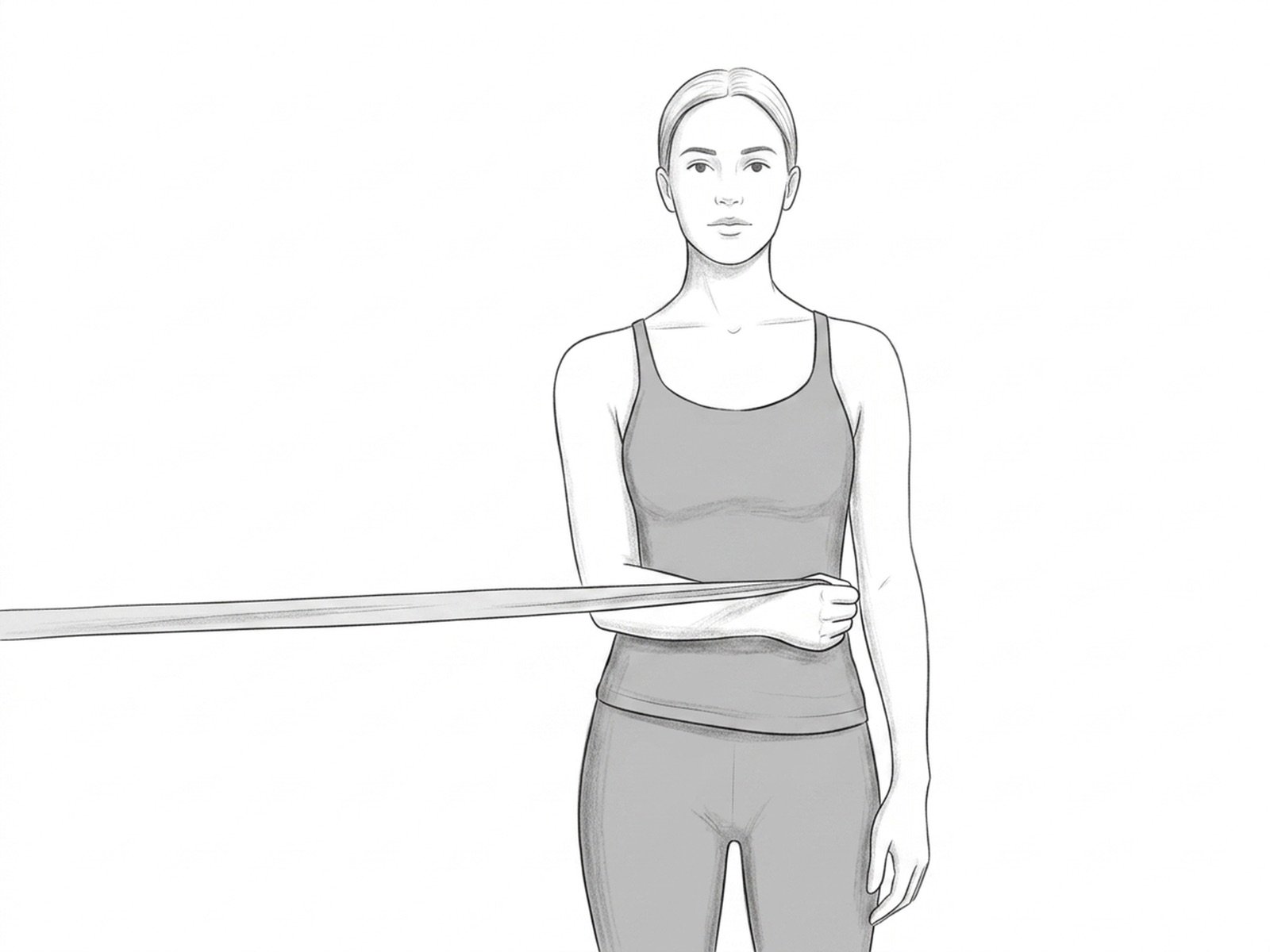
Banded Isotonic Internal Rotation
Dynamic strengthening of the shoulder internal rotators (subscapularis, pectoralis major, latissimus dorsi) with a resistance band. Complements rotator-cuff work in an advanced phase — internal rotation is frequently neglected in favor of external rotation, creating an imbalance.
How to perform
- Starting position. Anchor a resistance band to a sturdy fixed point at the height of the elbow on the affected side.
- Step 2. Stand next to the anchor so the band pulls from the affected side, with the elbow flexed at 90° and tucked against the trunk.
- Step 3. Hold the band and pull it toward your abdomen, performing internal shoulder rotation — the elbow stays tucked against the trunk.
- Step 4. Hold maximum internal rotation for 1 second and return slowly over 3 seconds to the starting position.
- Return. Place a rolled towel between the elbow and the trunk to ensure the arm stays fixed throughout the movement.
When not to perform
- Acute rotator-cuff injury
- Posterior shoulder instability
- Recent post-operative subscapular repair
- Impingement syndrome in an acute phase
- Medial epicondylitis in an acute phase
- Cervical pain radiating and aggravated by the movement
Medical disclaimer. These exercises are presented for informational purposes only. Always consult your physician before starting any exercise program, especially in case of acute pain, recent injury, or underlying clinical condition.
Related Exercises
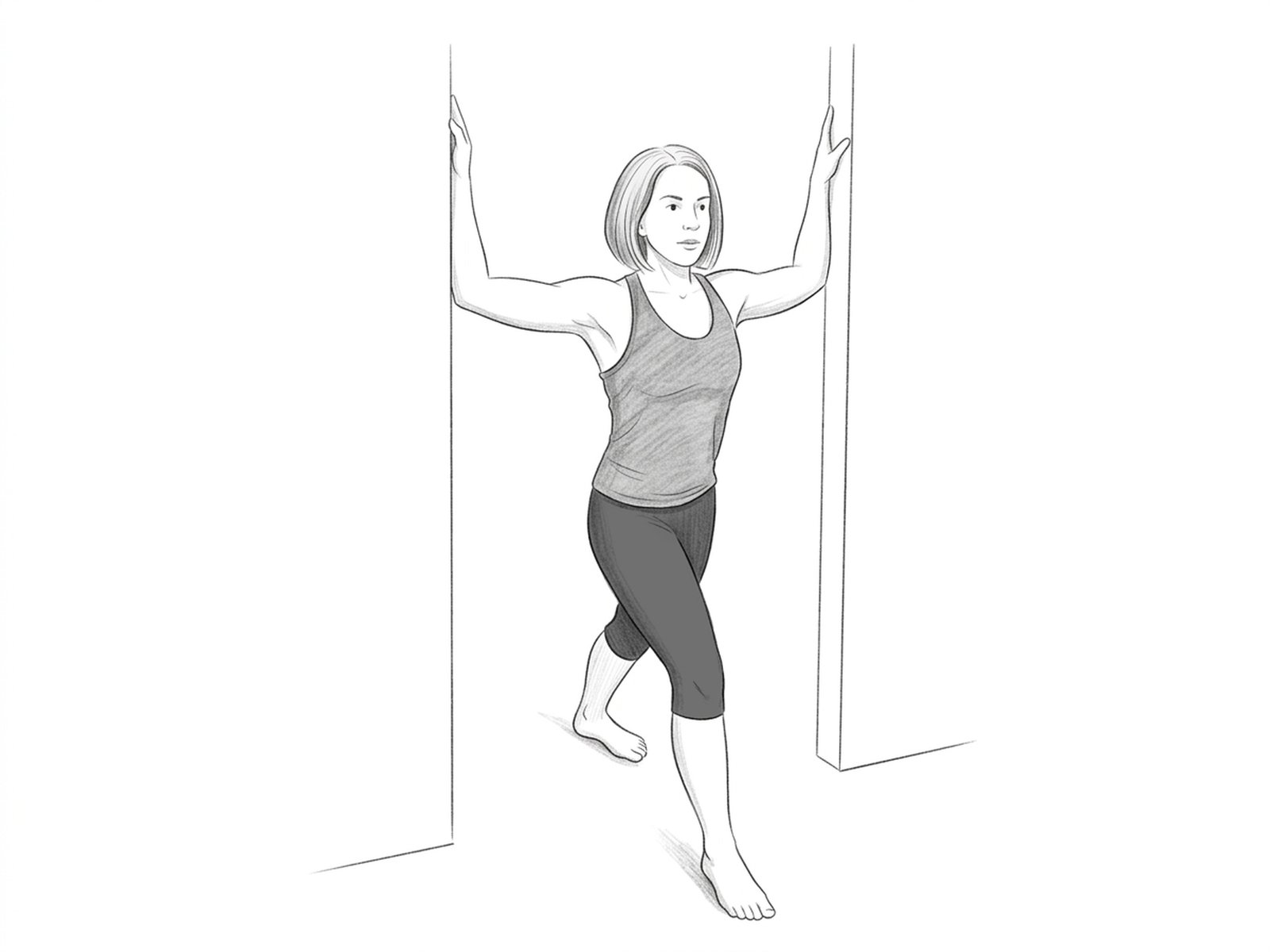
Doorway Pectoral Stretch
Stretches the pectoralis major and minor, muscles that are shortened in forward-head/rounded-shoulder posture. Reduces the passive scapular protraction that aggravates rotator-cuff tendinopathy.
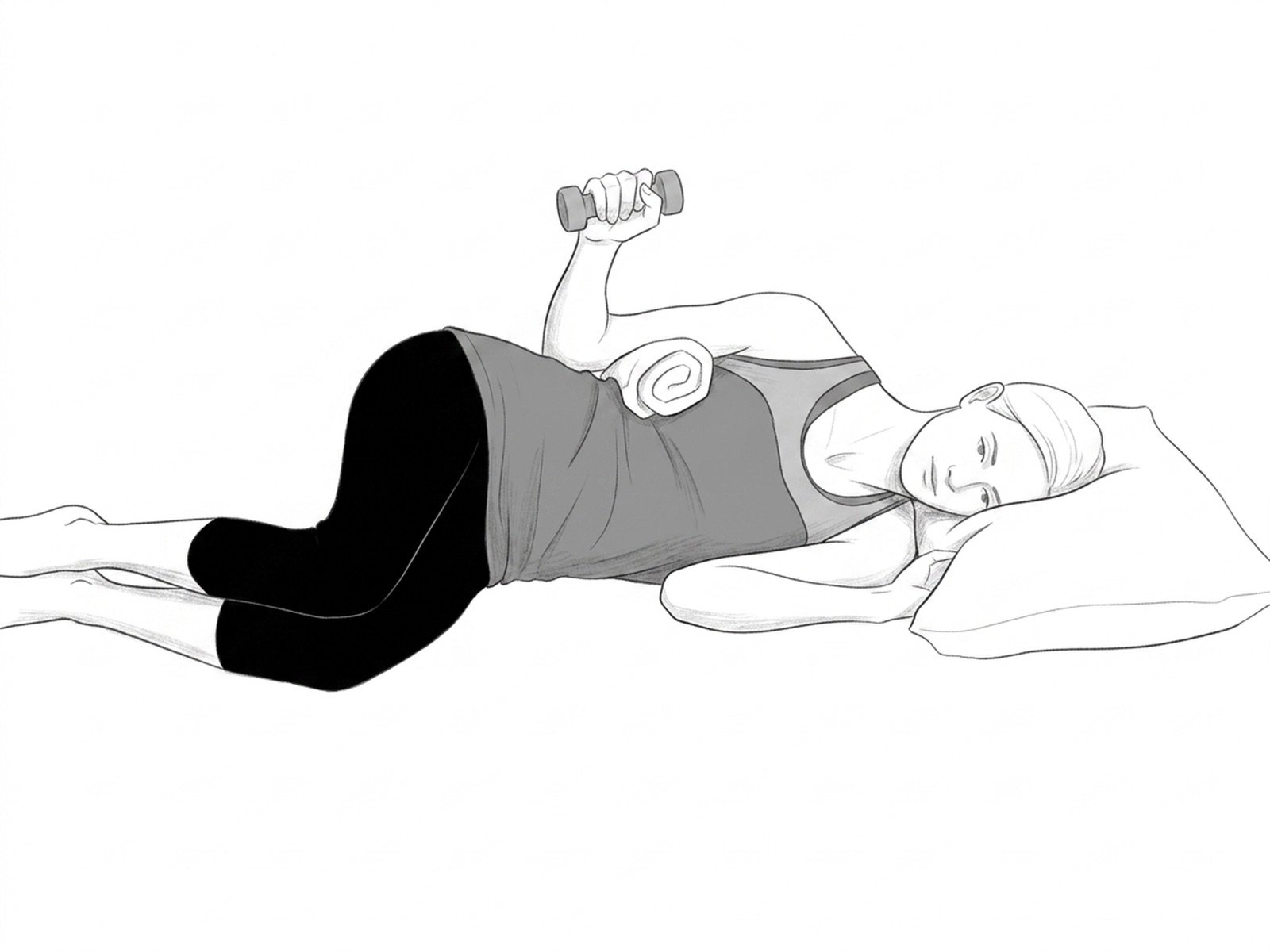
Side-Lying Shoulder Wiper
A wide windshield-wiper-like sweeping motion of the shoulder in side-lying, covering the range of internal and external rotation in a controlled manner. Isolates the subscapularis and the posterior cuff simultaneously — useful for recovering range and coordination after immobilization.
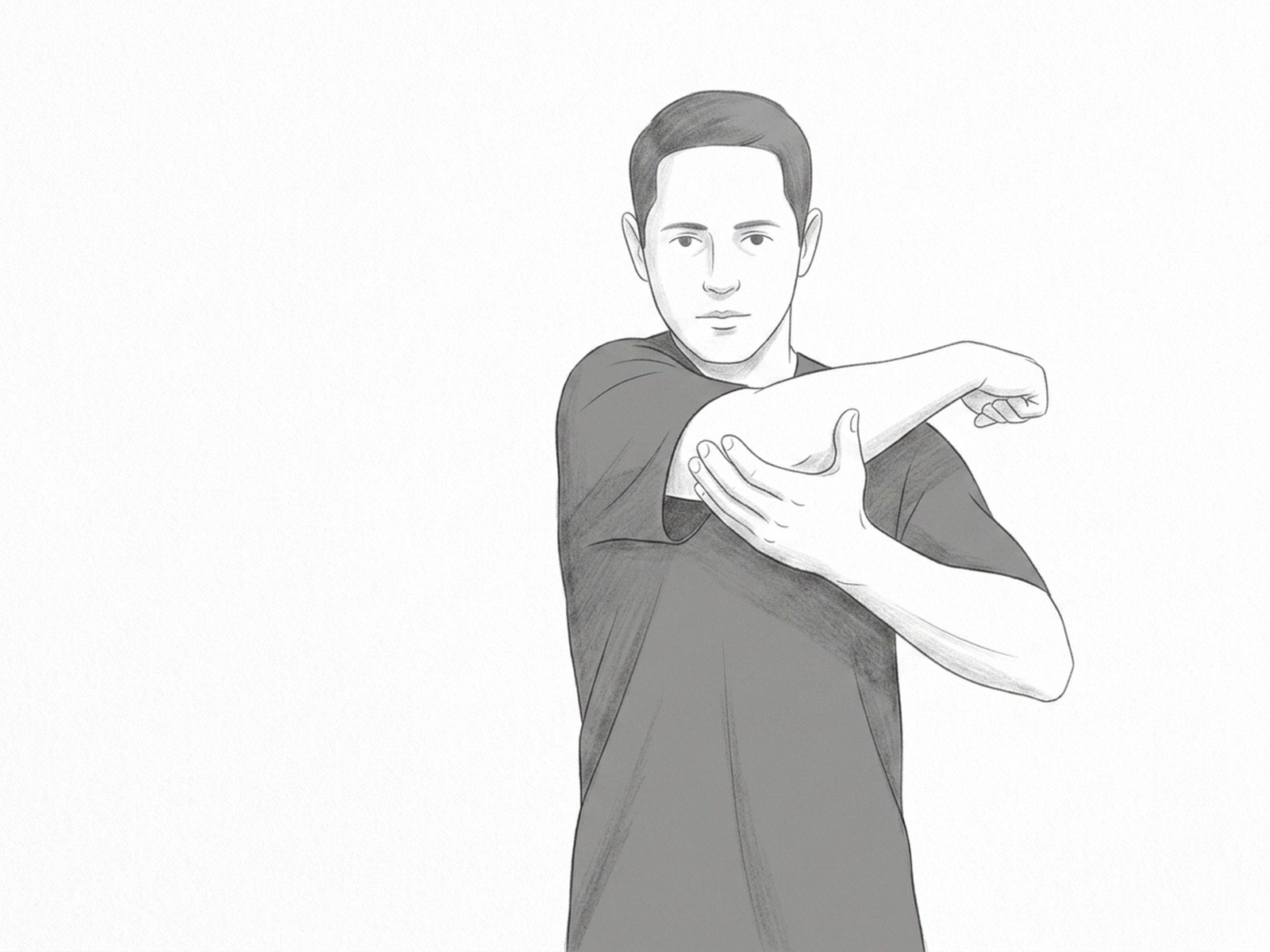
Cross-Body Shoulder Stretch
Stretch of the posterior shoulder capsule and external rotators in a functional position. Complements the sleeper stretch to correct the internal-rotation deficit (GIRD) common in rotator-cuff tendinopathy.