Therapeutic exercise
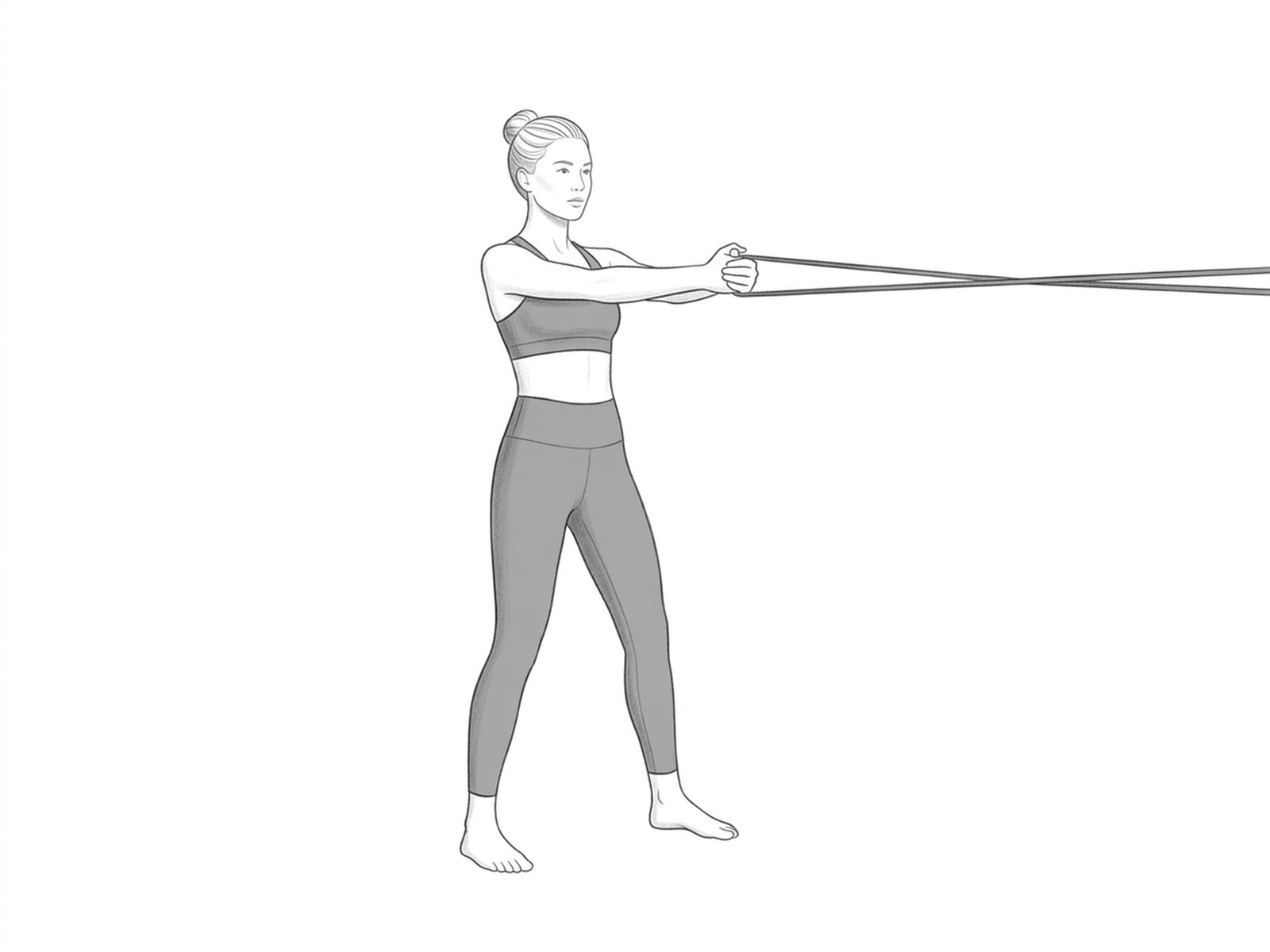
Pallof Press (Core Anti-Rotation)
Anti-rotational core stabilization exercise against lateral elastic resistance. Trains the core's capacity to resist trunk rotation — a functional pattern essential for preventing injuries in dynamic activities and rotational sports.
How to perform
- Starting position. Anchor a resistance band to a sturdy fixed point at sternum height (doorknob, post, or support).
- Step 2. Stand laterally to the anchor point, with feet shoulder-width apart and knees slightly bent.
- Step 3. Hold the band with both hands close to your chest, maintaining initial tension.
- Step 4. Push the band forward, extending the arms in front of you — resist the band's tendency to pull the trunk into rotation.
- Return. Hold the extended position for 3–5 seconds, contracting the abdomen and glutes. Return slowly over 3 seconds and repeat before switching sides.
When not to perform
- Symptomatic lumbar disc herniation in an acute phase
- High-grade spondylolisthesis
- Significant abdominal diastasis
- Acute shoulder injury preventing arm extension
- Third-trimester pregnancy
- Uncontrolled arterial hypertension
Medical disclaimer. These exercises are presented for informational purposes only. Always consult your physician before starting any exercise program, especially in case of acute pain, recent injury, or underlying clinical condition.
Related Exercises
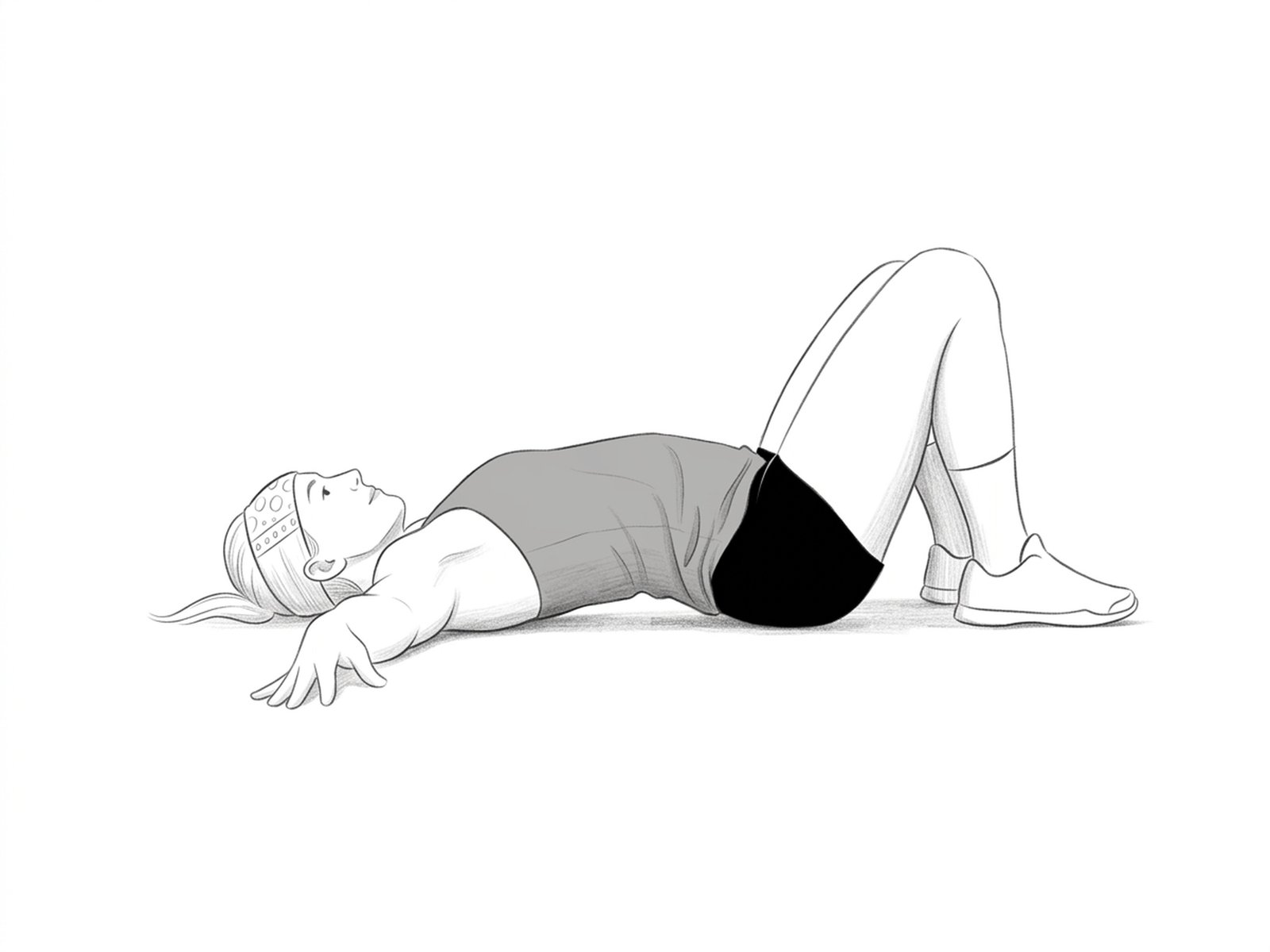
Pelvic Tilt
Gently activates the deep abdominal muscles through a pelvic tilt. Relieves low-back tension and retrains motor control of the deep stabilizers — one of the foundations of chronic mechanical low-back-pain rehabilitation.
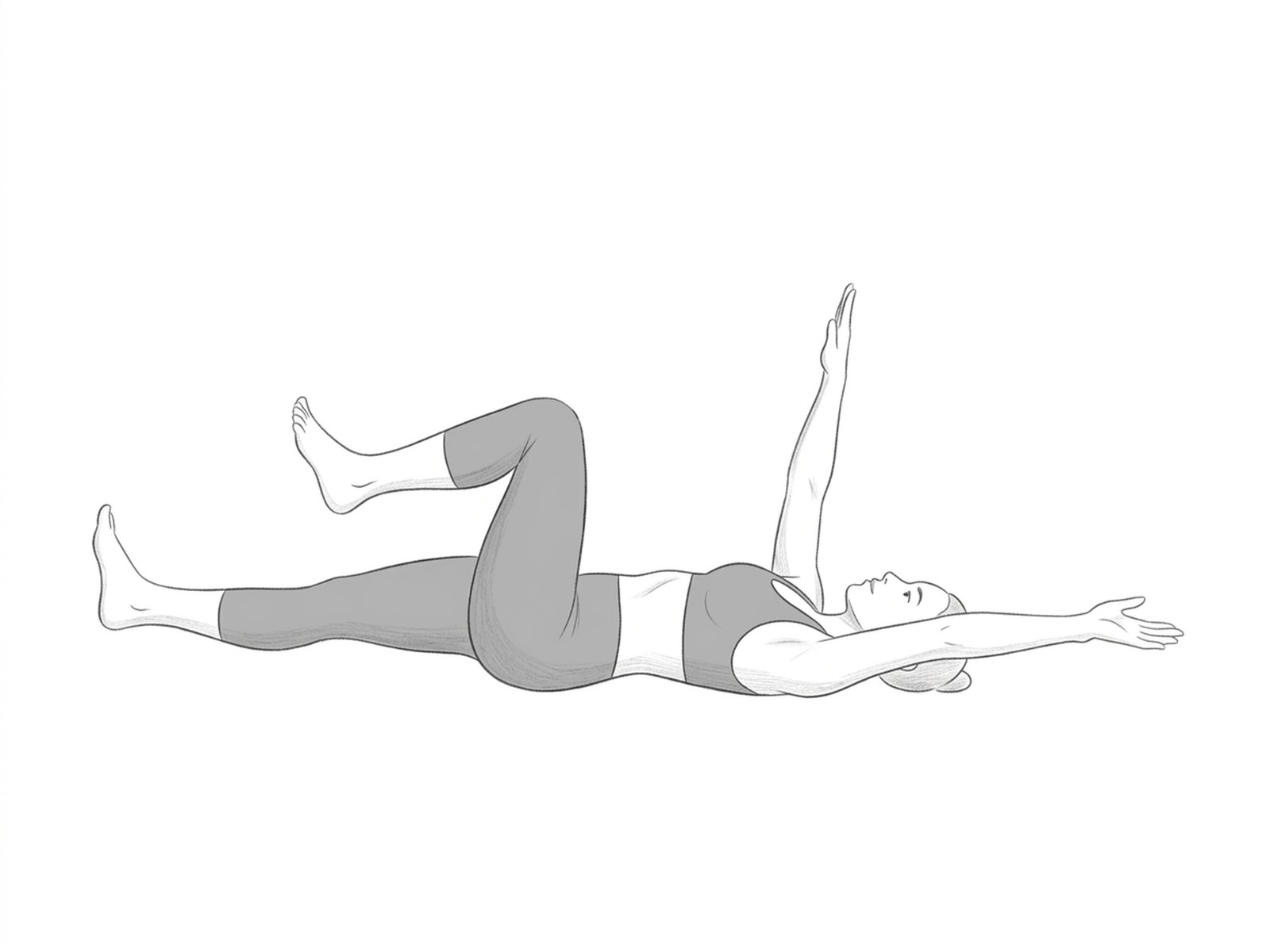
Dead Bug
Open-chain core stabilization exercise. Trains dissociation between the limbs and the trunk while maintaining a neutral spine — the natural progression between pelvic tilts and bird dog.
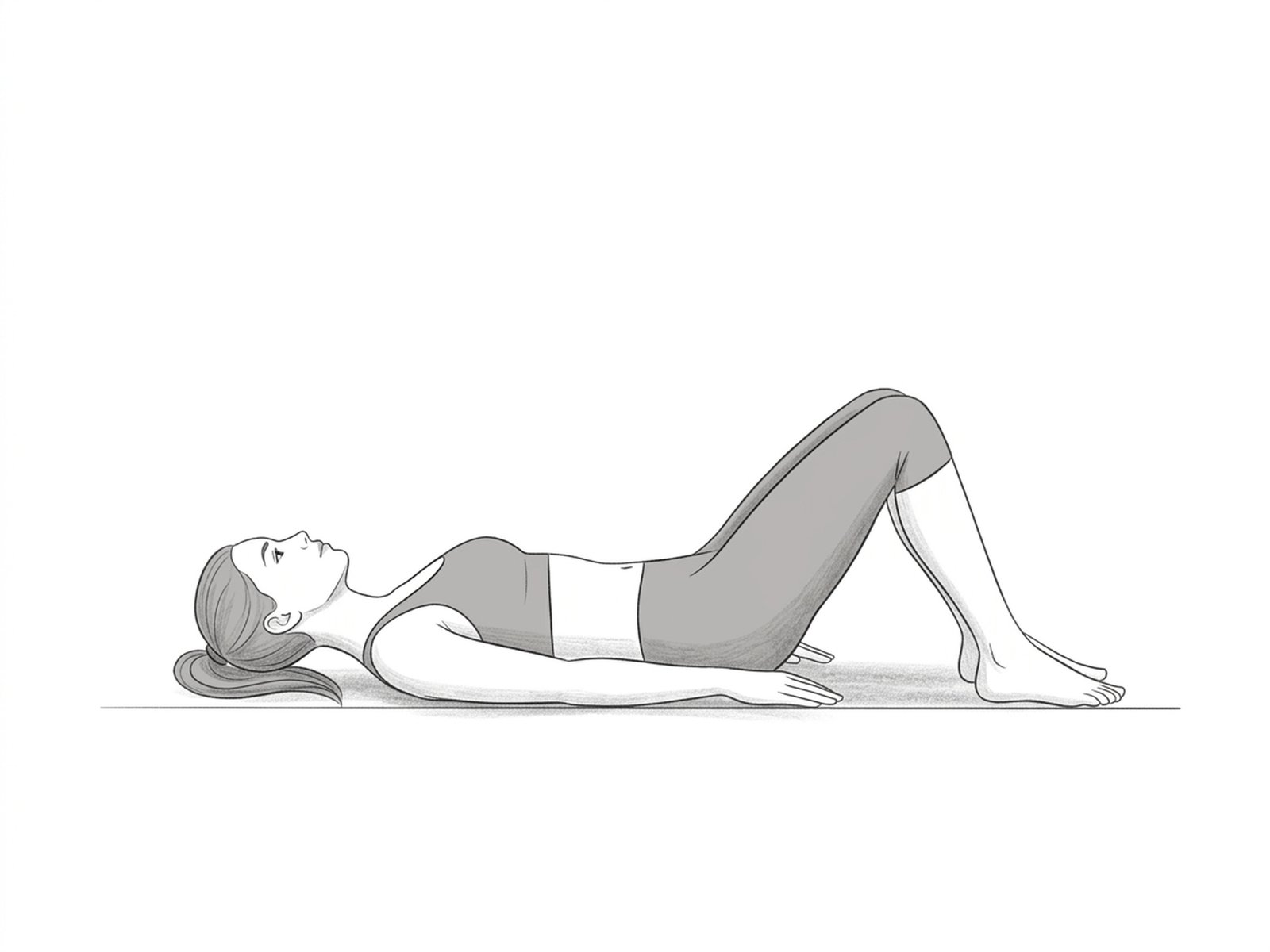
Transversus Abdominis Activation (Drawing-In)
Isolated motor activation of the transversus abdominis, the deep stabilizing muscle of the lumbar spine. The foundational motor-reeducation exercise — fundamental in core instability, sacroiliac dysfunction, and postpartum abdominal diastasis.