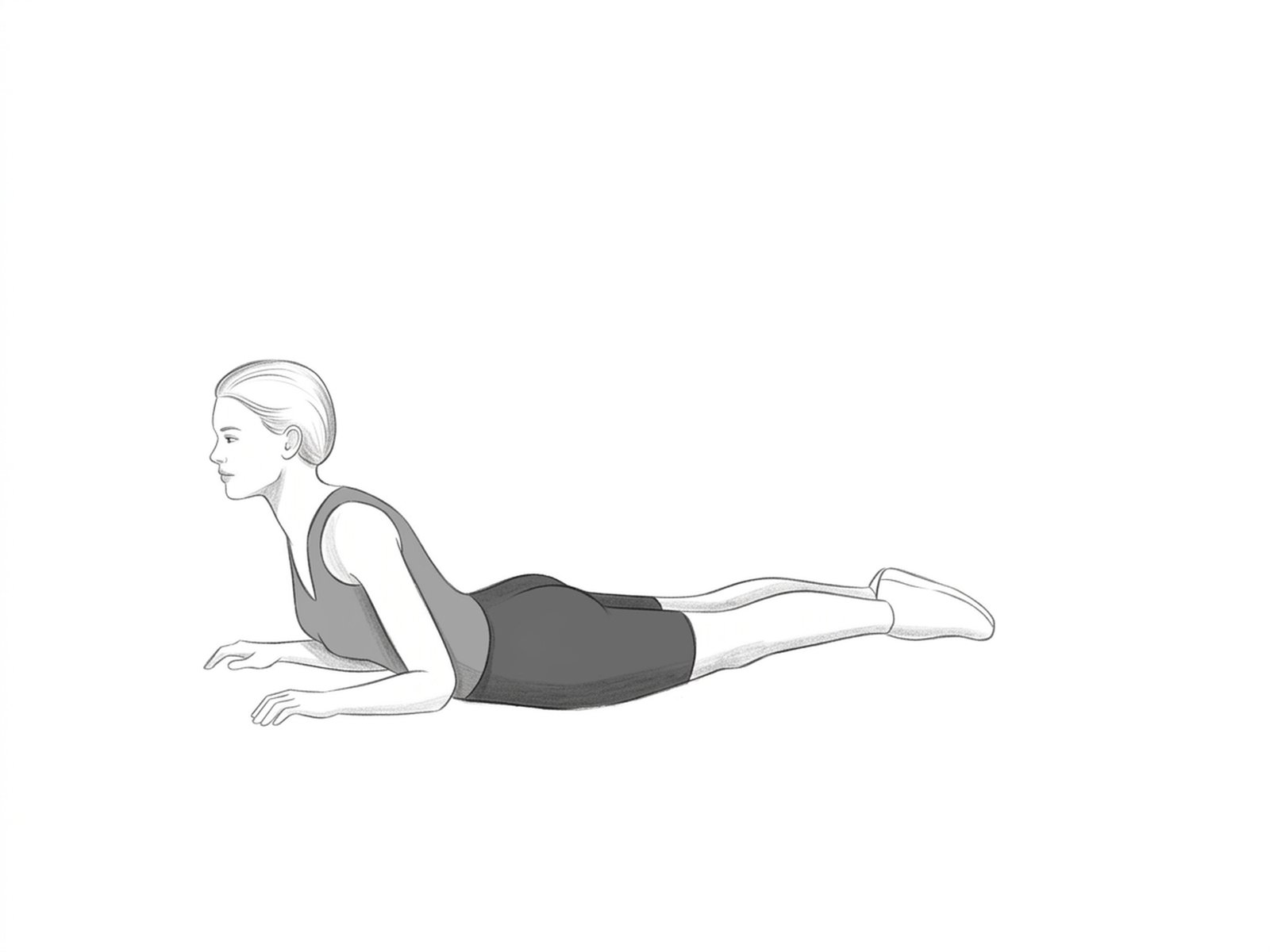
Therapeutic exercise
Progressive Prone (McKenzie)
Progressive passive lumbar-extension position in prone — progresses from simple prone (phase 1) to prone-on-elbows (phase 2). A key technique of McKenzie's directional assessment in patients with mechanical low back pain showing a preference for extension (discogenic).
How to perform
- Starting position. Phase 1: Lie face-down on a firm surface, with the arms extended at the sides of the body, the head turned to one side. Remain relaxed for 2–5 minutes, breathing deeply.
- Step 2. Observe the distribution of pain — in patients with a directional preference for extension, pain tends to centralize (recede from the leg toward the low back) in this position.
- Step 3. Phase 2: After 2 minutes in pure prone, rest the forearms on the floor, lifting the upper trunk — the elbows stay flexed and aligned under the shoulders.
- Step 4. Keep the pelvis in contact with the floor, relaxing the abdomen. Stay in the position for 2–5 minutes.
- Return. If the pain centralizes or reduces, progress in the next session to the prone press-up. If it worsens or radiates more distally, stop — that is not the therapeutic direction for your case.
When not to perform
- Pregnancy (incompatible with prone)
- Cauda equina syndrome (surgical emergency)
- Symptomatic spinal stenosis (directional preference for flexion, not extension)
- High-grade spondylolisthesis
- Recent vertebral fracture
- Increased distal pain during the position (sign of flexion preference)
Medical disclaimer. These exercises are presented for informational purposes only. Always consult your physician before starting any exercise program, especially in case of acute pain, recent injury, or underlying clinical condition.
Related Exercises
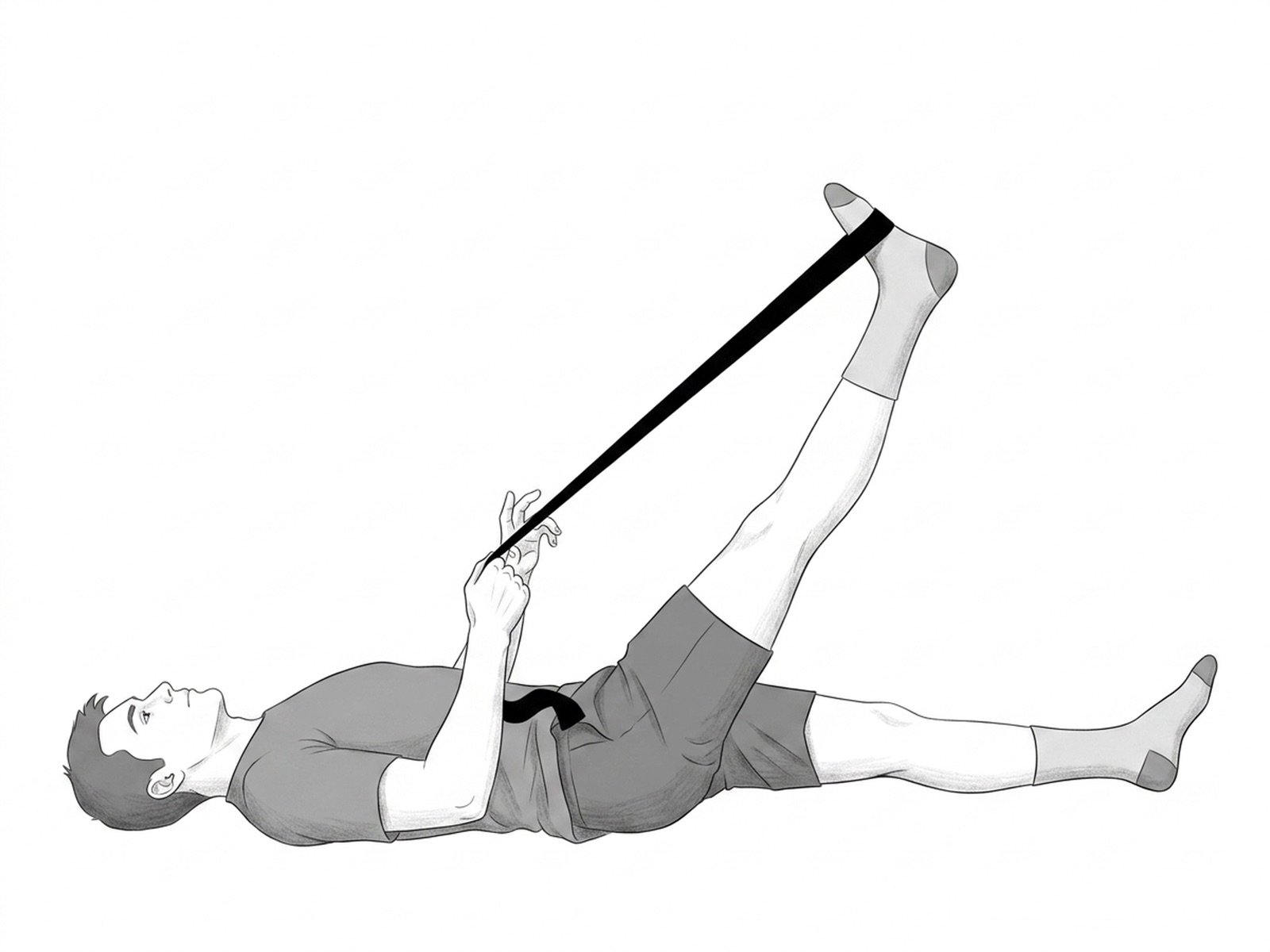
Supine Hamstring Stretch
Stretches the hamstrings without lumbar overload. A key exercise for chronic low back pain — shortened hamstrings increase pelvic flexion and disc loading.
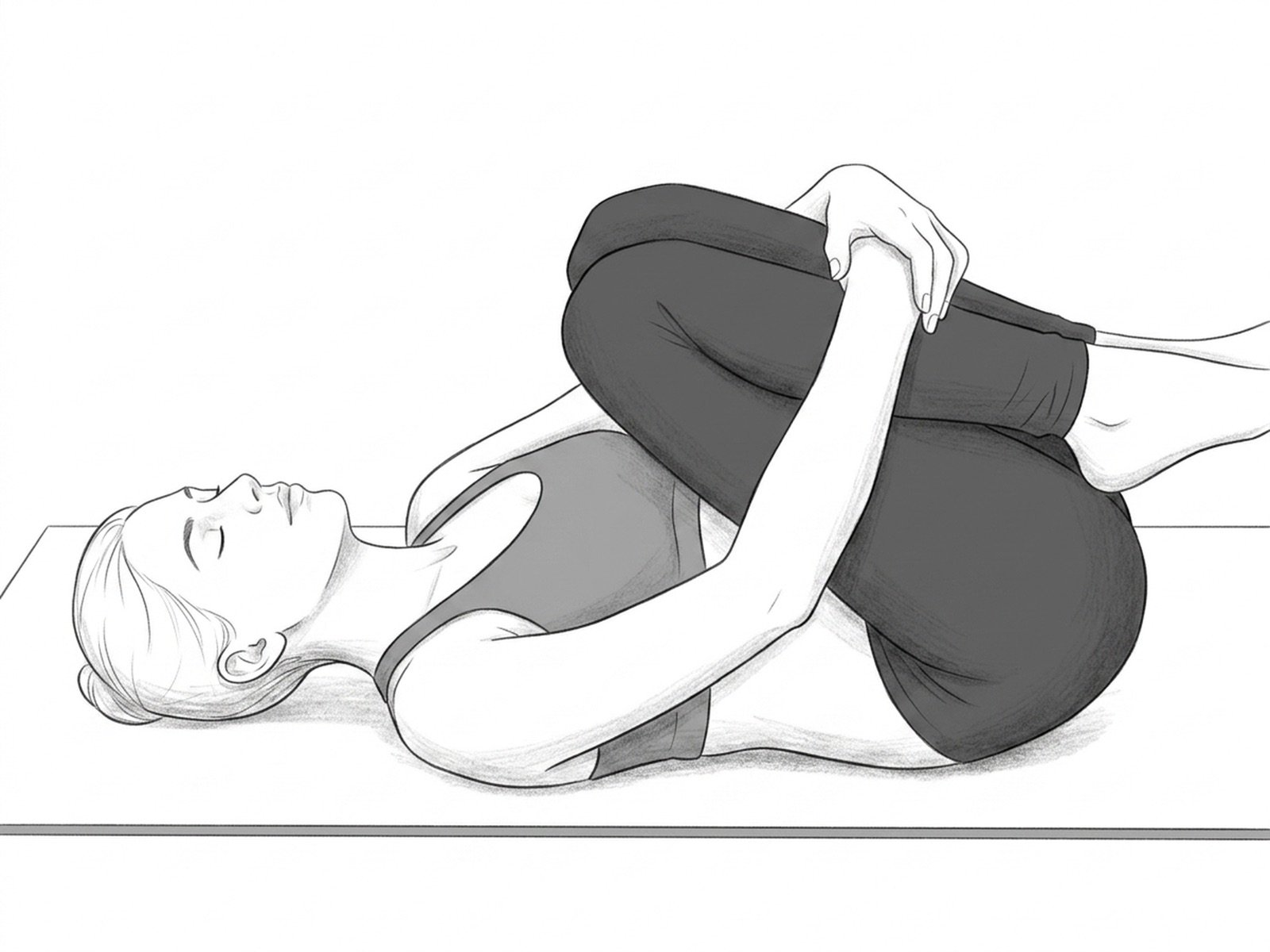
Double Knee-to-Chest
Bilateral variation of the knee-to-chest stretch, applying global lumbar spine flexion. More intense than the unilateral version, it is indicated in spinal stenosis and flexion-preference low back pain — opens the facet joints and relieves pressure on the neural roots.
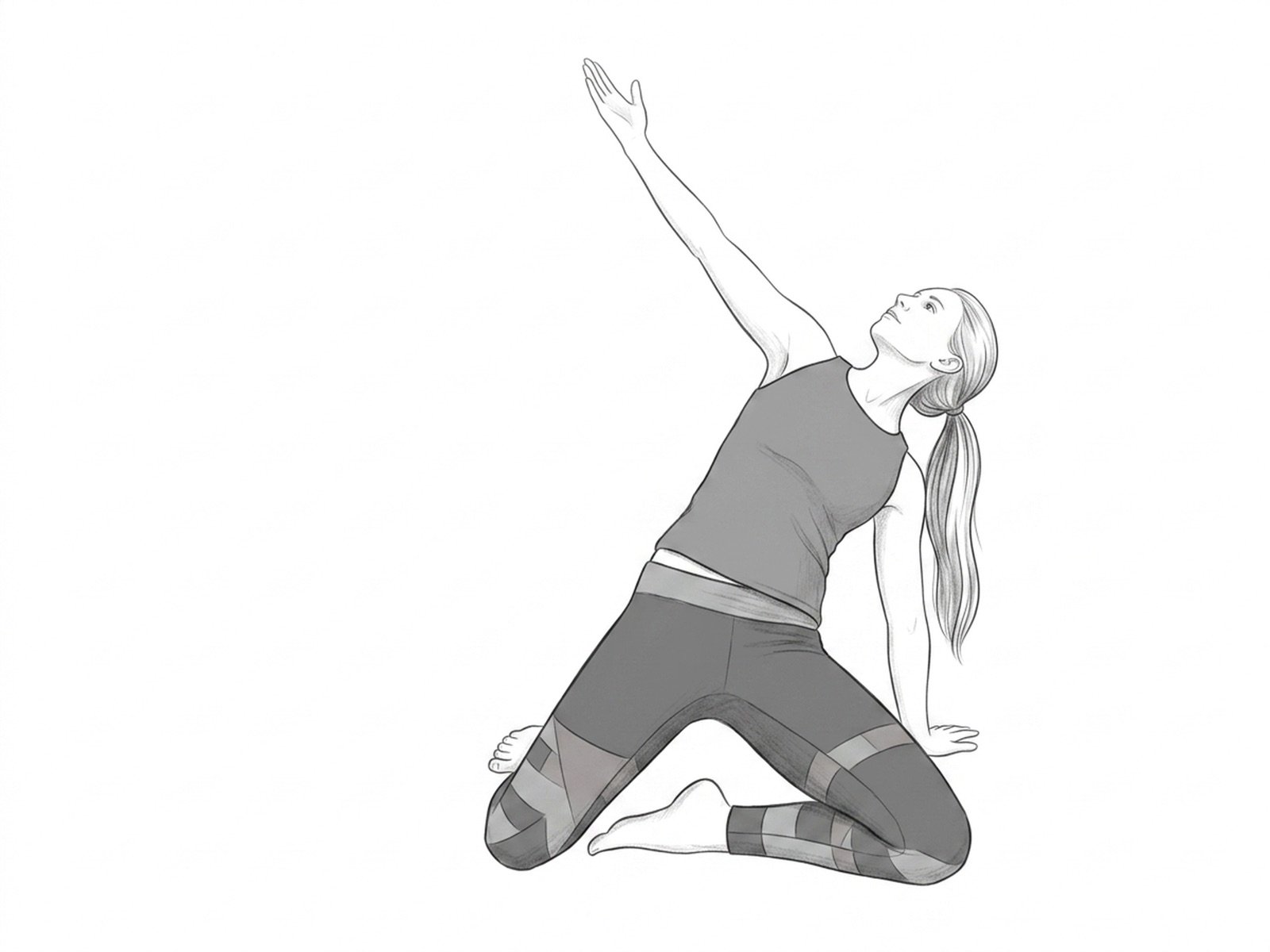
Quadratus Lumborum Lateral Stretch (Mermaid)
Specific stretch of the quadratus lumborum in a side-sitting position with legs folded laterally (Pilates Mermaid). Indicated in QL myofascial pain, chronic unilateral low back pain, and functional scoliosis — stretching the shortened QL unlocks lumbopelvic compensatory patterns.