Therapeutic exercise
Quadratus Lumborum Lateral Stretch (Mermaid)
Specific stretch of the quadratus lumborum in a side-sitting position with legs folded laterally (Pilates Mermaid). Indicated in QL myofascial pain, chronic unilateral low back pain, and functional scoliosis — stretching the shortened QL unlocks lumbopelvic compensatory patterns.
How to perform
- Starting position. Sit on the floor with legs folded to one side (Mermaid position) — back leg in external rotation, front leg in internal rotation.
- Step 2. Extend the arm on the side opposite the legs overhead.
- Step 3. Slowly lean the trunk toward the side of the legs, stretching the lateral trunk on the side of the raised arm.
- Step 4. Breathe deeply and allow the rib cage to expand on the stretched side — deepen the stretch with each exhalation.
- Return. Hold for 30 seconds and return to center. Switch sides, reversing the leg position.
When not to perform
- Acute low back pain with radiation
- Symptomatic lumbar disc herniation
- Recent hip or spine surgery
- Osteoporosis with vertebral fracture risk
- Acute sacroiliac pain
- Severe limitation of hip internal or external rotation
Medical disclaimer. These exercises are presented for informational purposes only. Always consult your physician before starting any exercise program, especially in case of acute pain, recent injury, or underlying clinical condition.
Related Exercises
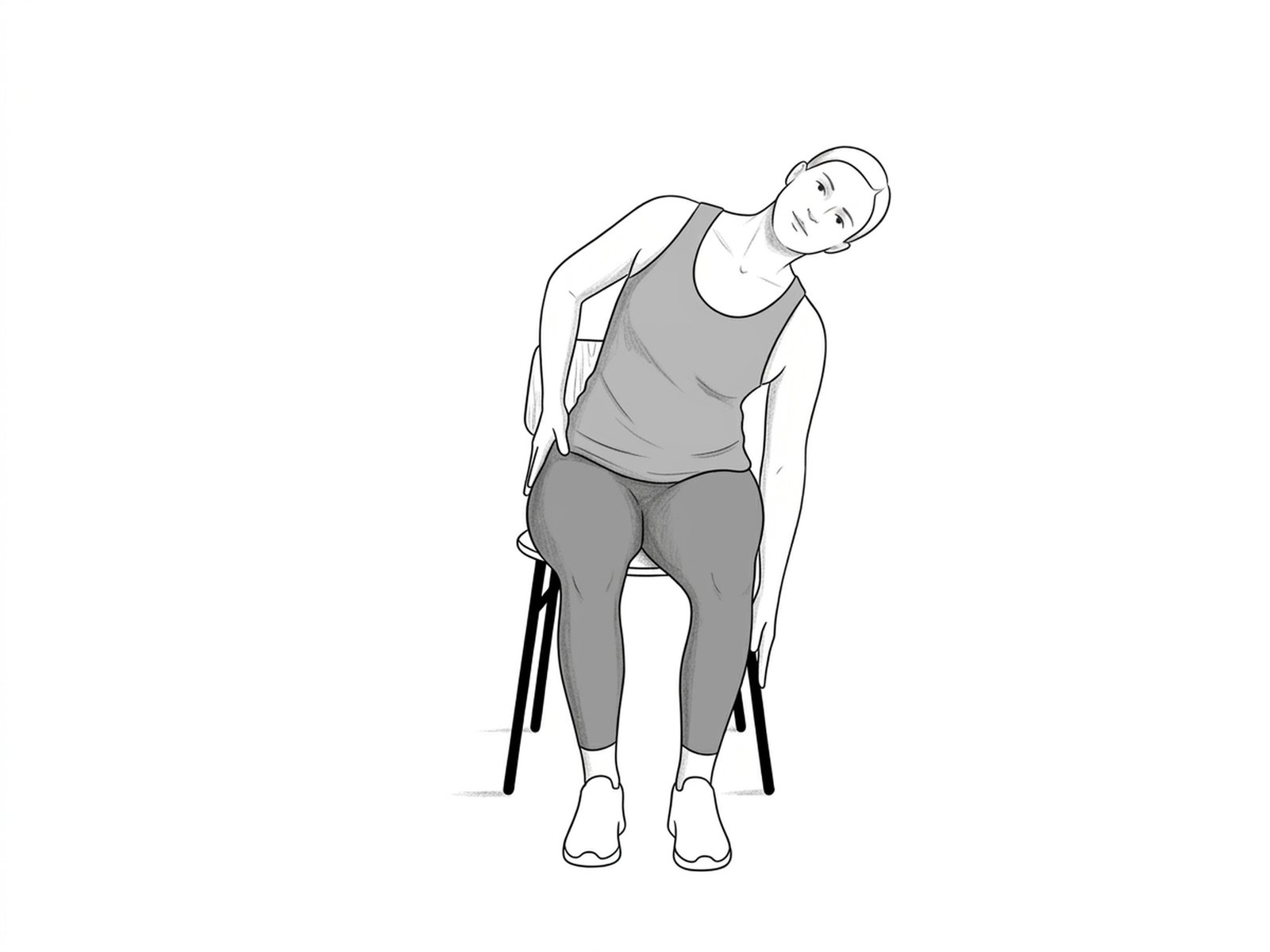
Seated Lateral Trunk Stretch
Lateral stretch of the quadratus lumborum, latissimus dorsi, and intercostals in a seated position, accessible in the work environment. Complements the Mermaid (on the floor) as a practical option for short breaks during the day.
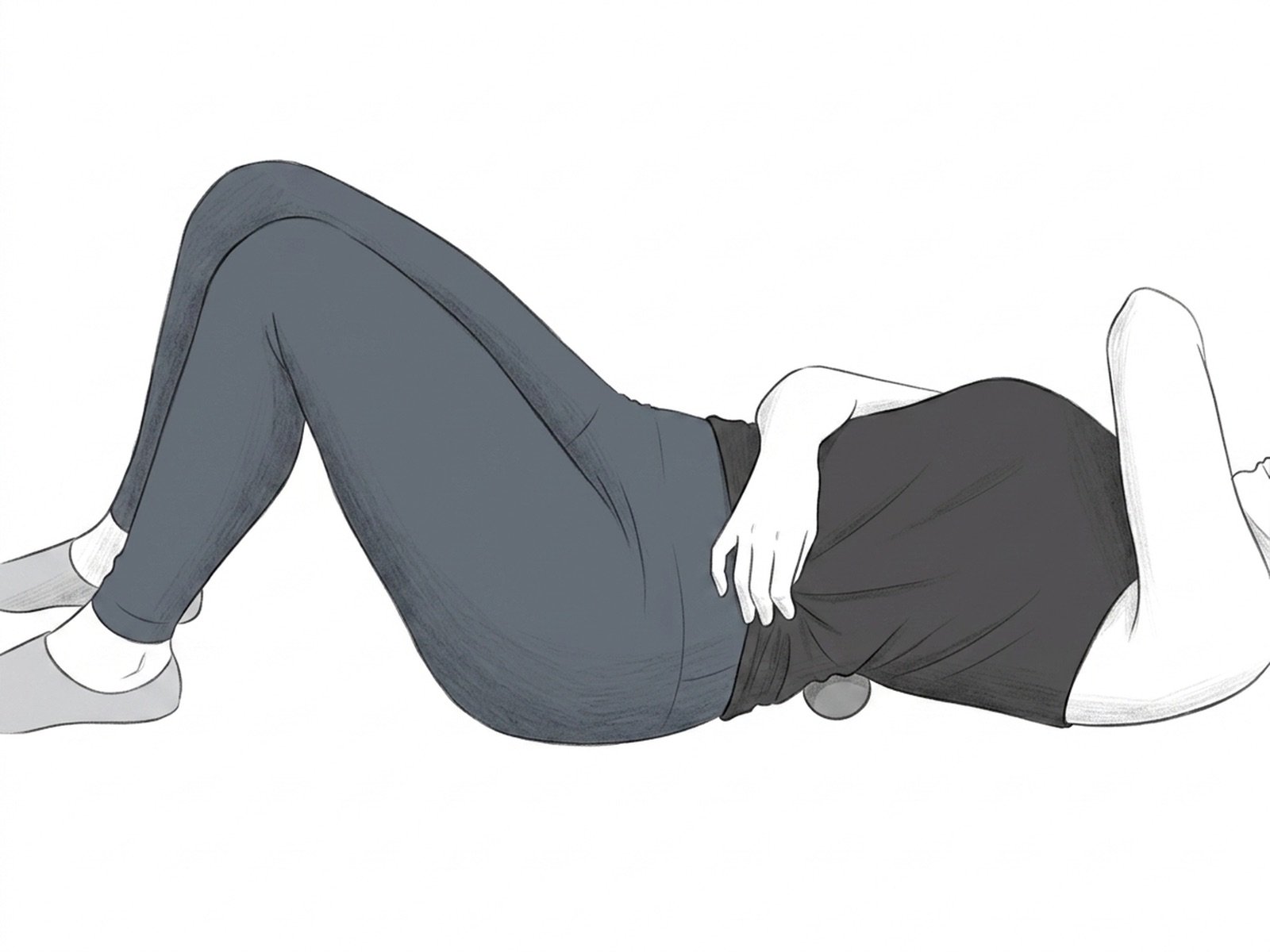
Quadratus Lumborum Ball Release
Targeted self-massage of the quadratus lumborum using a release ball (lacrosse or tennis) against the wall. Reaching the QL is difficult — it requires specific positioning to isolate the muscle, which lies deep between the rib, iliac crest, and lumbar transverse processes.
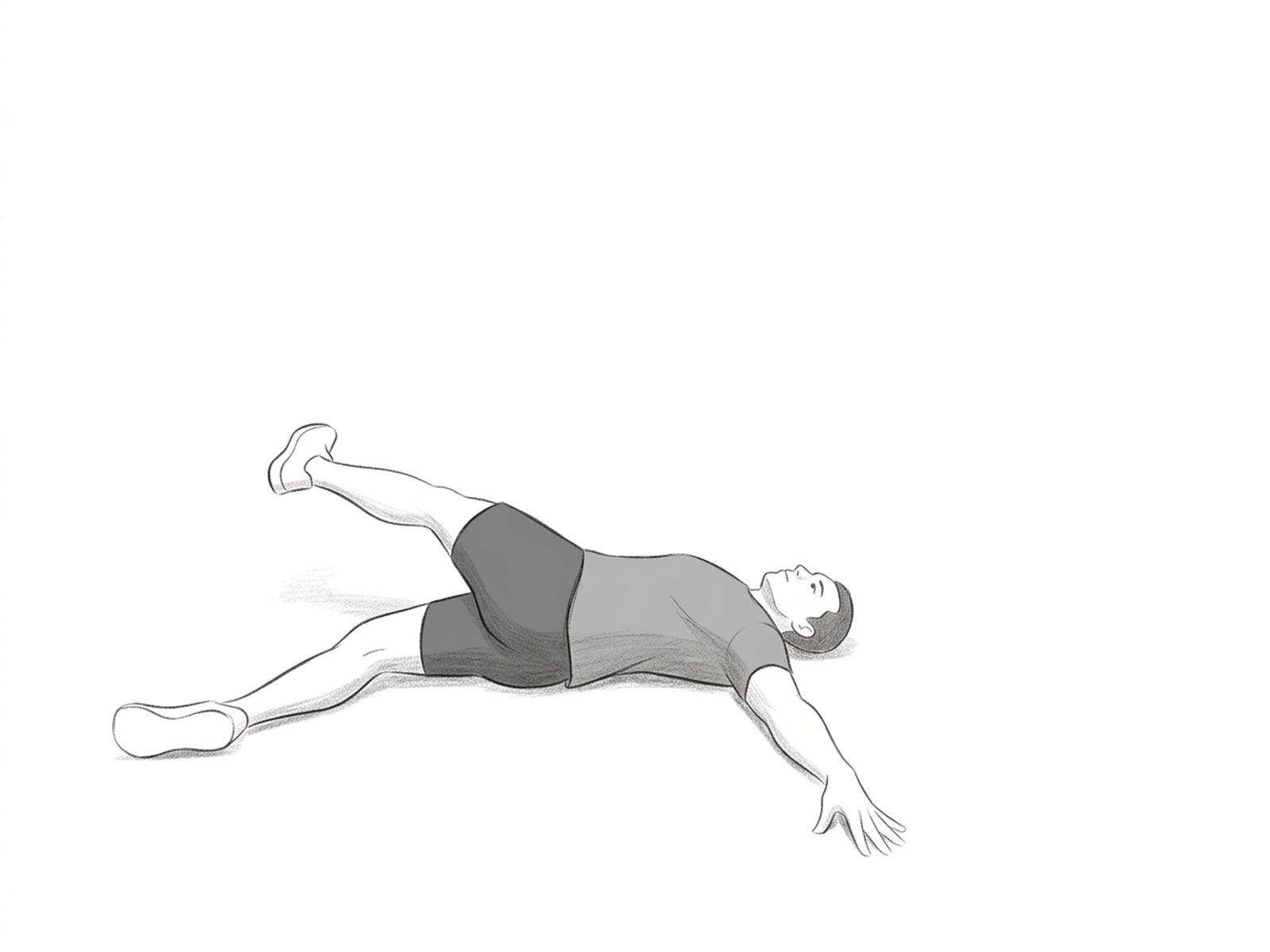
Lumbar Rotational Mobilization
Gently mobilizes the lumbar facet joints in rotation. Improves range of motion without axial loading, especially useful for the morning stiffness characteristic of facet-joint pain.