Therapeutic exercise
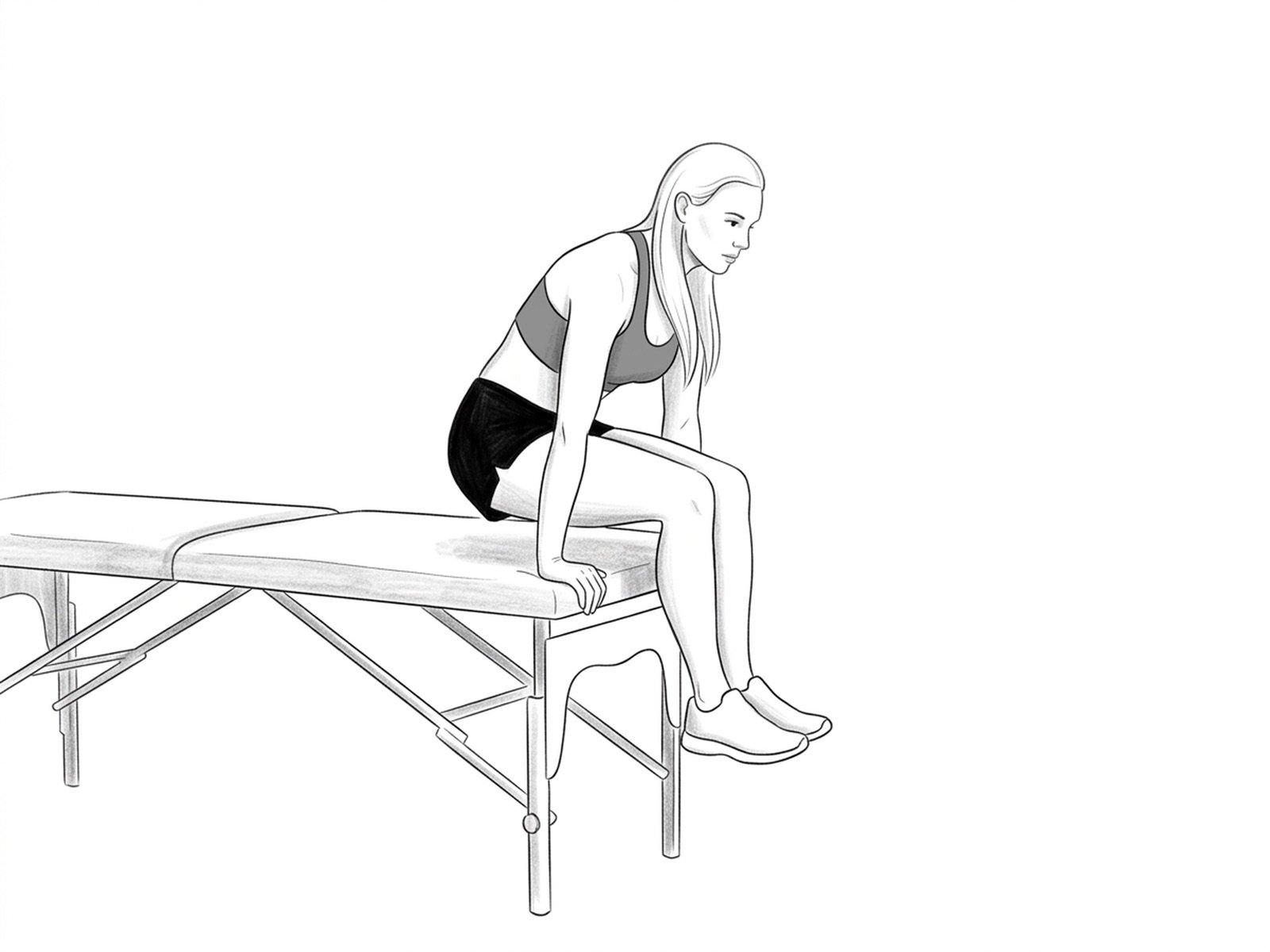
Seated Scapular Depression Press-Up
Isolated activation of the latissimus dorsi and lower trapezius fibers to promote active scapular depression in seated position. Reflexively inhibits the levator scapulae and upper trapezius — essential in levator-scapulae syndrome and chronic torticollis.
How to perform
- Starting position. Sit in a firm chair with armrests or a bench, with the hands resting on the sides (on the chair arms or bench edges).
- Step 2. Push the hands downward, attempting to lift the body off the chair — but without allowing the glutes to leave the support.
- Step 3. During the effort, feel the scapulae descend toward the back pockets (scapular depression) and the body sit slightly taller.
- Step 4. Hold the depression for 5 to 10 seconds, with the shoulders away from the ears.
- Return. Relax and repeat. The key is that the body should not actually leave the chair — the effort activates the latissimus and lower trapezius without producing movement.
When not to perform
- Acute rotator cuff injury
- Acute lateral epicondylitis
- Carpal tunnel syndrome in acute phase (loading the grip)
- Recent post-operative shoulder, elbow, or wrist surgery
- Uncontrolled arterial hypertension
- Acute low-back pain in extension
Medical disclaimer. These exercises are presented for informational purposes only. Always consult your physician before starting any exercise program, especially in case of acute pain, recent injury, or underlying clinical condition.
Related Exercises
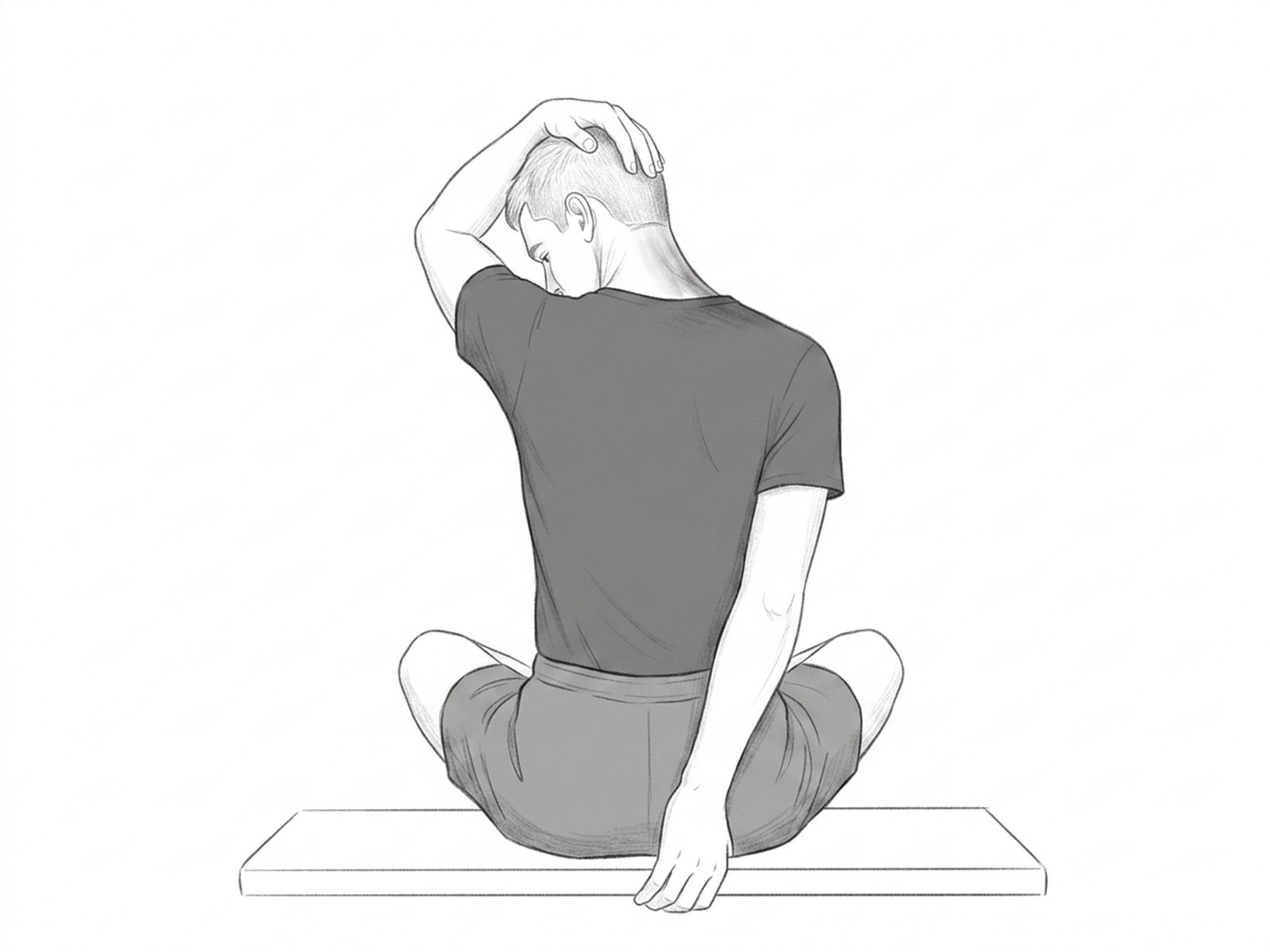
Levator Scapulae Stretch
Stretches the levator scapulae — a classic culprit in posterolateral neck pain and that sensation of heaviness around the neck, typical of people who spend long hours with the head forward in front of screens.
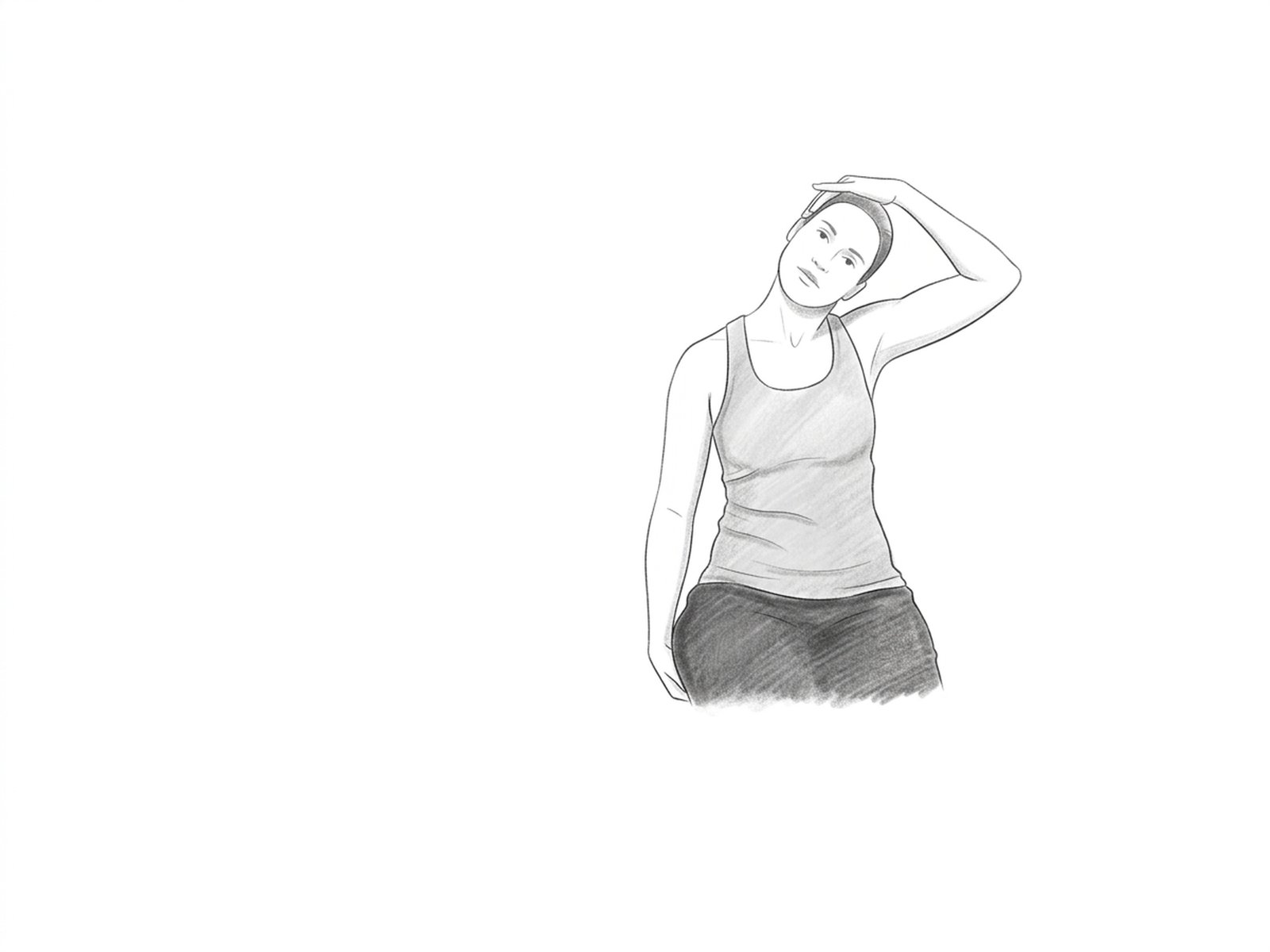
Upper-Trapezius Stretch
Stretches the upper trapezius — a muscle that is commonly hypertonic in patients with mechanical neck pain. Relieves the sensation of heaviness and tension in the neck and shoulders.
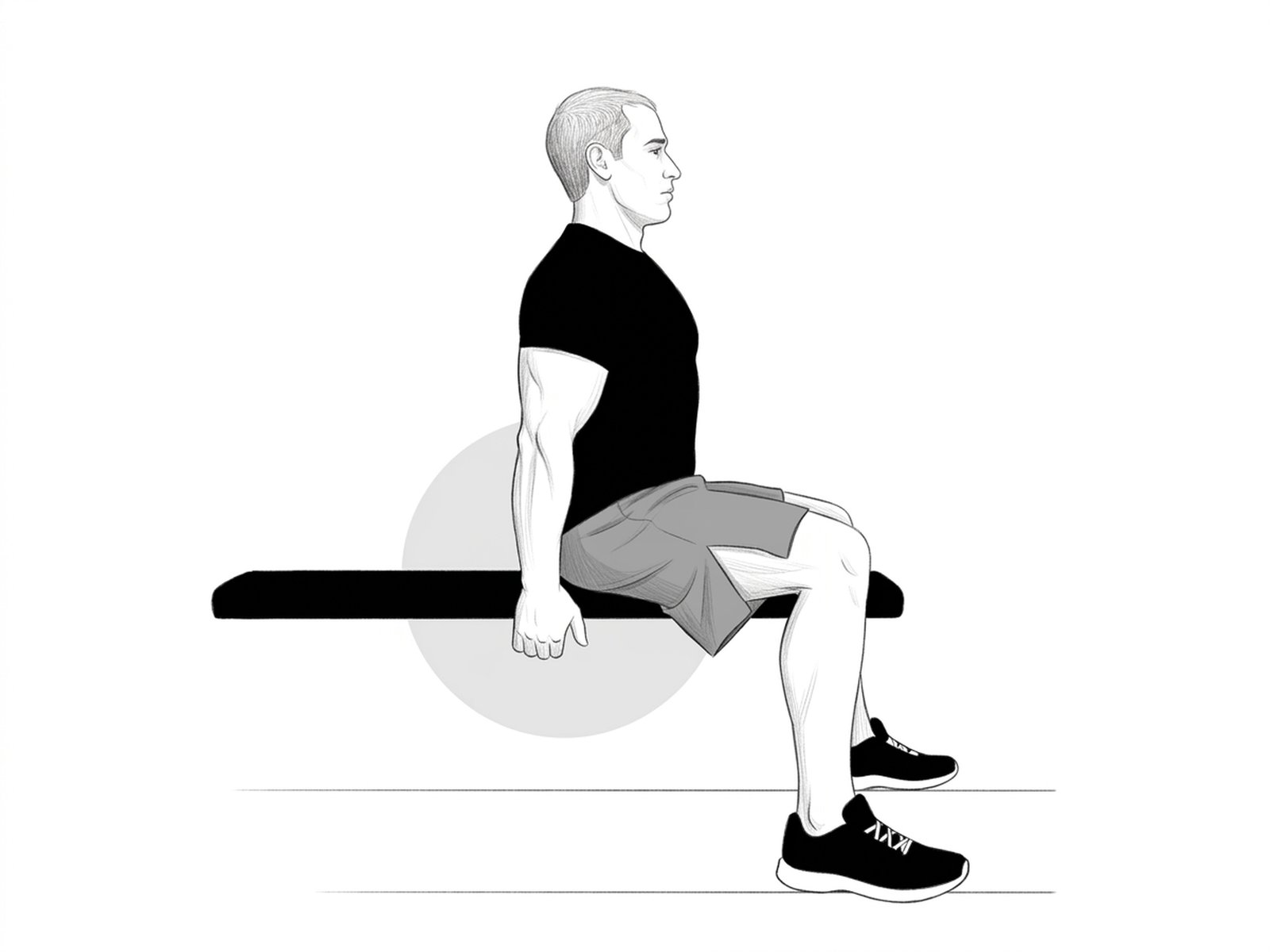
Eccentric Shoulder Shrug
Strengthening of the upper trapezius with heavy load and slow cadence on the descent (eccentric phase). Contrary to common belief, a weak (not shortened) upper trapezius is often the cause of chronic pain in the region — remodeling the tissue with progressive loading is the central strategy in treatment.