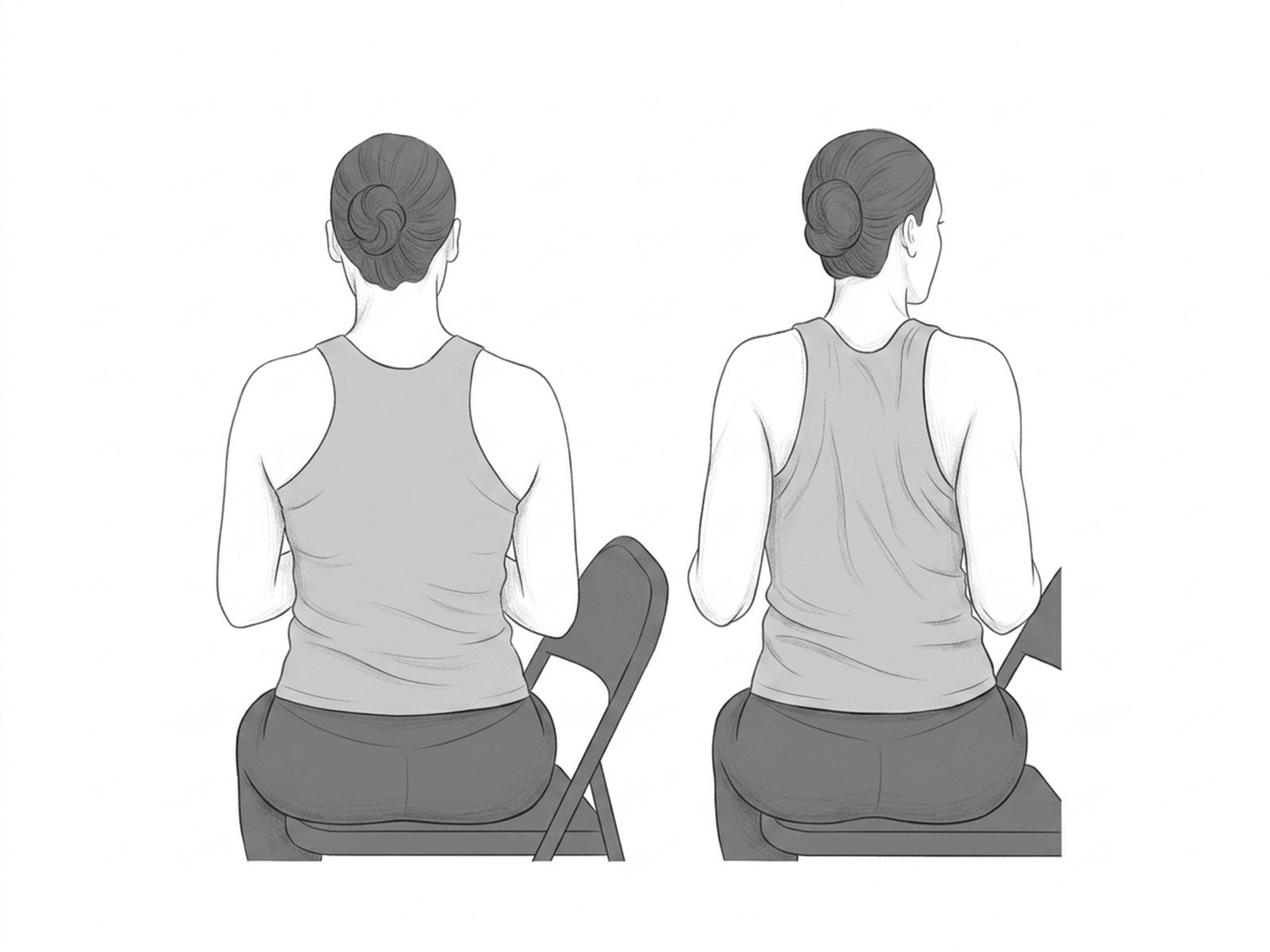
Therapeutic exercise
Scapular Retraction
Strengthens the scapular stabilizers — which support cervical posture and relieve compensatory overload on the upper trapezius, a muscle commonly tense in patients with neck pain.
How to perform
- Starting position. Sit with your spine upright and your shoulders relaxed.
- Step 2. Squeeze your shoulder blades together, as if trying to hold a pencil between them.
- Step 3. Hold the contraction for 5 seconds, without lifting your shoulders toward your ears.
- Return. Release slowly and repeat.
When not to perform
- Acute shoulder pain that worsens with the movement
- Recent shoulder surgery
Medical disclaimer. These exercises are presented for informational purposes only. Always consult your physician before starting any exercise program, especially in case of acute pain, recent injury, or underlying clinical condition.
Related Exercises
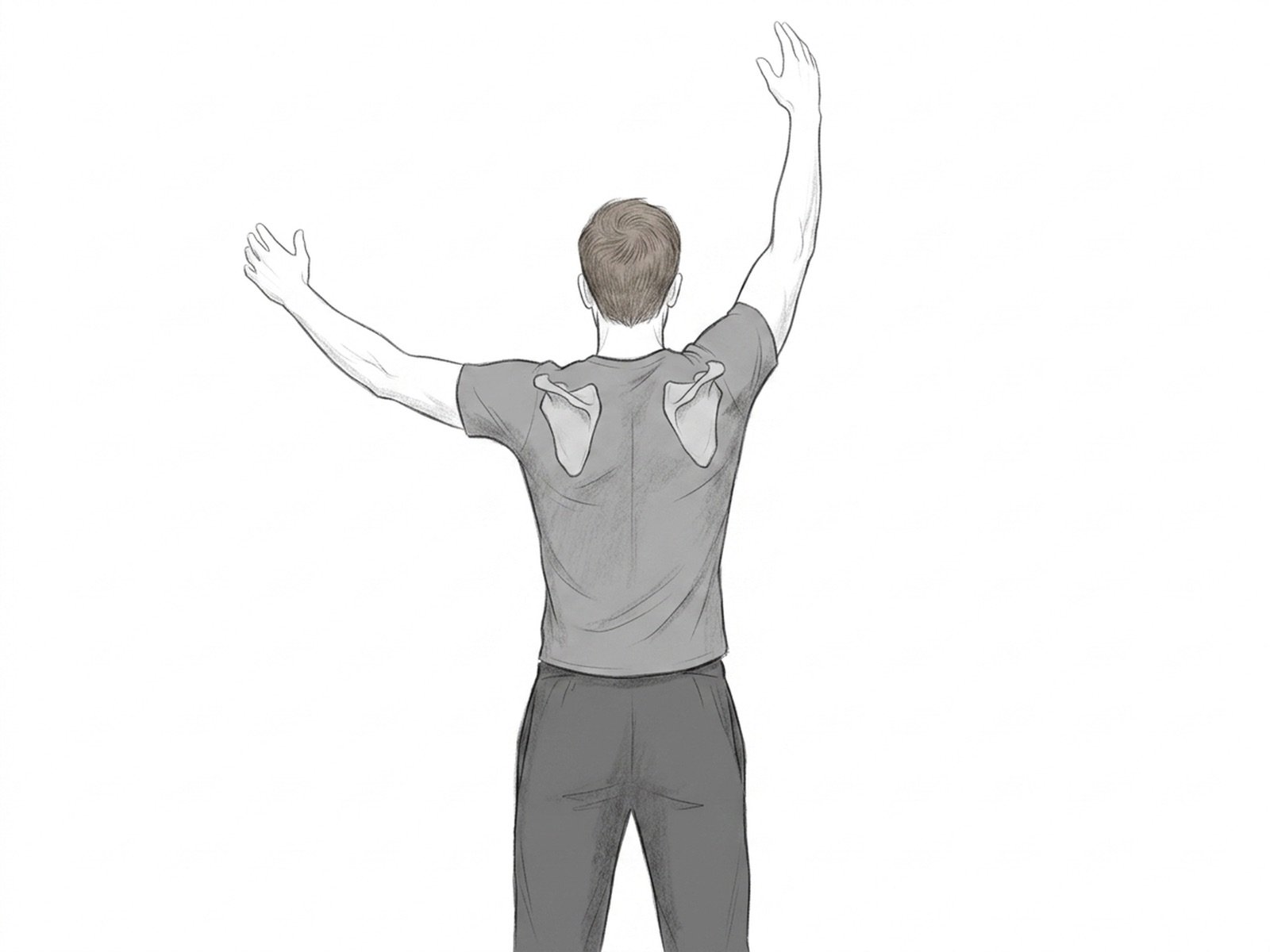
Scapular Retraction with Depression
Scapular activation pattern combining retraction (drawing the scapulae together) with depression (lowering the scapulae). Essential for thoracic outlet syndrome and for correcting the chronic upper-trapezius elevation in patients with upper-crossed syndrome.
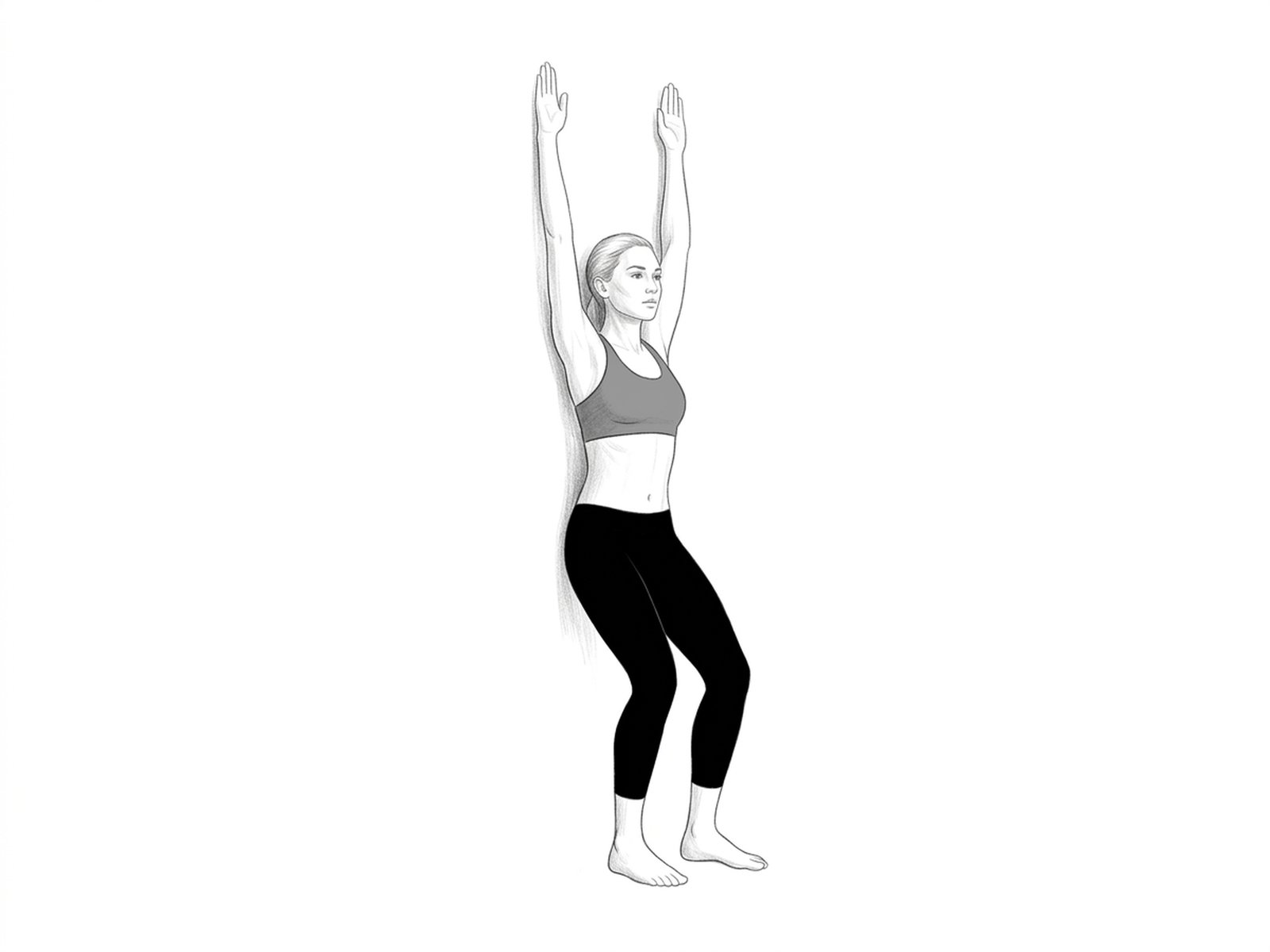
Wall Angels
Scapulothoracic mobilization in the posterior chain that corrects kyphotic posture. Indicated as an adjunct in cervical disc herniation to reduce compensatory overload.
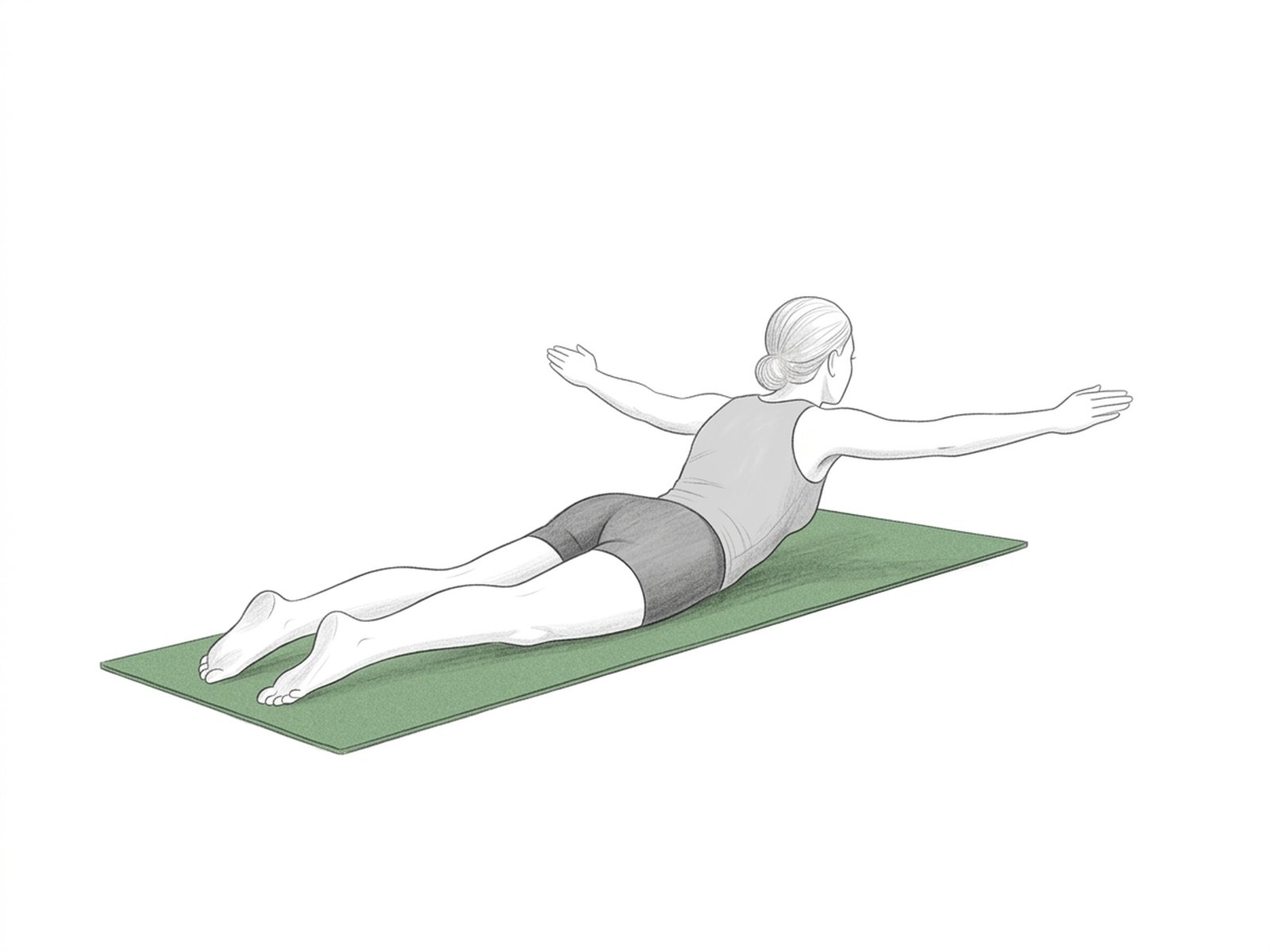
Prone T-Raise
Isolation of the middle trapezius and posterior deltoid in a prone position. Component of the Prone I/T/Y/W series — essential for re-balancing the shoulder girdle in patients with upper-crossed syndrome and scapular dyskinesia.