Shoulder rolls
Slow circles of both shoulders, up, back and down, with your arms relaxed. Shoulder rolls have been one small part of neck pain programmes, but no trial of them alone was found. Use them as an addition to strengthening, not a replacement.
Muscles worked
Illustration demonstrating the position of the Shoulder rolls exercise.
Biomechanical Execution Sequence
08 phases- Starting position
Sit tall on a sturdy chair, or stand, with your feet flat on the floor.
- Phase 2
Let your arms hang relaxed, with your hands flat and your fingers together.
- Phase 3
Lift both shoulders slowly toward your ears.
- Phase 4
Roll them back.
- Phase 5
Let them drop down.
- Phase 6
Roll them forward to where you started.
- Phase 7
Keep circling slowly until you finish the set.
- Return
Repeat, rolling the other way.
Prescribed in Clinical Guides
Medical disclaimer. These exercises are presented for informational purposes only. Always consult your physician before starting any exercise program, especially in case of acute pain, recent injury, or underlying clinical condition.
Related Exercises
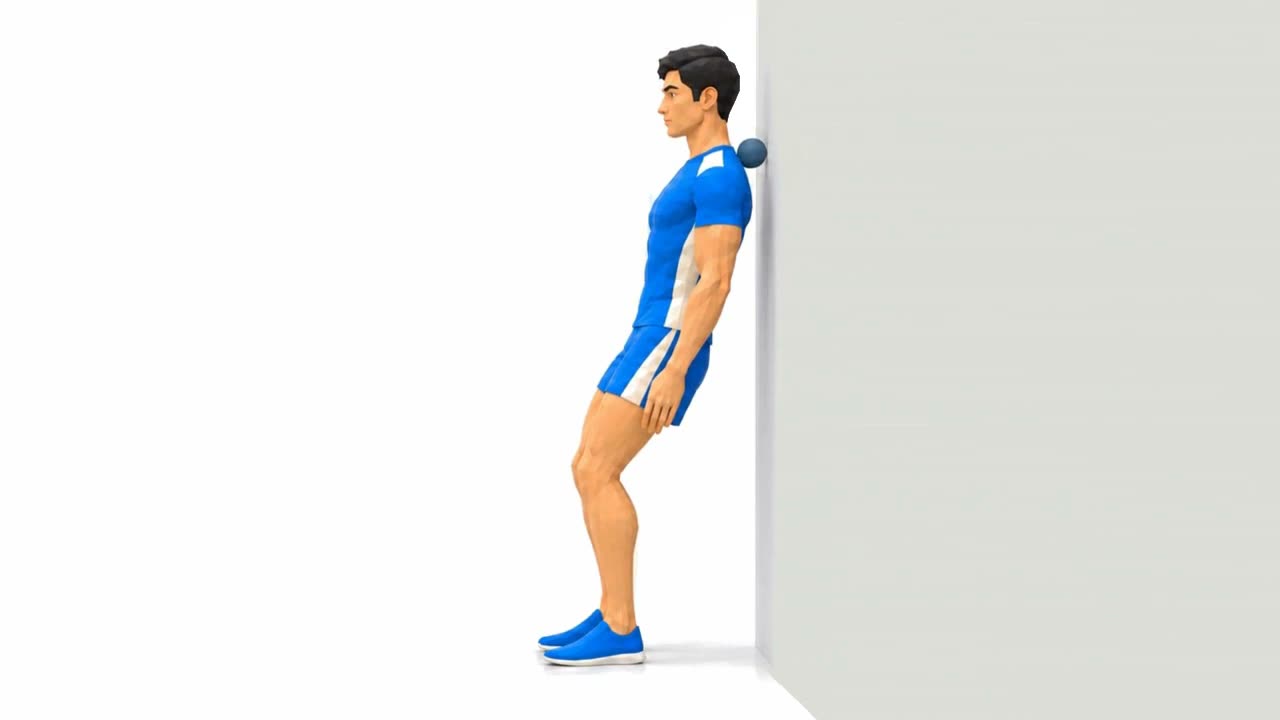
Upper trapezius ball release
A ball release means pressing a muscle against a ball. Here you lean the upper trapezius, the muscle between your neck and the point of your shoulder, into a ball against a wall. It has been tried for muscle pain in small studies. The word release in the name is only a common label. Read the cautions first.
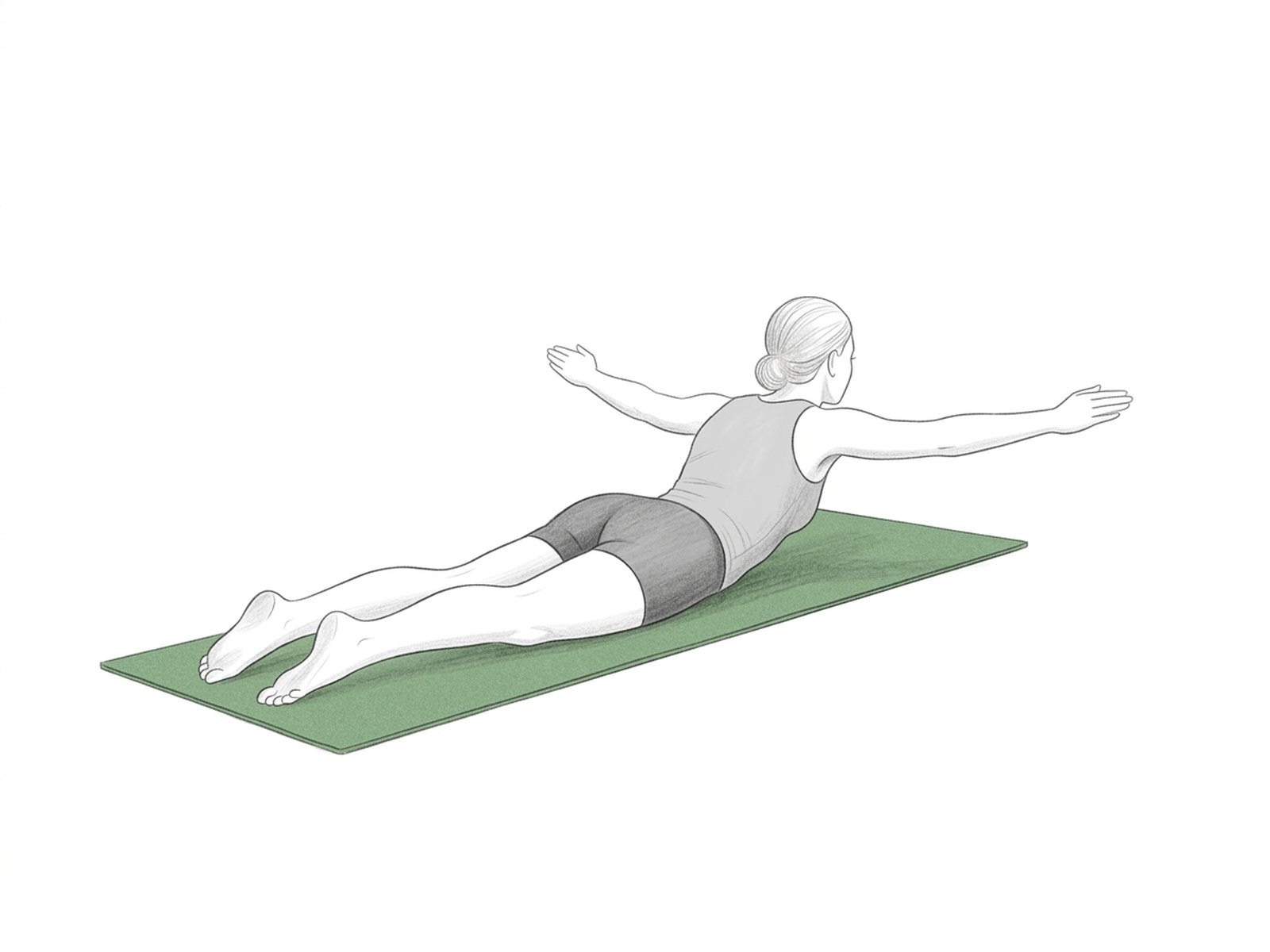
Prone T-Raise
Isolation of the middle trapezius and posterior deltoid in a prone position. Component of the Prone I/T/Y/W series — essential for re-balancing the shoulder girdle in patients with upper-crossed syndrome and scapular dyskinesia.
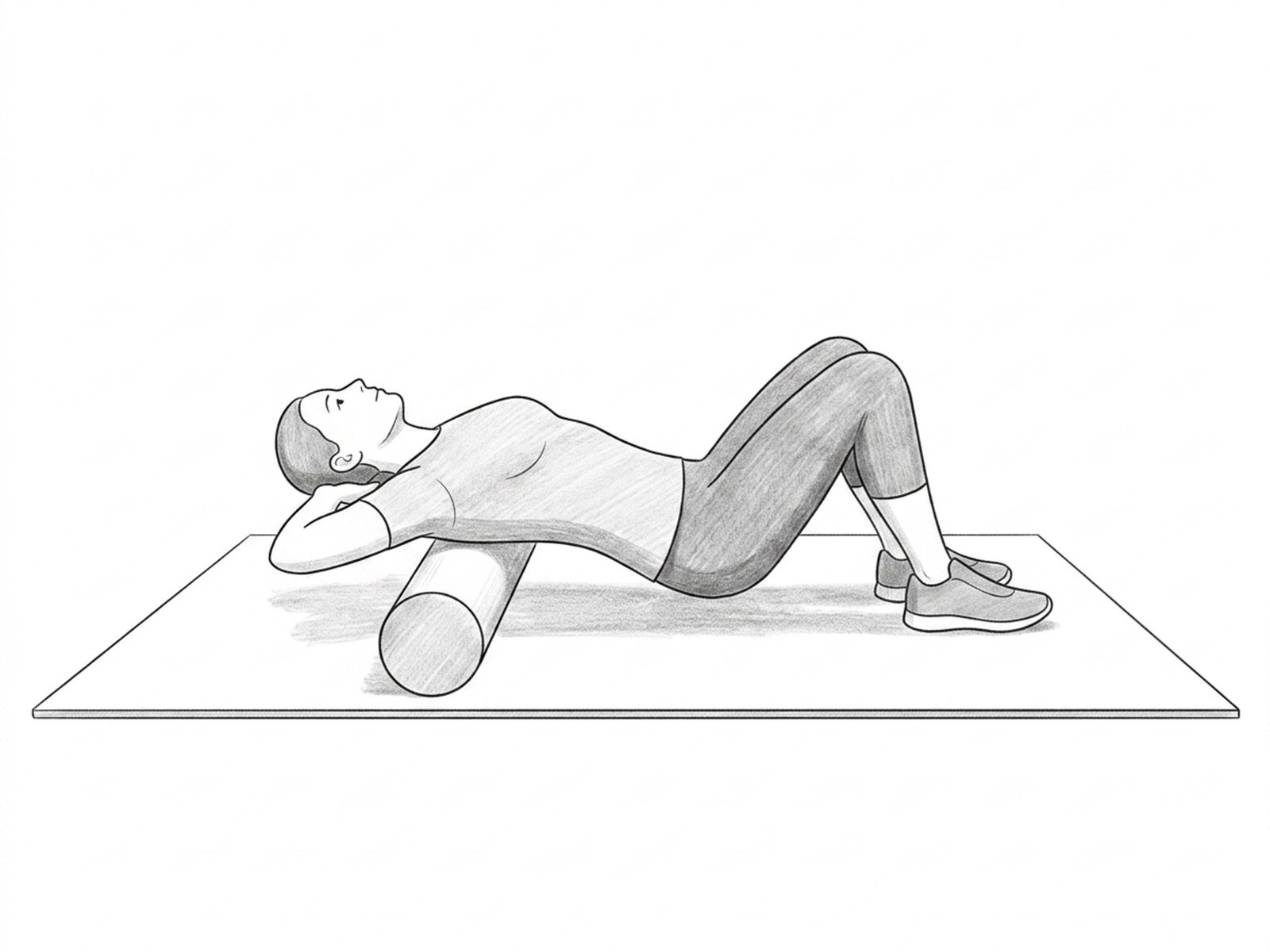
Upper-Back Myofascial Release
Self-myofascial release over the trapezius and thoracic erectors. Reduces tension of the characteristic trigger points of myofascial pain syndrome.