Therapeutic exercise
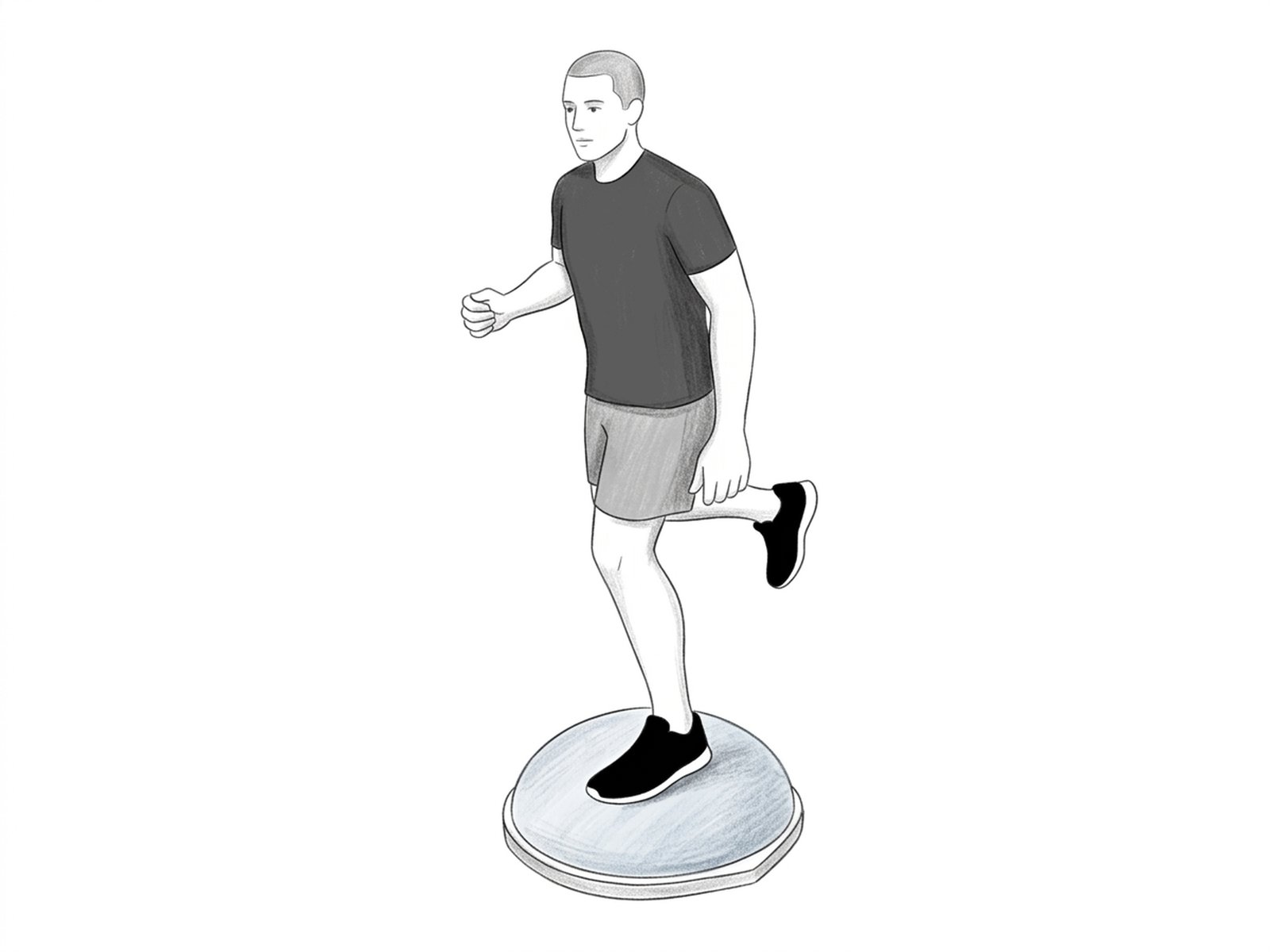
Single-Leg Balance on Unstable Surface
Advanced progression of single-leg balance using unstable surfaces (Bosu, balance disc, wobble board). Intensely challenges the proprioceptors — essential in advanced ankle-sprain rehab to prevent recurrence.
How to perform
- Starting position. Position a Bosu ball (dome side up) or balance board on the floor.
- Step 2. Step onto the surface with both feet and find initial balance.
- Step 3. Raise one foot off the support, transferring all weight to the contralateral leg.
- Step 4. Hold the balance for 30 seconds, adjusting subtly with the ankle and hip muscles.
- Return. For progression, perform with the eyes closed or add tasks (tossing a ball from side to side, picking up objects from the floor).
When not to perform
- Ankle sprain in acute phase
- Severe instability without prior medical clearance
- Recent ankle or foot fracture
- Positional vertigo
- Orthostatic hypotension
- Peripheral neuropathy with significant fall risk
Medical disclaimer. These exercises are presented for informational purposes only. Always consult your physician before starting any exercise program, especially in case of acute pain, recent injury, or underlying clinical condition.
Related Exercises
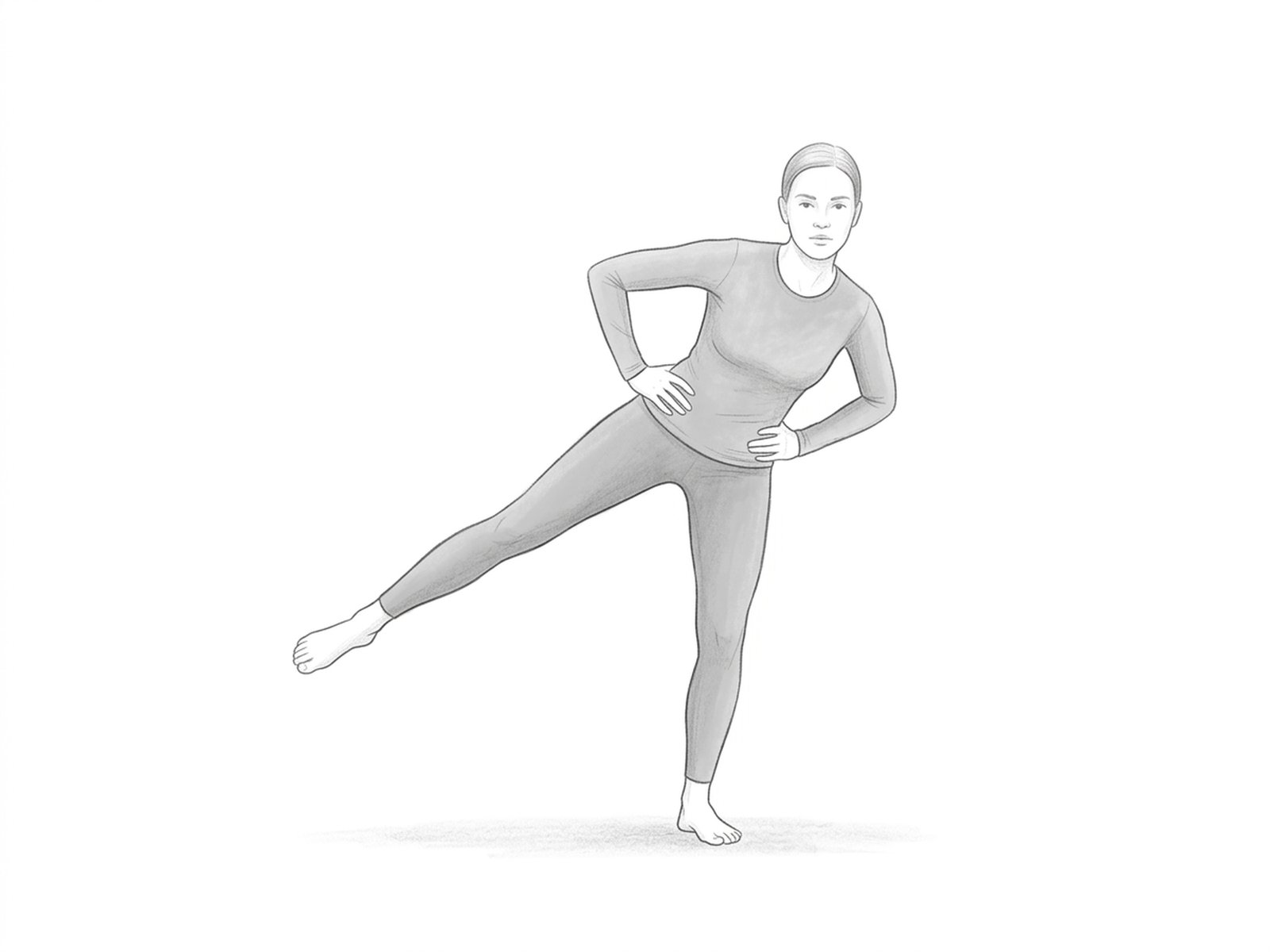
Star Excursion Balance
Functional single-leg balance training with excursion of the free foot in eight directions (star pattern). Originally developed as a test of ankle instability (Star Excursion Balance Test), it is used therapeutically to train multidirectional control — functional rehab after sprain.
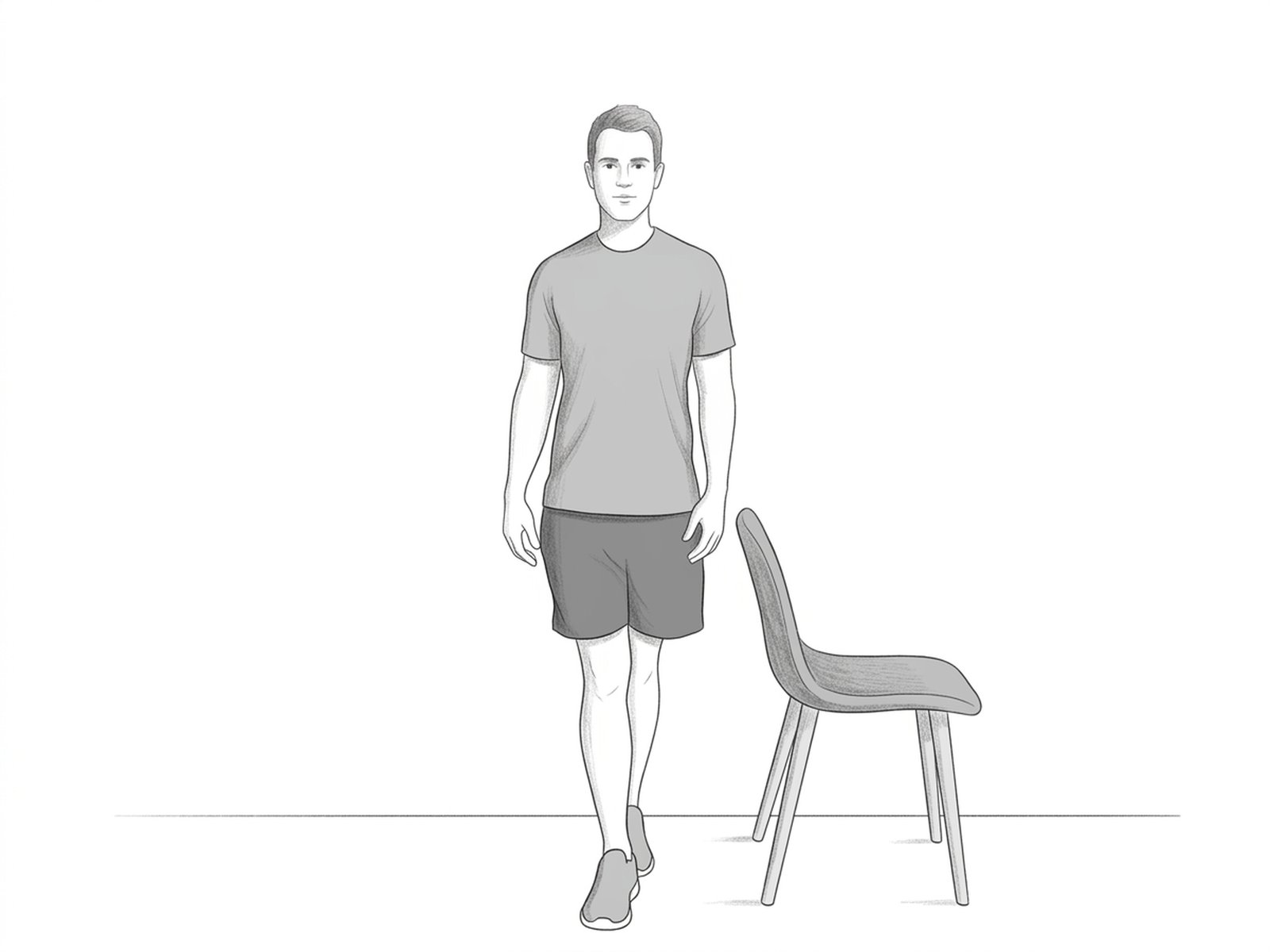
Tandem Stance and Heel-to-Toe Walking
Balance training on a narrow base, progressing from static position (tandem) to dynamic gait (heel-to-toe). Functional proprioceptive progression in ankle sprain and tibialis-posterior dysfunction — intermediate between bipedal and single-leg support.
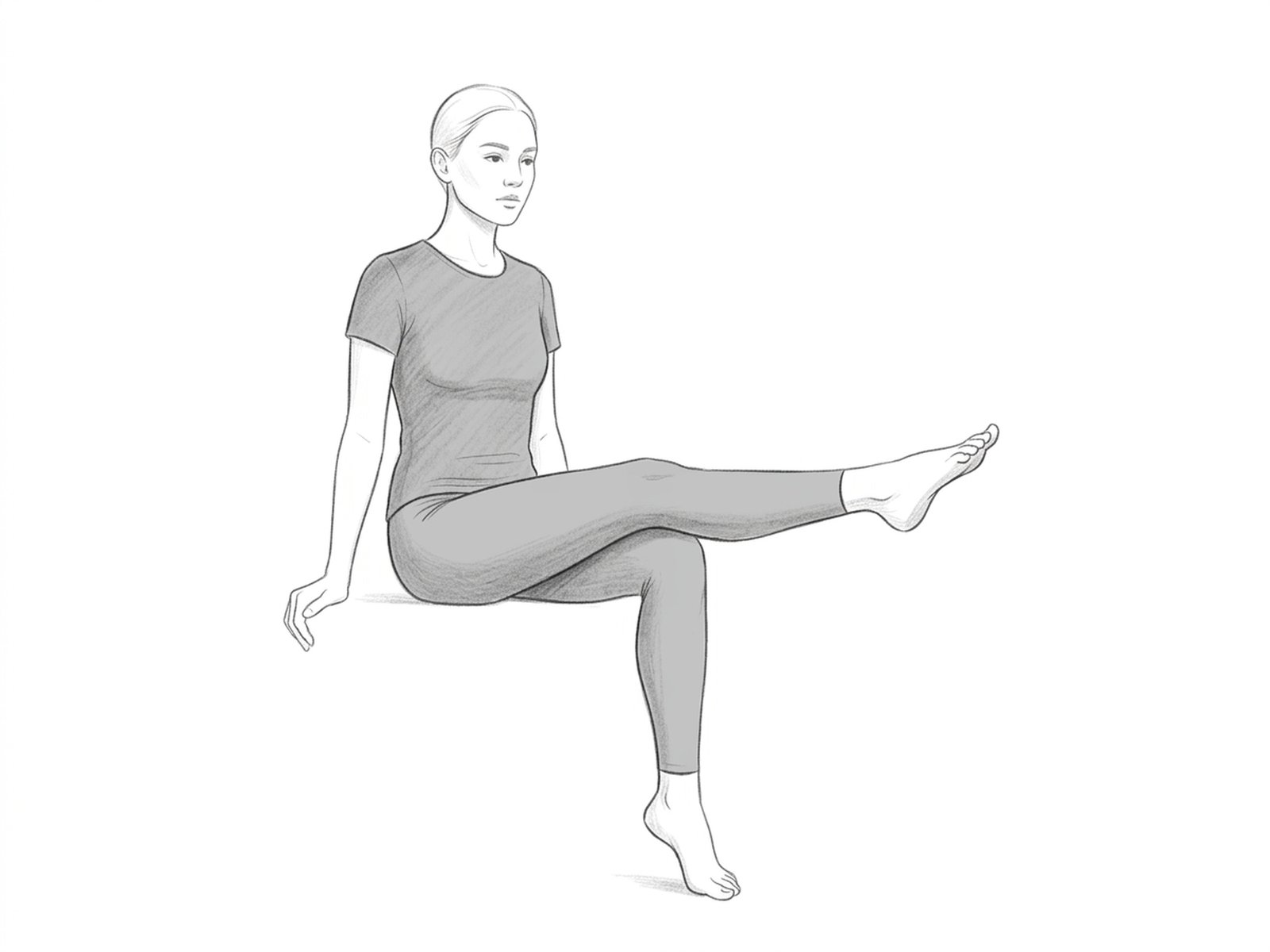
Ankle Alphabet
Multi-directional active ankle mobilization by tracing letters in the air with the foot. Restores full range of motion after a sprain in an engaging, comprehensive way — each letter requires a different combination of joint motions.