Wall push-up
A push-up done standing, with your hands on a wall. At the end you add a small forward push that slides your shoulder blades around your ribs. It works the chest and the back of the arms, and the forward push works the serratus anterior, the muscle along the side of your ribs that moves the shoulder blade.
Muscles worked
Illustration demonstrating the position of the Wall push-up exercise.
Biomechanical Execution Sequence
06 phases- Starting position
Stand facing a wall, about an arm's length away, with your feet hip-width apart.
- Phase 2
Place both flat hands on the wall at shoulder height.
- Phase 3
Bend your elbows to bring your chest slowly toward the wall, keeping your body straight.
- Phase 4
Press through your flat hands until your elbows are straight.
- Phase 5
Forward push: with your elbows straight, push a little further so your shoulder blades slide forward around your ribs.
- Return
Let your shoulder blades slide back.
Prescribed in Clinical Guides
Medical disclaimer. These exercises are presented for informational purposes only. Always consult your physician before starting any exercise program, especially in case of acute pain, recent injury, or underlying clinical condition.
Related Exercises
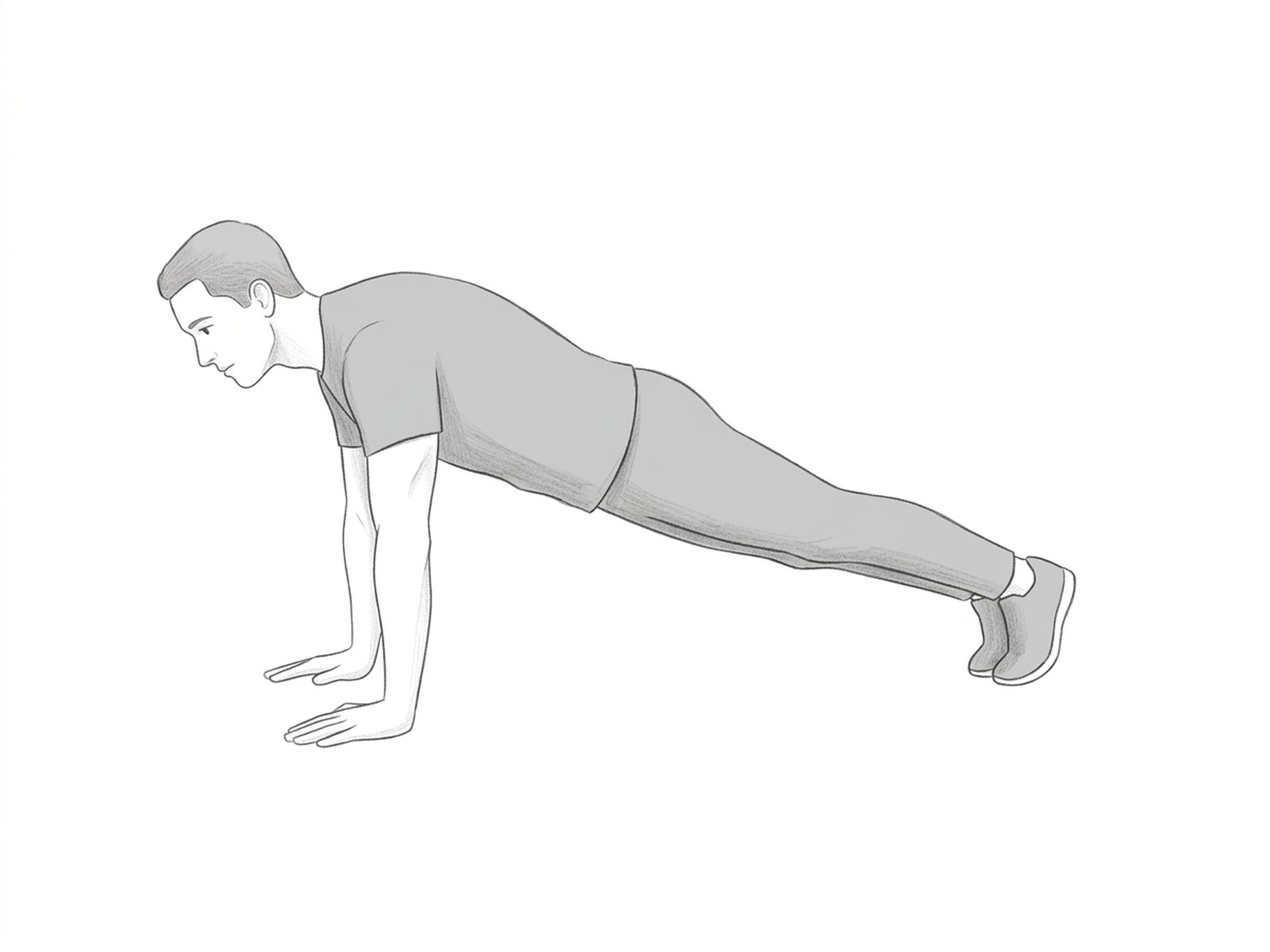
Push-Up Plus
Variant of the push-up with emphasis on maximum scapular protraction at the top of the movement. The 'plus' phase intensely recruits the serratus anterior — a key muscle in scapular stabilization and in inhibiting the levator scapulae.
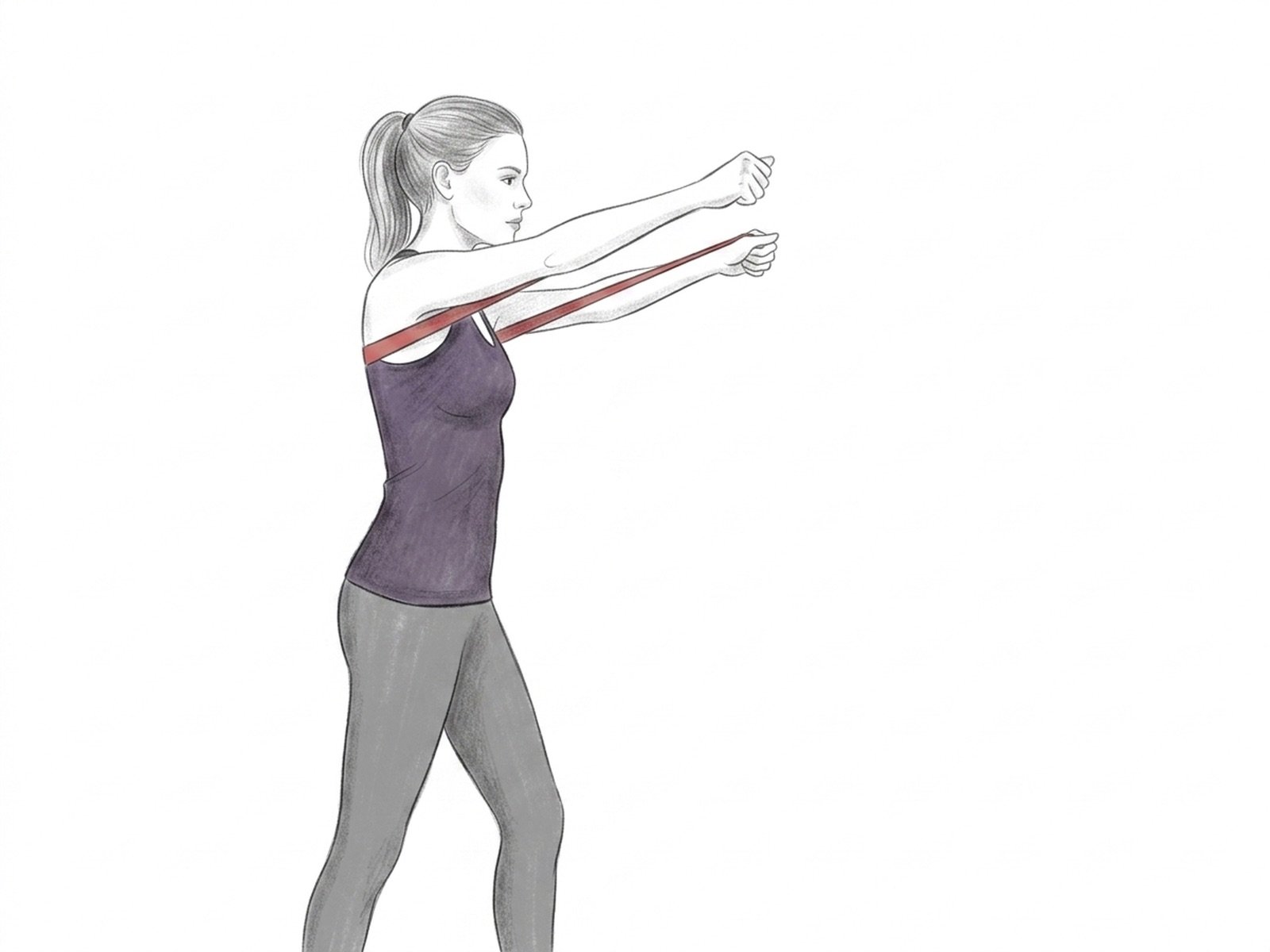
Banded Dynamic Hug
Resisted scapular protraction with a resistance band, mimicking the motion of giving a hug. Isolates the serratus anterior in a functional pushing pattern — complements the supine serratus punch in the progression of scapular-dyskinesia rehabilitation.
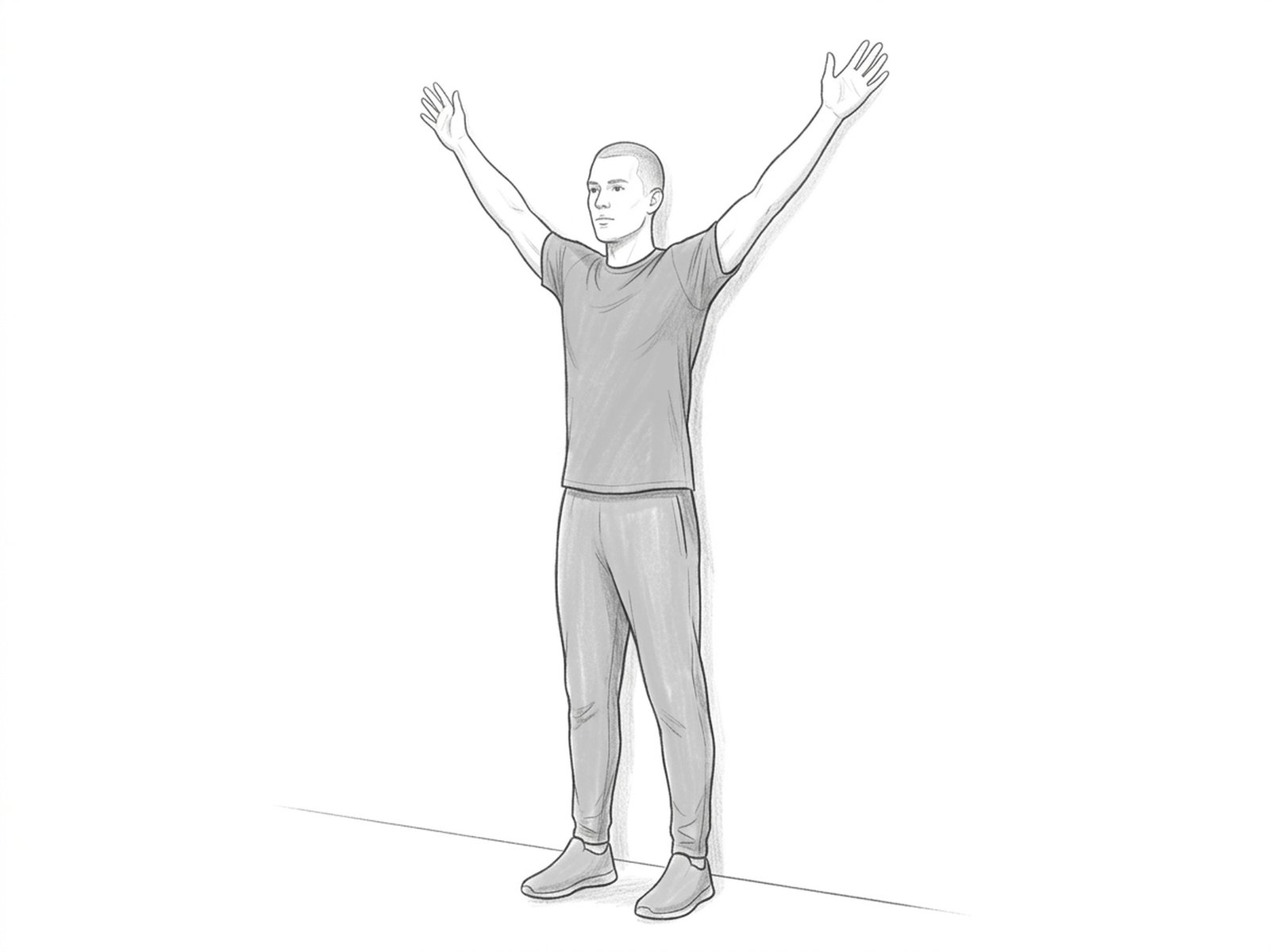
Wall Slide
Mobilization of the scapulothoracic chain in a functional elevation pattern. Restores the scapulohumeral rhythm, frequently dysfunctional in impingement syndrome.