Association between consultations with complementary/alternative medicine practitioners and menopause-related symptoms: a cross-sectional study
Peng et al. · Climacteric · 2015
Evidence Level
MODERATEOBJECTIVE
Examine the associations between consultations with different types of complementary medicine practitioners and menopause-related symptoms
WHO
10,011 Australian women aged 59-64 years across different types of menopause
DURATION
Cross-sectional analysis of data collected in 2010
POINTS
Not specified — the study focused on practitioner types, not specific points
🔬 Study Design
Oophorectomy
n=1141
Women with surgical removal of the ovaries
Hysterectomy
n=2260
Women with removal of the uterus only
Natural menopause
n=6610
Women with natural menopause
📊 Results in numbers
Massage therapists most consulted
Chiropractors/osteopaths consulted
Acupuncturists for low back pain (oophorectomy)
Chiropractors for low back pain (all groups)
Percentage highlights
📊 Outcome Comparison
Consultations with massage therapists by type of menopause
Odds ratio for consultations with acupuncturists (low back pain)
This large Australian study showed that menopausal women seek different types of complementary practitioners depending on the symptoms they experience. For example, acupuncturists are more sought after for back pain and night sweats, while massage therapists are preferred for anxiety and low back pain. It is important that you talk with your physician about any complementary therapy you are considering.
Article summary
Plain-language narrative summary
This cross-sectional study analyzed data from 10,011 Australian women aged 59-64 years to examine how different menopausal symptoms are associated with consultations with complementary and alternative medicine practitioners. Investigators categorized participants into three groups: women with oophorectomy (removal of the ovaries), hysterectomy (removal of the uterus), and natural menopause. The survey examined consultations with acupuncturists, massage therapists, naturopaths/herbalists, and chiropractors/osteopaths, correlating them with symptoms such as hot flushes, night sweats, low back pain, anxiety, and depression. Results revealed that massage therapists and chiropractors/osteopaths were the most consulted complementary practitioners, with 25-26% of women seeing massage therapists and 18-19% seeing chiropractors/osteopaths, regardless of the type of menopause.
Specific patterns emerged for different symptoms: women with hysterectomy who experienced night sweats were more likely to consult acupuncturists, but curiously less likely to consult acupuncturists for hot flushes. For low back pain, which proved to be the symptom most consistently associated with seeking complementary therapies, chiropractors/osteopaths were sought by women across all types of menopause. Acupuncturists were also significantly more sought for low back pain, especially by women with oophorectomy. Anxiety showed interesting associations: women with hysterectomy and natural menopause who had anxiety were more likely to seek massage therapists and acupuncturists.
Naturopaths/herbalists showed limited associations, being significantly sought only by women with oophorectomy who experienced urinary incontinence. The investigators adjusted their statistical models for multiple confounders, including demographic characteristics, hormone therapy use, other health conditions, and use of conventional health services. This rigorous statistical control strengthens the reliability of the findings. The clinical implications are significant: the study suggests that conventional health professionals should be aware of patterns of complementary therapy use by their menopausal patients.
The high prevalence of consultations—especially for massage and chiropractic/osteopathy—indicates that these modalities are an integral part of menopause care for many women. The differentiation between hot flushes and night sweats is particularly interesting, suggesting that these symptoms, although related, may lead to different therapeutic choices. The study also highlights the importance of low back pain as a symptom driving the search for complementary therapies, possibly reflecting the perceived or proven efficacy of modalities such as acupuncture and chiropractic for musculoskeletal pain. Limitations include the cross-sectional design, which prevents causal inferences, and reliance on self-reported data.
In addition, the study included only four types of complementary practitioners, possibly underestimating overall use of complementary medicine. The principal strength lies in the large nationally representative sample and the rigorous statistical control.
Strengths
- 1Large nationally representative sample of 10,011 women
- 2Rigorous statistical control for multiple confounders
- 3Stratification by different types of menopause (natural, surgical)
- 4Detailed analysis of specific symptoms and therapeutic modalities
Limitations
- 1Cross-sectional design prevents causal inferences
- 2Self-reported data subject to recall bias
- 3Only four types of practitioners included
- 4Restricted age range (59-64 years) may limit generalizability
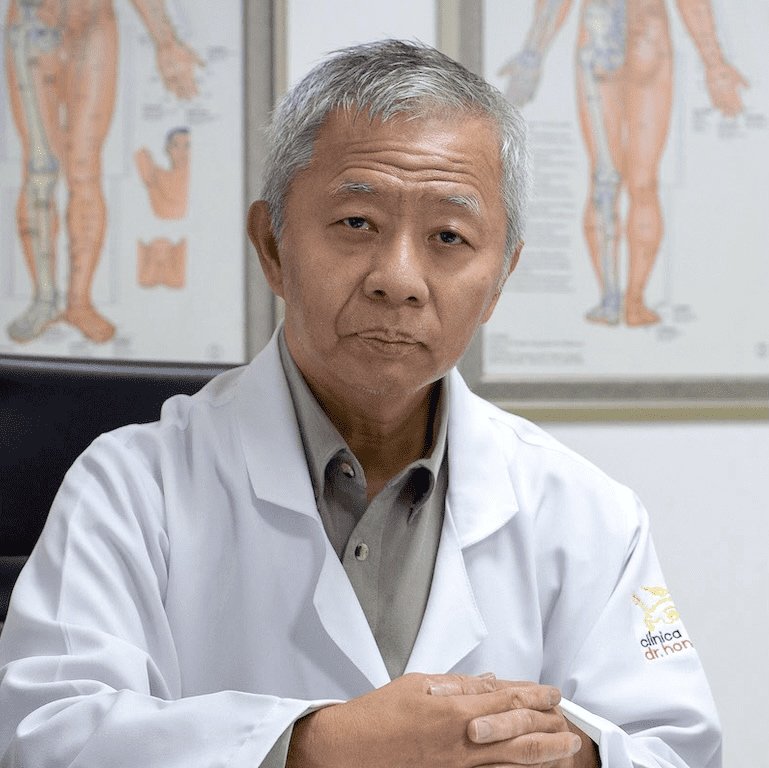
Expert Commentary
Prof. Dr. Hong Jin Pai
PhD in Sciences, University of São Paulo
▸ Clinical Relevance
Physicians caring for women in the perimenopausal and postmenopausal periods need to know that a substantial share of their patients will arrive at the office having already consulted or intending to consult complementary medicine practitioners. This Australian study of more than 10,000 women between 59 and 64 years of age documents, with statistical rigor and a nationally representative sample, that the search for acupuncture is not random: it follows identifiable symptomatic patterns. Low back pain emerges as the principal driver leading women—especially those who underwent oophorectomy—to seek out the acupuncturist, with an odds ratio of 3.11 in this subgroup. Night sweats in hysterectomized women are also associated with seeking acupuncture in a statistically robust manner. This mapping allows the physician to anticipate the patient's care-seeking behavior, open dialogue about the therapies she already uses, and rationally integrate acupuncture into the treatment plan, especially when musculoskeletal and vasomotor symptoms coexist.
▸ Notable Findings
The finding that most deserves attention is the dissociation between hot flushes and night sweats in their association with acupuncturist consultations: hysterectomized women with night sweats sought acupuncture in significantly greater proportion, while those with hot flushes presented an inverse association. This suggests that, in patients' own perception, these two vasomotor phenomena—often treated as equivalent in the literature—have distinct subjective qualities that guide different therapeutic choices. From a pathophysiologic standpoint, this makes sense: night sweats have a nocturnal autonomic component possibly more responsive to neuromodulatory strategies. Another notable datum is the OR of 3.11 for acupuncturist consultations for low back pain in the oophorectomy group, the highest in the entire analysis, indicating that surgical estrogen deprivation—with its repercussions on bone density, paravertebral musculature, and central sensitization—creates a pain profile that patients strongly associate with acupuncture as a relief resource.
▸ From My Experience
In my practice at the Pain Center of HC-FMUSP, the pattern described in the study resonates very concretely. Women in surgical menopause with chronic low back pain form a subgroup I usually treat with systemic acupuncture combined with paravertebral electroacupuncture, generally observing functional response from the third or fourth session. For these cases, I usually work with cycles of eight to ten sessions, followed by monthly maintenance. The combination with resistance exercise is indispensable—without it, the response to acupuncture tends to be shorter. Regarding night sweats, I have observed that patients who have already tried hormone therapy and chose to discontinue it respond well to acupuncture at points such as CV-4, KI-6, and HT-7, with perceptible improvement in four to six sessions. The profile that responds best is the motivated woman without severe untreated depressive syndrome who maintains reasonable sleep—severe sleep deprivation seems to attenuate the response. I do not indicate acupuncture alone when there is acute osteoporotic vertebral fracture or when low back pain has a significant uninvestigated radicular compressive component.
Full original article
Read the full scientific study
Climacteric · 2015
DOI: 10.3109/13697137.2014.989828
Access original articleScientific Review

Marcus Yu Bin Pai, MD, PhD
CRM-SP: 158074 | RQE: 65523 · 65524 · 655241
PhD in Health Sciences, University of São Paulo. Board-certified in Pain Medicine, Physical Medicine and Rehabilitation, and Medical Acupuncture. Scientific review and curation of every entry in this library.
Learn more about the author →Medical disclaimer: This content is for educational purposes only and does not replace consultation, diagnosis, or treatment by a qualified professional. Some information may be assisted by artificial intelligence and is subject to inaccuracies. Always consult a physician.
Content reviewed by the medical team at CEIMEC — Integrated Centre for Chinese Medicine Studies, a reference in Medical Acupuncture for over 30 years.
Related articles
Based on this article’s categories