Chronological Change and Importance of Acupuncture Points Used in Bell's Palsy in Classical Literature
Jang et al. · Journal of Korean Medicine · 2023
Evidence Level
MODERATEOBJECTIVE
Investigate the temporal evolution and importance of acupuncture points for Bell's palsy through classical Chinese texts
SOURCE
11 classical acupuncture books from the Qin to the Qing dynasty (282-1874 CE)
PERIOD
1,592 years of Chinese medical literature
POINTS
Dicang (ST-4), Jiache (ST-6), Shuigou (GV-26), and Chengjiang (CV-24) as the main points
🔬 Study Design
Texts analyzed
n=11
Analysis of acupuncture prescriptions in classical literature
📊 Results in numbers
Most used local points
Mean adjacent points
Mean distal points
Dicang (ST-4) most frequent
📊 Outcome Comparison
Frequency of use by location
This historical study shows how acupuncture points for facial palsy evolved over more than 1,500 years of Chinese medicine. The most important and effective points used today have a long tradition of use, especially those located in the region of the mouth and jaw.
Article summary
Plain-language narrative summary
This study represents a comprehensive historical analysis of the acupuncture points used in the treatment of peripheral facial palsy (Bell's palsy) through the examination of 11 classical Chinese acupuncture texts, covering a period of 1,592 years, from the Qin dynasty (282 CE) to the Qing dynasty (1874 CE). The main objective of the research was to identify which acupuncture points are most important in the current clinical treatment of Bell's palsy, based on the analysis of frequency of use, meridian affiliation, and anatomical location across the centuries. The methodology involved the systematic analysis of original texts, comparing them with the 'Dictionary of Acupuncture Prescriptions' as a reference, and categorizing the points into three groups: local points (on the face), adjacent points (head and neck), and distal points (limbs). The results revealed that the terminology for facial palsy evolved significantly over time.
Initially, during the Qin and Sui-Tang dynasties, the term 'Koubi' (口僻) was predominant, evolving into 'Kowai' (口喎) during the Song dynasty, and finally becoming established as 'Koyan Waisha' (口眼喎斜) from the Ming dynasty onward. This terminological evolution reflects a progressive refinement in understanding the condition, moving from a general description of deviation to a specific characterization of mouth and eye involvement. The quantitative analysis showed that the mean number of points used was 10.5 for local points, 2 for adjacent points, and 4 for distal points, demonstrating a clear preference for local treatment. The use of points increased progressively until the Ming dynasty, specifically up to the 'Bozaibang,' and then decreased, but the proportion of local points remained consistently high.
Beginning in the Ming dynasty, ST-4, ST-6, GV-26, and CV-24 emerged as the principal local points used. In the upper face region, the first point to be used was Sizhukong (TE-23) only in the Ming dynasty. For the mid face region, several points were used from the early dynasties, but their use gradually decreased after the Ming dynasty, except for ST-1 and GB-2. The lower face region showed the greatest consistency, with Dicang (ST-4), Jiache (ST-6), Shuigou (GV-26), and Chengjiang (CV-24) becoming established as the principal combination from the Ming dynasty onward.
The analysis by meridian revealed that the Stomach meridian (foot Yangming) was the most frequently used, with 61 of 112 total uses of facial points. This predominance of the Yangming meridian is consistent with the traditional Chinese medicine theory stating that 'Yangming governs the face.' Points of the Yangming meridian on the face were used in 87.5% of possible cases, demonstrating their fundamental importance in the treatment of facial palsy. For distal points, an interesting evolution was observed: initially, various meridians were used, but gradually there was a concentration on the hand Taiyin and hand Yangming meridians, culminating with the predominant use of Hegu (LI-4) in the Qing dynasty. This evolution suggests a refinement in the understanding of the principles of point selection based on meridian theory.
The frequency of individual point use showed that Dicang (ST-4) was the most used, with 18 occurrences, followed by Jiache (ST-6) with 13 occurrences and Shuigou (GV-26) with 12 occurrences. These points are all located in the lower face region, where the symptoms of facial palsy are most evident and functionally significant. From an anatomical standpoint, the most used points are located in muscles innervated by the facial nerve, particularly those involved in facial expression and oral function. Dicang (ST-4), for example, is related to the orbicularis oris, zygomaticus major, and levator anguli oris muscles, all crucial for facial symmetry and oral function.
The clinical implications of this study are significant for modern acupuncture practice. The historical analysis provides evidence of the time-tested effectiveness of specific point combinations, particularly the combination of ST-4, ST-6, GV-26, and CV-24 for facial palsy. The historical predominance of Yangming meridian points supports the modern approach of focusing on these points in treatment. The study also reveals how the understanding of facial palsy evolved from a primarily symptomatic condition to one with a more solid theoretical basis in terms of meridian theory.
The gradual decrease in the use of adjacent points over time may reflect a more refined understanding of which points are truly essential for effective treatment.
Strengths
- 1Comprehensive analysis of 1,592 years of medical literature
- 2Systematic comparison with original texts
- 3Clear categorization by anatomical location
- 4Identification of consistent evolutionary patterns
Limitations
- 1Limited to Chinese literature only
- 2Possible selection bias in choice of texts
- 3Absence of clinical efficacy data
- 4Does not include Korean or Japanese literature
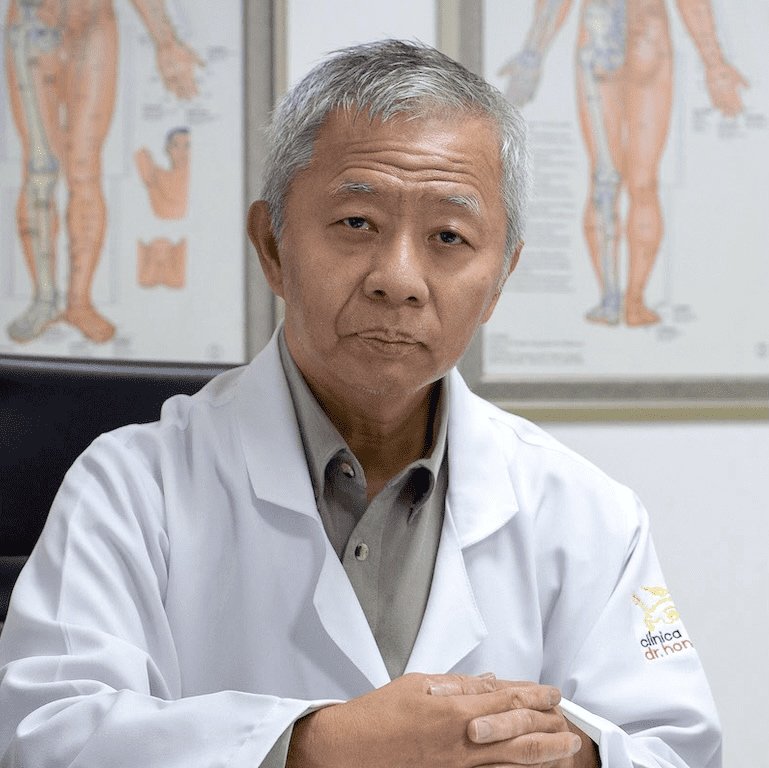
Expert Commentary
Prof. Dr. Hong Jin Pai
PhD in Sciences, University of São Paulo
▸ Clinical Relevance
Bell's palsy remains one of the peripheral neurological conditions most commonly referred to acupuncture clinics, and having clarity about which points have endured centuries of systematic use is not antiquarian exercise — it is the foundation for rational protocols. The study documents that ST-4, ST-6, GV-26, and CV-24 became established as the core combination from the Ming dynasty onward, and this historical stability converges precisely with the prescriptions that contemporary clinical literature tends to validate. The predominance of the Stomach meridian — 61 of 112 total facial uses — reinforces the logic of centering treatment on the Yangming pathway, something any acupuncture physician recognizes in daily practice. For the clinician treating acute facial palsy or its sequelae, this historical mapping offers a clear conceptual anchor: start with local points in the lower face region, where functional expressiveness is most compromised, and integrate distal points such as LI-4 with both classical and contemporary grounding.
▸ Notable Findings
The terminological evolution — from 'Koubi' to 'Koyan Waisha' — is not a mere philological detail; it conveys a progressive diagnostic refinement, from nonspecific deviation to precise recognition of the simultaneous involvement of mouth and eye, which guides both point selection and severity assessment. The fact that ST-4 (Dicang) appears in 18 of the 11 analyzed texts — more than any other point — and corresponds anatomically to the orbicularis oris, zygomaticus major, and levator anguli oris muscles places this point in a unique position: it is the location where peripheral palsy manifests with the greatest functional and aesthetic impact. Another finding worth noting is the progressive reduction of adjacent points over the centuries, suggesting that the tradition empirically pruned redundancies and concentrated efficacy on the truly essential points — a process of clinical optimization avant la lettre.
▸ From My Experience
In my practice at the Pain Center of HC-FMUSP, I usually see the first signs of response — reduction of lagophthalmos and slight return of perioral mobility — between the third and fifth session, especially when the patient arrives in the acute phase, ideally within the first two weeks. I consistently work with ST-4, ST-6, GV-26, and LI-4 as the backbone of the protocol, exactly the core that this historical survey identifies as established since the Ming dynasty. For the upper face, TE-23 and GB-14 come in when there is significant orbicularis oculi palsy. I have observed that patients with incomplete palsy respond in 8 to 12 sessions, whereas complete cases with unfavorable electroneuromyography often require 20 sessions or more, in combination with supervised facial rehabilitation exercises. I do not recommend acupuncture alone in cases with signs of central involvement or when there is suspicion of cholesteatoma — etiologic diagnosis precedes any needle. What this work confirms is that the concentration on Yangming points of the lower face is not protocol arbitrariness, but the distillation of more than fifteen centuries of systematic clinical observation.
Full original article
Read the full scientific study
Journal of Korean Medicine · 2023
DOI: http://dx.doi.org/10.13048/jkm.23033
Access original articleScientific Review

Marcus Yu Bin Pai, MD, PhD
CRM-SP: 158074 | RQE: 65523 · 65524 · 655241
PhD in Health Sciences, University of São Paulo. Board-certified in Pain Medicine, Physical Medicine and Rehabilitation, and Medical Acupuncture. Scientific review and curation of every entry in this library.
Learn more about the author →Medical disclaimer: This content is for educational purposes only and does not replace consultation, diagnosis, or treatment by a qualified professional. Some information may be assisted by artificial intelligence and is subject to inaccuracies. Always consult a physician.
Content reviewed by the medical team at CEIMEC — Integrated Centre for Chinese Medicine Studies, a reference in Medical Acupuncture for over 30 years.
Related articles
Based on this article’s categories