Anatomical Roots of Chinese Medicine and Acupuncture
Schnorrenberger, C. C. · Journal of Chinese Medicine · 2008
Evidence Level
MODERATEOBJECTIVE
Demonstrate that acupuncture has solid anatomical foundations based on ancient Chinese dissections
WHO
Classical Chinese texts and historical evidence of human dissections
DURATION
Historical analysis spanning 2,000 years (since 16 AD)
POINTS
He-Gu (LI-4) as a detailed anatomical example
🔬 Study Design
Documentary analysis
n=0
Review of classical Chinese texts
📊 Results in numbers
First recorded dissection
Organs identified in the Ling-Shu
Anatomical structures at the He-Gu point
📊 Outcome Comparison
Historical vs modern anatomical precision
This historical study reveals that Chinese acupuncture has always had a solid scientific anatomical basis. Contrary to what many think about 'mystical meridians,' acupuncture points correspond to real anatomical structures such as nerves, blood vessels, and muscles, known for more than 2,000 years.
Article summary
Plain-language narrative summary
This fundamental historical article, presented to the British Medical Acupuncture Society in 2006, offers a revolutionary perspective on the scientific foundations of Chinese acupuncture. Prof. Schnorrenberger demonstrates through extensive historical evidence that Chinese medicine has always had a solid anatomical basis, contradicting Western conceptions of mystical 'energetic meridians.'
The study reveals that the first recorded human dissection in history occurred in China in 16 AD, when Emperor Wang Mang ordered the dissection of a rebel named Wang Sun-Qing. This medical dissection, performed by the court physician Shang Fang, included measurements of internal organs and insertion of bamboo rods into blood vessels to map their course — a procedure surprisingly similar to modern anatomical studies. Notably, this occurred 1,500 years before the first dissections in the West.
The classical text Huang-Di Nei-Jing Ling-Shu, compiled during the Han Dynasties (200 BC - 200 AD), contains detailed anatomical descriptions that remain accurate today. Chapter 12, titled 'Jing-Shui' (Rivers of the Vessels), explicitly mentions anatomical dissections using the same Chinese characters used in modern anatomy: 'jie pou'. The text describes precise measurements of structures such as distance from lips to tongue, width of the mouth, length of the esophagus, capacity of the stomach, and topography of the large intestine — data that approximate remarkably to contemporary anatomical knowledge.
A crucial finding is that the 11 internal organs mentioned in the Ling-Shu (heart, lung, liver, spleen, kidney, pericardium, small and large intestines, gallbladder, stomach, bladder, and Triple Burner) use exactly the same Chinese characters as modern anatomy, confirming anatomical identity between ancient and contemporary organs. This 2,000-year terminological continuity suggests precise anatomical knowledge and not mystical concepts.
The author argues vigorously that the Western terms 'meridians' and 'channels' are mistranslations that have created unnecessary confusion. The original Chinese term 'Jing Mai' literally means 'pulsating blood vessels' and refers to neurovascular structures identified by conventional anatomy: blood vessels, central and peripheral nervous system, tendons, and muscles. This anatomical interpretation offers a plausible scientific explanation for the effects of acupuncture through known structures.
As a practical example, Schnorrenberger analyzes the He-Gu point (commonly called 'Large Intestine 4') in detail, demonstrating that needle insertion reaches specific anatomical structures: skin, subcutaneous tissue, dorsal venous network of the hand, dorsal digital nerve, dorsal metacarpal artery, interosseous muscles, adductor pollicis muscle, as well as the radial, median, and ulnar nerves. There are no mystical 'meridians' or 'energetic points' — only conventional anatomy.
The study includes impressive visual evidence, such as historical Chinese illustrations of dissections from the 10th-14th centuries, the famous Bronze Man of 1027 AD (the first anatomical model in medical history), and comparisons with Vesalius's anatomy (1543). These sources demonstrate Chinese anatomical knowledge that was earlier than and often superior to Western knowledge.
The clinical implications are significant. Understanding acupuncture as an intervention on specific anatomical structures, not on 'energy' or mystical 'meridians,' allows for safer and more scientifically grounded practice. The author proposes modern anatomical nomenclature for acupuncture points, replacing Western numerical designations with precise anatomical descriptions.
This work represents an important milestone in the demystification of acupuncture, offering solid scientific foundations based on irrefutable historical evidence. Paradoxically, by 'demystifying' acupuncture, Schnorrenberger strengthens its scientific credibility, demonstrating that this ancient therapy has always had a rational anatomical basis, with 'energetic' concepts being creations of inadequate Western translations.
Strengths
- 1Comprehensive historical analysis with primary Chinese sources
- 2Solid archaeological and documentary evidence
- 3Precise correlation between ancient and modern anatomy
- 4Clear scientific proposal for the foundations of acupuncture
Limitations
- 1Does not present modern experimental data
- 2Focus primarily historical without clinical validation
- 3Controversial position that challenges established paradigms
Expert Commentary
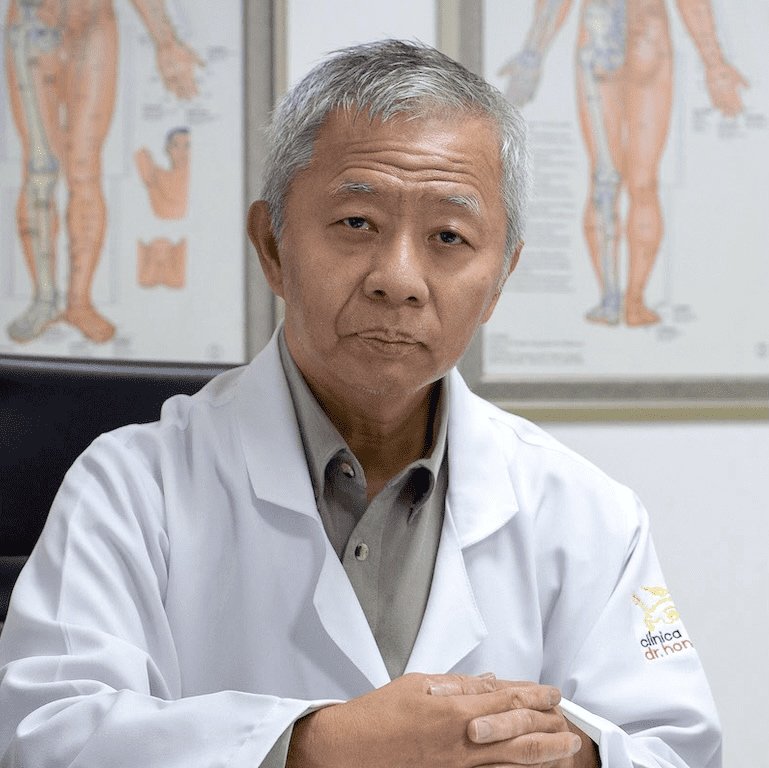
Prof. Dr. Hong Jin Pai
PhD in Sciences, University of São Paulo
▸ Clinical Relevance
The demonstration that acupuncture points correspond to neurovascular structures identifiable by conventional anatomy has direct consequences on how we teach and practice the specialty. When an acupuncture physician understands that He-Gu involves the radial, median, and ulnar nerves, the interosseous muscles, and the dorsal metacarpal vascular arch, needle insertion ceases to be an empirical maneuver guided by tradition and becomes an intentional anatomical-clinical gesture. This translates into greater technical precision, lower risk of adverse events, and a language that engages directly with neurologist, physiologist, and surgeon colleagues. Patients with neuromuscular pain syndromes, peripheral neuropathies, and conditions involving deep structures of the hand — frequent populations in pain services — are the first to benefit from an approach that locates the point with structural rather than symbolic rigor.
▸ Notable Findings
The terminological correlation is the most robust finding of the work: the 11 organs listed in the Ling-Shu employ exactly the same Chinese characters as contemporary anatomy, which dissolves the thesis that the organs of classical medicine would be abstract functional entities without morphological substrate. Equally revealing is the description of the dissection of 16 AD, which included visceral measurements and vascular catheterization with bamboo rods — a procedure methodologically akin to Renaissance morphological studies, yet predating Vesalius by fifteen centuries. The analysis of the He-Gu point, enumerating 13 structures traversed by the needle, provides an anatomical description model applicable to any point on the body, converting acupuncture into a procedure amenable to morphological standardization. The proposal to replace Western numerical nomenclature with precise anatomical descriptions represents a potential advance for the medical teaching of the specialty.
▸ From My Experience
At the Pain Center of HC-FMUSP, we have worked for decades with the conviction that the acupuncture maneuver is, above all, an anatomical gesture. When I present He-Gu to the residency, what I describe is not an abstract 'large intestine point,' but an access to the dorsal interosseous nerve plexus and the metacarpal vascular arch — and the patient's De Qi response confirms, in real time, that one is in the correct neural territory. I have observed that patients with carpal tunnel syndrome or lateral epicondylalgia, where regional anatomy is understood by the physician conducting the treatment, respond within three to five sessions with measurable functional improvement, something that in my practice takes eight to twelve sessions when the point is inserted without this structural reasoning guiding depth and angulation. Schnorrenberger's work validates what we usually teach: demystifying acupuncture does not weaken it — on the contrary, it strengthens its legitimate place within evidence-based medicine.
Indexed scientific article
This study is indexed in an international scientific database. Check your institutional access to obtain the full article.
Scientific Review

Marcus Yu Bin Pai, MD, PhD
CRM-SP: 158074 | RQE: 65523 · 65524 · 655241
PhD in Health Sciences, University of São Paulo. Board-certified in Pain Medicine, Physical Medicine and Rehabilitation, and Medical Acupuncture. Scientific review and curation of every entry in this library.
Learn more about the author →Medical disclaimer: This content is for educational purposes only and does not replace consultation, diagnosis, or treatment by a qualified professional. Some information may be assisted by artificial intelligence and is subject to inaccuracies. Always consult a physician.
Content reviewed by the medical team at CEIMEC — Integrated Centre for Chinese Medicine Studies, a reference in Medical Acupuncture for over 30 years.
Related articles
Based on this article’s categories