Ancient Chinese Medicine and Mechanistic Evidence of Acupuncture Physiology
Yang et al. · Pflügers Archiv - European Journal of Physiology · 2011
Evidence Level
MODERATEOBJECTIVE
Review of the physiologic mechanisms of acupuncture, integrating ancient Chinese texts with modern scientific evidence
SCOPE
3,000 years of traditional Chinese medicine and modern research dating from 1971
FOCUS
Mechanical mechanisms, acoustic waves, calcium signaling, and endogenous opioid release
METHODS
MRI, confocal microscopy, elastography, fMRI, and cellular studies
🔬 Study Design
📊 Results in numbers
Efficacy in chronic knee pain
Efficacy in low back pain
Acoustic wave velocity
Calcium wave propagation time
Acupuncture points historically cataloged
Percentage highlights
📊 Outcome Comparison
Efficacy in large clinical trials
This study shows how acupuncture works through mechanical waves that activate cells and release the body's natural pain relievers. The research confirms that ancient Chinese physicians had precise knowledge about how acupuncture relieves pain, validating both traditional and modern methods.
Article summary
Plain-language narrative summary
This comprehensive review unites 3,000 years of traditional Chinese medicine with the most recent scientific discoveries to explain how acupuncture actually works in the human body. The authors demonstrate that ancient Chinese medical texts, particularly the Huang Di Nei Jing 黃帝內經 from the 2nd century BCE, contained surprisingly precise knowledge about the physiologic mechanisms of acupuncture, which can now be validated through modern technologies such as magnetic resonance imaging and confocal microscopy.
Modern interest in acupuncture began in 1971 with the famous account by journalist James Reston of his postoperative treatment in China. Since then, extensive research has initially focused on neural mechanisms, exploring the role of endogenous opioids, glutamate, and adenosine in the central nervous system. Large randomized clinical trials involving more than 2,000 patients have demonstrated remarkable efficacy of acupuncture, with success rates of 92% for knee pain and 94% for low back pain, also confirming that traditional acupuncture (verum) consistently outperforms simulated (sham) acupuncture.
The revolutionary finding presented in this review is that acupuncture works primarily through mechanical mechanisms, not solely neural ones. When a needle is inserted and manipulated, it generates acoustic shear waves that propagate through tissues at velocities of 1-5 meters per second. These waves can be observed through magnetic resonance elastography, revealing that they spread more efficiently along traditional meridians than in random directions.
At the cellular level, these mechanical waves activate calcium channels in fibroblasts and endothelial cells, generating intracellular calcium waves that propagate much more slowly (minutes) but reach much larger areas of influence. This calcium-signaling process triggers the local release of beta-endorphin and other endogenous opioids, providing analgesia without the side effects of systemic medications.
The research also clarifies traditional Chinese concepts such as qi 氣 and meridians. Qi can be interpreted as the mechanical waves generated by blood circulation, while meridians represent the conduction pathways of these waves through tissues. This reinterpretation harmonizes the ancient philosophy of yin-yang 陰陽 (blood and qi as complementary circulatory systems) with modern physiology, without discarding traditional knowledge.
fMRI studies have confirmed that specific acupuncture points activate corresponding brain areas — for example, stimulation of points related to vision activates the visual cortex. This validates the specificity of acupuncture points and explains why sham acupuncture, although effective, is less potent than traditional acupuncture: it generates similar mechanical signals but with lower amplitude and specificity.
The clinical implications are significant. Acupuncture provides analgesia through activation of natural peripheral opioid systems, avoiding dependence and systemic side effects. The mechanical model explains why different techniques (Chinese, Korean, Japanese) can be effective — all generate mechanical waves, although with slightly different patterns.
This synthesis represents a milestone in the scientific understanding of acupuncture, demonstrating that millennia-old medical practices can be validated and refined through modern science, preserving both traditional wisdom and contemporary scientific rigor.
Strengths
- 1Unique integration of millennia-old traditional knowledge and modern science
- 2Comprehensive mechanistic model spanning acoustic waves to opioid release
- 3Validation of traditional concepts through advanced technologies (MRI, confocal microscopy)
- 4Compelling explanation for differences between verum and sham acupuncture
- 5Scientific basis for the absence of side effects and dependence
Limitations
- 1Narrative review without systematic quantitative meta-analysis
- 2Mechanical model still requires more extensive experimental validation
- 3Interpretation of ancient texts can be subjective
- 4Need for further studies to confirm wave-meridian correlations
- 5Some proposed mechanisms remain speculative
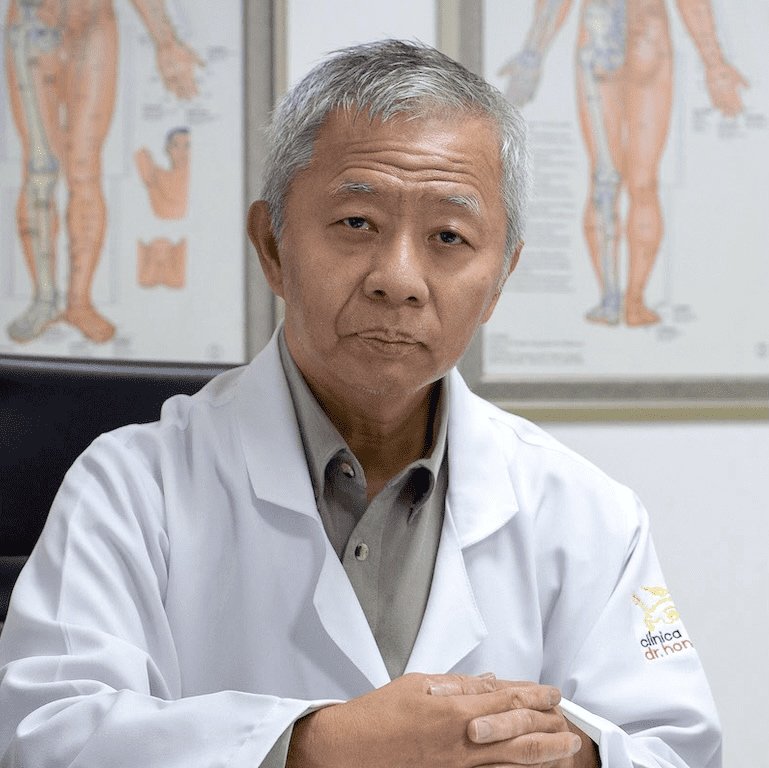
Expert Commentary
Prof. Dr. Hong Jin Pai
PhD in Sciences, University of São Paulo
▸ Clinical Relevance
This review by Yang et al. matters for practice because it offers the acupuncture physician a coherent mechanistic framework to communicate, with scientific precision, what happens in tissues from the moment the needle is inserted and manipulated. The demonstration that acoustic shear waves propagate at 1-5 m/s along pathways corresponding to the traditional meridians — observable by magnetic resonance elastography — transforms a previously abstract concept into a measurable phenomenon. For the clinician treating patients with chronic knee pain or low back pain, the efficacy rates reported in the large randomized trials cited in this review (92% and 94%, respectively) reinforce the choice of acupuncture as an active component of a therapeutic plan, not as a second-line complementary resource. The mechanistic distinction between verum and sham acupuncture also justifies, before clinical audiences and health committees, why the technique and the precise location of points are not interchangeable.
▸ Notable Findings
The most thought-provoking finding of this review is the reinterpretation of qi 氣 as a biomechanical phenomenon: the waves generated by pulsatile blood flow and amplified by needle manipulation would constitute the physical substrate of what the classical texts called the circulation of qi through the meridians. The subsequent propagation of intracellular calcium waves in fibroblasts and endothelial cells — reaching its plateau around 230 seconds — offers an elegant temporal explanation for the sensation of De Qi 得氣 and for the gradual onset of analgesia. Equally relevant is the fMRI confirmation that specific points activate topographically corresponding cortical areas, providing neurophysiologic support for the specificity of the classical mapping of the 365-400 cataloged points. Finally, the peripheral opioid mechanism — local activation of beta-endorphin without systemic recruitment — scientifically grounds the absence of dependence and dose-dependent adverse effects, a weighty argument when comparing acupuncture with conventional analgesics.
▸ From My Experience
In my practice at the Acupuncture Group of the Pain Center at HC-FMUSP (Hospital das Clínicas, Faculdade de Medicina da Universidade de São Paulo), the distinction between verum and sham is no longer merely academic: it directly guides how we teach needle manipulation to physicians in training. When the article describes that the amplitude and specificity of mechanical waves distinguish the two modalities, I find exact correspondence with what we observe clinically — patients who come from services that use superficial technique without manipulation tend to show inferior response and frequently report not having experienced De Qi 得氣. I commonly see significant analgesic response starting in the third or fourth session in chronic low back pain, with stabilization between the eighth and twelfth session, the moment at which we discuss spacing for monthly maintenance. I routinely combine acupuncture with supervised exercise and, when appropriate, with anti-inflammatories in the acute phase — the peripheral opioid analgesia described in the article complements, without duplicating, the mechanism of NSAIDs. Anxious patients with a high threshold of central sensitization respond particularly well; in severe fibromyalgia syndromes, I calibrate expectations toward more modest and progressive functional gains.
Full original article
Read the full scientific study
Pflügers Archiv - European Journal of Physiology · 2011
DOI: 10.1007/s00424-011-1017-3
Access original articleScientific Review

Marcus Yu Bin Pai, MD, PhD
CRM-SP: 158074 | RQE: 65523 · 65524 · 655241
PhD in Health Sciences, University of São Paulo. Board-certified in Pain Medicine, Physical Medicine and Rehabilitation, and Medical Acupuncture. Scientific review and curation of every entry in this library.
Learn more about the author →Medical disclaimer: This content is for educational purposes only and does not replace consultation, diagnosis, or treatment by a qualified professional. Some information may be assisted by artificial intelligence and is subject to inaccuracies. Always consult a physician.
Content reviewed by the medical team at CEIMEC — Integrated Centre for Chinese Medicine Studies, a reference in Medical Acupuncture for over 30 years.
Related articles
Based on this article’s categories