Pain, Ideology and the Integration of Chinese and Western Medicine: A History of Acupuncture Anesthesia, 1953-1990
Liang et al. · Université Paris Cité · 2023
Evidence Level
STRONGOBJECTIVE
Investigate how acupuncture anesthesia emerged and evolved in China (1953-1990), analyzing the interactions between Chinese medicine, Western medicine, and political ideology
WHO
Historical actors involved in acupuncture anesthesia in China during the Maoist and post-Cultural Revolution periods
DURATION
37-year historical analysis (1953-1990)
POINTS
Various points, including electroacupuncture and specific points such as Taiyang and Zusanli
🔬 Study Design
Cultural Revolution Period
n=2000000
Mass use of acupuncture anesthesia in surgeries
Post-1978
n=0
Decline in clinical use
📊 Results in numbers
Surgeries with acupuncture anesthesia during the Cultural Revolution
Peak popularity period
Decline after
📊 Outcome Comparison
Clinical use of the technique
This historical study shows how acupuncture anesthesia was created in China in the 1950s and became widely used during the Cultural Revolution (1966-1976), when more than 2 million surgeries were performed using this technique. The research reveals that political and cultural factors were crucial both for the success and the subsequent decline of this anesthetic approach.
Article summary
Plain-language narrative summary
This doctoral dissertation presents a comprehensive historical analysis of acupuncture anesthesia in China between 1953 and 1990, examining how political, ideological, and medical factors interacted to create, develop, and later diminish this unique medical technique. The study, conducted by Wenbo Liang at Université Paris Cité, offers a historical-epistemological perspective on one of the most significant events in 20th-century Chinese medicine. The research reveals that acupuncture anesthesia was not simply a natural extension of traditional acupuncture, but rather a conceptual innovation that emerged in the specific context of 1950s China. The author argues that the creation of this technique resulted from the co-construction of political ideology and Chinese and Western medical concepts.
During the Cultural Revolution (1966-1976), the 'integration of Chinese and Western medicine' was promoted as a supreme 'health line,' encouraging a hybrid integration of the two medical traditions. The methodological analysis is based on historical epistemology, examining primary sources including published articles, conference proceedings, hospital archives, and interviews with key figures from the period. The study shows that more than 2 million surgeries were performed under acupuncture anesthesia during the Cultural Revolution, representing an unprecedented medical phenomenon. The professionals involved established their own criteria and definitions for pain and anesthesia, challenging conventional Western standards.
The research explores how holistic concepts of pain regulation were developed, emphasizing the ability of the conscious patient to cooperate during surgery and mobilize psychological and physiological resources for the healing process. After 1978, with political changes and greater autonomy of research institutions, the clinical use of acupuncture anesthesia declined significantly. The previously identified advantages lost legitimacy in the new political and medical context. The study includes a detailed analysis of electroacupuncture, tracing its historical origins to 19th-century French practices and examining how it became integrated into Chinese medicine.
The research on neurobiochemical mechanisms, particularly the studies of Han Jisheng begun in 1965, is analyzed as a specific case of how acupuncture was introduced into laboratories and how interpretations of pain 'modulation' were developed. The implications of this historical analysis extend beyond Chinese medicine, offering reflections on the complex interactions between medical technique and politics and providing perspectives for understanding contemporary conceptions and practices of the 'modernization of Chinese medicine.' The study contributes significantly to our understanding of how medical knowledge is constructed in specific political contexts and how different medical traditions can interact in innovative ways.
Strengths
- 1Rigorous historical-epistemological methodology
- 2Broad base of primary sources and archives
- 3Detailed analysis of 37 years of historical evolution
- 4Interviews with key figures from the period
- 5Unique perspective on medicine and politics
Limitations
- 1Specific focus on the Chinese context
- 2Retrospective analysis of historical events
- 3Reliance on period sources that may carry political bias
- 4Limited access to some archives from the period
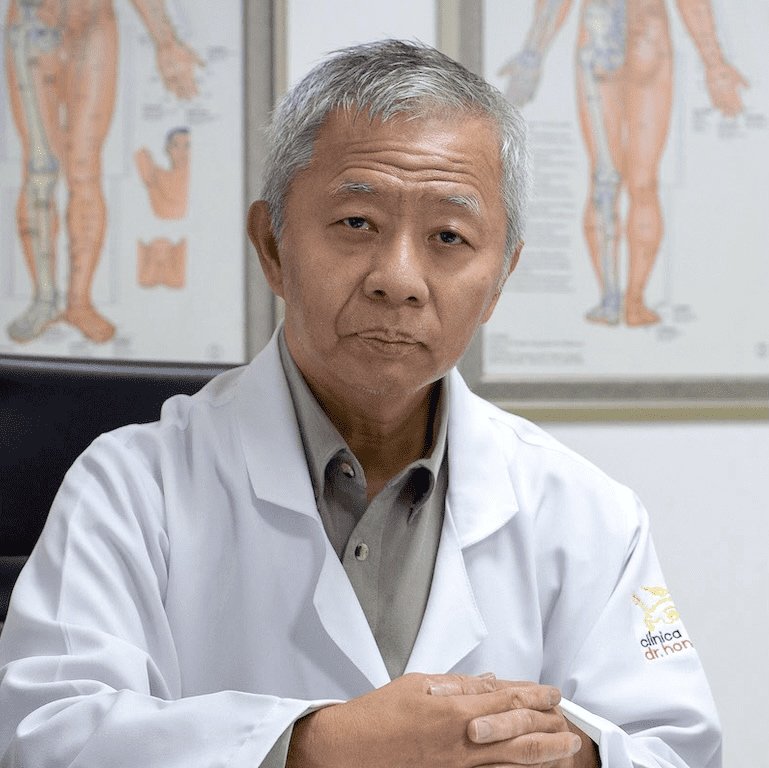
Expert Commentary
Prof. Dr. Hong Jin Pai
PhD in Sciences, University of São Paulo
▸ Clinical Relevance
Understanding the historical trajectory of acupuncture anesthesia between 1953 and 1990 is not a purely academic exercise — it is a condition for the contemporary acupuncture physician to situate practice within a coherent epistemological genealogy. Liang's work demonstrates that the categories we operate with today — pain modulation, neurobiochemical integration, electroacupuncture — did not arise in neutral laboratories but were forged at the interface between political ideology and large-scale clinical experimentation. For the physician using electroacupuncture in the management of perioperative or chronic pain, knowing that this modality has roots that trace back to 19th-century French practices and was systematized by Han Jisheng beginning in 1965 offers conceptual depth. It also clarifies why certain perioperative analgesia protocols with acupuncture still meet institutional resistance: the memory of the ideological context that produced them continues, consciously or not, to contaminate their reception in Western institutions.
▸ Notable Findings
The most robust and unsettling figure in this work is the volume: more than 2 million surgeries performed under acupuncture anesthesia during the Cultural Revolution, between 1966 and 1976. There is no parallel in the history of Western medicine — no alternative analgesic technique has been tested on this scale within such a compressed time frame. What Liang reveals, however, is that this mass experiment generated its own clinical corpus, with endogenous criteria for pain and anesthesia that deliberately challenged the prevailing Western standards. The emphasis on the active cooperation of the conscious patient and on the mobilization of psychophysiological resources during the surgical act anticipates modern conceptions of pain neuroscience and mind-body medicine. The abrupt decline after 1978 does not reflect technical failure but political reconfiguration — which, paradoxically, validates the hypothesis that the perceived efficacy was real enough to sustain two million procedures even under greater scrutiny.
▸ From My Experience
In my trajectory at the Pain Center of HC-FMUSP, I have witnessed generations of physicians come to acupuncture unknowingly carrying the prejudices laid down by the very historical cycle Liang documents. The association between acupuncture and political propaganda turned away decades of serious researchers — and this translated into underused perioperative protocols. Today, when I use electroacupuncture as an adjuvant in patients undergoing orthopedic or oncologic procedures, the rationale I offer to anesthesiology colleagues necessarily passes through this genealogy: Han Jisheng, endogenous opioid peptides, segmental modulation. Anxious patients with high central sensitization — those who benefit most from active cooperation during procedures — are precisely those in whom I have seen the greatest response to the acupuncture component of perioperative management. Works such as Liang's should be required reading in any medical training program in acupuncture, because without history there is no science — only decontextualized technique.
Full original article
Read the full scientific study
Université Paris Cité · 2023
DOI: NNT:2023UNIP7301
Access original articleScientific Review

Marcus Yu Bin Pai, MD, PhD
CRM-SP: 158074 | RQE: 65523 · 65524 · 655241
PhD in Health Sciences, University of São Paulo. Board-certified in Pain Medicine, Physical Medicine and Rehabilitation, and Medical Acupuncture. Scientific review and curation of every entry in this library.
Learn more about the author →Medical disclaimer: This content is for educational purposes only and does not replace consultation, diagnosis, or treatment by a qualified professional. Some information may be assisted by artificial intelligence and is subject to inaccuracies. Always consult a physician.
Content reviewed by the medical team at CEIMEC — Integrated Centre for Chinese Medicine Studies, a reference in Medical Acupuncture for over 30 years.
Related articles
Based on this article’s categories