What Is Glycemic Control?
Glycemic control refers to the body's capacity to maintain blood glucose levels within appropriate physiologic ranges. In healthy individuals, fasting glucose lies between 70 and 99 mg/dL, and postprandial glucose rarely exceeds 140 mg/dL.
In type 2 diabetes mellitus (T2D), insulin resistance and progressive dysfunction of pancreatic beta cells compromise this balance, resulting in chronic hyperglycemia. Glycated hemoglobin (HbA1c) is the main marker of long-term glycemic control, reflecting the average glycemia of the last 90 to 120 days.
Keeping HbA1c below 7% significantly reduces the risk of microvascular complications (retinopathy, nephropathy, neuropathy) and, to a lesser extent, macrovascular complications (myocardial infarction, stroke, peripheral arterial disease). Pursuing appropriate glycemic targets is central to diabetes management.
HbA1c < 7%
Recommended target for most adults with type 2 diabetes, associated with lower risk of microvascular complications.
Fasting Glucose
Target between 80 and 130 mg/dL for most patients. Values persistently above 130 mg/dL signal the need for therapeutic adjustment.
Postprandial Glucose
Target below 180 mg/dL two hours after meals. Postprandial peaks independently raise cardiovascular risk.
Pathophysiology of Poor Glycemic Control
Type 2 diabetes results from the interaction between insulin resistance in peripheral tissues (muscle, liver, adipose tissue) and progressive failure of beta cells of the pancreas. At the time of diagnosis, an estimated 50% of beta cell function is already compromised.
Hepatic insulin resistance increases glucose production, especially during the overnight fast. In skeletal muscle, it impairs GLUT4-mediated glucose uptake. In adipose tissue, it drives excessive lipolysis with release of free fatty acids, which further worsen insulin resistance.

Why Is Poor Glycemic Control Dangerous?
Chronic hyperglycemia activates tissue-damage mechanisms: formation of advanced glycation end products (AGEs), polyol pathway activation, oxidative stress, and endothelial dysfunction. These processes progressively damage blood vessels and peripheral nerves.
Glycemic variability (frequent swings between hypo- and hyperglycemia) also contributes to vascular damage, independently of HbA1c. Continuous glucose monitoring has revealed that postprandial peaks and nocturnal hypoglycemias are more prevalent than HbA1c alone suggests.
Three neurobiological levels of medical acupuncture: from muscle to central modulation
Mechanical stimulation of myelinated peripheral afferents engages local tissue perfusion, spinal dorsal horn gating, and descending brainstem analgesia across sessions.
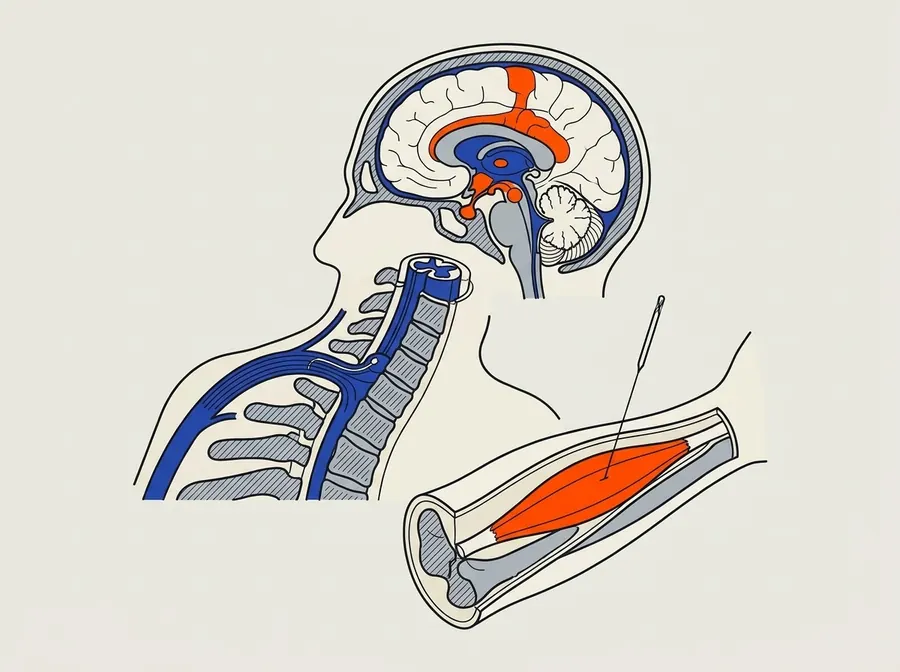
1. Local & myofascial coupling
Recruits Aβ/Aδ mechanoreceptors, releases local adenosine, and restores micro-perfusion in taut muscle bands.
2. Spinal dorsal horn gating
Segmental inhibitory interneurons dampen ascending nociceptive signaling and calm viscerosomatic reflexes.
3. Descending central control
Engages periaqueductal gray and brainstem relays, recruiting endogenous opioids and monoamines.
Symptoms of Poor Glycemic Control
Hyperglycemia can be silent for years. When symptoms appear, they generally indicate glycemia persistently above 180-200 mg/dL. Recognizing early signs allows intervention before complications set in.
Signs of Poor Glycemic Control
Polyuria (excessive urination)
Increased urinary volume caused by osmotic glycosuria when blood glucose exceeds the renal threshold (~180 mg/dL).
Polydipsia (excessive thirst)
Intense thirst that compensates for urinary fluid loss. May drive intake above 3-4 liters per day.
Unexplained weight loss
Despite preserved or increased appetite, impaired glucose utilization leads to muscle and fat catabolism.
Persistent fatigue
Direct consequence of cells failing to use glucose as an energy source, compounded by dehydration.
Blurred vision
Hyperglycemia alters lens osmolarity, causing edema and refractive change. Reversible with glycemic control.
Slow wound healing
Hyperglycemia compromises immune function, peripheral vascularization, and collagen synthesis needed for tissue repair.
Tingling in the extremities
Paresthesias in hands and feet signal early diabetic neuropathy from small-fiber nerve damage.
Recurrent infections
Vaginal candidiasis, recurrent urinary infections, and skin infections are more frequent in uncontrolled diabetes.
Diagnosis and Monitoring
Diagnosing type 2 diabetes and assessing glycemic control rely on standardized laboratory tests. Confirmation requires at least two abnormal results, or one abnormal result accompanied by classic symptoms.
Diagnostic Criteria for Diabetes Mellitus
Source: Brazilian Diabetes Society (SBD) / ADA 2024
Diagnostic Tests
- Fasting glucose ≥ 126 mg/dL (8-hour fast)
- HbA1c ≥ 6.5% (NGSP-standardized method)
- 2-h post-OGTT glucose ≥ 200 mg/dL (75 g oral glucose test)
- Random glucose ≥ 200 mg/dL with classic symptoms
Glycemic Control Targets (Adults with T2D)
- HbA1c: < 7% for most adults; individualized for older adults and frail patients
- Pré-prandial glucose: 80-130 mg/dL
- Postprandial glucose (2 h): < 180 mg/dL
- Time in range (TIR): > 70% between 70-180 mg/dL on continuous monitoring
Glycemic Monitoring Tools
| Tool | What It Measures | Advantages | Limitations |
|---|---|---|---|
| HbA1c | Average glycemia of 90-120 days | Standardized, widely available | Does not capture glycemic variability or hypoglycemias |
| Capillary glucose (fingerstick) | Glucose at the moment of measurement | Immediate, accessible, low cost | Snapshot only; requires multiple daily measurements |
| Continuous glucose monitor (CGM) | Interstitial glucose every 5 min | Trends, alerts, TIR, variability | High cost; calibration required in some models |
| Fructosamine | Average glycemia of 2-3 weeks | Useful in anemias that alter HbA1c | Less standardized; few laboratories perform it |
Complications of Poor Glycemic Control
Diabetes complications are classified as microvascular and macrovascular. The relationship between HbA1c level and risk of complications is continuous: each 1% reduction in HbA1c is associated with a decrease of about 37% in microvascular complication risk (UKPDS 35).
Microvascular and Macrovascular Complications of Diabetes
| Category | Complication | Prevalence | Main Mechanism |
|---|---|---|---|
| Microvascular | Diabetic retinopathy | 30-40% after 20 years | Damage to retinal microvasculature by AGEs and oxidative stress |
| Microvascular | Diabetic nephropathy | 20-30% of patients | Thickening of the glomerular basement membrane and mesangial sclerosis |
| Microvascular | Diabetic neuropathy | 30-50% of patients | Axonal damage from glucotoxicity, ischemia of the vasa nervorum |
| Macrovascular | Coronary artery disease | 2-4x higher risk | Accelerated atherosclerosis, endothelial dysfunction, prothrombotic state |
| Macrovascular | Ischemic stroke | 2x higher risk | Atherosclerosis of carotid and cerebral arteries |
| Macrovascular | Peripheral arterial disease | 15-20% of patients | Lower-limb ischemia, risk of amputation |
Conventional Treatment
Managing type 2 diabetes is multifactorial, combining lifestyle changes (diet and physical exercise), pharmacotherapy, and regular monitoring. Treatment is individualized based on HbA1c, comorbidities, cardiovascular risk, and patient preferences.
Metformin remains the first-line pharmacologic agent for most patients. In recent decades, new therapeutic classes such as SGLT2 inhibitors and GLP-1 agonists have transformed treatment by offering cardiovascular and renal benefits beyond glycemic control.
Main Drug Classes for Type 2 Diabetes
| Class | Mechanism | HbA1c Reduction | Additional Effects |
|---|---|---|---|
| Metformin | Reduces hepatic glucose production; improves insulin sensitivity | 1.0-1.5% | Low cost; weight-neutral; possible cardiovascular benefit |
| SGLT2 inhibitors (empagliflozin, dapagliflozin) | Block renal glucose reabsorption | 0.5-1.0% | Cardiovascular and renal protection; weight loss of 2-3 kg |
| GLP-1 agonists (semaglutide, liraglutide) | Stimulate insulin secretion; suppress glucagon; delay gastric emptying | 1.0-1.8% | Significant weight loss (4-7 kg); cardiovascular protection |
| DPP-4 inhibitors (sitagliptin, vildagliptin) | Prolong action of endogenous incretins | 0.5-0.8% | Well tolerated; weight-neutral |
| Sulfonylureas (gliclazide, glimepiride) | Stimulate insulin secretion by beta cells | 1.0-1.5% | Low cost; risk of hypoglycemia and weight gain |
| Insulin (basal, bolus, premixed) | Direct hormonal replacement | 1.5-3.5% | No efficacy ceiling; risk of hypoglycemia and weight gain |
Lifestyle Changes
A balanced diet and regular physical exercise are irreplaceable pillars of treatment. Weight loss of 5-10% significantly improves insulin sensitivity, lowers HbA1c by 0.5-1.0%, and reduces the need for medications.
Aerobic exercise (150 minutes/week of moderate intensity) and resistance exercise (2-3 weekly sessions) improve muscle glucose uptake independently of insulin, via contraction-mediated GLUT4 translocation.
Do
- Keep a balanced diet and regular physical exercise, the irreplaceable pillars of treatment
- Do aerobic exercise, 150 minutes/week of moderate intensity
- Do resistance exercise, 2-3 weekly sessions
Avoid
- Stop insulin, metformin, or other medications without guidance from the endocrinologist
- Stop treatment because glycemia is controlled
- Use natural teas and supplements instead of medication
- Managing type 2 diabetes is multifactorial, combining lifestyle changes, pharmacotherapy, and regular monitoring.
- Metformin remains the first-line pharmacologic agent for most patients.
- Treatment is individualized based on HbA1c, comorbidities, cardiovascular risk, and patient preferences.
Acupuncture as Complementary Therapy
Acupuncture has been investigated as a complementary therapy in the management of type 2 diabetes, always associated with conventional treatment (diet, exercise, medication). Growing evidence suggests that acupuncture can improve metabolic parameters through multiple physiologic mechanisms.
It is essential to emphasize that acupuncture does not replace prescribed medication, diet, or physical exercise. It acts as an adjuvant, potentiating the effects of conventional treatment and helping in the management of associated symptoms that affect quality of life.
Mechanisms of Action
In experimental models and clinical studies, the effects of acupuncture on glucose metabolism are attributed to neuroendocrine modulation. Stimulation of specific points is proposed to activate the autonomic nervous system, particularly the parasympathetic (vagus) branch, which regulates insulin secretion and hepatic glucose production — but the magnitude and clinical relevance of these mechanisms are still under investigation.
Studies in experimental models show that electroacupuncture can improve insulin sensitivity in peripheral tissues through activation of the AMPK pathway (AMP-activated protein kinase) in skeletal muscle, increasing translocation of the GLUT4 transporter to the cell membrane.
Other mechanisms under investigation include: reduced systemic inflammatory markers (TNF-alpha, IL-6), modulation of the hypothalamic-pituitary-adrenal axis (lowering chronic cortisol that worsens insulin resistance), improved beta-cell function, and gut microbiota regulation.
Autonomic Regulation
Studies suggest that vagal stimulation may improve parasympathetic tone, with possible impact on insulin secretion and hepatic glucose production — a mechanism still under investigation.
Insulin Sensitivity
In experimental models, AMPK pathway activation and increased GLUT4 expression in skeletal muscle improve peripheral glucose uptake.
Reduction of Inflammation
Reduces pro-inflammatory cytokines (TNF-alpha, IL6) that drive insulin resistance in adipose and muscle tissue.
Scientific Evidence
Some trials and systematic reviews suggest that acupuncture, as an adjuvant to conventional treatment, may be associated with modest reductions in HbA1c and fasting glucose in patients with T2D. The Cochrane reviews (Chen 2019) and high-quality independent meta-analyses still consider the evidence insufficient for a firm conclusion; the magnitude of clinical effect and reproducibility require confirmation in robust trials.
Another updated meta-analysis (Li et al., 2026) suggested that adjuvant acupuncture may improve glucose metabolism parameters, with more consistent effects on fasting glucose and insulin resistance (HOMA-IR index). Some studies suggest a larger effect with low-frequency electroacupuncture (2-4 Hz), although comparative evidence across protocols is still insufficient.
Preliminary microcirculation studies suggest that acupuncture may improve microvascular perfusion in patients with diabetic complications, such as diabetic foot syndrome, but there is no evidence yet that it prevents peripheral complications.
Cochrane
The evidence is still considered insufficient for a firm conclusion; the magnitude of clinical effect and reproducibility require confirmation in robust trials.
Li et al.
Adjuvant acupuncture improved glucose metabolism parameters, with more consistent effects on fasting glucose and insulin resistance (HOMA-IR index).
Safety and Integration with Standard Treatment
Medical acupuncture is considered safe as a complementary therapy in diabetes. Adverse effects are minimal and generally limited to local hematomas at the insertion sites. There are no known interactions with antidiabetic medications (metformin, insulin, SGLT2 inhibitors, or GLP-1 agonists).
The medical acupuncturist should closely monitor the patient's glycemia, since improved insulin sensitivity may, in some cases, require medication dose adjustment in coordination with the endocrinologist, especially in patients on sulfonylureas or insulin (risk of hypoglycemia).
Prognosis
The prognosis of type 2 diabetes depends directly on the quality of glycemic control over time. The UKPDS study showed that early intensive control confers lasting benefits — the só-called "legacy effect" — even after decades of follow-up.
With appropriate, multifactorial treatment (glycemic, blood pressure, lipid, and smoking cessation control), patients with T2D can have life expectancy close to that of the general population. The key is early intervention and sustained adherence to treatment.
Course of Type 2 Diabetes Management
Diagnosis and Lifestyle
Diagnostic confirmation, patient education, start of diet and exercise. Metformin as first-line pharmacotherapy. Establish individualized HbA1c targets.
Therapeutic Optimization
Assess response to metformin (HbA1c at 3 months). Add a second agent if the target is not reached. Consider SGLT2i or GLP-1RA in patients with cardiovascular risk. Initiate acupuncture as adjuvant.
Intensification and Screening
Screen for complications (fundus examination, microalbuminuria, foot evaluation). Adjust therapy based on response. Maintain acupuncture sessions if benefit is documented.
Long-Term Follow-Up
Continuous monitoring of HbA1c (quarterly to semi-annually), renal function, and lipid profile. Reevaluate targets in older or comorbid patients. Maintain lifestyle and pharmacologic treatment.
Myths and Facts
Myth vs. Fact
Acupuncture can replace insulin or metformin in diabetes.
Acupuncture is exclusively complementary. It should never replace prescribed medications, diet, or exercise. Its efficacy is as an adjuvant to conventional treatment.
Type 2 diabetes always needs insulin from the start.
Most patients with T2D start treatment with lifestyle changes and metformin. Insulin is reserved for advanced beta-cell failure or when other medications fail to reach the targets.
If glycemia is controlled, I can stop treatment.
Type 2 diabetes is a chronic and progressive disease. Discontinuing treatment leads to the return of hyperglycemia in most cases. Maintaining treatment prevents long-term complications.
Natural teas and supplements control diabetes without medication.
No tea or supplement has sufficient evidence to replace antidiabetic medications. Some may interfere with medication. Always inform the physician about any supplement used.
When to Seek Medical Help
Frequently Asked Questions about Glycemic Control and Acupuncture
Glycemic control is the ability to keep blood glucose levels within appropriate ranges. In type 2 diabetes, the main marker is glycated hemoglobin (HbA1c), which reflects the average glycemia of the past 3 months. Keeping HbA1c below 7% reduces the risk of microvascular complications (retinopathy, nephropathy, neuropathy) by about 37% for each 1% reduction. Chronic poor control leads to progressive vascular and nerve damage.
No. Acupuncture is strictly a complementary therapy and should never replace insulin, metformin, or other medications prescribed by the endocrinologist. It works as an adjuvant, potentiating the effect of conventional treatment. Some studies suggest modest reductions in HbA1c when combined with medication, but the evidence is still considered insufficient for a firm conclusion. Stopping medications without medical guidance can lead to serious complications.
In experimental models and early studies, acupuncture appears to act through multiple mechanisms, still under investigation: improved insulin sensitivity via AMPK pathway activation and increased GLUT4 translocation in muscle; autonomic nervous system modulation via vagal stimulation, optimizing insulin secretion; reduction of systemic inflammatory markers (TNF-alpha, IL-6) that worsen insulin resistance; and modulation of the hypothalamic-pituitary-adrenal axis, lowering chronic cortisol.
Protocols most used in clinical studies use 2-3 sessions per week for the first 4 weeks, followed by 1-2 sessions per week for an additional 8 to 20 weeks. Response is assessed by HbA1c every 3 months. The medical acupuncturist adjusts the frequency based on individual response. Patients with long-standing diabetes or multiple comorbidities may require longer protocols.
HbA1c reflects the average glycemia of the past 90-120 days and is the main long-term control indicator (target: < 7%). Fasting glucose measures the glucose level after 8 hours without eating (target: 80-130 mg/dL), mainly reflecting nocturnal hepatic glucose production. Postprandial glucose is measured 2 hours after a meal (target: < 180 mg/dL) and assesses the insulin response to a carbohydrate load. Each measurement captures different aspects of glucose metabolism.
Yes, medical acupuncture is safe for patients on insulin. There are no known interactions between acupuncture and antidiabetic medications. Adverse effects are minimal — generally limited to small hematomas at the insertion sites. The medical acupuncturist should monitor glycemia closely, since improved insulin sensitivity may eventually require dose adjustment, in coordination with the endocrinologist, to avoid hypoglycemia.
Complications are divided into microvascular and macrovascular. Microvascular include retinopathy (30-40% of patients after 20 years, possibly leading to blindness), nephropathy (20-30%, possibly progressing to dialysis), and neuropathy (30-50%, with pain, tingling, and risk of amputation). Macrovascular include coronary disease (2-4 times higher risk of myocardial infarction), stroke, and peripheral arterial disease. Strict control of HbA1c, blood pressure, and cholesterol significantly reduces these risks.
Growing evidence suggests that acupuncture can help manage diabetic neuropathy symptoms, especially neuropathic pain and tingling. Proposed mechanisms include improved microcirculation in peripheral nerves, modulation of nociceptive transmission, and reduced perineural inflammation. Studies on microcirculation in diabetic foot syndrome also suggest benefits, still preliminary. Treating neuropathy with acupuncture is always complementary to optimizing glycemic control.
The two most impactful interventions are a balanced diet and regular exercise. A 5-10% reduction in body weight significantly improves insulin sensitivity and may lower HbA1c by 0.5-1.0%. Aerobic exercise (150 minutes/week) and resistance exercise (2-3 sessions/week) improve muscle glucose uptake. The diet should prioritize fiber, protein, and healthy fats, limiting refined carbohydrates. Adequate sleep and stress management also directly influence glycemia.
Acupuncture may be considered when: the patient does not reach HbA1c targets despite optimized conventional treatment; when associated symptoms affect quality of life (neuropathy, chronic pain, insomnia, stress); or when an integrative complementary approach is sought. The medical acupuncturist evaluates the individual indication and coordinates with the endocrinologist to ensure safety and efficacy. The ideal moment is as part of a comprehensive therapeutic plan, not as a last resort.
Related Reading
Deepen your knowledge with related articles
- Acupuncture for Type 2 Diabetes: Systematic Review and Meta-Analysis (Li et al., 2026)Read article
- Library: Acupuncture for Glucose Metabolism (updated meta-analyses)Read article
- Acupuncture and Microcirculation in Diabetic Foot Syndrome (2024)Read article
- Acupuncture for Diabetic NeuropathyRead article
- Scientific Studies LibraryRead article