CV-12 Zhongwan (中脘) — Middle Cavity
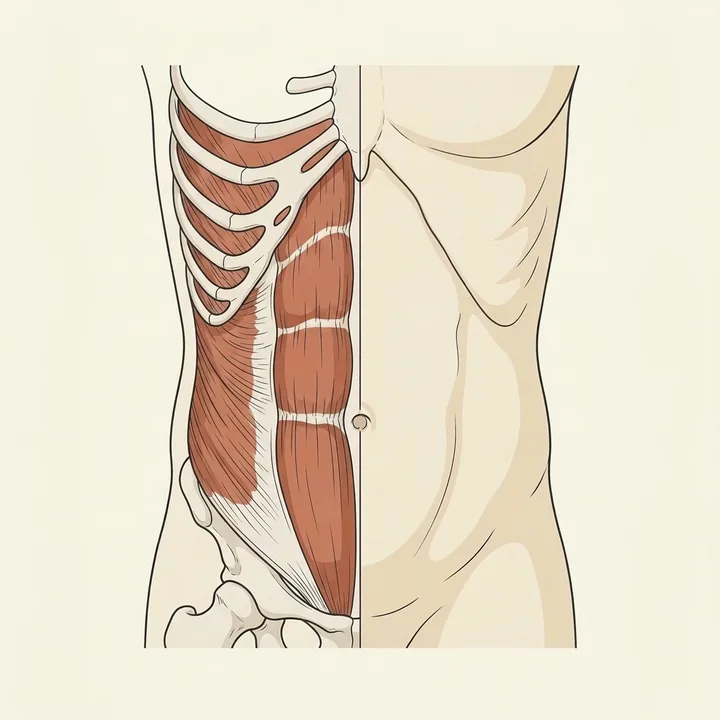
In the upper abdomen, on the anterior midline, 4 cun superior to the umbilicus (at the midpoint between the umbilicus and the costosternal angle).
In supine decubitus, locate the point 1 cun above Jian Li (CV-11), or 4 cun above the center of the umbilicus.
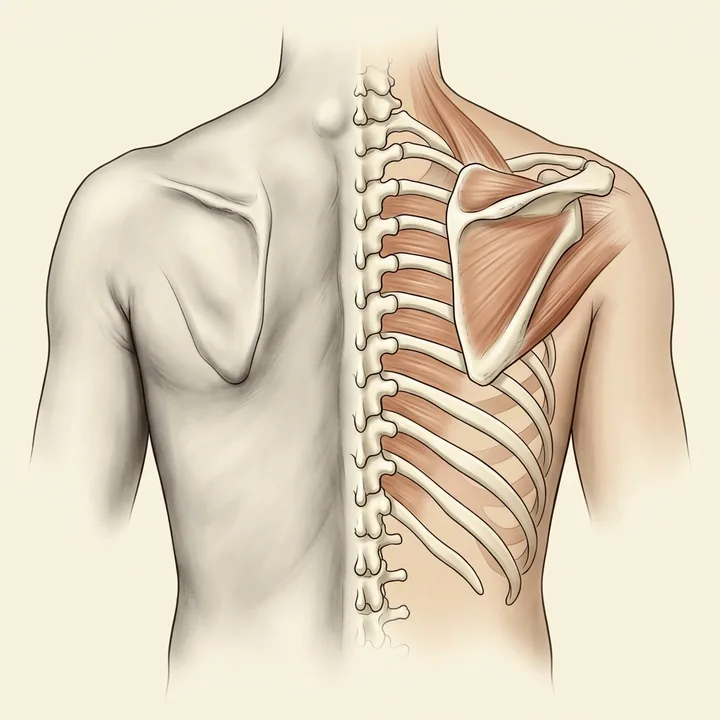
Linea alba. Innervated by the seventh intercostal nerve.
Perpendicular insertion, 1.0–2.0 cun.
Medical application & myofascial correlation
Clinical synthesis
Front-Mu point of the Wei (Stomach), effective in treating diseases of the Pi (Spleen) and the Wei (Stomach). It may be used for diseases of the Wei (Stomach) such as pain, vomiting, indigestion, diarrhea, and also for diseases caused by hypofunction of the Wei (Stomach) and Pi (Spleen). The Pi and the Wei correspond to the Earth element, according to the theory of the Five Elements. If the Pi and the Wei fail to perform their normal functions, the Earth (Spleen) generates Metal (Lung) deficiently, and may suggest lung diseases such as asthma, excess mucus, and hemoptysis. Palpitations, insomnia, dissociative disorder, bipolar disorder, and epilepsy are caused by deficiency in the transformation of Qi and Xue (blood), causing deficiency in nourishing the Xin (Heart) or determining the formation of mucus due to deficiency of the Pi (Spleen), consequently causing internal disturbance in the Zang Fu. The retention of dampness in the Middle Jiao manifests as urticaria and jaundice. The fire of the stomach causes a fetid odor in the nose. This point may be selected for diseases caused by dysfunction of the Wei (Stomach) or as a result of disharmony between the Pi (Spleen) and the Wei (Stomach).
Clinical practice indications
- 01Peptic ulcer
- 02Acute and chronic gastritis
- 03Gastroesophageal reflux disease
- 04Gastroenteritis
- 05Hiatal hernia
- 06Globus hystericus
Presenting symptoms & complaints
Classical tradition, channel actions & source
Classical therapeutic actions
- Harmonizes the Stomach
- Descends the rebellious Qi
- Tonifies the Spleen
- Resolves Dampness and Phlegm. (Principal point for all digestive disorders)
Traditional indications (TCM)
Functional classification
Character etymology
Zhong (中), middle; Wan (脘), cavity. "Cavity" means the inner part of the stomach. The point is located in the area corresponding to the center of the stomach.
Three-level neuromodulation recruited from CV 12
Physical teaching maquette of the peripheral, segmental spinal, and descending supraspinal pathways engaged by medical needling along the Conception Vessel channel.
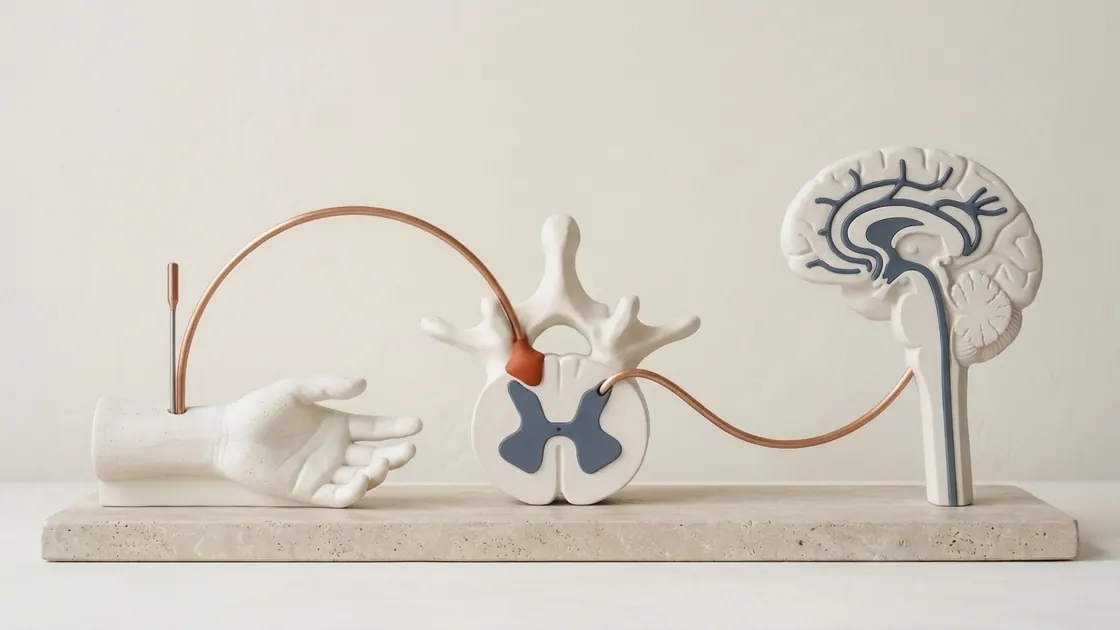
Peripheral afferent input
Targeted needling at CV 12 (Conception Vessel) activates myelinated Aβ and Aδ afferent fibers in fascia and muscle, initiating a structured drug-free sensory signal.
Segmental dorsal horn gating
Within the matching spinal cord segment, inhibitory interneurons attenuate ascending nociceptive traffic and balance segmental viscerosomatic autonomic reflexes.
Supraspinal descending control
Brainstem and cortical relays (periaqueductal gray and rostral ventromedial medulla) recruit endogenous opioids, serotonin, and norepinephrine to quiet pain amplification.
Clinical relations & channel protocols
Functional pairs & channel couplings
Immediate neighbors on the meridian
CV 12 in research
How many Library studies cite this point, since when, and with which designs and verdicts.
- Studies
- 33Library studies cite CV 12
- By year
- 20022026
- Verdict
- Strong8
- Moderate21
- Limited4
- Study designs
- Meta-analysis8
- Systematic Review3
- RCT10
- Case Series1
- Narrative Review6
- Observational1
- Other designs4
- Classical source
- Jia Yi Jing
- Depth
- 1–2 cunPerpendicular
Each study counts once, under the most specific design it states. The verdict is the Library’s word for the strength of each study’s evidence.
See the numbers: CV 12 in research
| Year | Studies |
|---|---|
| 2002 | 1 |
| 2004 | 1 |
| 2008 | 1 |
| 2010 | 1 |
| 2011 | 1 |
| 2012 | 2 |
| 2014 | 2 |
| 2015 | 1 |
| 2017 | 1 |
| 2019 | 1 |
| 2020 | 2 |
| 2021 | 5 |
| 2022 | 1 |
| 2023 | 6 |
| 2024 | 2 |
| 2025 | 1 |
| 2026 | 4 |
Often appears with
Points the Library studies cite together with CV 12. It shows research practice, not a prescription.
- ST 3632 studies in common
- PC 621 studies in common
- ST 2510 studies in common
- SP 610 studies in common
- LI 49 studies in common
- LR 38 studies in common
- KI 36 studies in common
- CV 46 studies in common
Each filled mark stands for 5 studies; an open mark, for 1 to 4.
Related clinical reading
6Understand functional dyspepsia — chronic stomach discomfort without identifiable organic cause, its mechanisms, diagnosis, and evidence-based treatments.
Understand chronic gastritis — the persistent inflammation of the gastric mucosa, its causes (H. pylori, autoimmune, chemical), histologic diagnosis, and evidence-based treatments.
Understand chronic insomnia — the most prevalent sleep disorder, its neurobiologic mechanisms, diagnosis, and evidence-based treatments.
Understand chemotherapy-induced nausea and vomiting (CINV) — one of the most feared side effects of cancer treatment, its mechanisms, classification, and modern prevention strategies.
Understand postoperative nausea and vomiting (PONV) — a frequent anesthetic complication, its risk factors, mechanisms, and evidence-based prevention and treatment strategies.
Understand gastroesophageal reflux disease (GERD) — a condition in which acidic stomach contents return to the esophagus, its mechanisms, diagnosis, and evidence-based treatments.