Therapeutic exercise
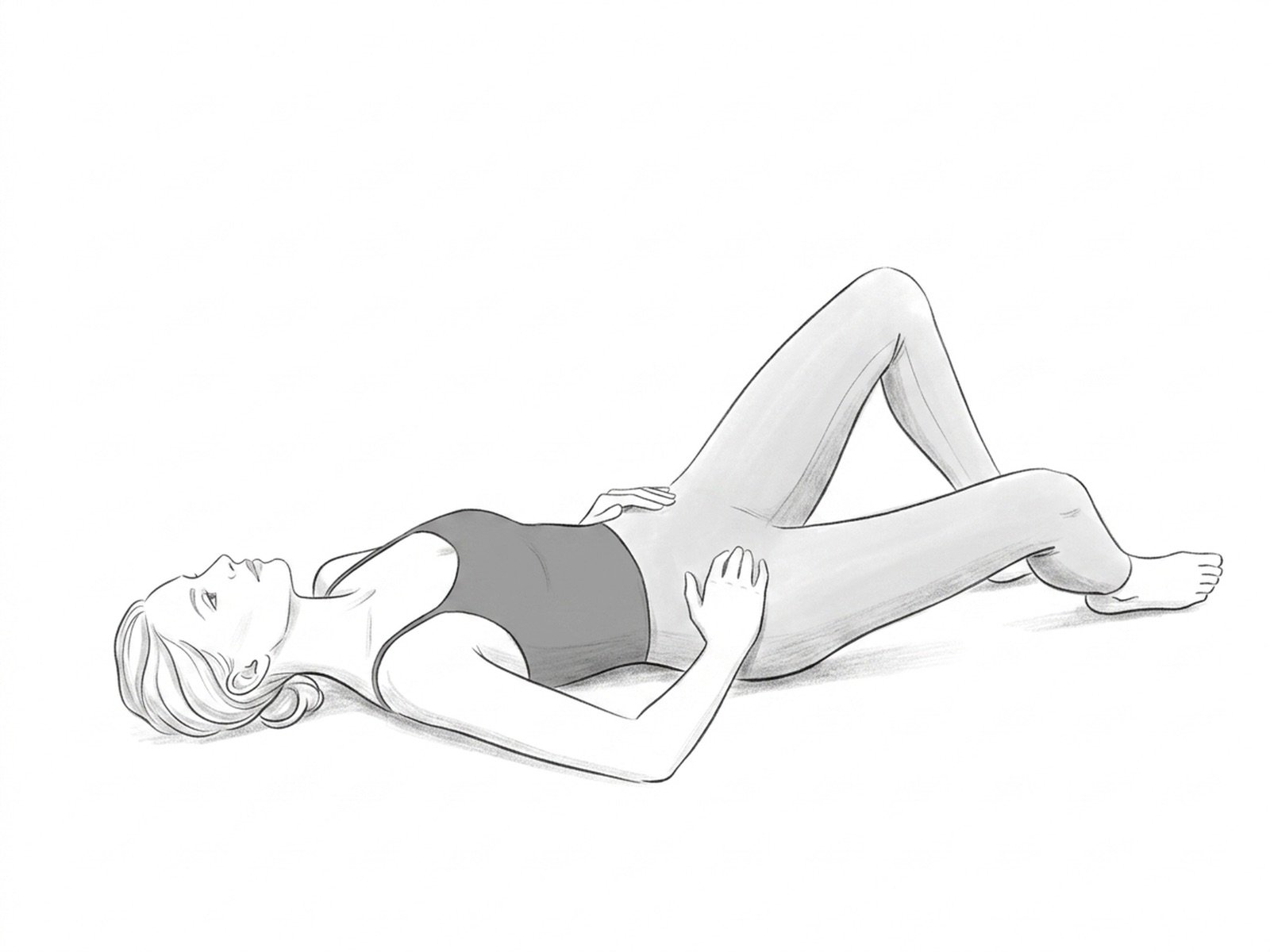
Supine Bent-Knee Fall-Outs
Low-load rotational control exercise with maintenance of the neutral pelvic position. Challenges the abdominal obliques and the transversus to resist rotation — a natural progression after mastering heel slides in abdominal diastasis rehabilitation.
How to perform
- Starting position. Lie face-up with knees bent, feet flat on the floor, and arms relaxed at the sides.
- Step 2. Activate the transversus abdominis (drawing-in).
- Step 3. Maintaining activation, slowly let the right knee fall to the right side, with control — only as far as you can without letting the opposite pelvis lift off the floor.
- Step 4. Return the knee to the neutral position actively, using the core, over 3 seconds.
- Return. Alternate with the left knee. If the pelvis compensates (one side lifts), stop and resume the drawing-in — the range should be limited to what the core can control.
When not to perform
- Postpartum first week
- Recent hip surgery
- Acute sacroiliac pain
- Severe diastasis with visceral protrusion
- Acute pelvic pain
- Symptomatic rotational lumbar disc herniation
Medical disclaimer. These exercises are presented for informational purposes only. Always consult your physician before starting any exercise program, especially in case of acute pain, recent injury, or underlying clinical condition.
Related Exercises
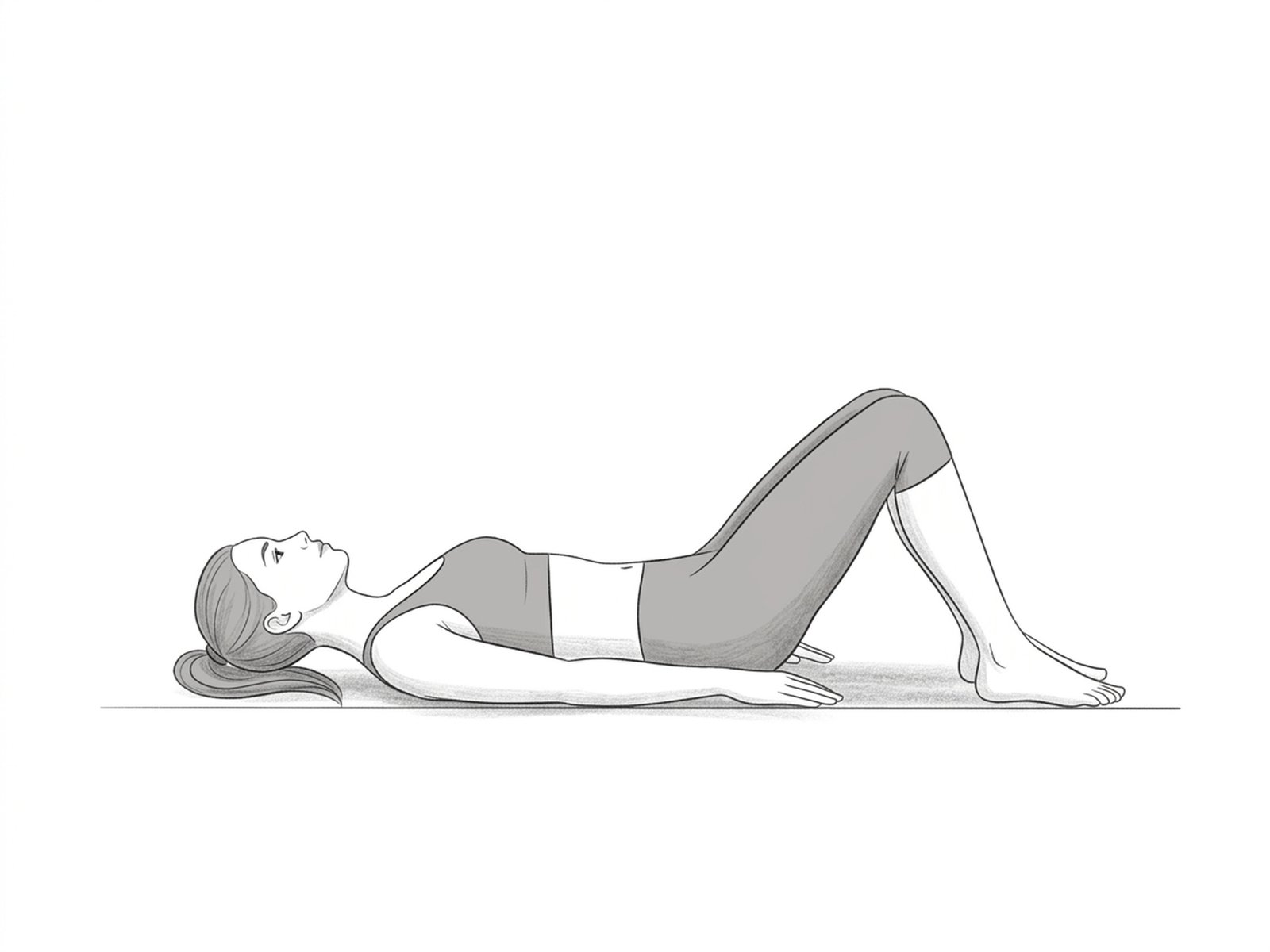
Transversus Abdominis Activation (Drawing-In)
Isolated motor activation of the transversus abdominis, the deep stabilizing muscle of the lumbar spine. The foundational motor-reeducation exercise — fundamental in core instability, sacroiliac dysfunction, and postpartum abdominal diastasis.
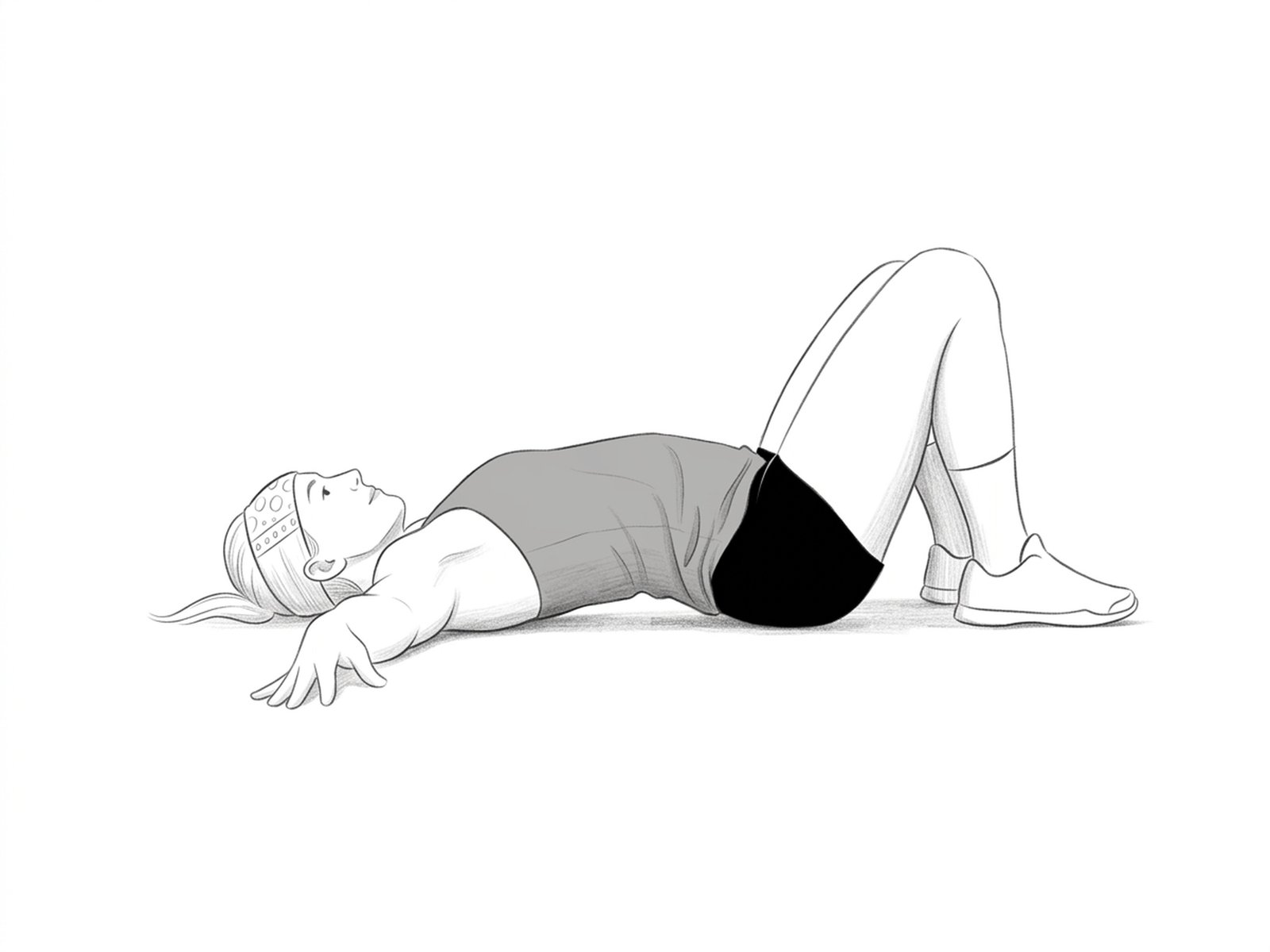
Pelvic Tilt
Gently activates the deep abdominal muscles through a pelvic tilt. Relieves low-back tension and retrains motor control of the deep stabilizers — one of the foundations of chronic mechanical low-back-pain rehabilitation.
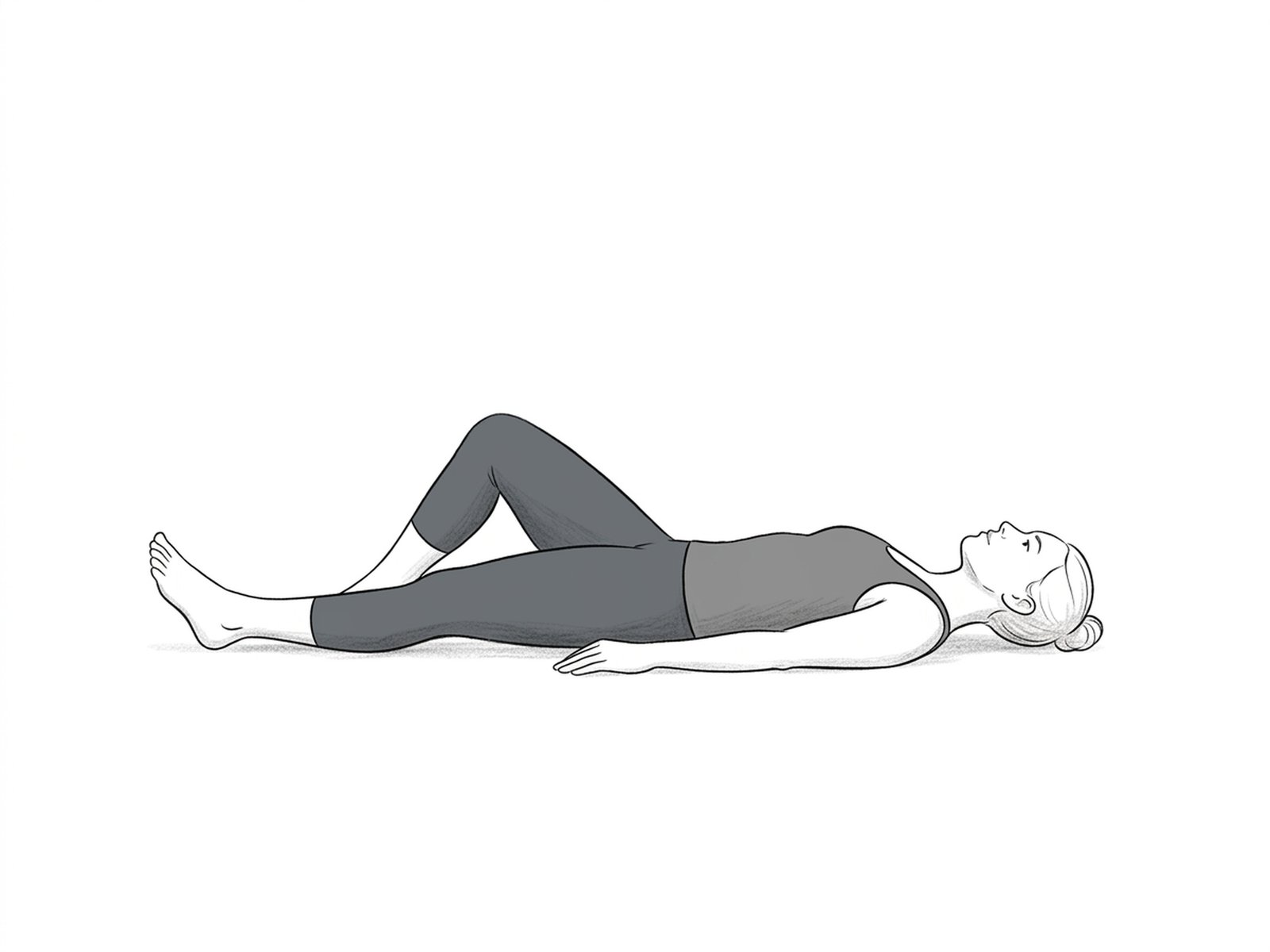
Heel Slide with Transversus Activation
A low-load exercise that combines alternating heel slides with isolated activation of the transversus abdominis. Safe in the postpartum period and appropriate for early rehabilitation of abdominal diastasis — progresses the core without overloading the linea alba.