Therapeutic exercise
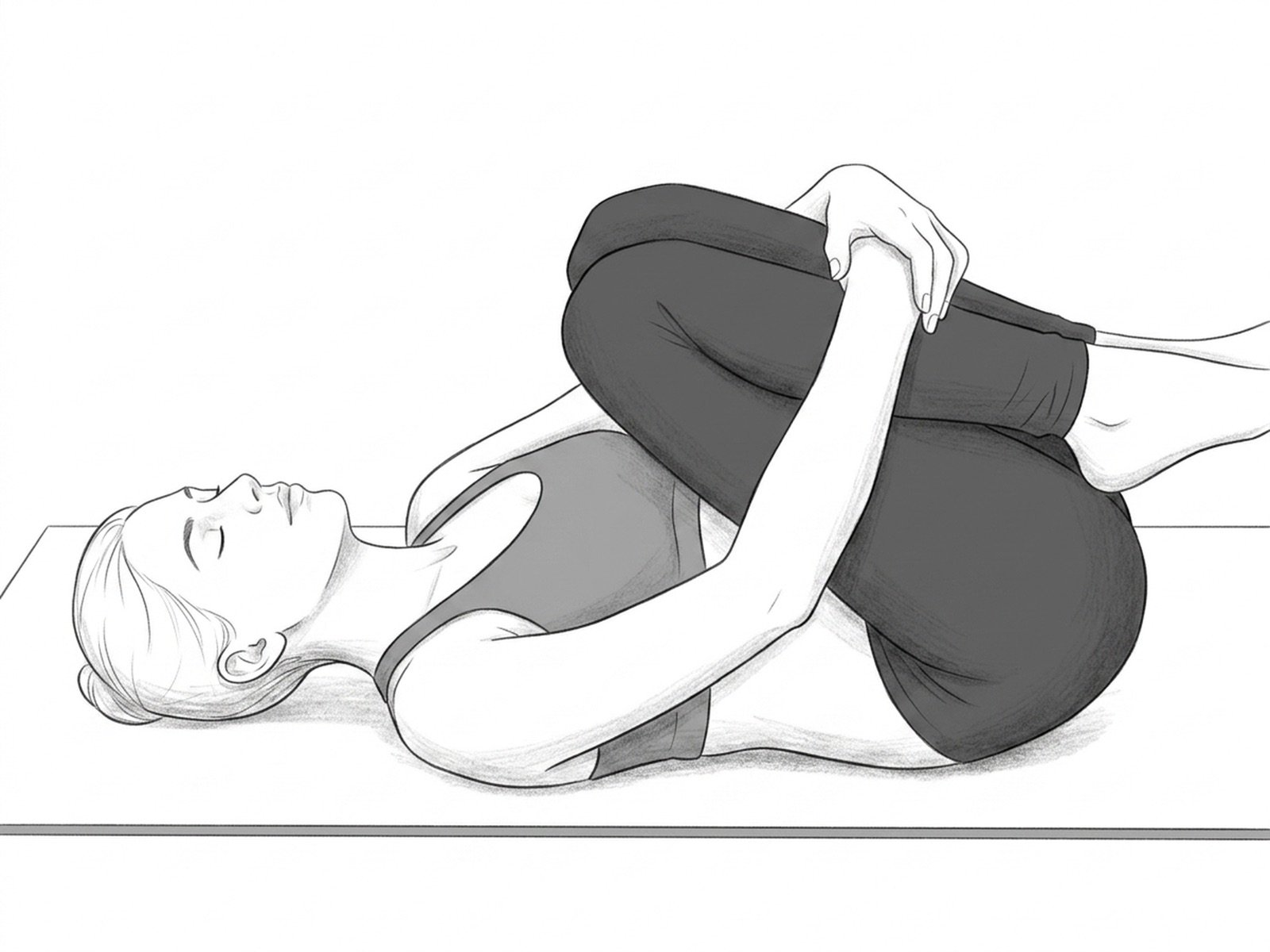
Double Knee-to-Chest
Bilateral variation of the knee-to-chest stretch, applying global lumbar spine flexion. More intense than the unilateral version, it is indicated in spinal stenosis and flexion-preference low back pain — opens the facet joints and relieves pressure on the neural roots.
How to perform
- Starting position. Lie face-up on a firm surface.
- Step 2. Bring both knees toward the chest, holding them behind the thighs (not the shins).
- Step 3. Gently pull the knees toward the chest until you feel the stretch in the lumbar region — the low back should round against the floor.
- Step 4. Hold the position for 20–30 seconds, breathing deeply.
- Return. Release slowly and extend the legs. Rest 30 seconds between repetitions.
When not to perform
- Acute lumbar disc herniation with radiculopathy in an inflammatory phase
- Extension-preference low back pain (worsens in flexion)
- Recent hip arthroplasty
- Recent lumbar spine surgery
- Cauda equina syndrome
- Third-trimester pregnancy
Medical disclaimer. These exercises are presented for informational purposes only. Always consult your physician before starting any exercise program, especially in case of acute pain, recent injury, or underlying clinical condition.
Related Exercises
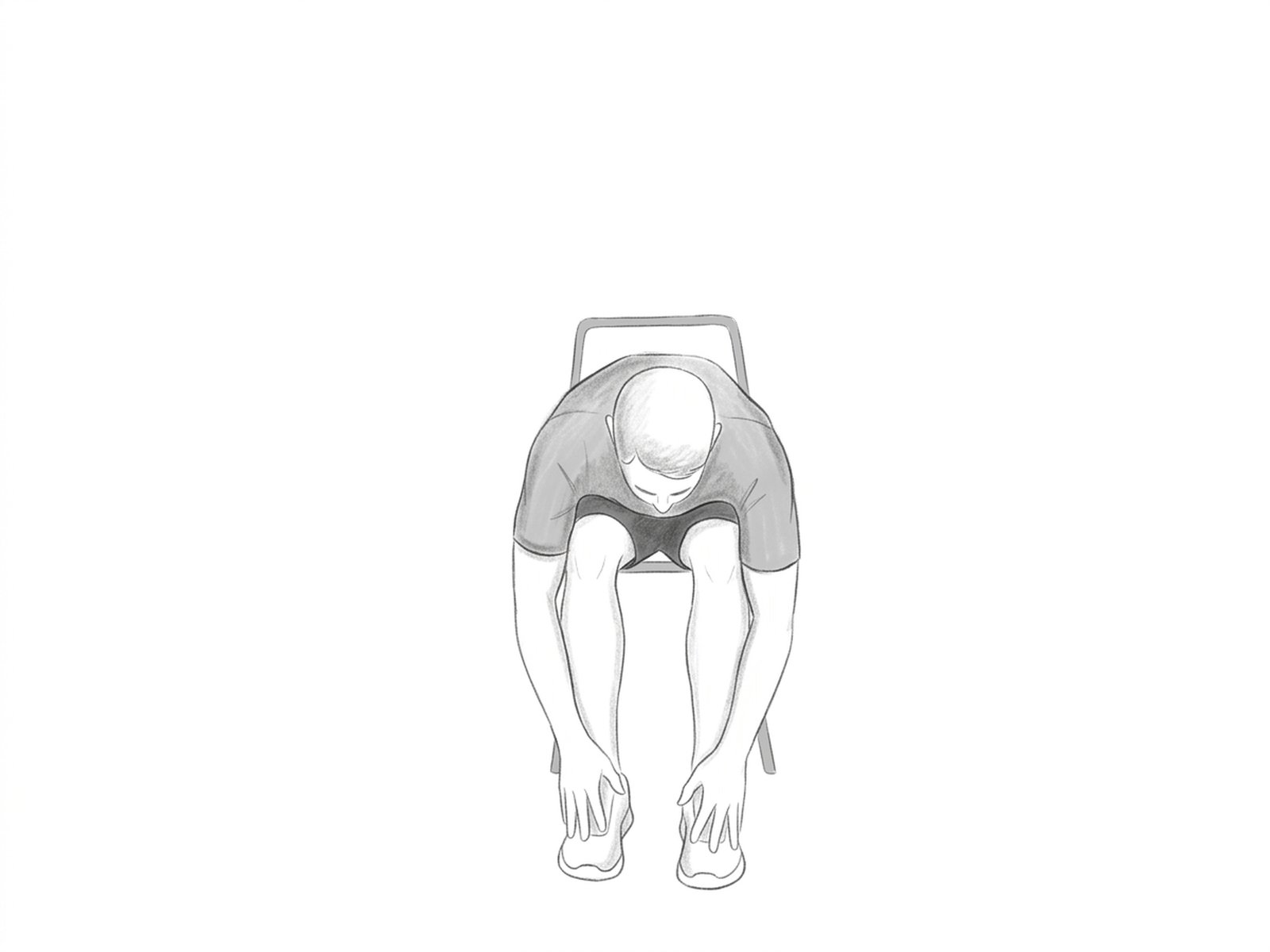
Seated Lumbar Flexion
Active lumbar flexion performed seated, accessible in the work environment. In patients with spinal stenosis who spend hours standing (retail, nursing, teaching), it interrupts the facet-compression pattern and relieves neurogenic claudication without the need to lie down.
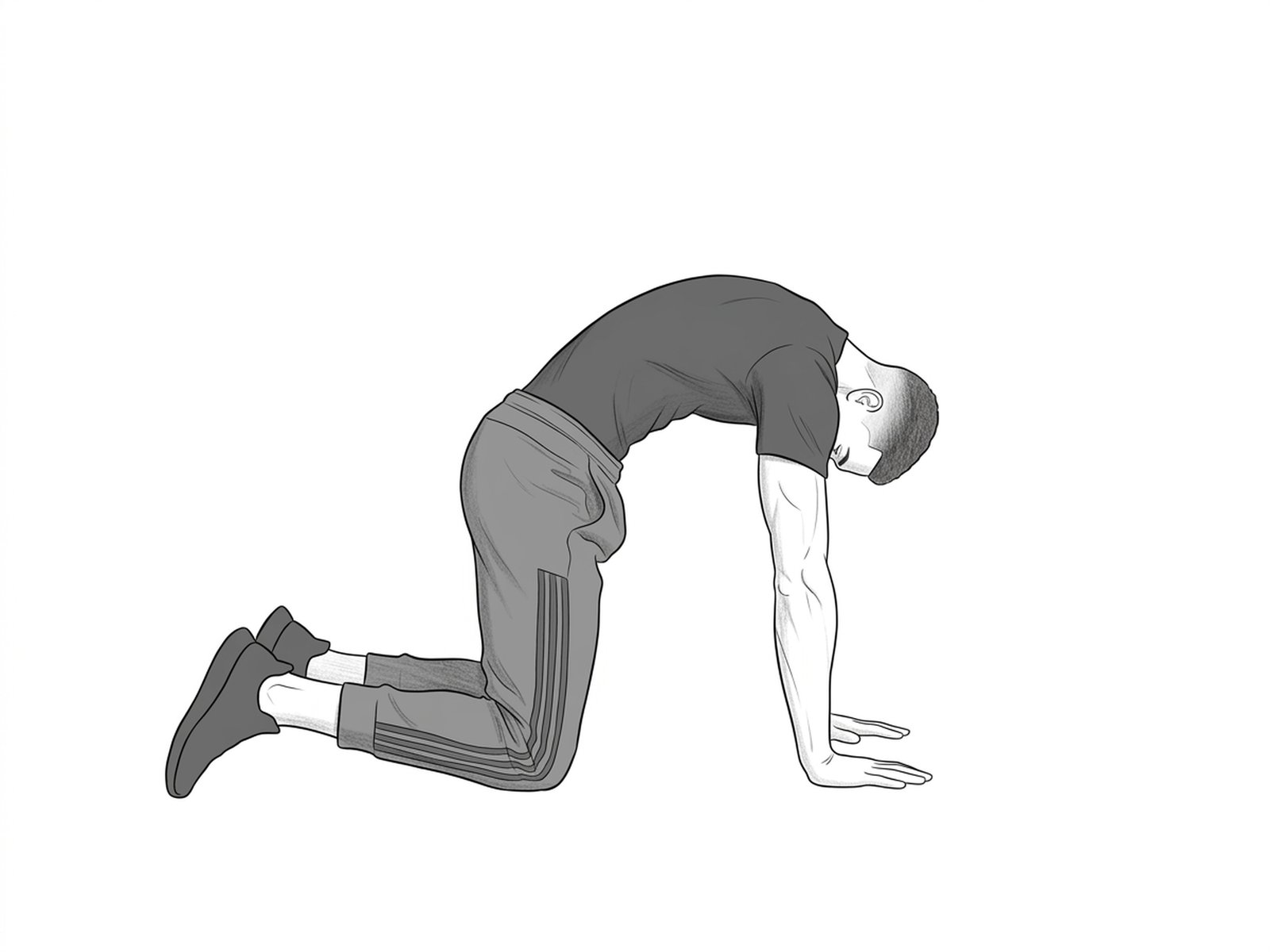
Cat-Cow
Segmental mobilization of the spine in flexion and extension. Improves vertebral mobility, helps lubricate the facet joints, and relieves the stiffness typical of prolonged static postures.
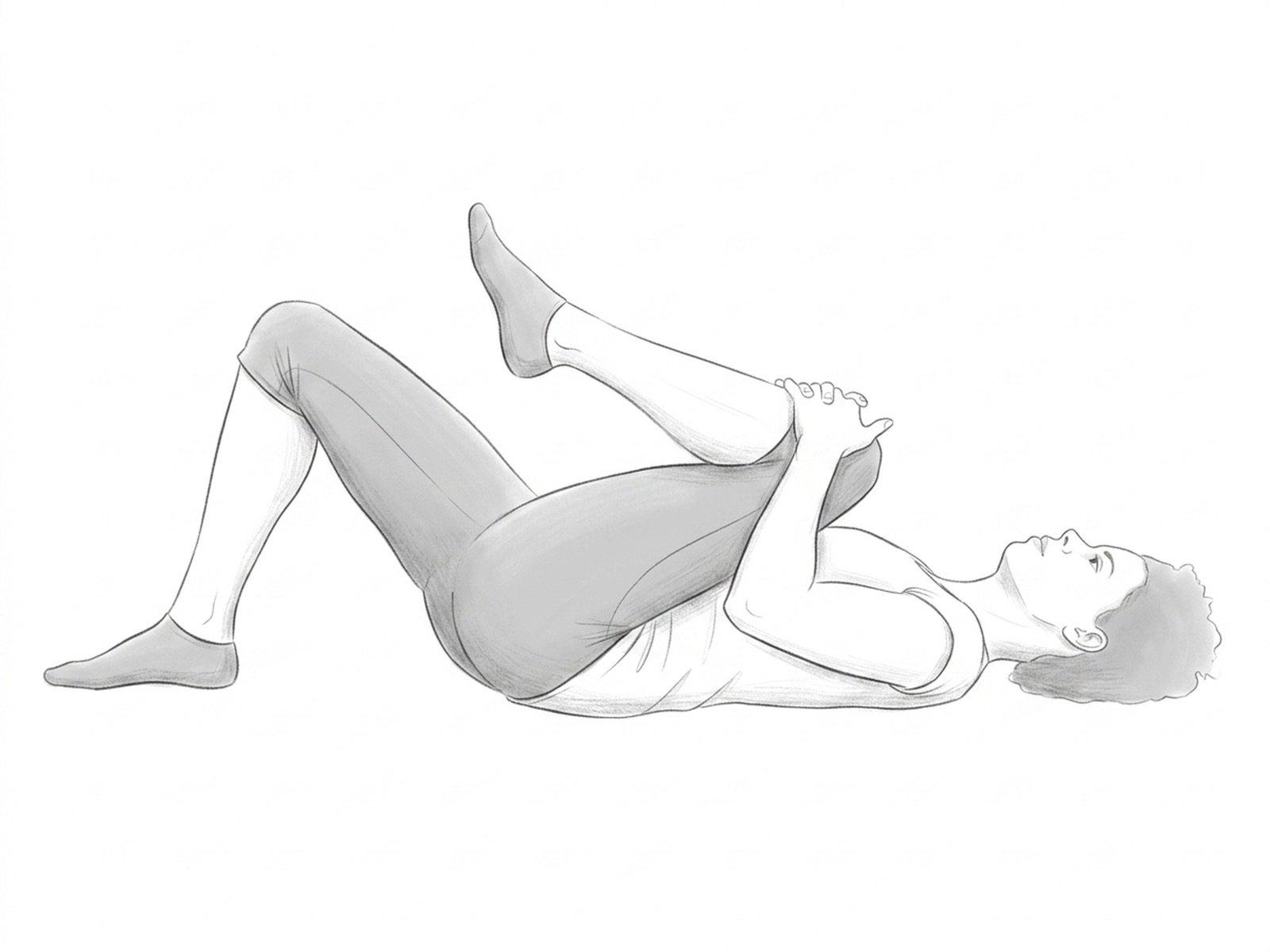
Knee-to-Chest Stretch
A gentle stretch for the lumbar paraspinal muscles and the glutes. Promotes joint decompression and symptomatic relief, particularly useful during acute flares of non-radiating pain.