Eccentric calf raises
Eccentric calf raises selectively load the gastroc-soleus complex and deep posterior compartment while the muscles are lengthening to improve tissue capacity. This may help Medial Tibial Stress Syndrome by enhancing the ability of the plantar flexors to absorb ground reaction forces and reducing traction stress along the posteromedial border of the tibia.
Muscles worked
Illustration demonstrating the position of the Eccentric calf raises exercise.
Biomechanical Execution Sequence
05 phases- Starting position
Stand on the edge of a step with your heels hanging off, lightly holding a wall or railing for balance.
- Phase 2
Push up onto your toes using both feet to reach the highest peak position.
- Phase 3
Lift your unaffected leg off the step, transferring all your weight to the affected leg.
- Phase 4
Slowly lower your heel down below the level of the step over a count of 3 to 4 seconds.
- Return
Place the unaffected foot back onto the step to push back up, and repeat the cycle.
Prescribed in Clinical Guides
Medical disclaimer. These exercises are presented for informational purposes only. Always consult your physician before starting any exercise program, especially in case of acute pain, recent injury, or underlying clinical condition.
Related Exercises
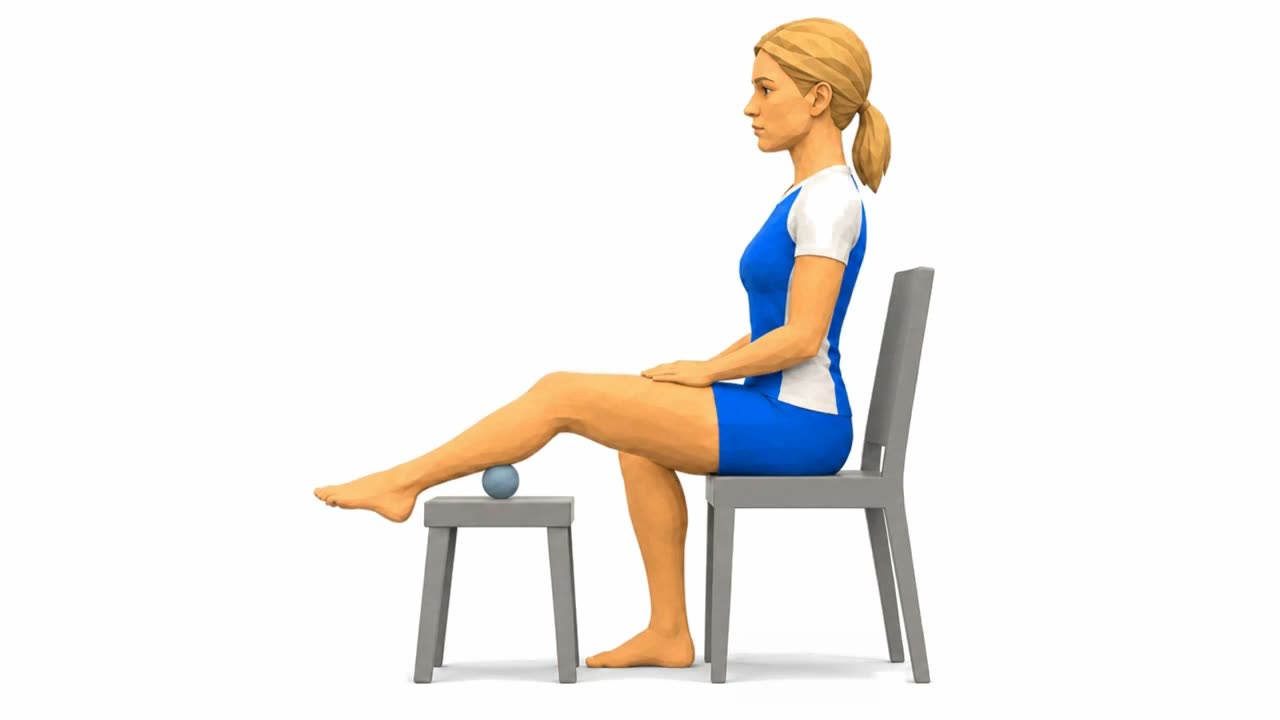
Calf ball release
A ball release means pressing a muscle against a ball. Here you sit on a chair and rest the back of your calf on a ball on a low stool, pressing the gastrocnemius and soleus, the two main calf muscles. The calf studies found used rollers, not a ball. The word release in the name is only a common label. Read the cautions first.
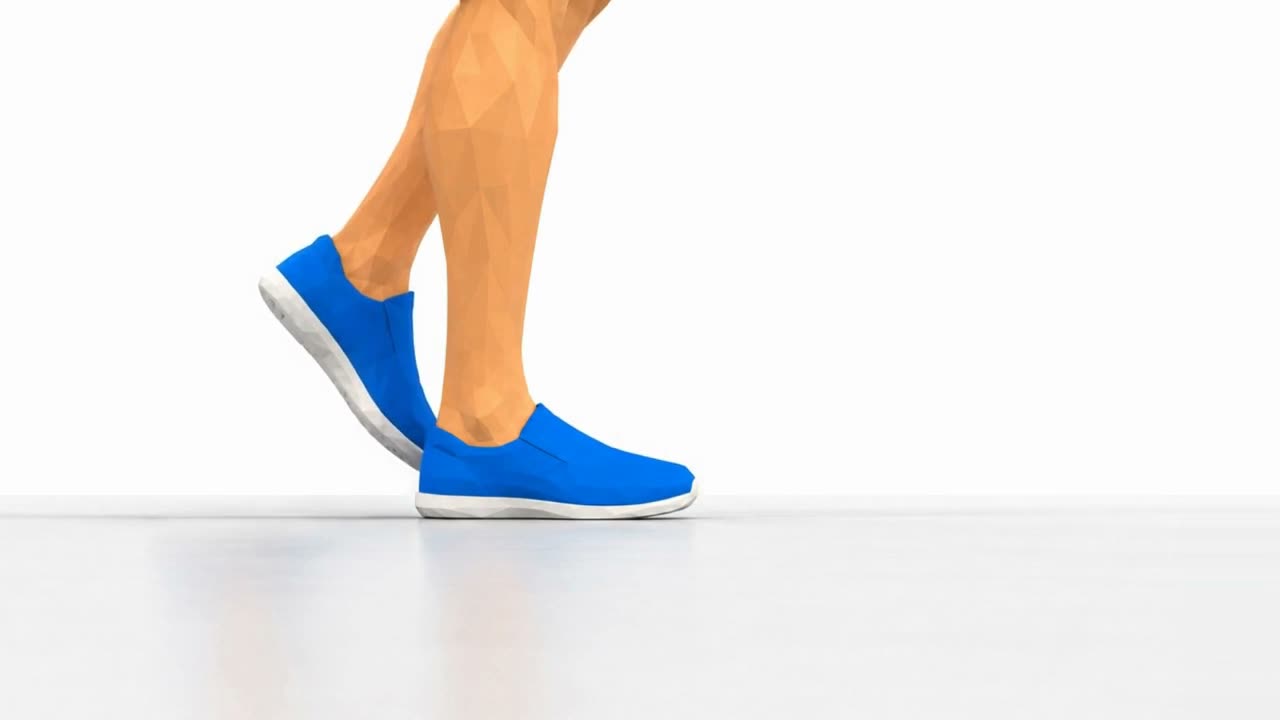
Heel-to-toe walking
Heel-to-toe walking challenges dynamic balance and proprioception by drastically reducing the base of support during the gait cycle. This forces the sensorimotor system to rapidly activate stabilizing ankle musculature, improving neuromuscular control, which may help reduce episodes of giving way in chronic ankle instability.
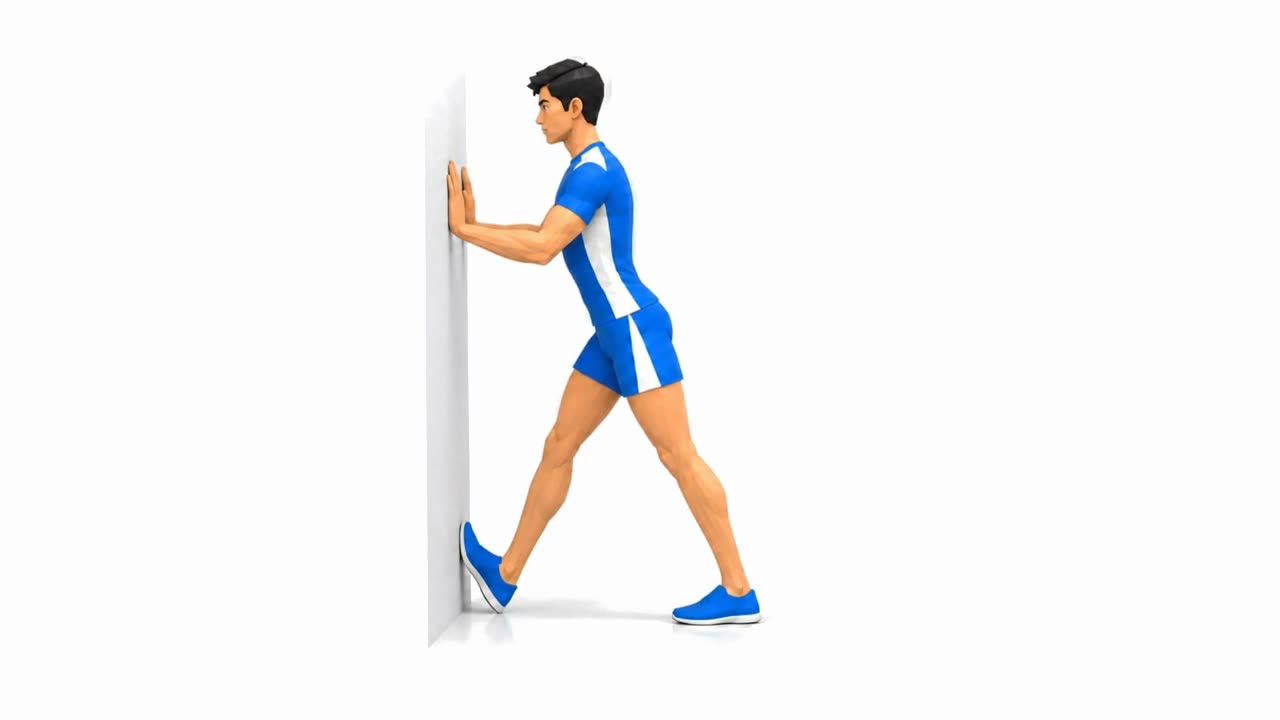
Wall slant calf stretch
The wall slant calf stretch provides a prolonged, passive stretch to the gastrocnemius and soleus muscles, increasing tissue extensibility in the posterior lower leg. By improving ankle dorsiflexion, it may help reduce mechanical tension on the plantar fascia during gait. This helps alleviate heel pain associated with plantar fasciitis.