Therapeutic exercise
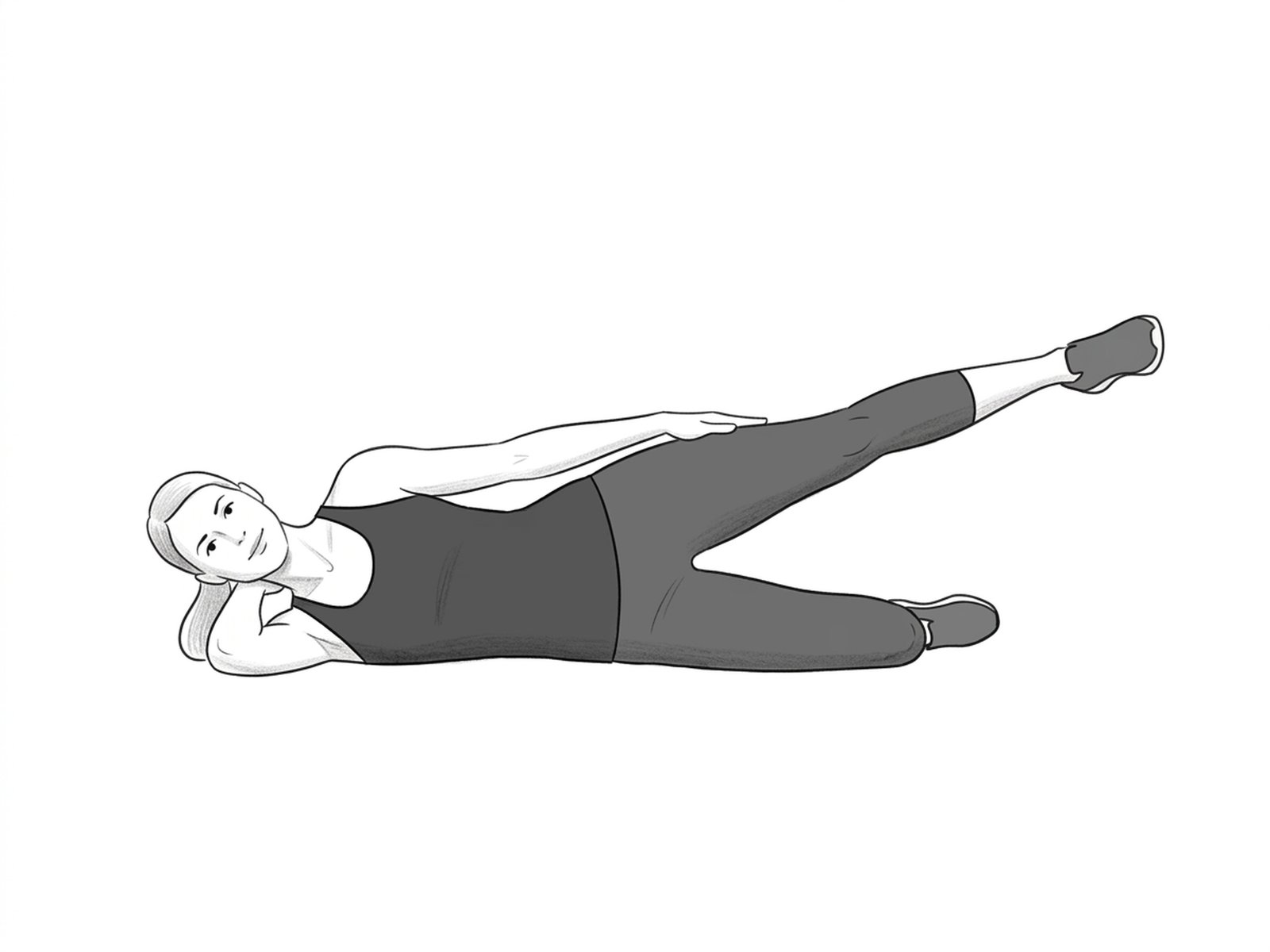
Side-Lying Hip Abduction
Strengthens the gluteus medius, a muscle frequently weakened in chronic sciatica. Improves pelvic stability during gait.
How to perform
- Starting position. Lie on your side with your legs extended and aligned.
- Step 2. Rest your head on the lower arm and keep your hip perpendicular to the floor.
- Step 3. Slowly lift the upper leg without rotating the pelvis, to about 30–45°.
- Return. Lower with control and repeat. Switch sides after completing the set.
When not to perform
- Acute gluteal pain
- Recent hip surgery
Medical disclaimer. These exercises are presented for informational purposes only. Always consult your physician before starting any exercise program, especially in case of acute pain, recent injury, or underlying clinical condition.
Related Exercises
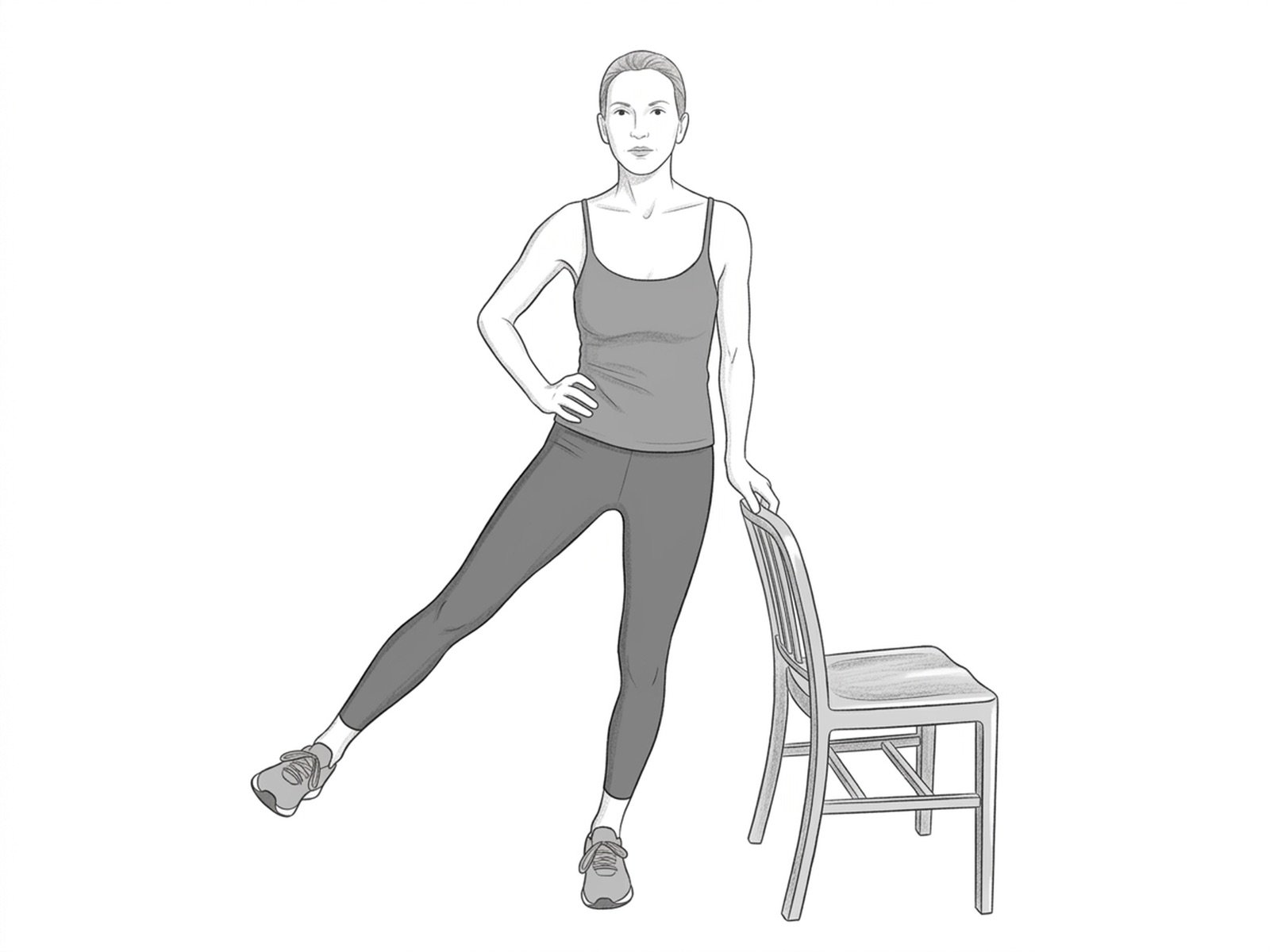
Standing Hip Abduction
Functional version of hip abduction performed in standing, in closed kinetic chain on the supporting side. Simultaneously recruits the abductors of the elevated leg and the pelvic stabilizers of the supporting side — closer to gait demands than the sidelying version.
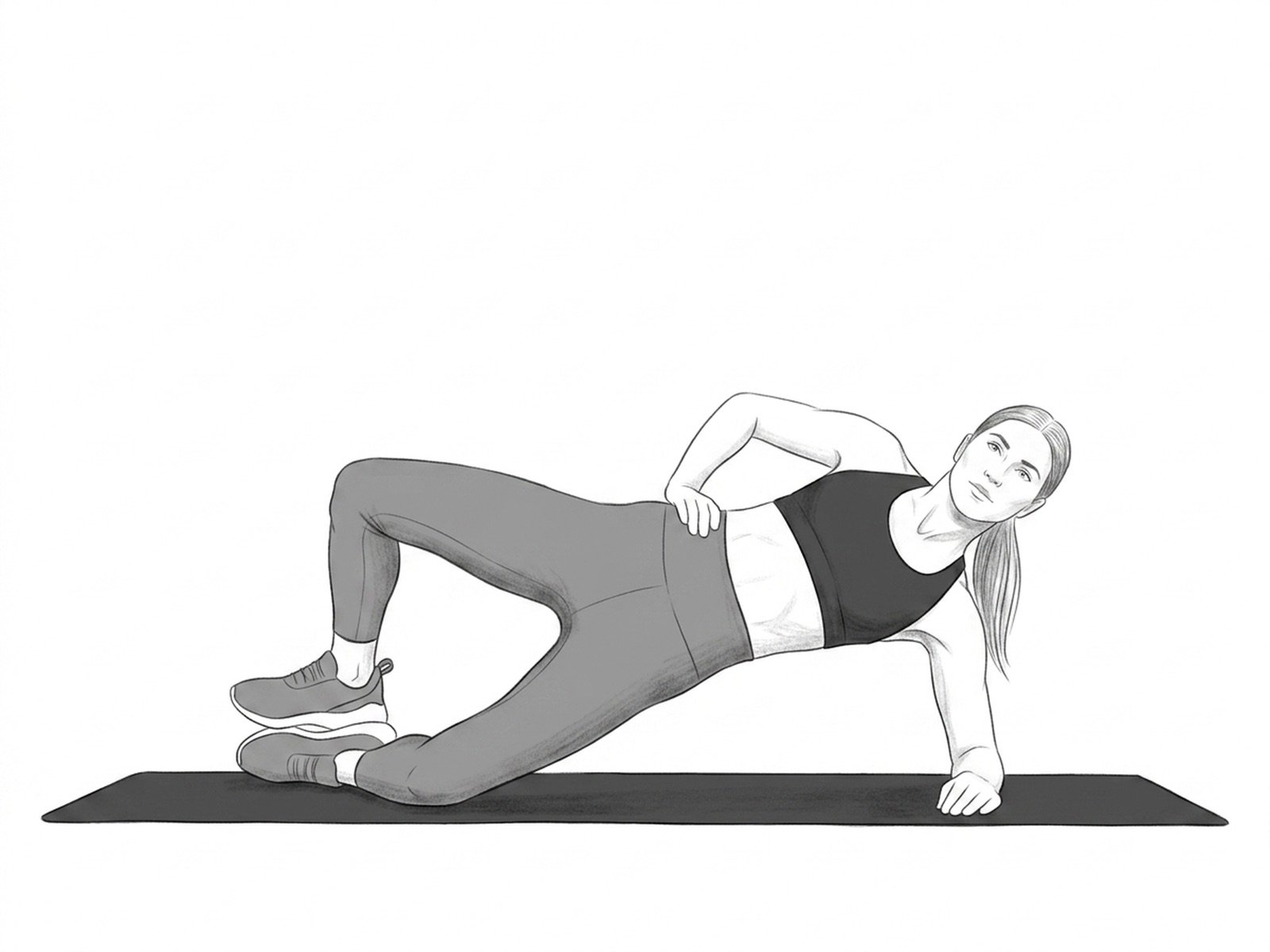
Clamshell
Strengthens the gluteus medius and the external hip rotators. Essential in hip osteoarthritis to reduce the compensatory Trendelenburg pattern during gait.
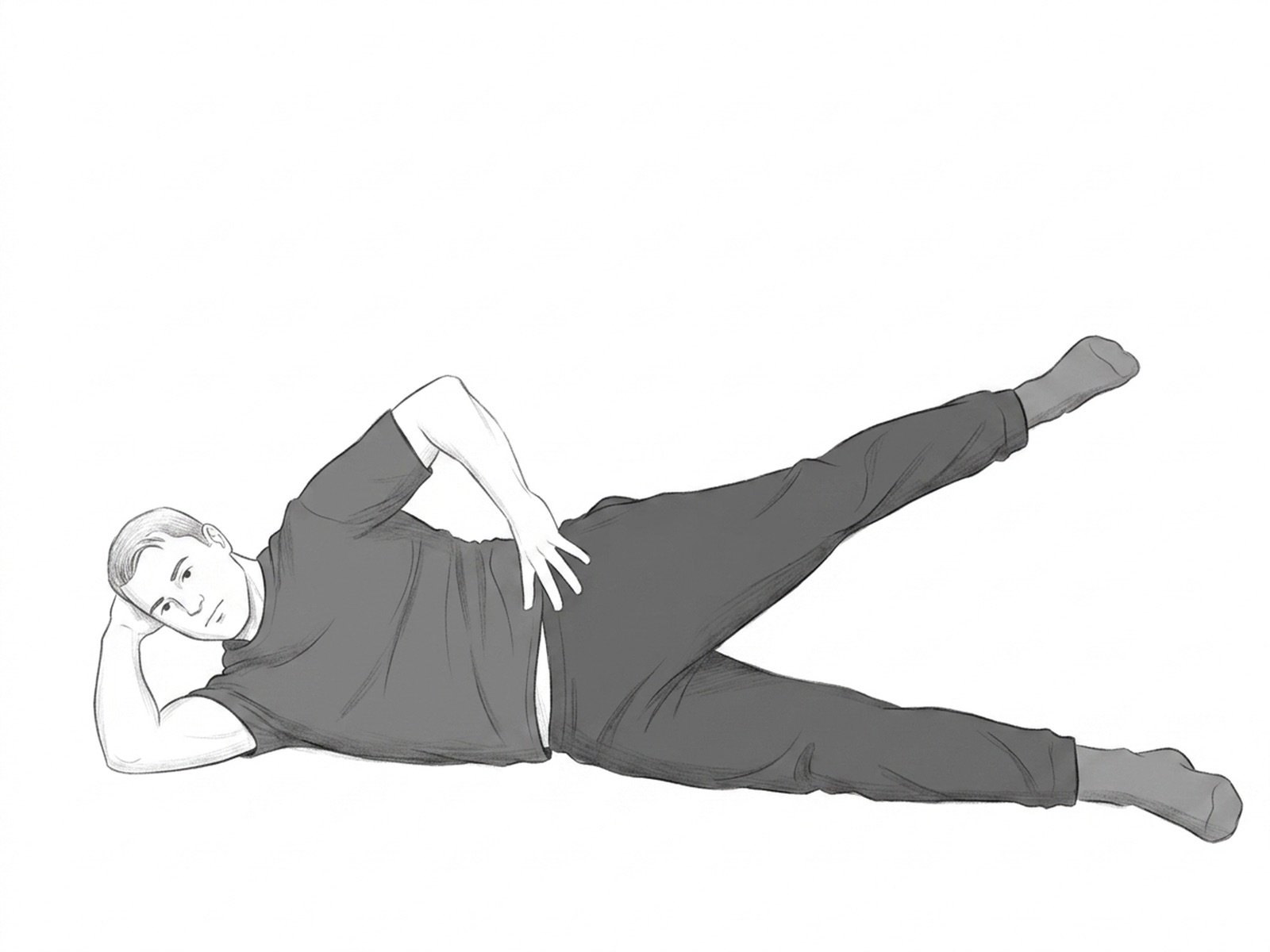
Sidelying Hip Abduction Isometric
Isometric version of the sidelying abduction exercise, holding the elevated leg without dynamic movement. In reactive gluteal tendinopathy, isometric loading produces an analgesic effect without overload — the first stage of treatment before isotonic work.