Therapeutic exercise
Hip-Flexor Lunge Stretch
Stretches the iliopsoas and rectus femoris, frequently shortened in sedentary patients with sciatic pain, and reduces traction on the lumbar spine.
How to perform
- Starting position. Kneel with the symptomatic leg behind and the other leg in front at 90°.
- Step 2. Keep your trunk upright and squeeze the glute of the kneeling side.
- Step 3. Drive your hips forward until you feel a stretch at the front of the thigh and groin.
- Return. Hold for 30 seconds and repeat on the other side.
When not to perform
- Acute pain in the supporting knee
- Recent meniscal injury
Medical disclaimer. These exercises are presented for informational purposes only. Always consult your physician before starting any exercise program, especially in case of acute pain, recent injury, or underlying clinical condition.
Related Exercises
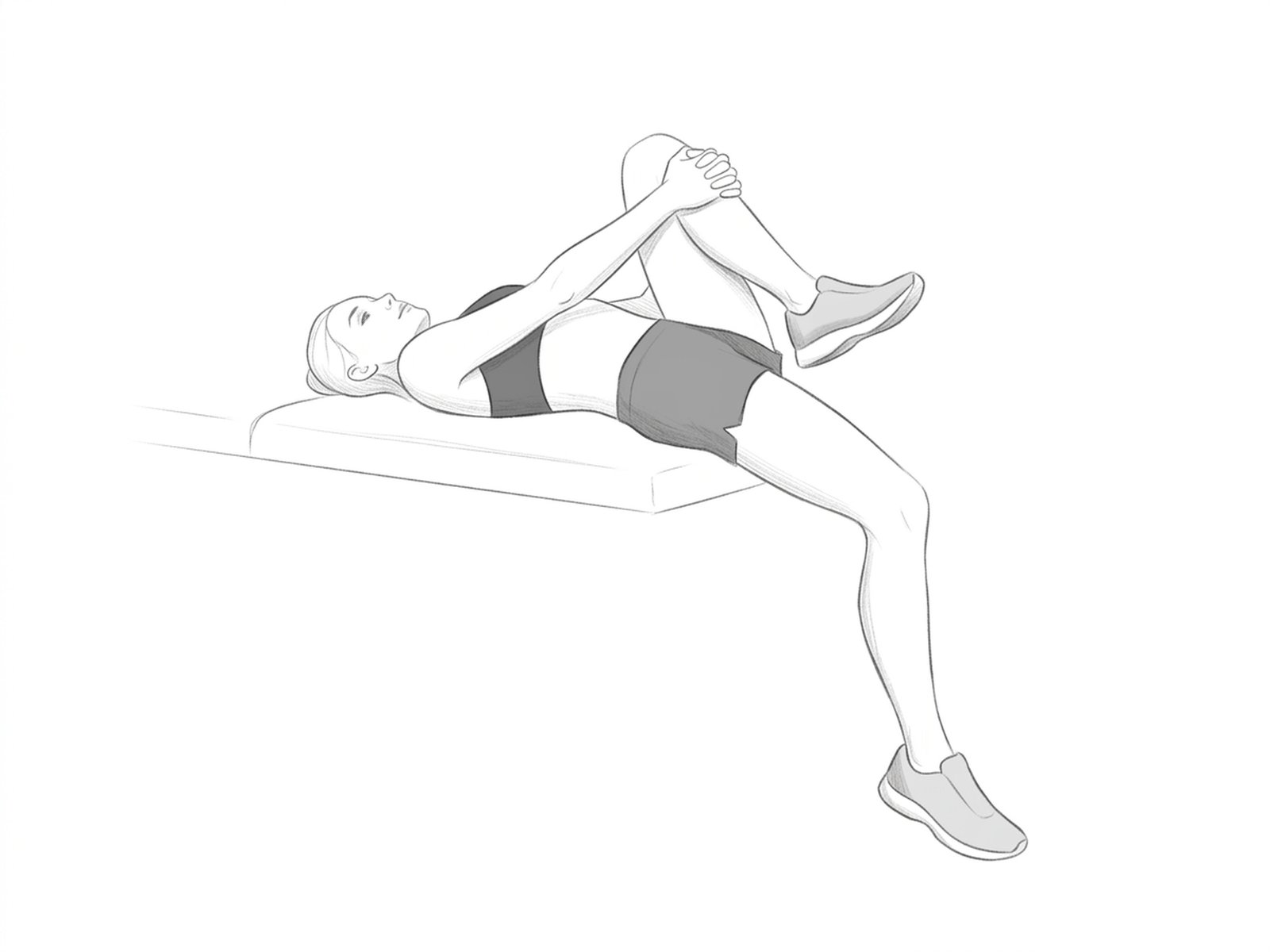
Thomas Stretch (Hip Flexors)
Passive stretch of the hip flexors (psoas, iliacus, rectus femoris) in the Thomas position — supine on a table or bed with one leg hanging off the edge. Allows pelvic relaxation and isolated stretching of the shortened flexor.
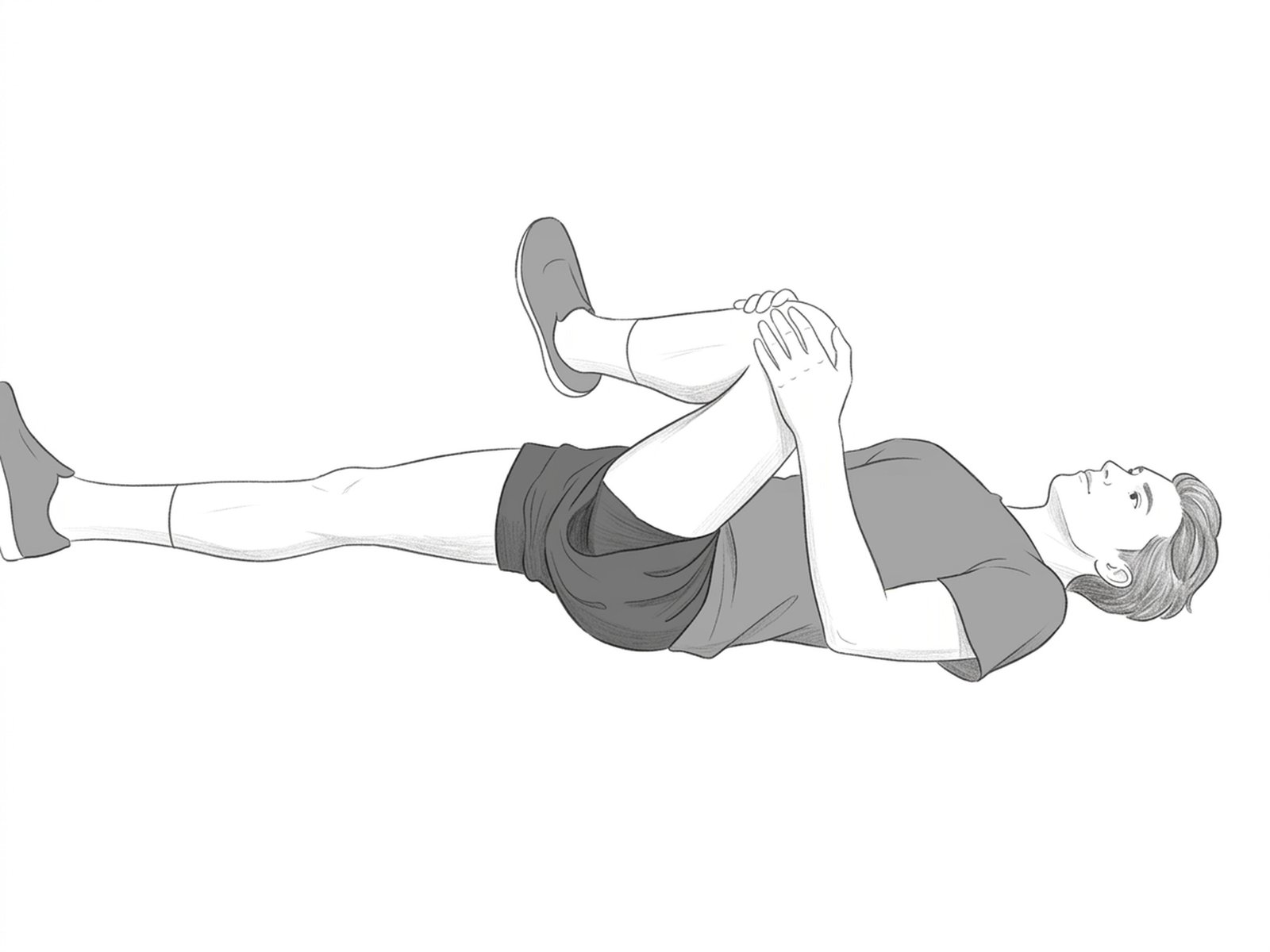
Supine Piriformis Stretch
Safely stretches the piriformis, reducing compression of the sciatic nerve by the muscle — a frequent cause of deep gluteal pain with radiation.
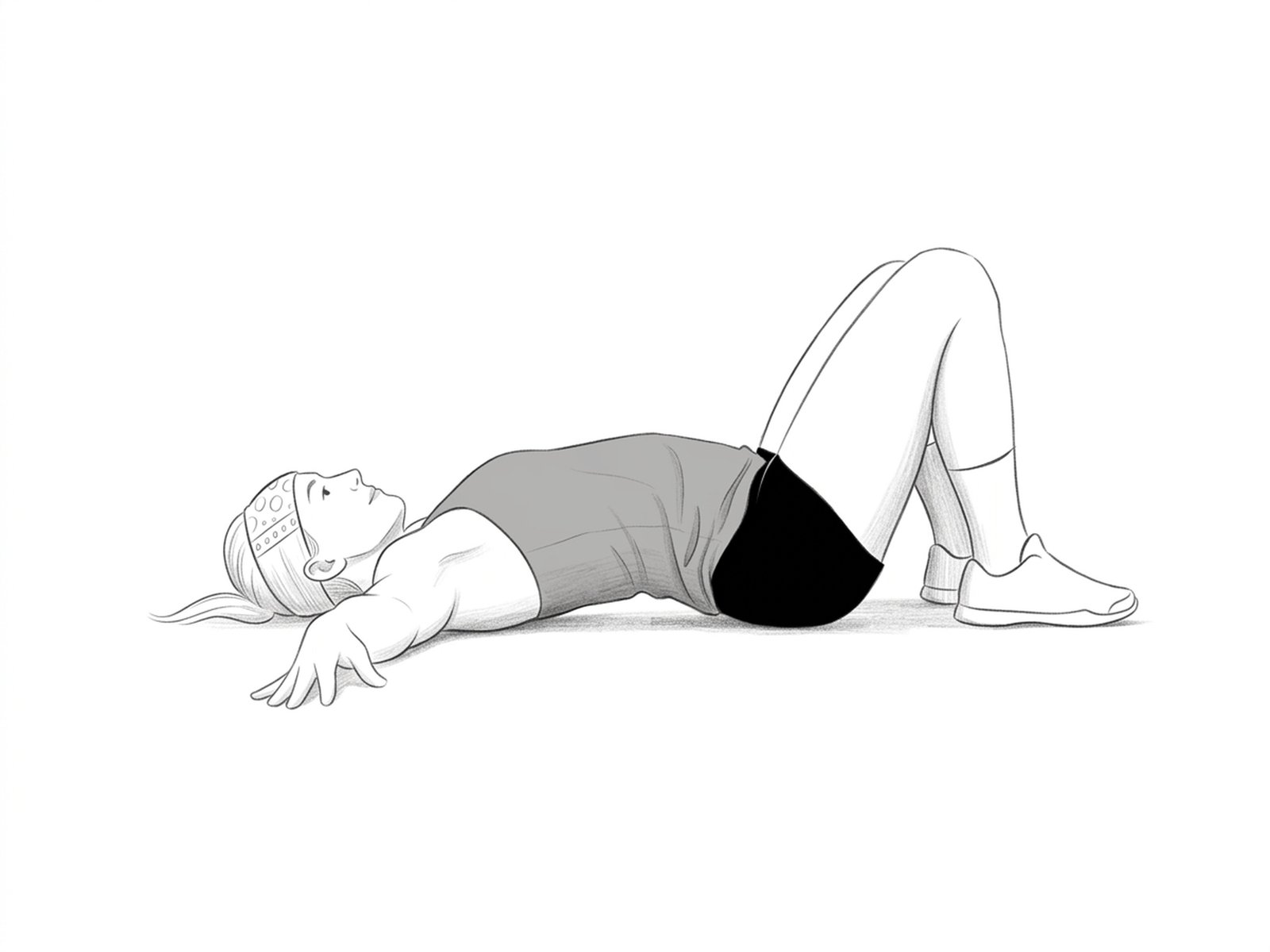
Pelvic Tilt
Gently activates the deep abdominal muscles through a pelvic tilt. Relieves low-back tension and retrains motor control of the deep stabilizers — one of the foundations of chronic mechanical low-back-pain rehabilitation.