Pelvic drops
Pelvic drops target the eccentric and concentric control of the hip abductors, particularly the gluteus medius, on the weight-bearing leg. Strengthening these muscles stabilizes the pelvis during the stance phase of gait, preventing excessive hip adduction and internal rotation that increases tension on the iliotibial (IT) band.
Muscles worked
Illustration demonstrating the position of the Pelvic drops exercise.
Biomechanical Execution Sequence
04 phases- Starting position
Stand sideways on a step with your stance foot near the edge and the other foot hanging off freely.
- Phase 2
Keep the stance leg straight but unlocked, maintaining an upright torso.
- Phase 3
Slowly lower the free foot toward the floor by letting the pelvis drop on that side.
- Return
Squeeze the hip of the stance leg to hike the pelvis back up to the starting level.
Prescribed in Clinical Guides
Medical disclaimer. These exercises are presented for informational purposes only. Always consult your physician before starting any exercise program, especially in case of acute pain, recent injury, or underlying clinical condition.
Related Exercises
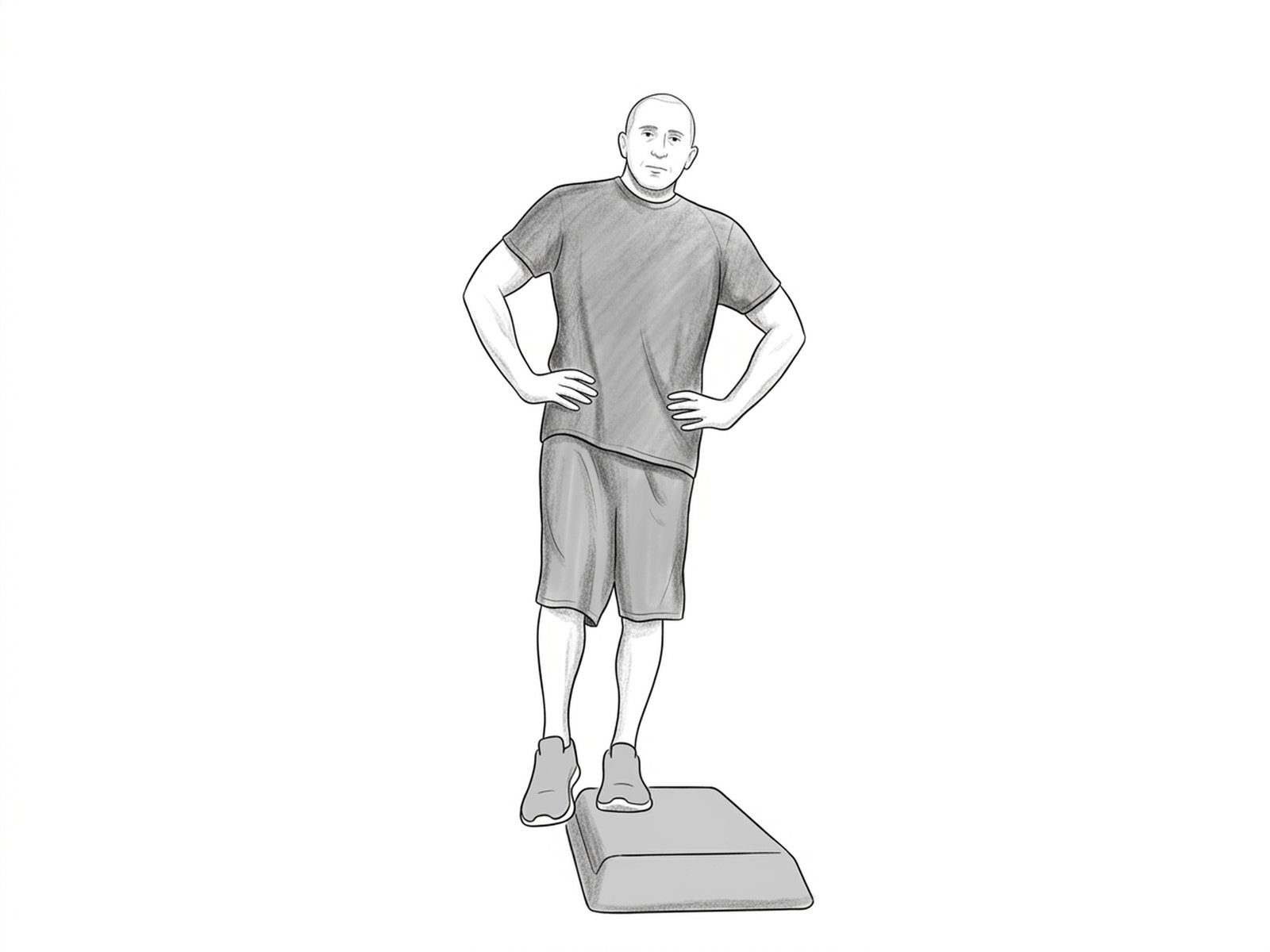
Pelvic Hike Standing on a Step
Unilateral strengthening of the quadratus lumborum and gluteus medius through elevation and descent of the contralateral pelvis while the patient stands on a step. Re-educates pelvic control in single-leg support — essential in QL myofascial pain and iliotibial band syndrome.
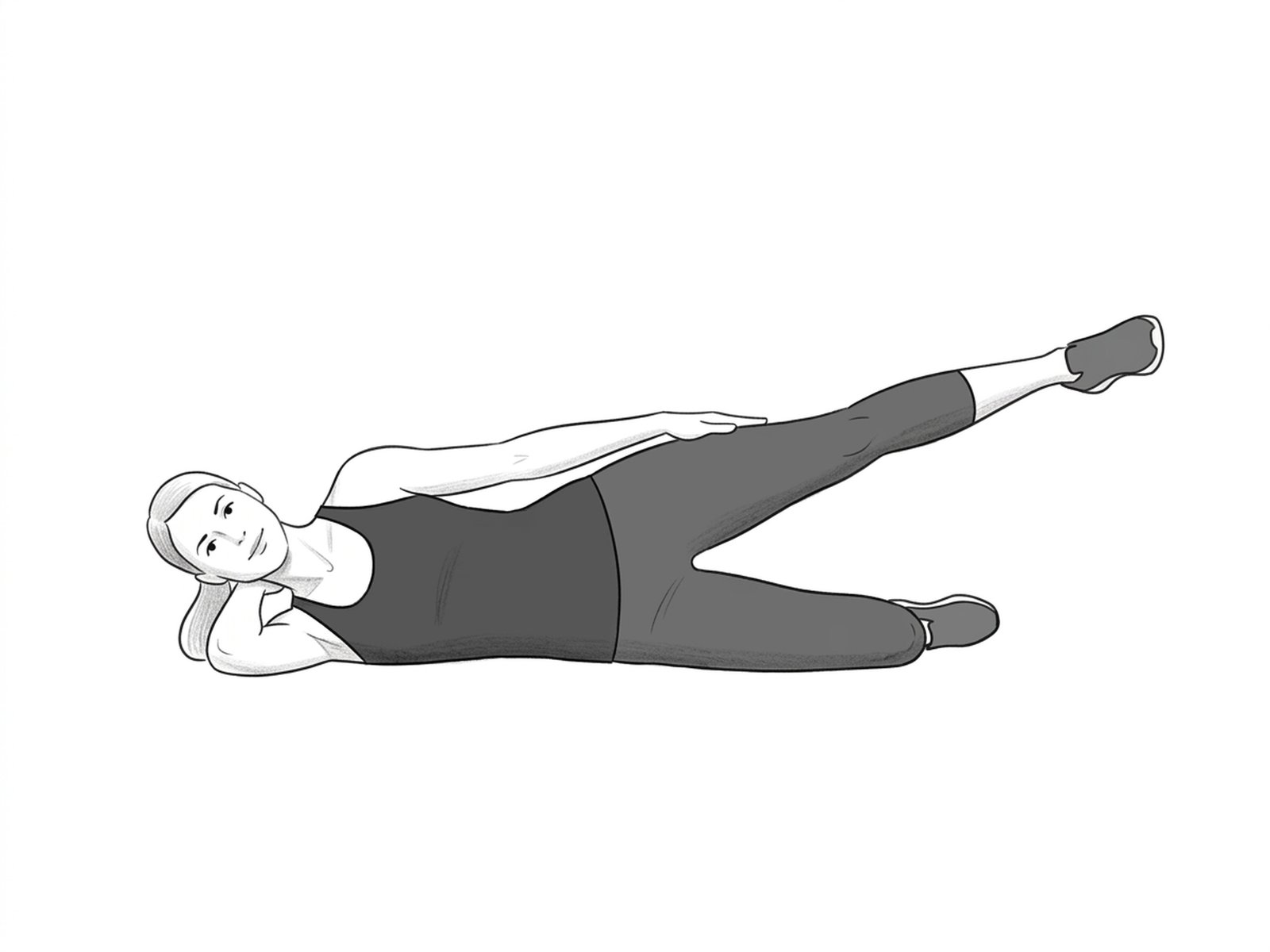
Side-Lying Hip Abduction
Strengthens the gluteus medius, a muscle frequently weakened in chronic sciatica. Improves pelvic stability during gait.
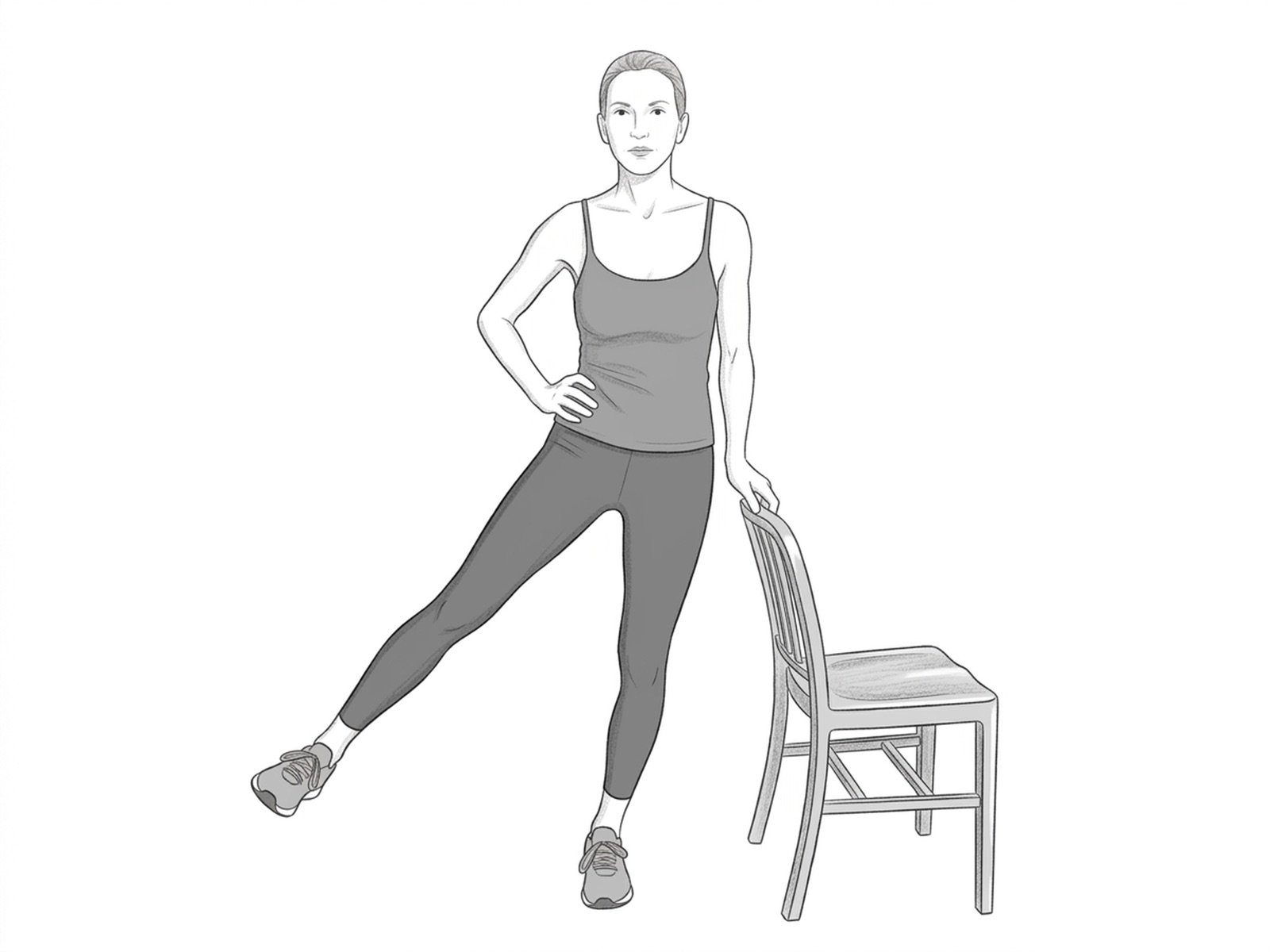
Standing Hip Abduction
Functional version of hip abduction performed in standing, in closed kinetic chain on the supporting side. Simultaneously recruits the abductors of the elevated leg and the pelvic stabilizers of the supporting side — closer to gait demands than the sidelying version.