Therapeutic exercise
Head-Posture Correction for TMD
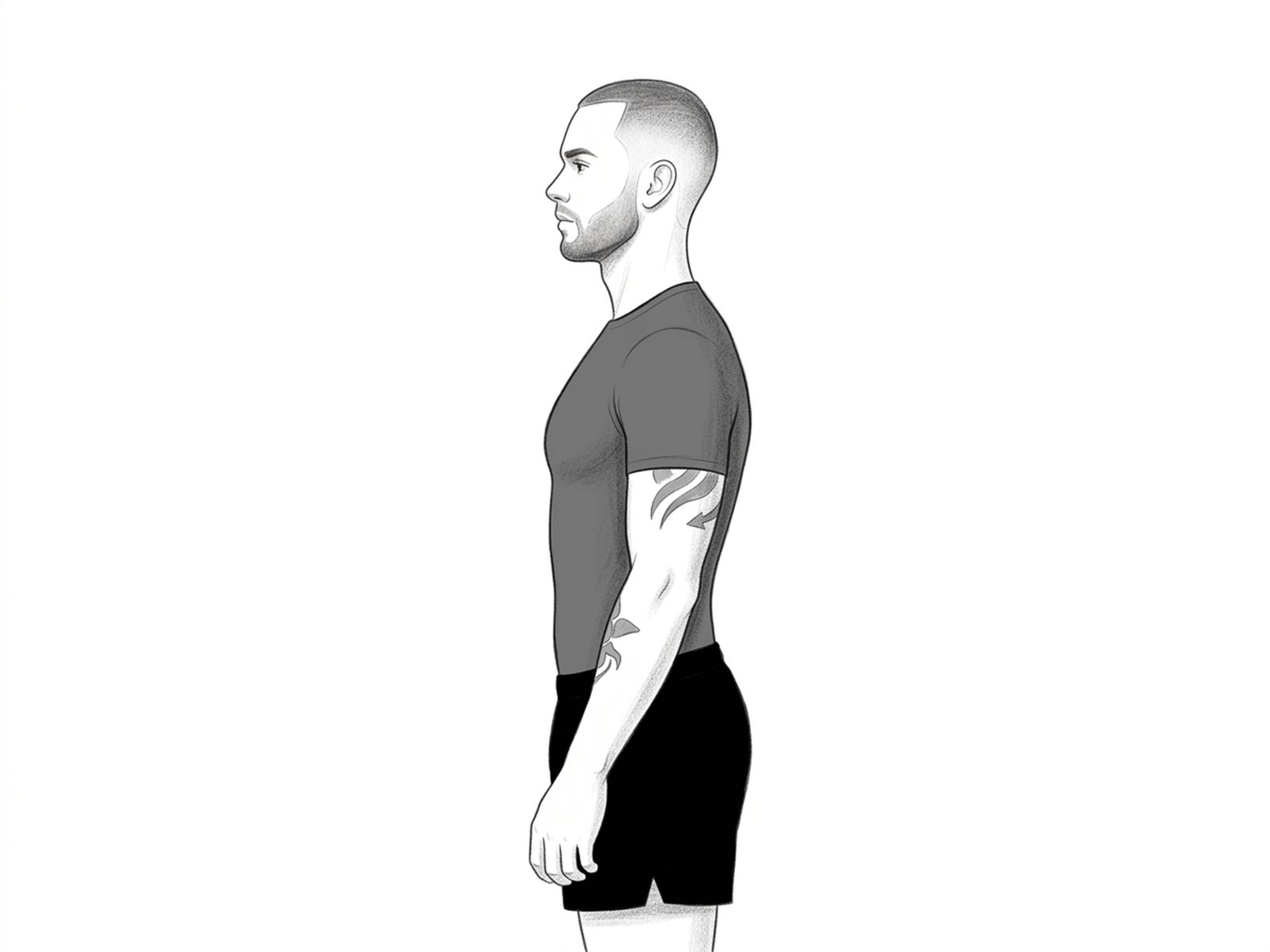
Craniocervical alignment combining chin retraction and vertical elongation. Reduces the overload on the masseter and temporalis caused by forward-head posture.
How to perform
- Starting position. Sit upright with your feet flat on the floor.
- Step 2. Retract your chin (without tilting the head) — imagine the crown of the head being pulled upward.
- Step 3. Relax your jaw, shoulders, and tongue (resting position: teeth apart, tongue on the palate).
- Return. Hold the posture for 30 seconds.
When not to perform
- Dizziness with cervical retraction
Medical disclaimer. These exercises are presented for informational purposes only. Always consult your physician before starting any exercise program, especially in case of acute pain, recent injury, or underlying clinical condition.
Related Exercises
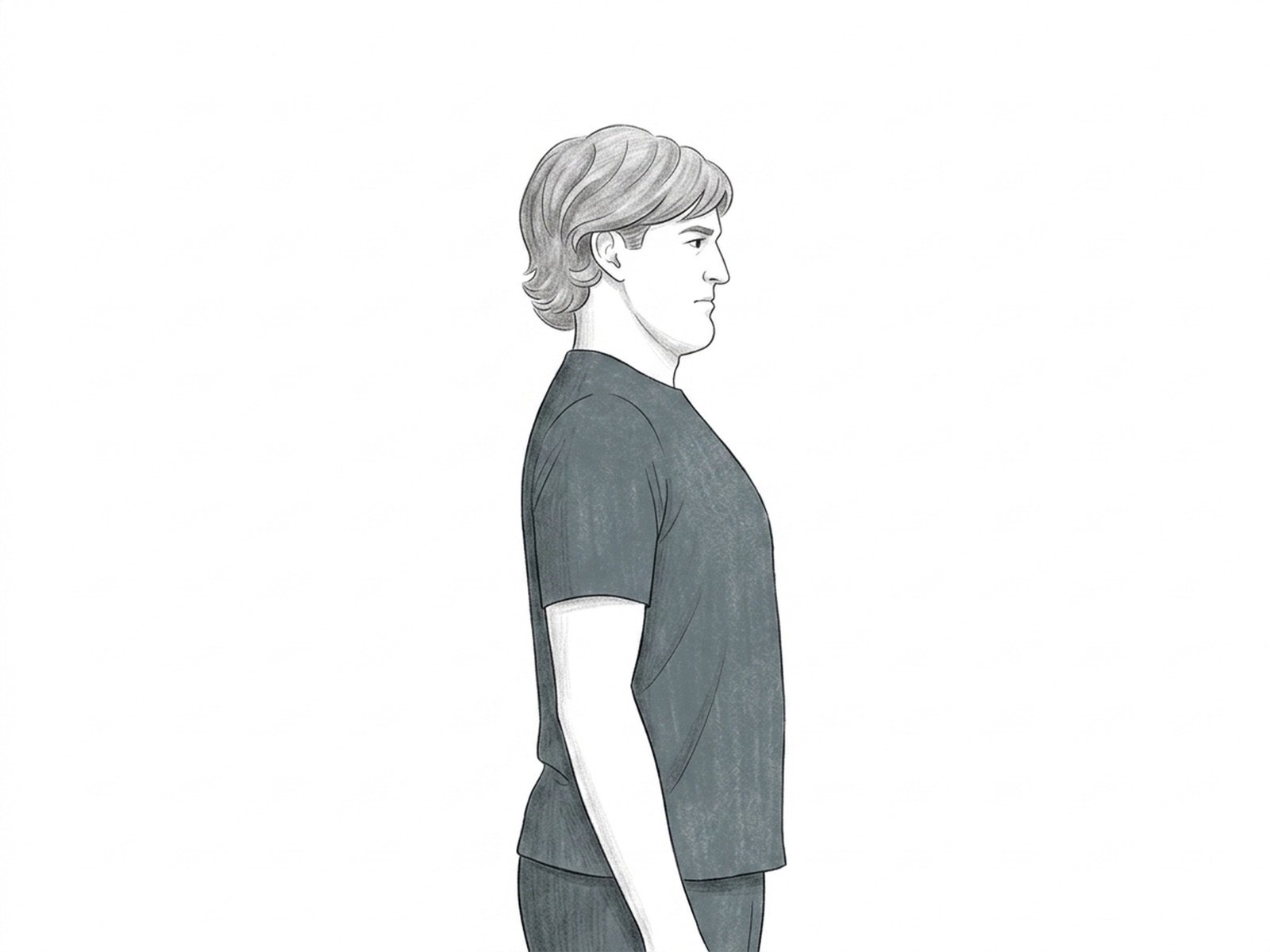
Cervical Retraction (Chin Tuck)
Activates the deep cervical flexors — longus colli and longus capitis — muscles essential for cervical stabilization and frequently inhibited in chronic neck-pain patterns.
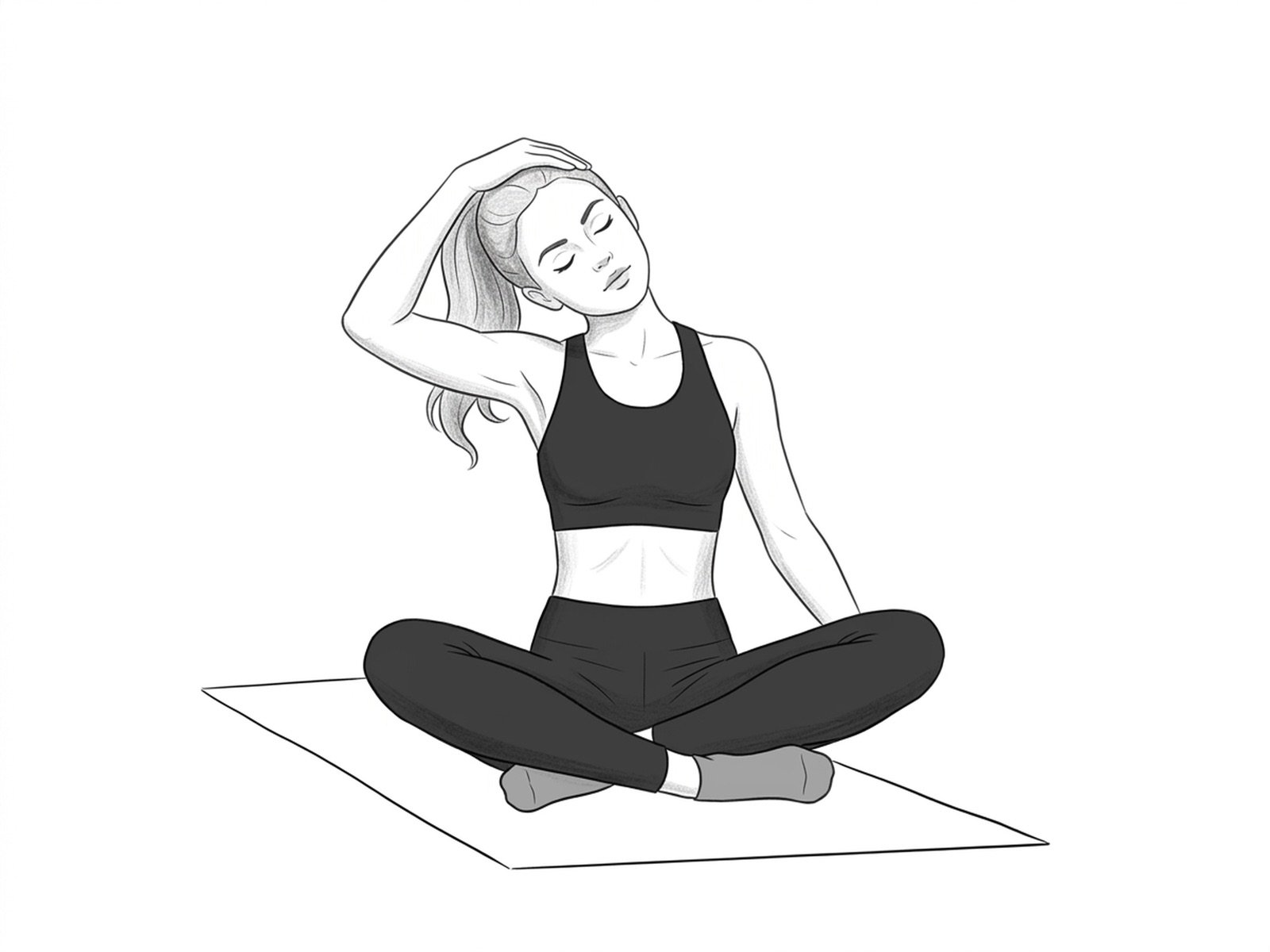
Sternocleidomastoid (SCM) Stretch
Selective stretch of the sternocleidomastoid — a muscle frequently shortened in patients with tension-type headache, cervicogenic headache, and forward-head posture. The position combines extension, rotation, and contralateral lateral flexion.
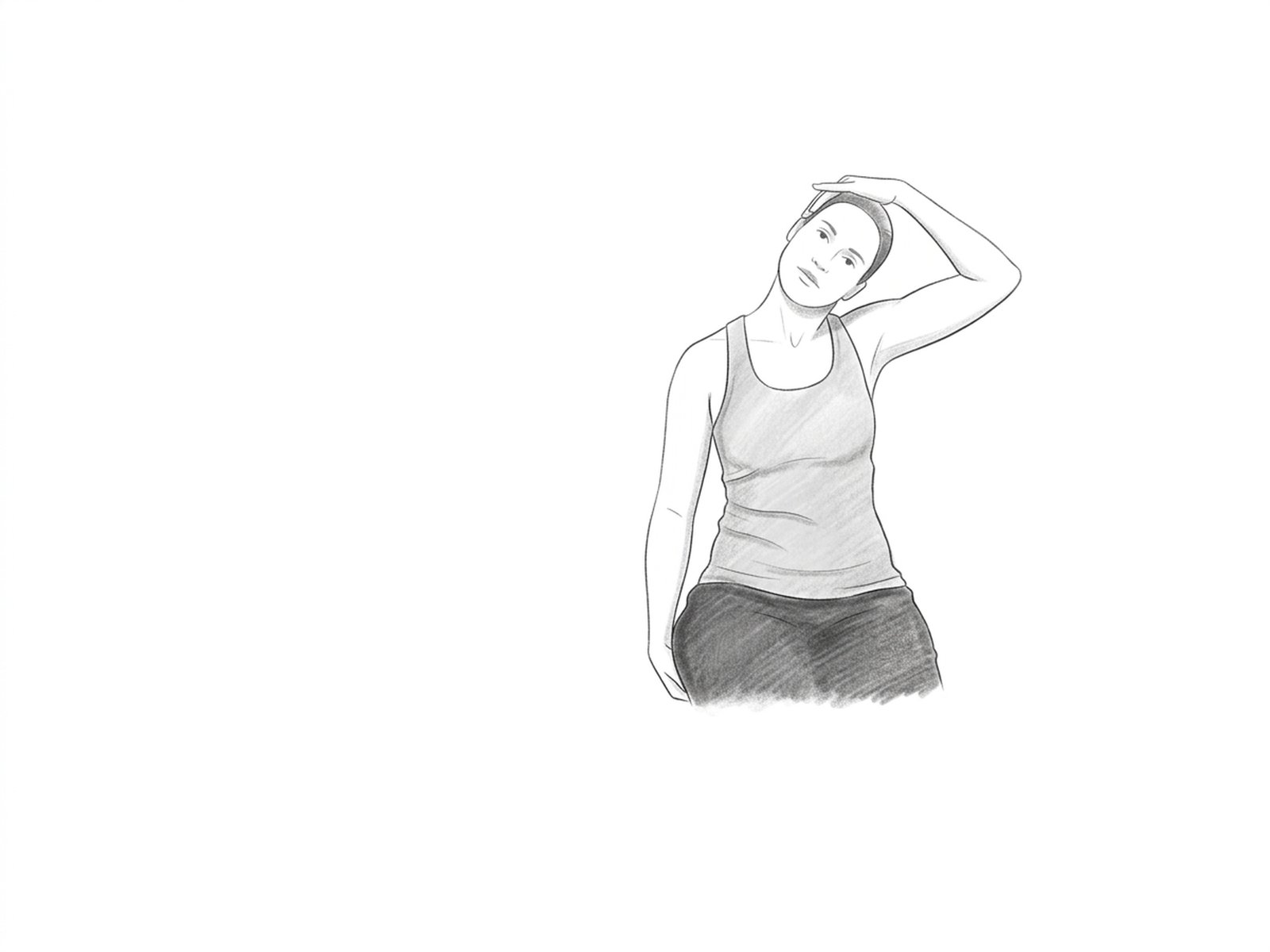
Upper-Trapezius Stretch
Stretches the upper trapezius — a muscle that is commonly hypertonic in patients with mechanical neck pain. Relieves the sensation of heaviness and tension in the neck and shoulders.