Therapeutic exercise
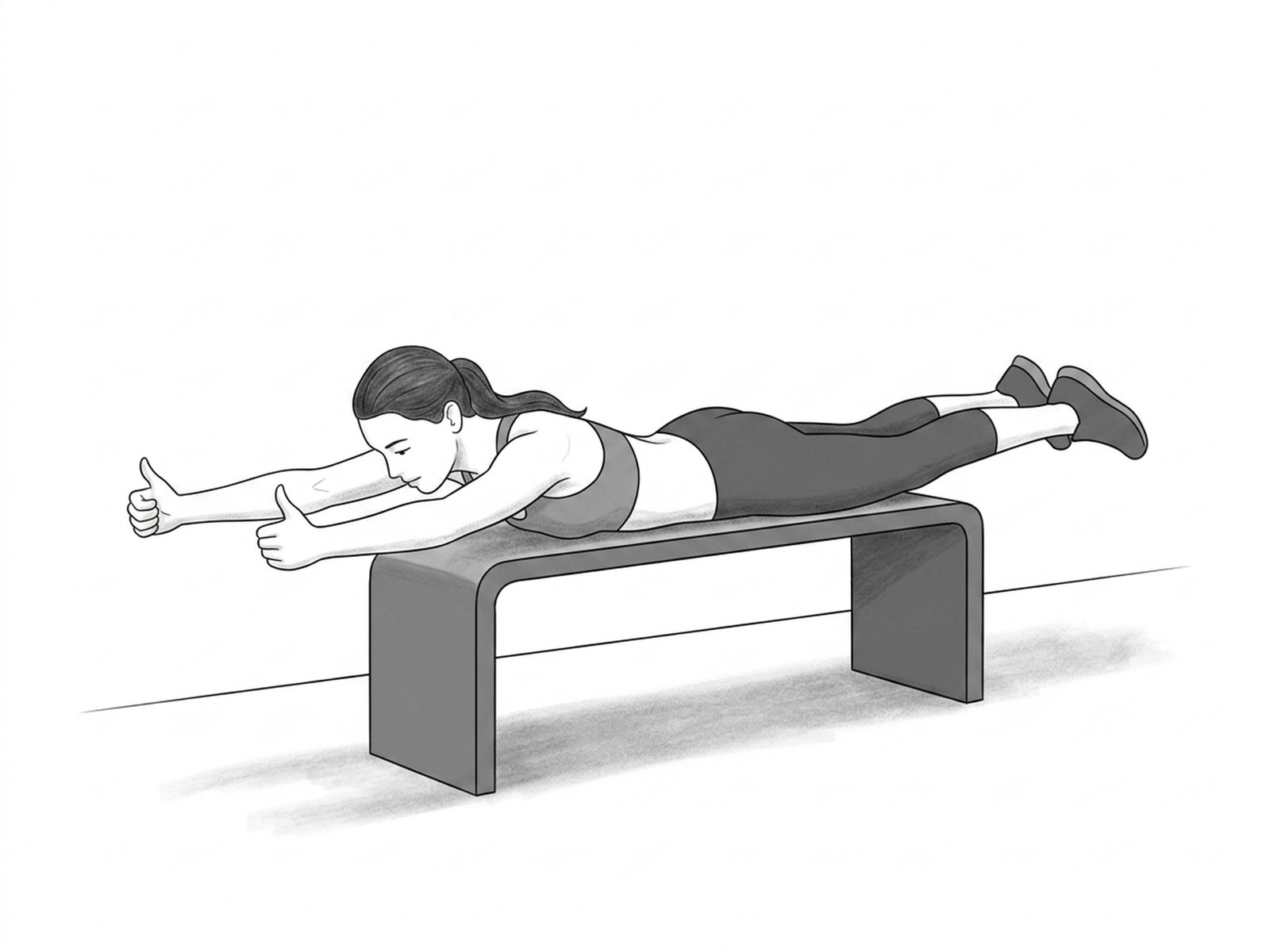
Prone I-Raise
Variant of the Prone YTWI series that specifically targets scapular depression combined with glenohumeral extension. Useful in cervical dystonia and upper-crossed syndrome — recruits the lower trapezius in a pattern opposite to the chronic compensation.
How to perform
- Starting position. Lie face-down on a bench or bed with the trunk supported and the arms hanging down.
- Step 2. Extend the arms in front of the head, thumbs pointing toward the ceiling — forming a continuous line with the trunk (I position).
- Step 3. Raise the arms maintaining the I shape, activating the musculature between the shoulder blades — do not let the shoulders rise toward the ears.
- Step 4. Hold maximum elevation for 2 seconds, with scapulae depressed and retracted.
- Return. Lower slowly over 3 seconds back to the starting position. The movement is small — what matters is the quality of the activation, not the range.
When not to perform
- Acute rotator-cuff injury
- Glenohumeral instability
- Recent shoulder surgery
- Adhesive capsulitis in a freezing phase
- Acute cervical pain in prone
- Symptomatic cervical disc herniation
Medical disclaimer. These exercises are presented for informational purposes only. Always consult your physician before starting any exercise program, especially in case of acute pain, recent injury, or underlying clinical condition.
Related Exercises
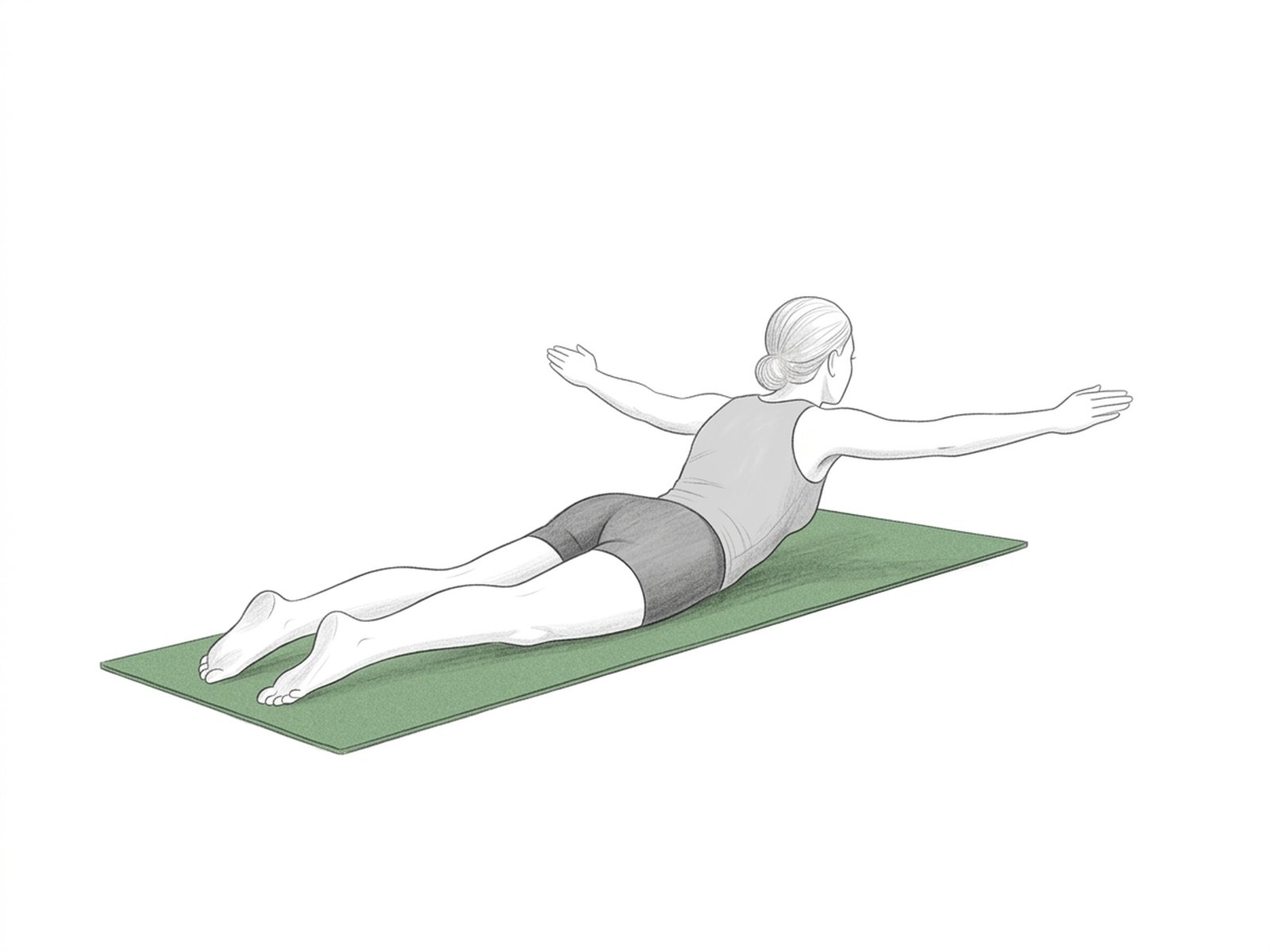
Prone T-Raise
Isolation of the middle trapezius and posterior deltoid in a prone position. Component of the Prone I/T/Y/W series — essential for re-balancing the shoulder girdle in patients with upper-crossed syndrome and scapular dyskinesia.
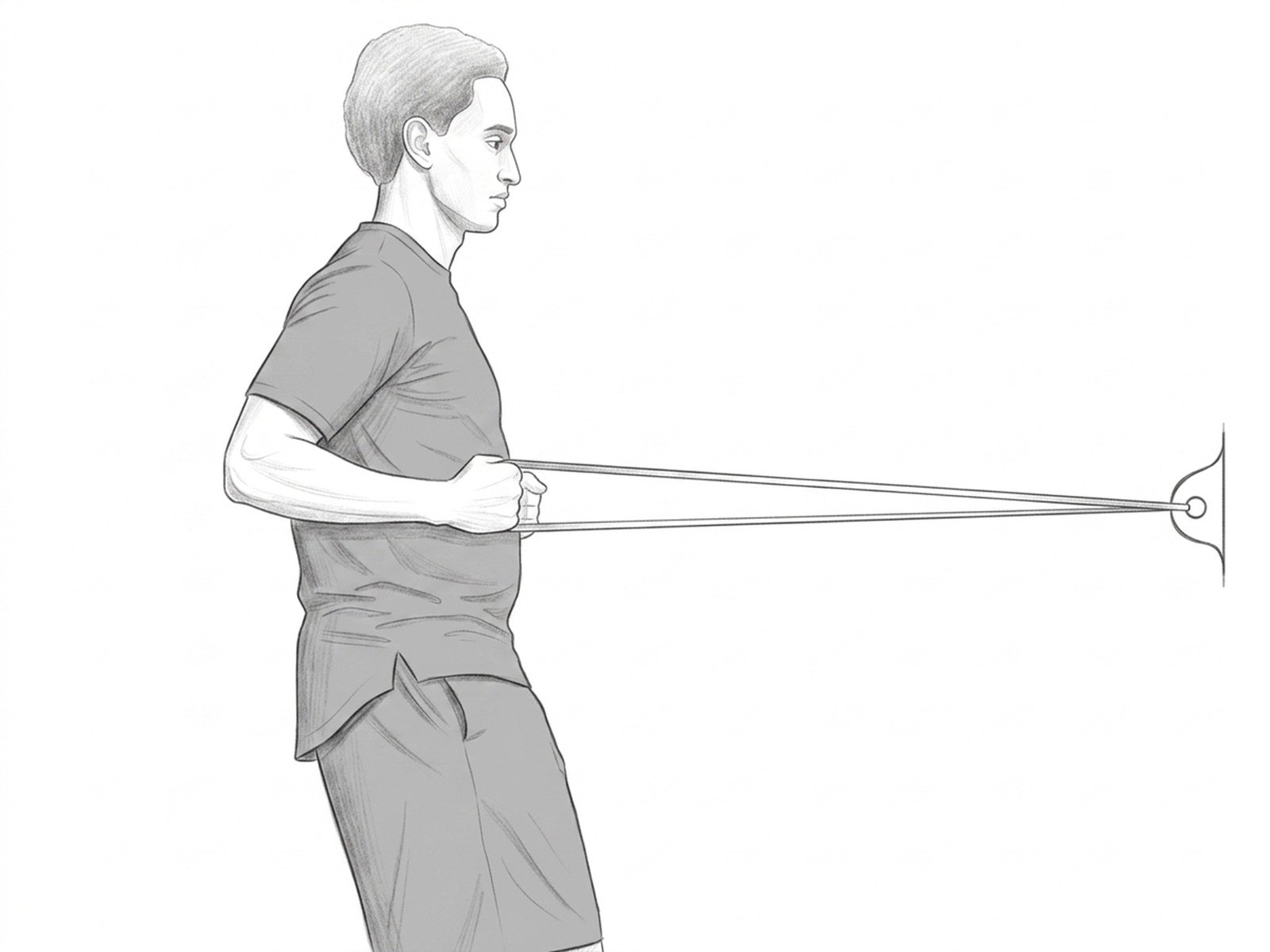
Banded Row
Horizontal pull with elastic resistance, recruiting the rhomboids, middle trapezius, and latissimus dorsi. The fundamental pulling exercise in shoulder-girdle rehabilitation — re-balances the pectoral/dorsal ratio in patients with upper-crossed syndrome.
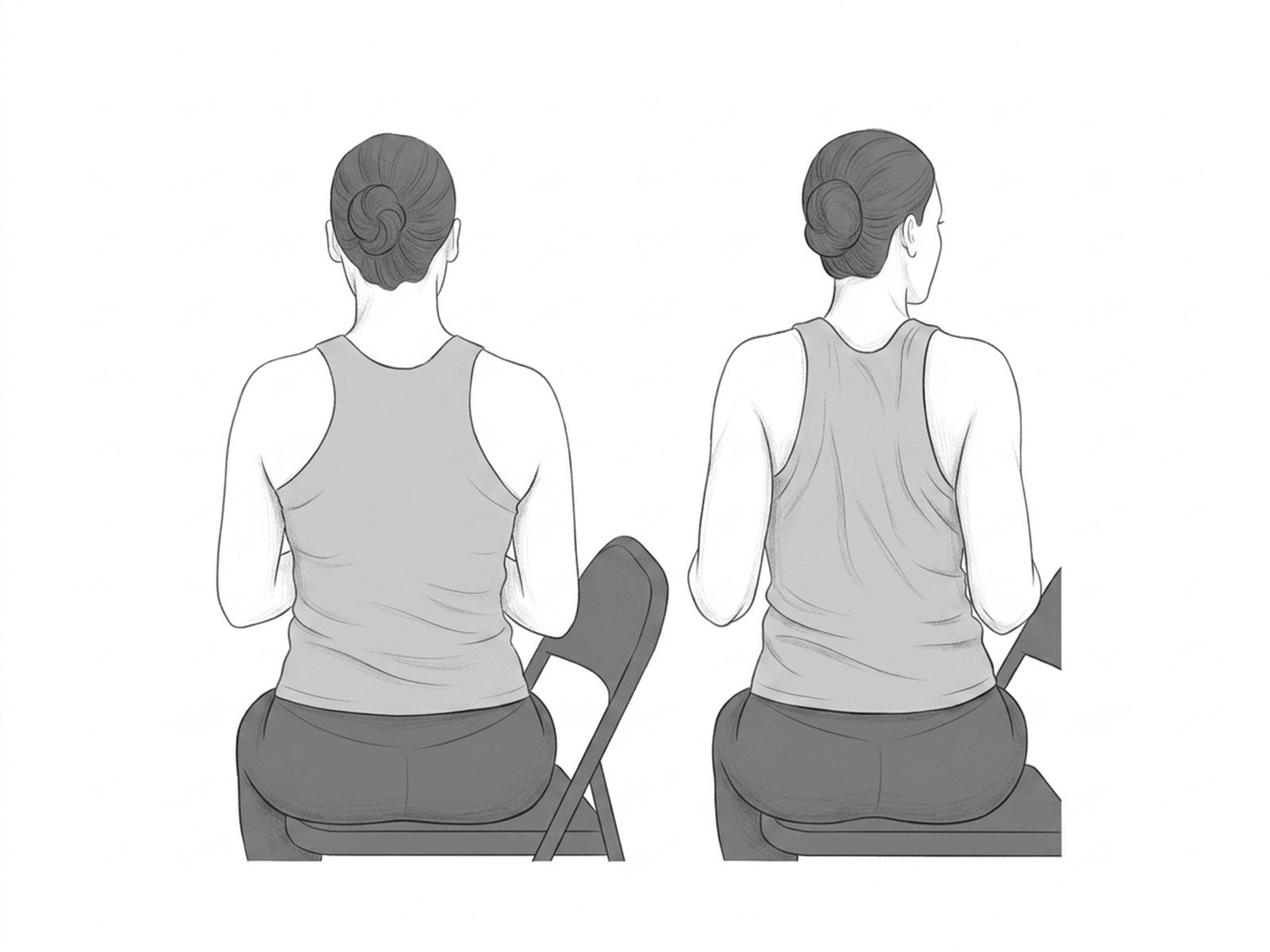
Scapular Retraction
Strengthens the scapular stabilizers — which support cervical posture and relieve compensatory overload on the upper trapezius, a muscle commonly tense in patients with neck pain.