Therapeutic exercise
Pulley-Assisted Elevation
Use of a home over-the-door pulley for passive assisted elevation of the affected shoulder. The healthy arm does the work; the affected arm is elevated without active muscular effort, gaining joint range in adhesive capsulitis and post-operative shoulder.
How to perform
- Starting position. Install a simple pulley over a door, with a long rope through the wheel and handles at both ends.
- Step 2. Sit in a chair facing the door, holding a handle in each hand.
- Step 3. With the healthy arm, pull the rope down — this makes the handle on the affected side rise, passively elevating the frozen shoulder.
- Step 4. Reach the tolerable limit without forcing acute pain and hold for 5 seconds.
- Return. Let the healthy arm release tension gradually, letting the affected arm descend slowly. Breathe deeply throughout the entire movement.
When not to perform
- Recent non-consolidated shoulder fracture
- Post-operative rotator-cuff repair in the first 6 weeks
- Active joint infection
- Recent unstabilized dislocation
- Upper-limb deep vein thrombosis
- Severe acute pain unresponsive to analgesics
Medical disclaimer. These exercises are presented for informational purposes only. Always consult your physician before starting any exercise program, especially in case of acute pain, recent injury, or underlying clinical condition.
Related Exercises
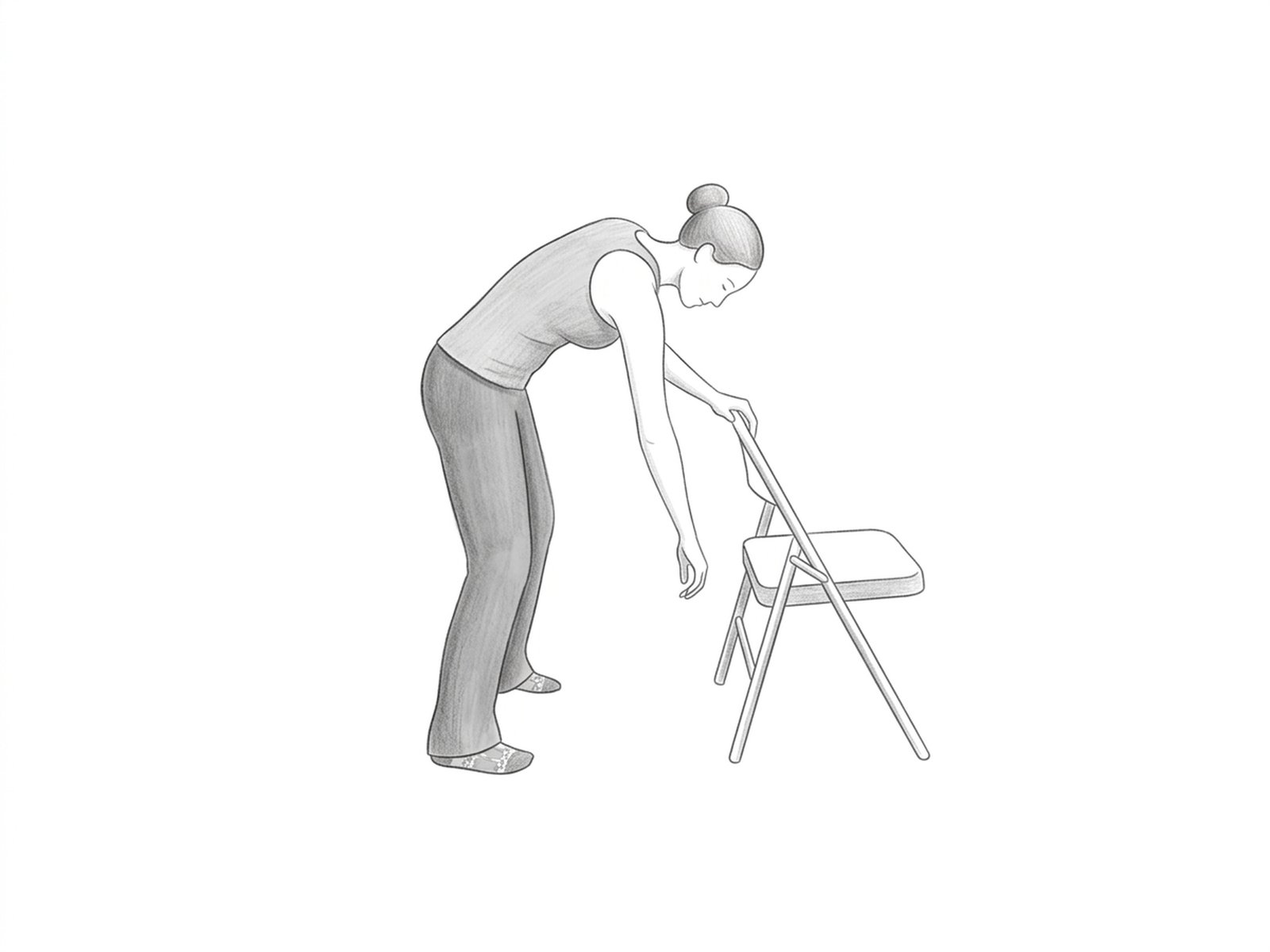
Codman Pendulum Exercise
Passive shoulder mobilization through gravity, without active muscle contraction. The first exercise prescribed for acute shoulder pain, adhesive capsulitis, and post-operative care — allows joint movement without rotator-cuff loading.
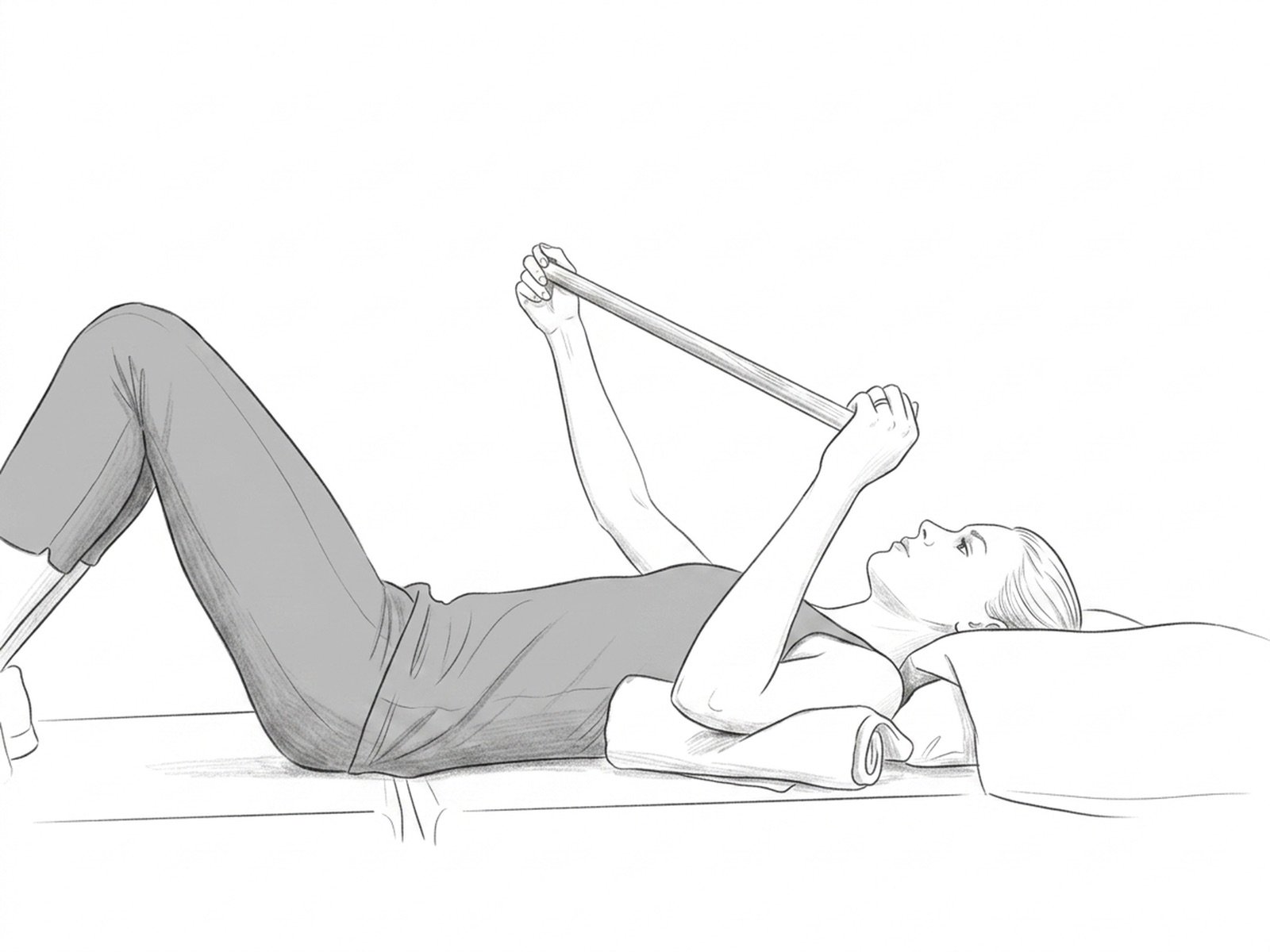
Cane-Assisted External Rotation
Self-assisted mobilization of glenohumeral external rotation using a cane or broomstick. The healthy arm guides the movement on the affected side, allowing range-of-motion recovery without active muscular contraction — essential in adhesive capsulitis and post-operative shoulder.
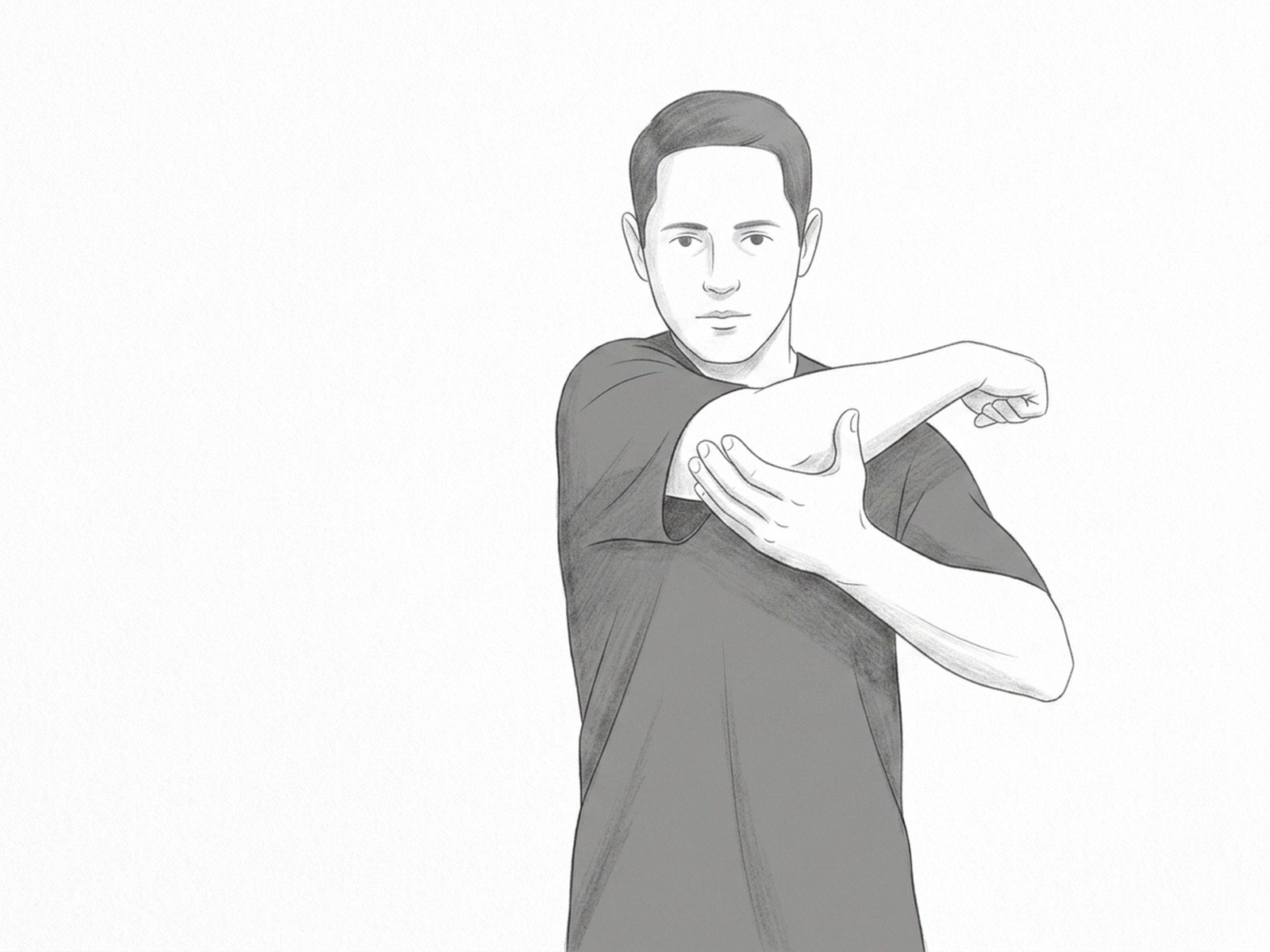
Cross-Body Shoulder Stretch
Stretch of the posterior shoulder capsule and external rotators in a functional position. Complements the sleeper stretch to correct the internal-rotation deficit (GIRD) common in rotator-cuff tendinopathy.