Side planks
The side plank is an isometric stabilization exercise that engages the lateral core musculature to resist lateral spinal flexion. For Quadratus Lumborum (QL) Myofascial Pain Syndrome, it builds endurance and load tolerance in the QL, reducing compensatory overactivity and spasm. This improved neuromuscular control promotes local tissue desensitization and functional lumbopelvic stability.
Muscles worked
Illustration demonstrating the position of the Side planks exercise.
Biomechanical Execution Sequence
05 phases- Starting position
Lie on your side with your elbow positioned directly beneath your shoulder and your legs stacked straight.
- Phase 2
Engage your core by bracing your abdominal muscles and squeezing your glutes.
- Phase 3
Lift your hips off the floor until your body forms a straight line from your head to your heels.
- Phase 4
Hold this position while breathing steadily, maintaining a neutral neck and spine.
- Return
Lower your hips with control back to the starting position.
Prescribed in Clinical Guides
Medical disclaimer. These exercises are presented for informational purposes only. Always consult your physician before starting any exercise program, especially in case of acute pain, recent injury, or underlying clinical condition.
Related Exercises
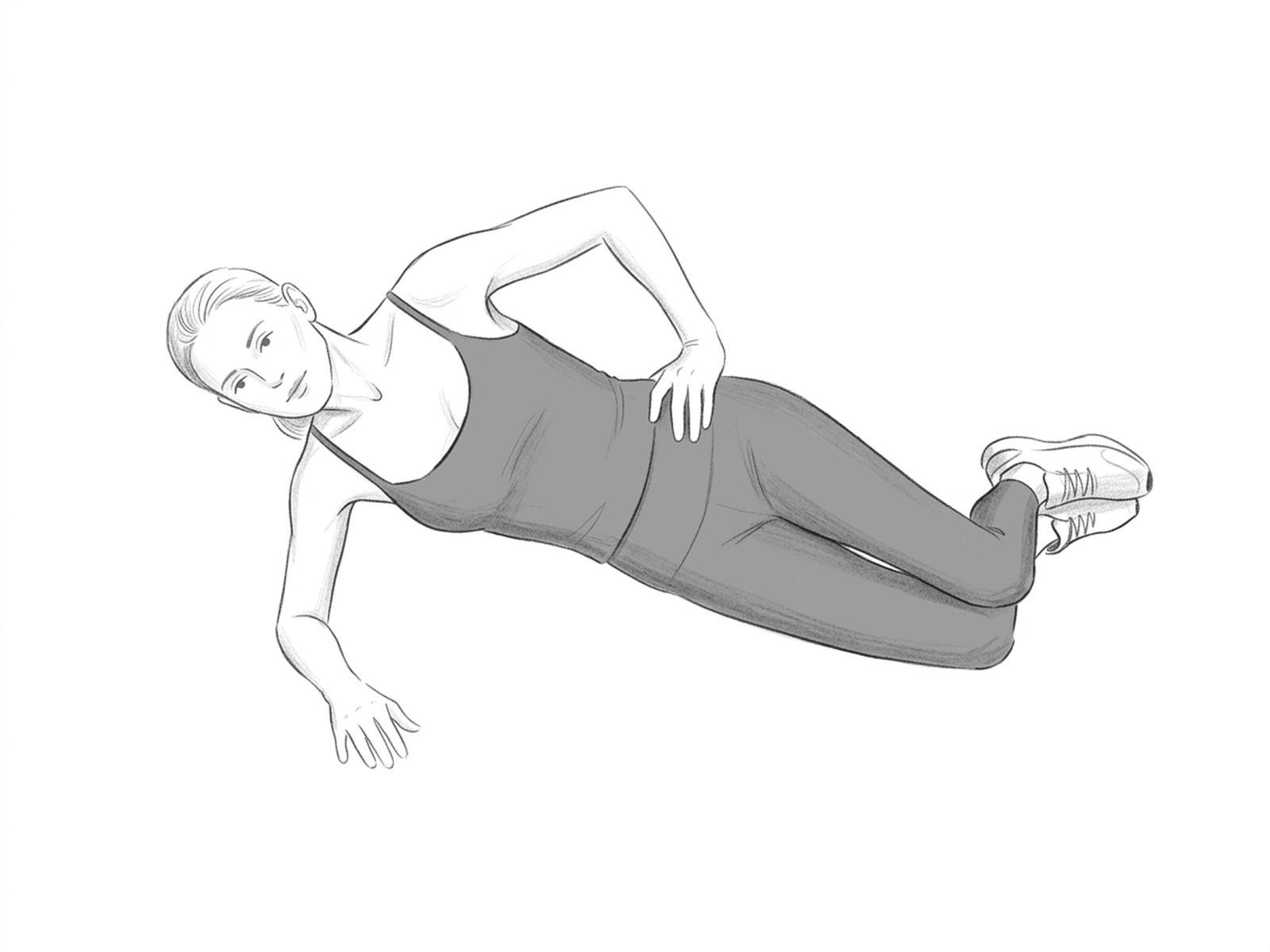
Modified Side Plank
Isometric strengthening of the quadratus lumborum and obliques — a component of the McGill Big 3, validated for chronic low back pain. Modified version on the knees for accessibility.
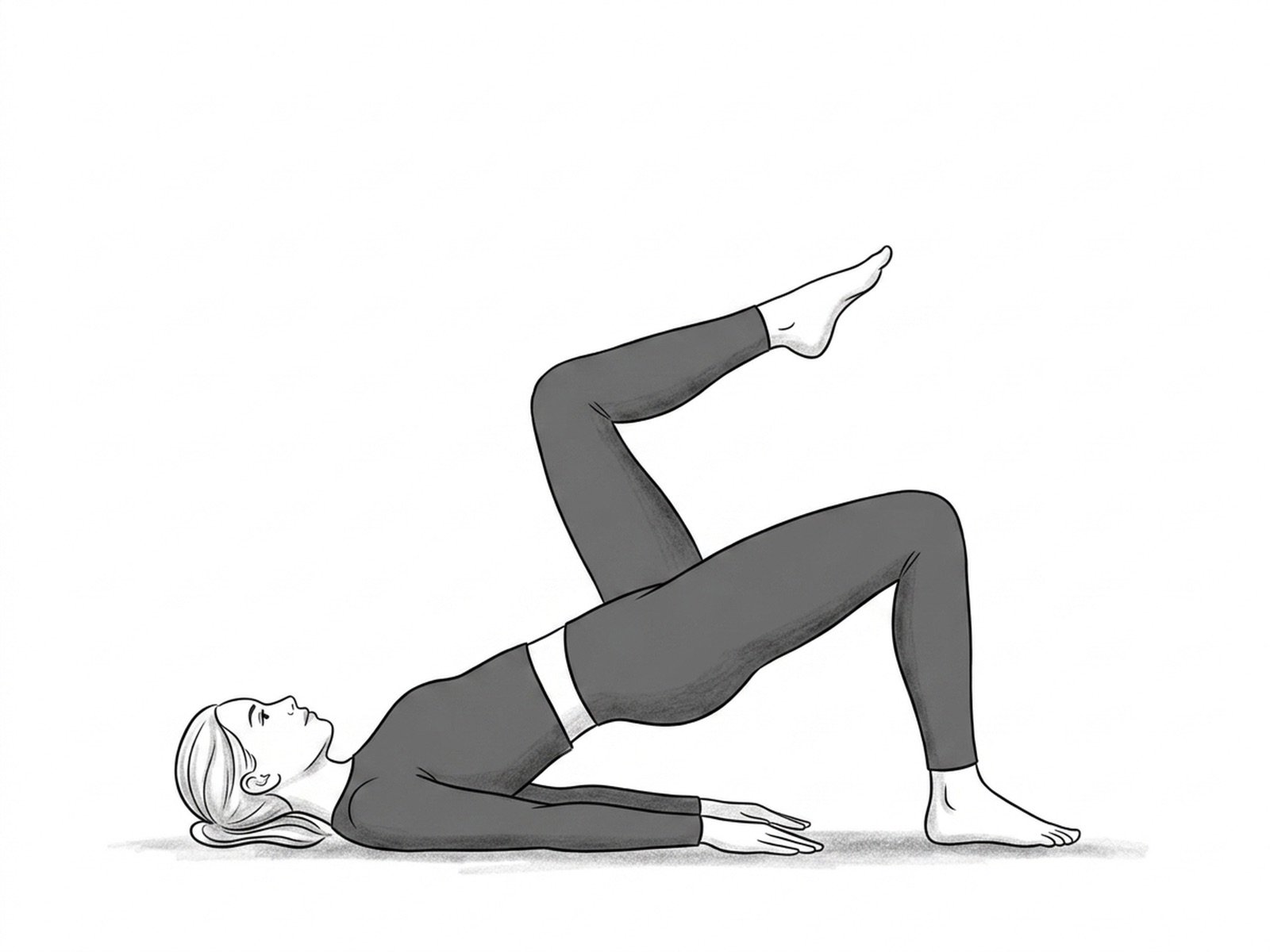
Bridge March
A progression of the glute bridge with a single-leg stability challenge. Strengthens the glutes and core simultaneously, adding motor control to the load — relevant in hip osteoarthritis.
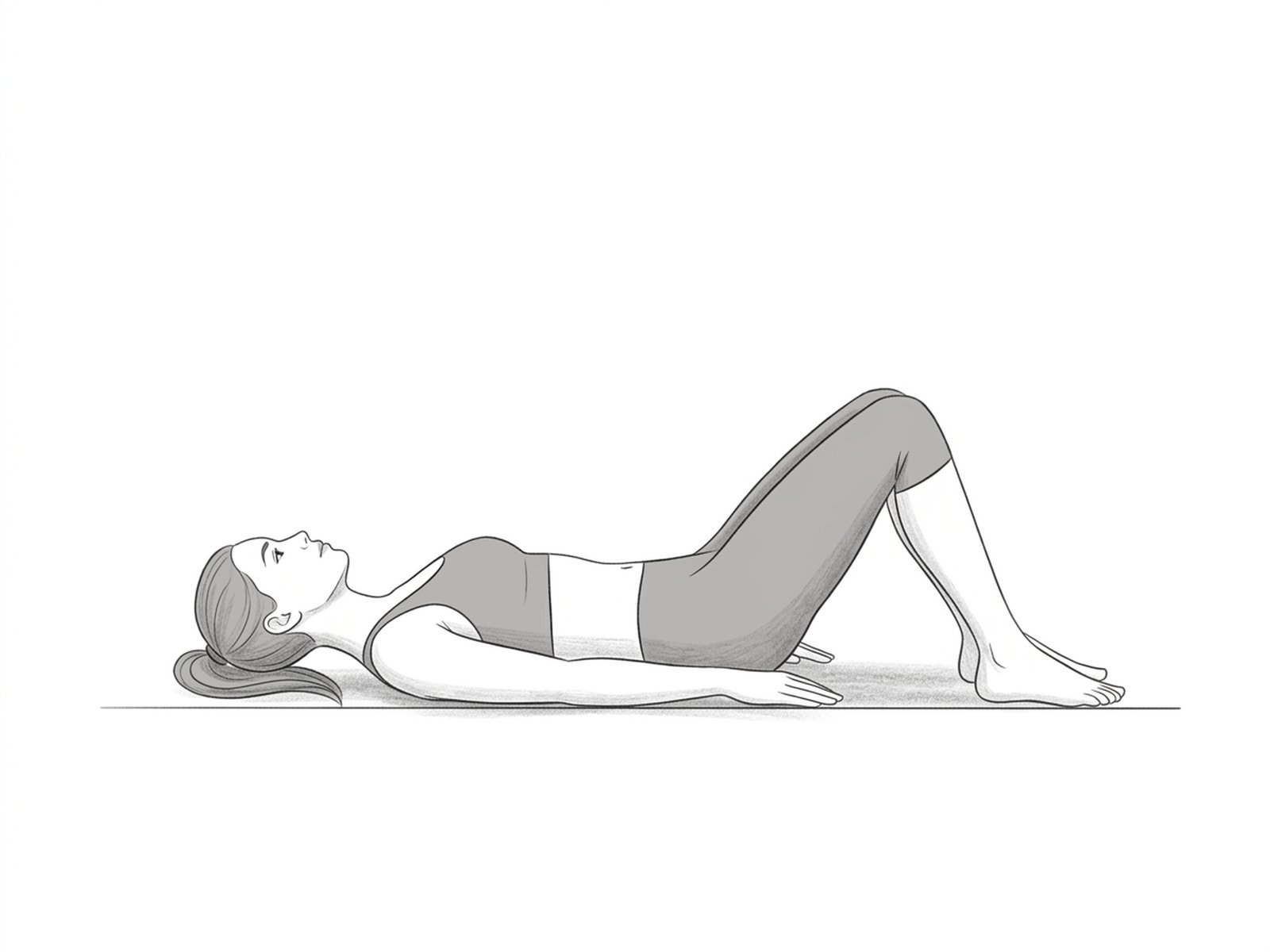
Transversus Abdominis Activation (Drawing-In)
Isolated motor activation of the transversus abdominis, the deep stabilizing muscle of the lumbar spine. The foundational motor-reeducation exercise — fundamental in core instability, sacroiliac dysfunction, and postpartum abdominal diastasis.