Therapeutic exercise
Thread the Needle Thoracic Rotation
Rotational mobilization of the thoracic spine in quadruped. Restores the thoracic rotation frequently lost in office workers — and whose absence forces the cervical and lumbar regions to compensate, generating pain.
How to perform
- Starting position. Get onto all fours with hands beneath the shoulders and knees beneath the hips.
- Step 2. Pass one arm underneath the trunk, sliding the hand along the floor toward the opposite side (like threading a needle).
- Step 3. Let the shoulder and temple of the moving side rest on the floor, feeling the thoracic rotation.
- Return. Return with control and repeat. Switch sides after completing the set.
When not to perform
- Acute shoulder pain when bearing weight
- Acute wrist injury
Medical disclaimer. These exercises are presented for informational purposes only. Always consult your physician before starting any exercise program, especially in case of acute pain, recent injury, or underlying clinical condition.
Related Exercises
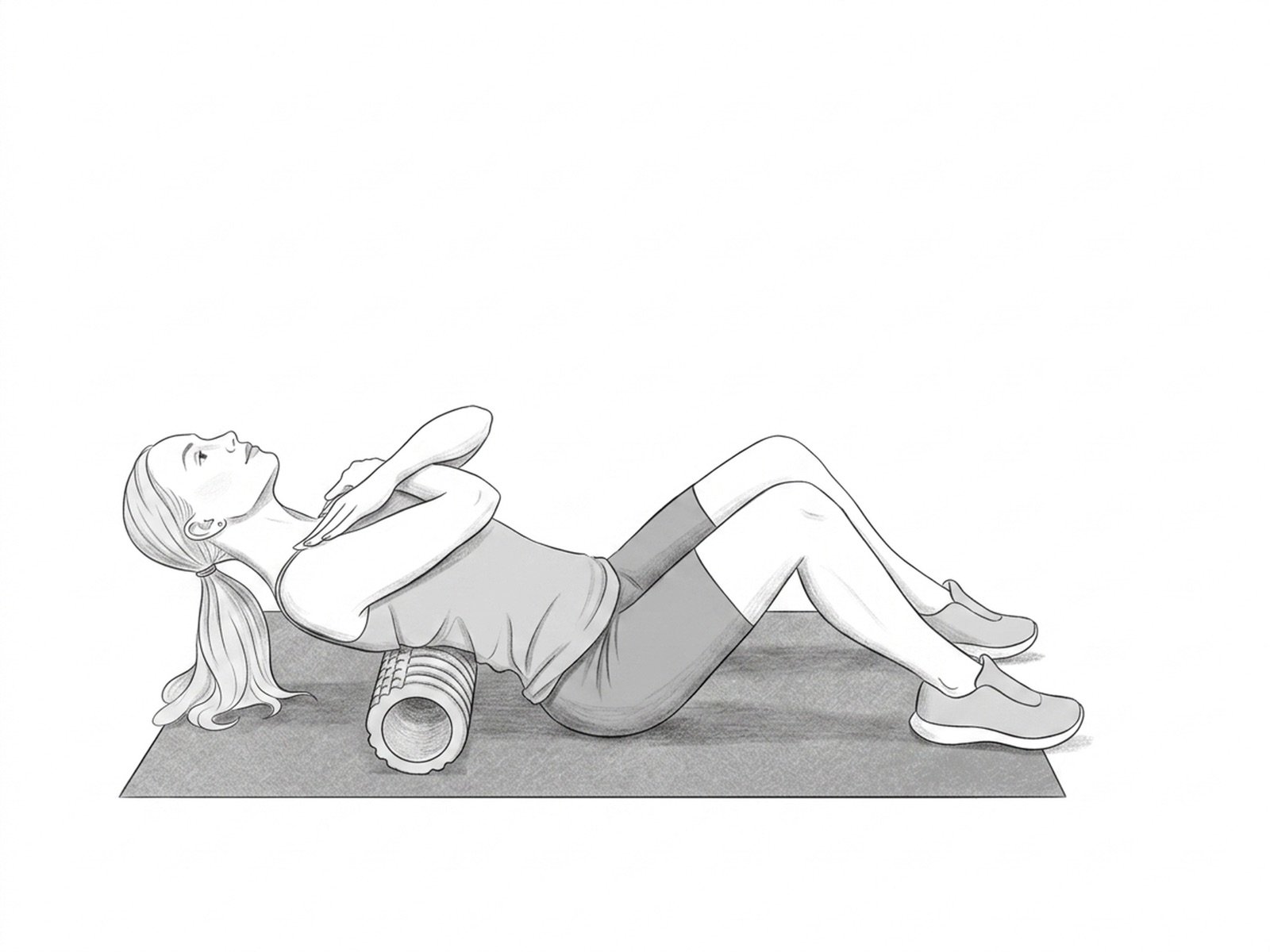
Thoracic Mobilization on a Foam Roller
Mobilizes the thoracic spine into extension using a foam roller. Improves mobility of the thoracic kyphosis and reduces secondary cervical compensations driven by stiffness in this region — common in people who spend long hours at a computer.
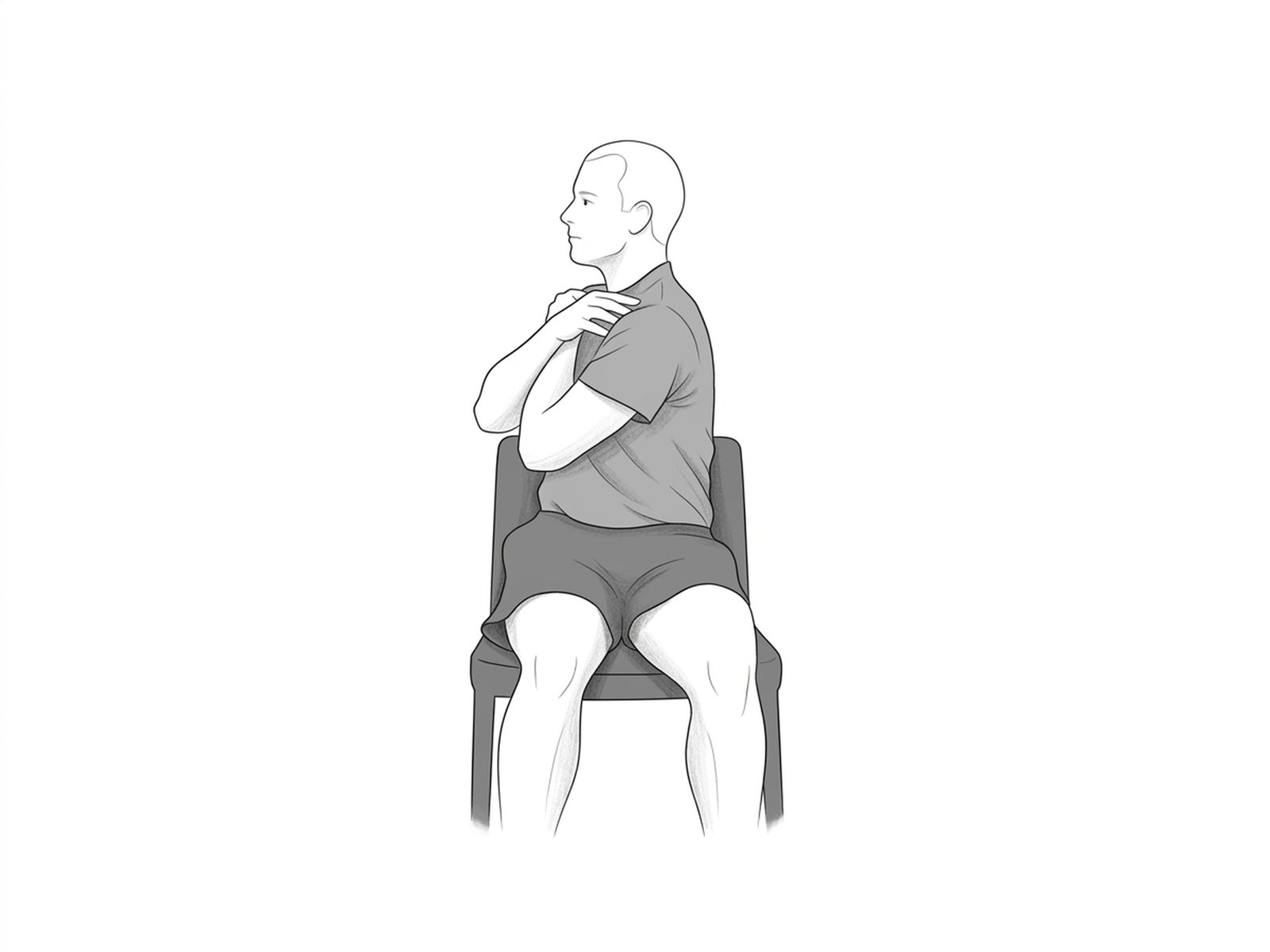
Seated Thoracic Rotation
Rotational mobilization of the thoracic spine in a seated position, accessible in the work environment. Complements quadruped rotation (thread-the-needle) as a postural variation for patients with hyperkyphosis and thoracic stiffness induced by a sedentary lifestyle.
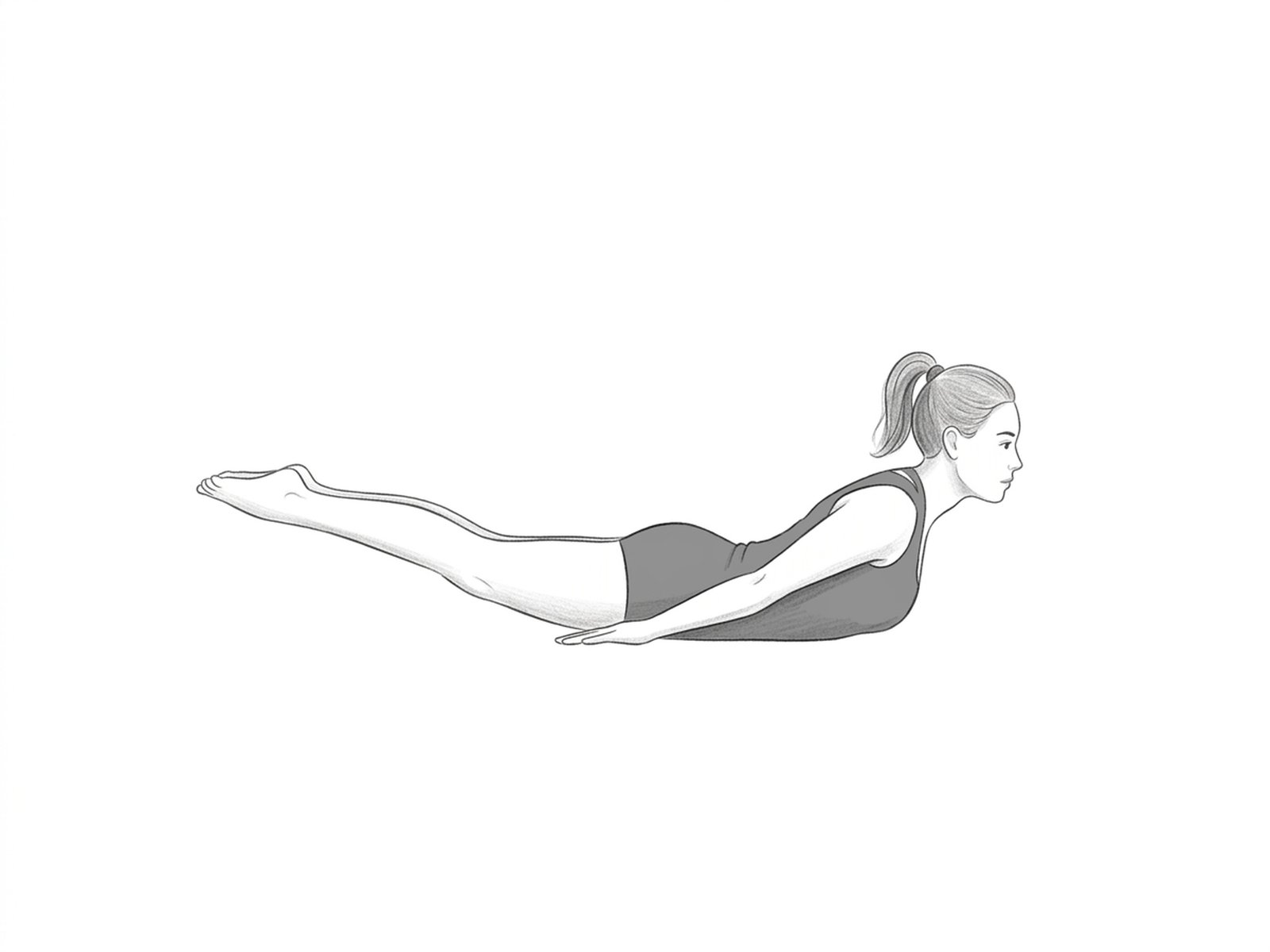
Prone Cobra (Dynamic Thoracic Extension)
Integrated strengthening of the thoracic extensors, spinal erectors, and scapular stabilizers in a prone position. Different from the prone press-up (lumbar extension), the focus here is thoracic extension and scapular retraction — a key exercise against postural hyperkyphosis.