The effects of acupuncture on the secondary outcomes of anxiety and quality of life for women undergoing IVF: A randomized controlled trial
Smith et al. · Acta Obstetricia et Gynecologica Scandinavica · 2019
Evidence Level
STRONGOBJECTIVE
To evaluate the effects of acupuncture on anxiety and quality of life in women undergoing in vitro fertilization treatment
WHO
848 women aged 18-42 years undergoing IVF in Australia and New Zealand
DURATION
3 sessions: 1st between days 6-8 of ovarian stimulation + 2 on the day of embryo transfer
POINTS
Guilai ST-29, Guanyuan CV-4, Qihai CV-6, Sanyinjiao SP-6, Xuehai SP-10 + additional points
🔬 Study Design
Acupuncture
n=424
Traditional Chinese acupuncture with specific points
Sham Control
n=424
Sham acupuncture with non-penetrating needles
📊 Results in numbers
Reduction in post-transfer anxiety
Questionnaire response rate
Improvement in general health (SF-36)
Women who completed the protocol
Percentage highlights
📊 Outcome Comparison
Anxiety (STAI) after transfer
General Health (SF-36) after treatment
This study found that acupuncture may help reduce anxiety during the in vitro fertilization process, particularly at the time of embryo transfer. Although the benefits did not persist after 3 months, acupuncture proved to be a safe option for supporting emotional well-being during this stressful period.
Article summary
Plain-language narrative summary
Acupuncture has been increasingly sought by women undergoing in vitro fertilization treatments, both in the hope of improving their chances of becoming pregnant and in the search for relief from the emotional stress that accompanies this process. In vitro fertilization treatment is known to have a significant impact on women's quality of life, generating anxiety and uncertainty throughout the process, especially during waiting periods. Although many fertility clinics offer psychological support services, not all women use these resources, either because they do not recognize the need or because they do not feel comfortable seeking help.
This Australian-New Zealand study specifically examined whether acupuncture could help reduce anxiety and improve quality of life in women during in vitro fertilization treatment. The researchers conducted a randomized controlled clinical trial, considered the gold standard of medical research, involving 848 women aged 18 to 42 years, recruited between June 2011 and October 2015 at 16 fertility centers in Australia and New Zealand. Participants were randomly assigned to two groups: one received true acupuncture and the other received sham acupuncture, serving as a control. The protocol was developed by expert consensus and consisted of only three sessions: the first between days 6 and 8 of ovarian stimulation and two on the day of embryo transfer.
Results showed that 608 women reached the embryo transfer stage, of whom 526 completed all three treatment sessions. To measure anxiety, the researchers used a scientifically validated scale, applied at three time points: at baseline, on the day of embryo transfer, and 14 weeks after the start of treatment. Quality of life was assessed using a comprehensive questionnaire that examines different aspects of physical and emotional health. The study found a statistically significant reduction in anxiety in women who received true acupuncture at the time of embryo transfer compared with those who received sham treatment.
Regarding quality of life, there was an improvement in the "general health" domain in the acupuncture group, although this benefit was not sustained at the 14-week follow-up.
These findings have important implications for both patients and assisted reproduction professionals. For women undergoing in vitro fertilization, the study suggests that acupuncture may provide some relief from anxiety during one of the most stressful moments of treatment — the day of embryo transfer. This period is often described by patients as extremely distressing, as it represents the culmination of weeks of preparation and the anticipation of results. However, it is important to note that the observed benefits were temporary and were not sustained over time.
For health care professionals, the results indicate that, although acupuncture may have some role in managing anxiety during in vitro fertilization treatment, it should not be viewed as a complete solution for patients' emotional needs.
The study has some important limitations that should be considered when interpreting the results. First, the acupuncture protocol used was relatively brief, with only three sessions, which may not have been sufficient to produce more lasting benefits. In addition, there was a significant dropout rate in questionnaire responses, especially at the long-term follow-up, when many women already knew the outcome of their treatments. The researchers also observed that women who completed all treatments tended to have a more positive view of their general health, suggesting that this group may have been more engaged in caring for their own well-being.
It is important to note that, three months after the start of treatment, regardless of the group to which they belonged, women showed elevated anxiety scores and reduced emotional well-being, highlighting the ongoing need for psychosocial support during and after in vitro fertilization treatment. These findings suggest that, although acupuncture may offer punctual benefits, the emotional needs of women undergoing fertility treatments are complex and require more comprehensive and sustained approaches over time.
Strengths
- 1Large multicenter sample of 848 women
- 2Well-controlled, randomized double-blind trial
- 3Use of validated instruments (STAI, SF-36)
- 4Acupuncture protocol based on Delphi consensus
- 514-week follow-up after treatment
Limitations
- 1Short-duration acupuncture protocol (only 3 sessions)
- 2Anxiety benefits did not persist at follow-up
- 330% dropout rate due to canceled cycles
- 4Possible residual activity of the sham control
- 5Did not use a fertility-specific questionnaire (FertiQoL)
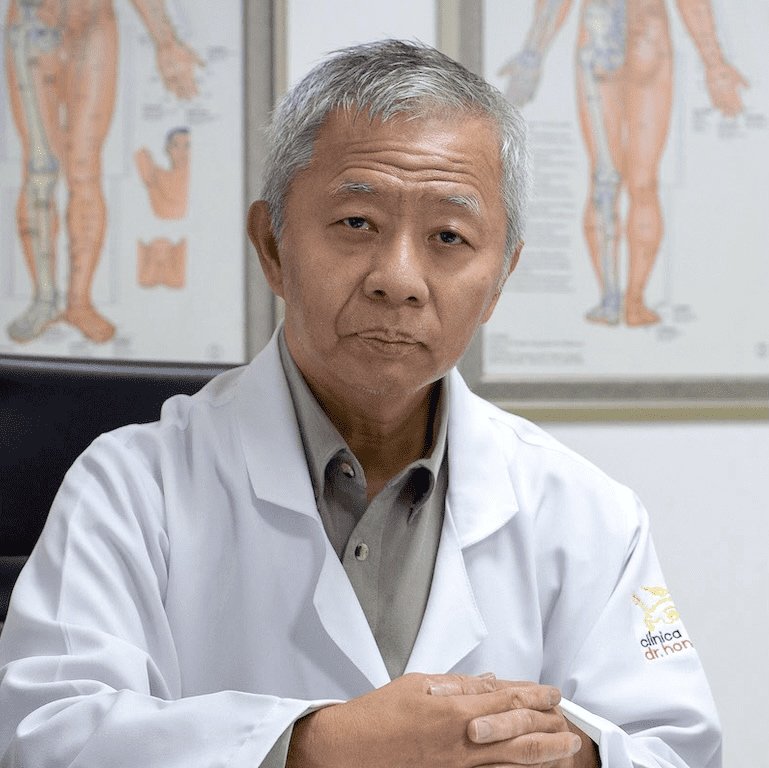
Expert Commentary
Prof. Dr. Hong Jin Pai
PhD in Sciences, University of São Paulo
▸ Clinical Relevance
Women undergoing IVF cycles represent one of the populations most vulnerable to acute psychological distress that we see in our practice. The perioperative window of embryo transfer — with all the symbolic weight it carries — is a moment of intense anxiety and, paradoxically, of limited pharmacologic support, given the reproductive context. This trial with 848 participants recruited at 16 Australian and New Zealand centers offers a robust foundation for integrating acupuncture as an adjunctive resource at this critical moment. The 1.1-point reduction on the post-transfer anxiety scale, with a confidence interval that does not cross zero, and the 2.6-point improvement in the SF-36 general health domain provide sufficient support to guide the inclusion of acupuncture in emotional support protocols at assisted reproduction centers, particularly as a complement — and not a substitute — to structured psychological care.
▸ Notable Findings
The most striking finding of this work is the statistically significant reduction in anxiety at exactly the moment of embryo transfer, the peak of cycle stress. This acute effect, captured by the STAI and validated in a double-blind design with non-penetrating sham, demonstrates that three sessions of acupuncture — one during stimulation and two on the day of transfer — are sufficient to produce a measurable impact on the immediate anxiety state. The improvement in the SF-36 general health domain reinforces that the effect is not unidimensional. The protocol derived from Delphi consensus among experts deserves attention: it signals that point selection was deliberate and reproducible, which facilitates clinical implementation. The fact that, 14 weeks later, both groups showed elevated anxiety scores and worsened emotional well-being is, in itself, a finding that reframes the discussion — not as a failure of acupuncture, but as evidence of the magnitude and chronicity of the psychological distress associated with IVF.
▸ From My Experience
In my practice with oncology patients and chronic pain patients undergoing repeated invasive procedures, I have observed a similar pattern: acupuncture produces its most clear-cut anxiolytic effect in the first 24 to 48 hours after the session, with intensity that tends to attenuate without maintenance. With three sessions concentrated within a few days, as in this protocol, what is captured is precisely this acute window — and it is exactly there that the IVF patient most needs support. I usually recommend that, for sustained emotional outcomes, at least eight to twelve sessions distributed over the full cycle are necessary. The patient profile that responds best in my experience is the one with predominantly situational anxiety, without underlying generalized anxiety disorder — where acupuncture potentiates psychological support without competing with it. At the Pain Center, we frequently combine autonomic regulation techniques — such as auricular acupuncture and points like Yintang, PC-6, and HT-7 — with body sessions, which appears to amplify and prolong the anxiolytic effect observed clinically.
Full original article
Read the full scientific study
Acta Obstetricia et Gynecologica Scandinavica · 2019
DOI: 10.1111/aogs.13528
Access original articleThis study underpins the editorial content of the site.
Condition pages and clinical articles that cite this evidence as the basis of their recommendations.
Scientific Review

Marcus Yu Bin Pai, MD, PhD
CRM-SP: 158074 | RQE: 65523 · 65524 · 655241
PhD in Health Sciences, University of São Paulo. Board-certified in Pain Medicine, Physical Medicine and Rehabilitation, and Medical Acupuncture. Scientific review and curation of every entry in this library.
Learn more about the author →Medical disclaimer: This content is for educational purposes only and does not replace consultation, diagnosis, or treatment by a qualified professional. Some information may be assisted by artificial intelligence and is subject to inaccuracies. Always consult a physician.
Content reviewed by the medical team at CEIMEC — Integrated Centre for Chinese Medicine Studies, a reference in Medical Acupuncture for over 30 years.
Related articles
Based on this article’s categories