Clinical Effects of Scalp Electrical Acupuncture in Stroke: A Sham-Controlled Randomized Clinical Trial
Hsing et al. · The Journal of Alternative and Complementary Medicine · 2012
Evidence Level
MODERATEOBJECTIVE
To assess the efficacy of subcutaneous scalp electrical stimulation in functional recovery of patients with chronic ischemic stroke
WHO
62 patients with ischemic stroke at least 18 months prior, ages 24-65 years
DURATION
Ten 30-minute sessions, twice a week for 5 weeks
POINTS
Motor and sensory areas of the scalp corresponding to the Penfield homunculus
🔬 Study Design
Active group
n=35
Scalp electroacupuncture with 2/100 Hz stimulation
Sham group
n=27
Placebo stimulation with disconnected leads
📊 Results in numbers
Improvement on NIHSS (active group)
Significant difference between groups
No adverse events
Completion rate
Percentage highlights
📊 Outcome Comparison
Improvement on NIHSS
This study tested a special type of scalp acupuncture combined with electrical stimulation in people who had suffered a stroke more than a year earlier. The results showed that the treatment can help improve some neurological symptoms and was safe and well tolerated by patients.
Article summary
Plain-language narrative summary
Stroke is one of the leading causes of disability worldwide, accounting for a significant number of patients who are left with permanent sequelae. Although some spontaneous recovery may occur in the first months after stroke, especially during the first six to twelve months, about one-third to one-half of patients are left with moderate to severe functional limitations that persist into the chronic phase of the disease. During this late period, conventional treatment options are limited, creating an important need to seek complementary therapies that can offer additional benefits to patients.
Scalp acupuncture has emerged as a promising therapeutic approach in this context. This technique involves the insertion of needles into the subcutaneous tissue of the scalp at points corresponding to the functional areas of the cerebral cortex, based on the concept that stimulation of these specific regions can increase activity in the corresponding brain areas and consequently promote local neuroplasticity in the injured regions. Although prior studies have investigated the effects of conventional acupuncture in stroke patients, the results have remained inconsistent, and there has been limited evidence specifically on the efficacy of scalp electroacupuncture in the chronic phase of stroke.
To address these questions, the researchers conducted a randomized controlled study of 62 patients who had suffered ischemic stroke at least 18 months earlier. The participants, aged 24 to 65 years, were randomly divided into two groups to receive ten treatment sessions. The active group received low-frequency electrical stimulation delivered through acupuncture needles inserted into the scalp, while the control group received sham treatment using disconnected leads but with all other aspects of the protocol kept identical. Each session lasted 30 minutes and was performed twice a week for five weeks.
The needles were positioned over projections of motor, sensory, and association areas of the brain, based on established neuroanatomical mapping. To assess outcomes, the researchers used three validated scales: the National Institutes of Health Stroke Scale (NIHSS), which evaluates neurological function; the Barthel Index, which measures functional independence; and the modified Rankin Scale, which assesses the degree of functional disability.
The results showed that the group receiving active treatment had significant improvement on the NIHSS compared with the sham group. This scale, which evaluates specific neurological aspects such as level of consciousness, motor strength, and other neurological functions, detected clinically relevant changes in patients treated with verum scalp electroacupuncture. Importantly, the active group showed statistically significant improvement after the ten treatment sessions, while the control group showed no substantial change. However, the other two functional scales used in the study did not show significant differences between groups.
All patients tolerated treatment well, with no reports of major adverse events or dropouts during the study period.
Clinically, these findings suggest that scalp electroacupuncture may offer detectable neurological benefits for patients with chronic stroke, even when applied over a relatively short period. For health professionals, this represents an additional therapeutic option that may be considered as part of a comprehensive rehabilitation plan. For patients, especially those in the chronic phase of stroke who have few available treatment alternatives, this technique may represent hope for functional improvement. The results also indicate that the electrical component of the stimulation may be crucial to the observed benefits, suggesting that electrostimulation through acupuncture needles may be more effective than traditional manual acupuncture in this specific context.
It is important to acknowledge the limitations of this study. The difference in results between scales may indicate that the NIHSS is more sensitive for detecting short-term neurological changes, while the functional scales may require more time or more substantial changes to show improvement. In addition, assessments were performed only immediately after the end of treatment, precluding analysis of whether the benefits are sustained over the long term or whether they may translate into broader functional improvements over time. The study population was heterogeneous in terms of time since stroke and lesion location, which, while increasing the generalizability of the results, may have influenced the detection of effects across all scales used.
Future research should include longer follow-up periods to assess the durability of benefits and to investigate whether the initial neurological improvements eventually translate into measurable functional gains in activities of daily living. It would also be valuable to explore the underlying neurobiological mechanisms of these effects and to compare traditional acupuncture directly with electrostimulation to determine which component is more responsible for the observed benefits.
Strengths
- 1Randomized study with a well-structured sham control group
- 2Use of validated neurological scales
- 3Absence of adverse effects
- 4Complete adherence to treatment
Limitations
- 1Significant improvement on only one of the three scales assessed
- 2Assessment performed only immediately after treatment
- 3Heterogeneous population may have diluted the results
- 4Lack of long-term follow-up
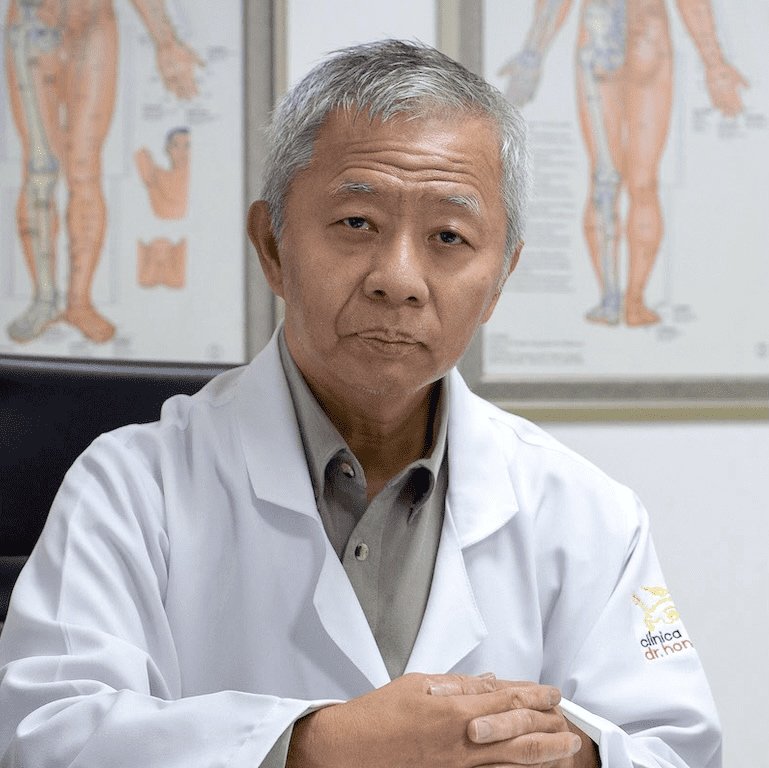
Expert Commentary
Prof. Dr. Hong Jin Pai
PhD in Sciences, University of São Paulo
▸ Clinical Relevance
The chronic phase of stroke—here defined as at least 18 months from onset—represents one of the most challenging clinical scenarios in neurological rehabilitation, as the window for spontaneous recovery has already closed and the conventional arsenal offers very few disease-modifying options. In this context, a randomized trial with a sham group demonstrating significant improvement on the NIHSS after ten sessions of scalp electroacupuncture with alternating 2/100 Hz frequency has direct relevance for any service caring for stroke survivors with persistent motor and sensory sequelae. The protocol with needles positioned over the neuroanatomical projections of motor, sensory and association cortical areas is replicable, standardizable, and fits naturally into a multidisciplinary rehabilitation program. Patients aged 24 to 65 with chronic ischemic stroke are the most immediate target population, but the rationale extends to any patient functional enough to tolerate 30-minute outpatient sessions twice a week.
▸ Notable Findings
The data deserving extra attention is the improvement on the NIHSS—from 4.36 to 3.75 in the active group, with a statistically significant between-group difference (p = 0.03)—achieved in a chronically established population, where reductions on this scale are typically difficult to elicit with any intervention. That the Barthel Index and modified Rankin Scale did not follow this change does not diminish the finding; on the contrary, it suggests that scalp electroacupuncture acts primarily on measurable neurological parameters before translating into broader functional gains, which is biologically plausible given the concept of neuroplasticity induced by repetitive low- and high-frequency stimulation. The 100% adherence and complete absence of adverse events in 62 patients consolidate the safety profile of the technique, a fundamental aspect when considering routine incorporation in populations with cardiovascular comorbidities and on anticoagulation.
▸ From My Experience
In my practice at the HC-FMUSP Pain Center, I have incorporated scalp acupuncture—with and without electrical stimulation—in the management of neurological sequelae for many years, and what this work describes resonates with what we routinely observe. In patients with chronic stroke, I usually see the first signs of response between the third and fifth sessions, generally manifesting as a subtle improvement in tone or movement quality, before any measurable functional gain appears on the scales. A typical cycle in our service is around 12 to 20 sessions to reach an initial plateau, with subsequent monthly maintenance in those who respond well. I invariably combine scalp acupuncture with active motor physical therapy—the plasticity window opened by electrical stimulation needs to be exploited with movement. The profile that responds best, in my experience, is the motivated patient with predominantly subcortical lesion and preserved cognitive function. I avoid the technique in patients with uncontrolled post-stroke epilepsy, a situation that this study did not address and that warrants additional caution.
Full original article
Read the full scientific study
The Journal of Alternative and Complementary Medicine · 2012
DOI: 10.1089/acm.2011.0131
Access original articleScientific Review

Marcus Yu Bin Pai, MD, PhD
CRM-SP: 158074 | RQE: 65523 · 65524 · 655241
PhD in Health Sciences, University of São Paulo. Board-certified in Pain Medicine, Physical Medicine and Rehabilitation, and Medical Acupuncture. Scientific review and curation of every entry in this library.
Learn more about the author →Medical disclaimer: This content is for educational purposes only and does not replace consultation, diagnosis, or treatment by a qualified professional. Some information may be assisted by artificial intelligence and is subject to inaccuracies. Always consult a physician.
Content reviewed by the medical team at CEIMEC — Integrated Centre for Chinese Medicine Studies, a reference in Medical Acupuncture for over 30 years.
Related articles
Based on this article’s categories