HT-3 Shaohai (少海) — Lesser Sea
Anatomical location
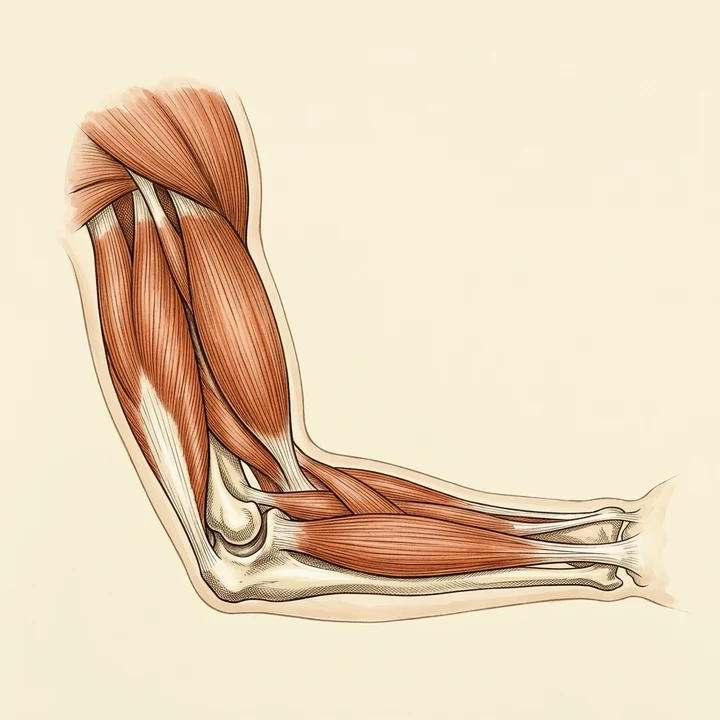
On the anteromedial aspect of the elbow, immediately in front of the medial epicondyle of the humerus, at the level of the cubital crease.
Practical palpation guide
With the elbow flexed and the arm abducted, support the head with the hand. Locate the point on the medial border, at the end of the cubital crease.
Anatomical plane & innervation
Origins of the pronator teres and flexor carpi radialis muscles. Innervated by the medial cutaneous nerve of the forearm. The ulnar nerve passes posterior to the medial epicondyle.
Needling technique
Perpendicular insertion, 0.3–0.5 cun.
Medical application & myofascial correlation
Clinical synthesis
The Xin (Heart) is the organ that controls blood circulation, houses the mind, corresponds to Fire among the Five Elements, and manifests in the tongue. Deficiency of Xin (Heart) Qi and stagnation in the Collateral may cause precordial pain and palpitations. Deficiency of Xin (Heart) Qi may cause bipolar disorder, epilepsy, and memory deficit. The tongue is the organ of voice. The collateral (Luo) of the Hand Shao Yin "connects with the root of the tongue." When Xin (Heart) Qi is deficient, dysphonia may occur. Headache and toothache may be caused by the rising of Xin (Heart) Fire. Boils result from stagnation of the Xin (Heart). This point has the function of calming the mind, promoting the flow of Qi in the meridians, and eliminating Heat. Hence its importance in the disorders mentioned.
Clinical practice indications
- 01Medial epicondylitis (golfer's elbow)
- 02Cubital tunnel syndrome — ulnar nerve entrapment
- 03Angina pectoris
- 04Trigeminal neuralgia
- 05Parkinson's disease — adjuvant for tremors
Presenting symptoms & complaints
Classical tradition, channel actions & source
Classical therapeutic actions
- Calms the spirit
- Transforms Phlegm
- Clears Heat
- Activates the channel
- Benefits the arm
- Calms the mind (Shen)
Traditional indications (TCM)
Functional classification
Character etymology
Shao (少), of Shao Yin; Hai (海), He point. Shao refers to the Hand Shao Yin Meridian and Hai to the He (Sea) point of the Heart Meridian. The Qi of the meridian circulates at this point like water flowing into the sea.
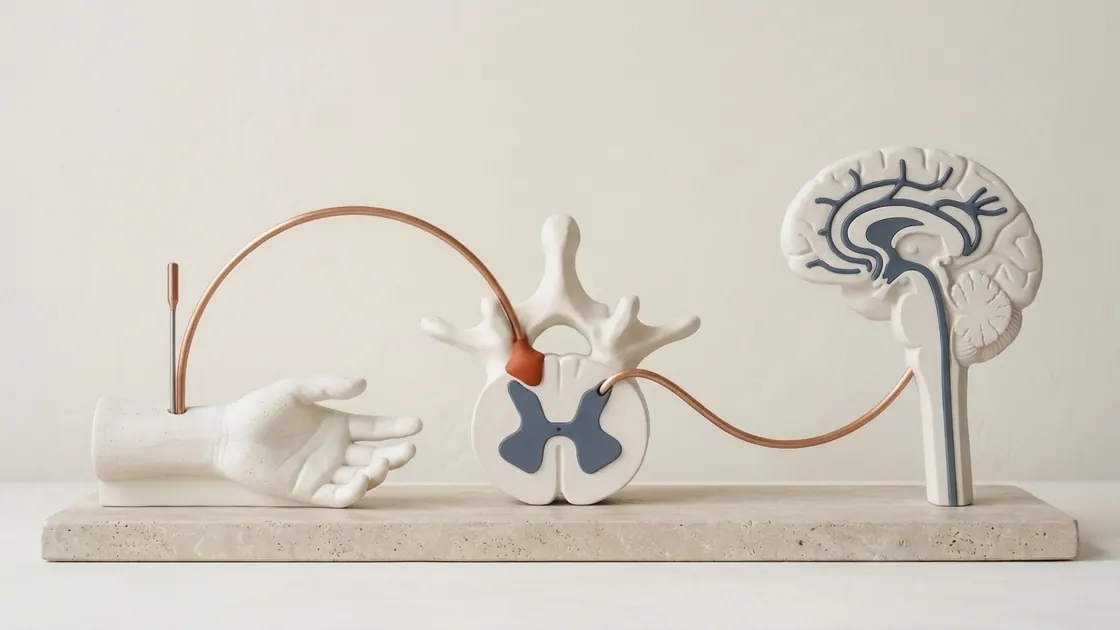
Three-level neuromodulation recruited from HT 3
Physical teaching maquette of the peripheral, segmental spinal, and descending supraspinal pathways engaged by medical needling along the Heart channel.
Peripheral afferent input
Targeted needling at HT 3 (Heart) activates myelinated Aβ and Aδ afferent fibers in fascia and muscle, initiating a structured drug-free sensory signal.
Segmental dorsal horn gating
Within the matching spinal cord segment, inhibitory interneurons attenuate ascending nociceptive traffic and balance segmental viscerosomatic autonomic reflexes.
Supraspinal descending control
Brainstem and cortical relays (periaqueductal gray and rostral ventromedial medulla) recruit endogenous opioids, serotonin, and norepinephrine to quiet pain amplification.
Clinical relations & channel protocols
Immediate neighbors on the meridian

Clinical trial protocols using this point
- studies cite this point
- 6 studies cite this point
- RCTs
- 2 RCTs
- sham-controlled
- 5 sham-controlled
Top clinical conditions tested
Most frequent synergistic partner points
Clinical Protocols & Trials Using This Point
Clinical conditions in our trial library where HT3 ranks among the core protocol points (3 mapped protocols).
HT 3 in research
How many Library studies cite this point, since when, and with which designs and verdicts.
- Studies
- 6Library studies cite HT 3
- By year
- 20072022
- Verdict
- Strong4
- Moderate2
- Study designs
- Meta-analysis1
- RCT2
- Narrative Review2
- Other designs1
- Classical source
- Jia Yi Jing
- Depth
- 0.3–0.5 cunPerpendicular
Each study counts once, under the most specific design it states. The verdict is the Library’s word for the strength of each study’s evidence.
See the numbers: HT 3 in research
| Year | Studies |
|---|---|
| 2007 | 1 |
| 2012 | 1 |
| 2014 | 1 |
| 2020 | 1 |
| 2021 | 1 |
| 2022 | 1 |
Often appears with
Points the Library studies cite together with HT 3. It shows research practice, not a prescription.
- ST 363 studies in common
- LI 112 studies in common
- LU 51 study in common
- LI 51 study in common
- LI 101 study in common
- SP 101 study in common
- SI 41 study in common
- BL 231 study in common
Each filled mark stands for 5 studies; an open mark, for 1 to 4.
Related clinical reading
6Understand GAD — one of the most common anxiety disorders, its neurobiological mechanisms, diagnosis, and evidence-based treatment options.
Understand major depression — one of the most prevalent medical conditions in the world, its neurobiologic mechanisms, diagnosis, and evidence-based treatments.
Understand Parkinson disease — a progressive neurodegenerative condition affecting movement — along with its mechanisms, diagnosis, and current treatment options.
Learn about medial epicondylitis — causes, pathophysiological mechanisms, diagnosis, and evidence-based treatments.
Understand trigeminal neuralgia — one of the most intense facial pains known, its neurovascular compression mechanisms, diagnosis, and pharmacologic and surgical therapeutic options.
Understand diabetic neuropathy — the most common chronic complication of diabetes, its metabolic and vascular mechanisms, early diagnosis, and multimodal treatment strategies.