HT-2 Qingling (青靈) — Cyan Spirit
Anatomical location
3 cun proximal to the cubital crease, on the medial border of the biceps brachii muscle. With the elbow flexed, measure 3 cun from the ulnar end of the cubital crease (HT-3) toward the axilla. Located in a groove on the medial border of the biceps brachii.
Practical palpation guide
With the elbow flexed, select Shao Hai (HT-3). Locate Qing Ling (HT-2) 3 cun above Shao Hai (HT-3).
Anatomical plane & innervation
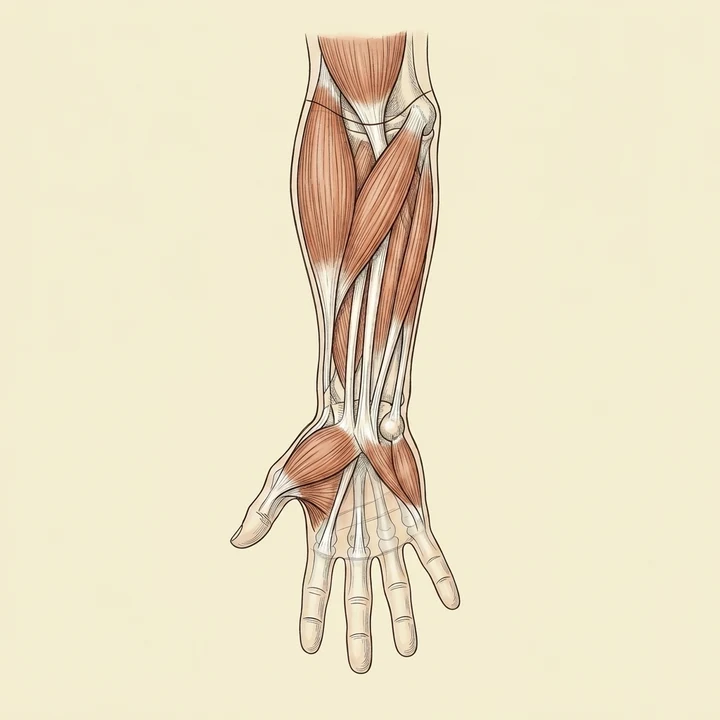
Medial border of the biceps brachii and brachialis muscles. Innervated by the medial cutaneous nerve of the forearm and the ulnar nerve. The basilic vein runs superficially.
Needling technique
Perpendicular insertion, 0.3–0.5 cun.
Medical application & myofascial correlation
Clinical synthesis
The point promotes the flow of Qi in the meridians, and is therefore indicated in the treatment of headache, pain and difficulty moving the shoulder and upper limbs, and axillary pain and edema.
Clinical practice indications
- 01Bicipital tendinitis
- 02Referred pain from medial epicondylitis
Presenting symptoms & complaints
Classical tradition, channel actions & source
Classical therapeutic actions
- Activates the channel and relieves pain
Traditional indications (TCM)
Character etymology
Qing (青), pain treatment; Ling (靈), efficacy. An analgesic point, indicated for the treatment of upper-limb pain and headache.
Layered tissue anatomy & needle biomechanics at HT 2
Cross-sectional technical schematic of perpendicular insertion (90°) (0.3–0.5 cun): superficial connective collagen coupling, intramuscular myofascial transduction, and deep neurovascular protection.
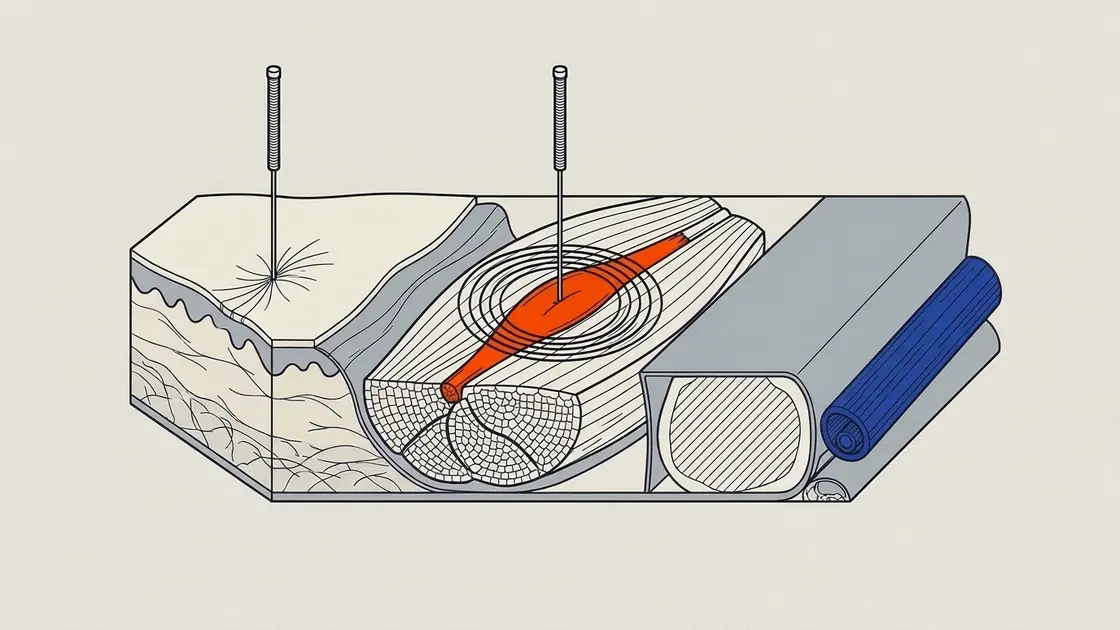
Dermal & fascial collagen coupling
A solid non-cutting filiform needle (0.25 mm rounded tip) enters via perpendicular insertion (90°), gently tenting loose areolar collagen fibers without slicing dermal vessels.
Myofascial spindle & Aδ / C transduction
Within the 0.3–0.5 cun target window at HT 2, mechanical coupling recruits intramuscular mechanoreceptors, increasing local micro-perfusion and releasing taut bands.
Strict anatomical safety floor
The deep fascial septum, bone cortex, and underlying neurovascular bundle or cavity define the strict anatomical boundary observed during physician needling at HT 2.
Clinical relations & channel protocols
Immediate neighbors on the meridian
HT 2 in research
How many Library studies cite this point, since when, and with which designs and verdicts.
- Studies
- 2Library studies cite HT 2
- By year
- 20152017
- Verdict
- Moderate2
- Study designs
- RCT2
- Classical source
- Qing Jin Sheng Hui Fang
- Depth
- 0.3–0.5 cunPerpendicular
Each study counts once, under the most specific design it states. The verdict is the Library’s word for the strength of each study’s evidence.
See the numbers: HT 2 in research
| Year | Studies |
|---|---|
| 2015 | 1 |
| 2017 | 1 |
Often appears with
Points the Library studies cite together with HT 2. It shows research practice, not a prescription.
- LU 92 studies in common
- LI 112 studies in common
- HT 72 studies in common
- HT 82 studies in common
- PC 42 studies in common
- PC 62 studies in common
- PC 72 studies in common
- PC 82 studies in common
Each filled mark stands for 5 studies; an open mark, for 1 to 4.
Related clinical reading
4Understand tension-type headache — the most common headache, its mechanisms, how to tell it apart from migraine, and the most effective therapeutic approaches.
Learn about medial epicondylitis — causes, pathophysiological mechanisms, diagnosis, and evidence-based treatments.
Pain on raising the arm? Understand subacromial impingement syndrome — from mechanism to evidence-based treatment.
Causes, symptoms, diagnosis, and treatments for the leading cause of shoulder pain in adults.