Therapeutic exercise
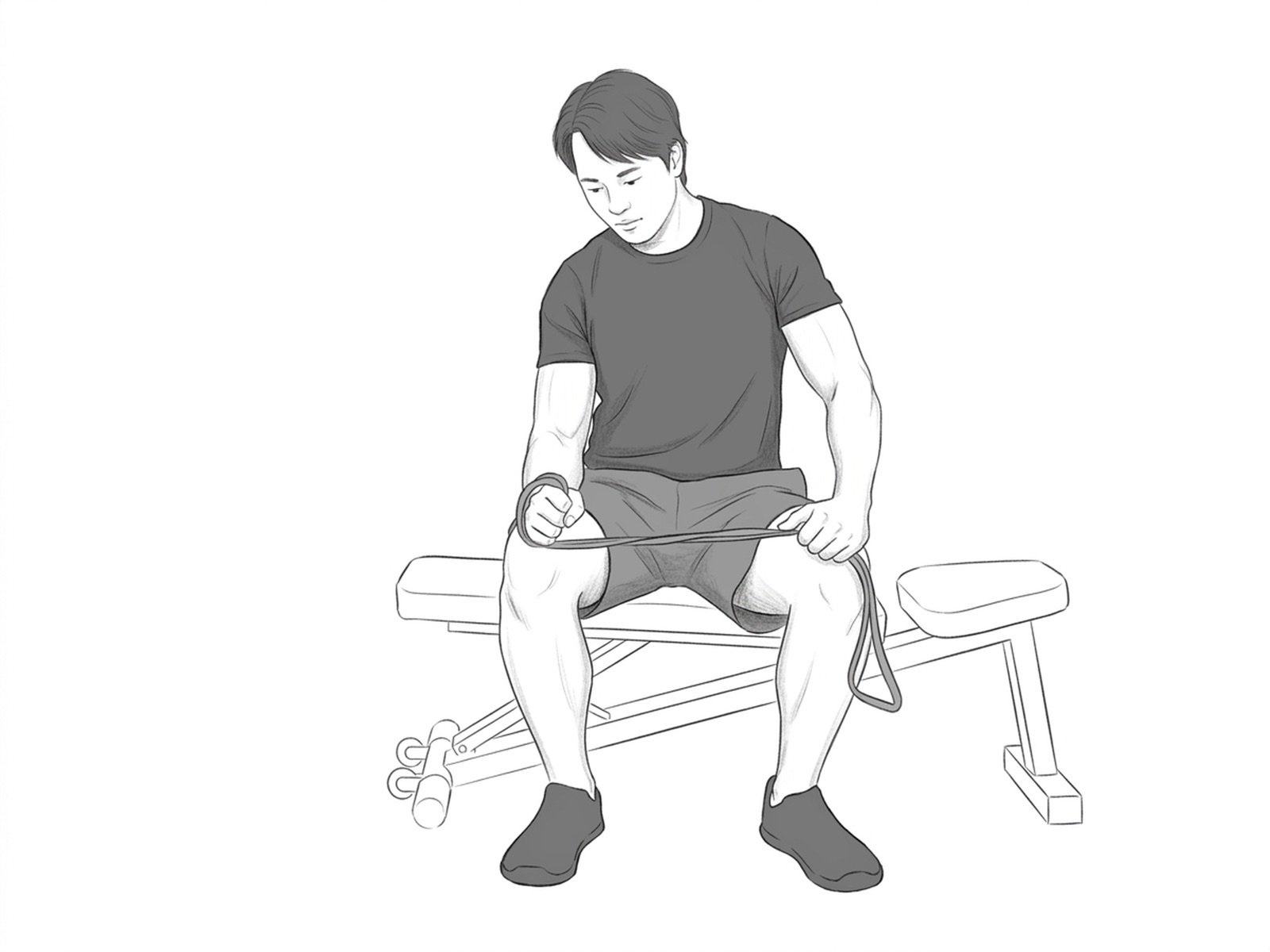
Banded Forearm Pronator Strengthening
Strengthening of the pronator teres and pronator quadratus against elastic resistance. In medial epicondylitis, the pronators are frequently weak and overloaded simultaneously — strengthening within a safe range restores tendon capacity without generating compression in the cubital tunnel.
How to perform
- Starting position. Sit with the forearm resting on a table, elbow flexed at 90° and the hand off the edge.
- Step 2. Hold one end of an elastic band with the affected hand, starting in supination (palm up) and the band tensioned from a high fixed point.
- Step 3. Rotate the forearm, bringing the palm down (pronation) against the band's resistance, over 2 seconds.
- Step 4. Hold maximum pronation for 1 second and return over 3 seconds to supination.
- Return. Keep the elbow fixed at 90° throughout the movement — do not allow compensation with shoulder rotation.
When not to perform
- Medial epicondylitis in an acute reactive phase
- Cubital tunnel syndrome in an acute phase
- Symptomatic pronator teres syndrome
- Recent radius or ulna fracture
- Recent elbow or forearm surgery
- Acute joint pain without diagnosis
Medical disclaimer. These exercises are presented for informational purposes only. Always consult your physician before starting any exercise program, especially in case of acute pain, recent injury, or underlying clinical condition.
Related Exercises
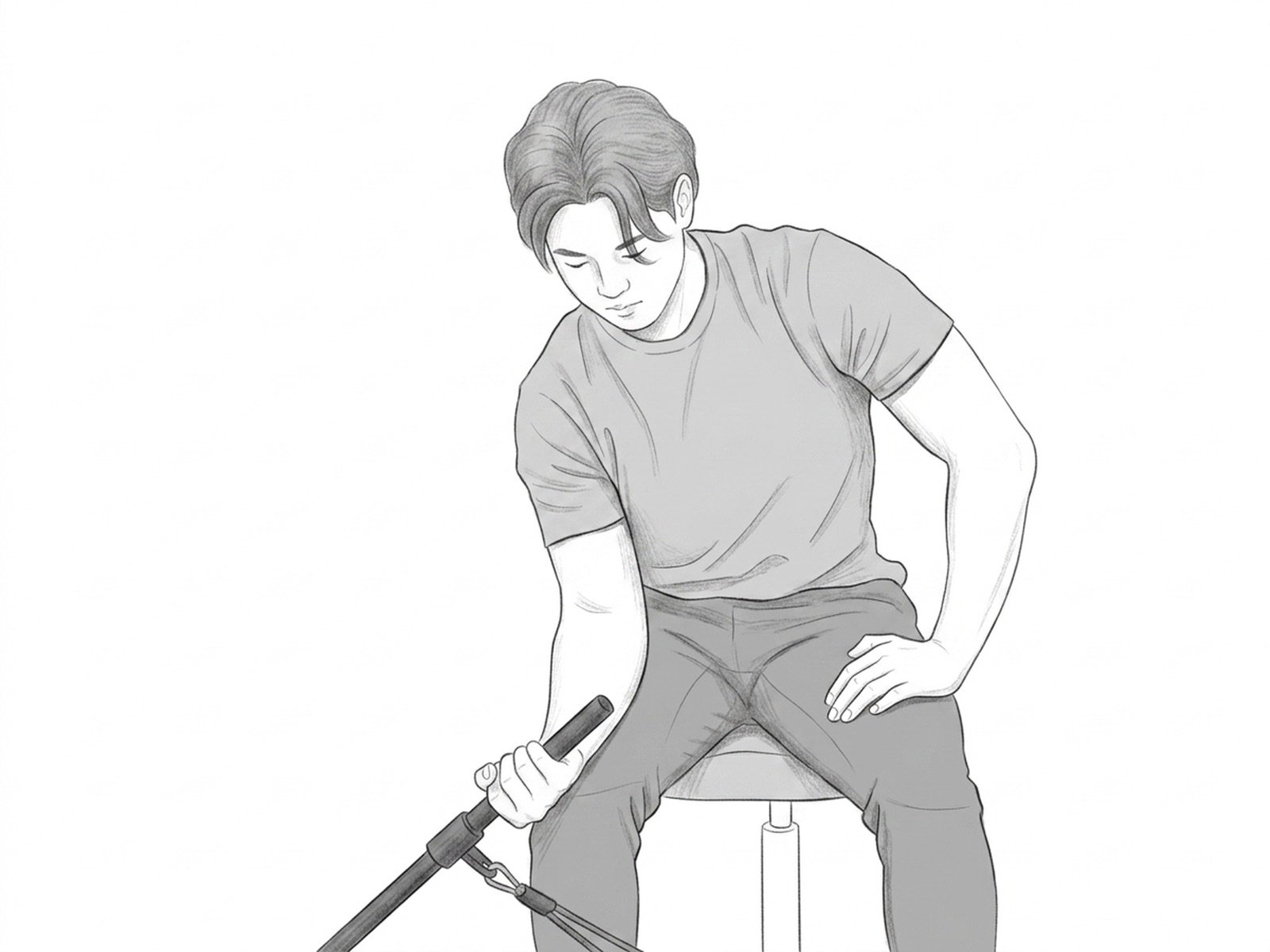
Pronator Teres Stretch
Passive stretch of the pronator teres by combining elbow extension with passive forearm supination. Important in cubital tunnel syndrome (decompresses the medial elbow) and in radial tunnel syndrome (releases the radial nerve under the Arcade of Frohse).

Prayer Stretch
Bilateral stretch of the wrist and forearm flexors in a prayer position. Useful in carpal tunnel syndrome — it stretches the flexor retinaculum and the flexor tendons simultaneously, complementing median-nerve glides in the conservative phase.
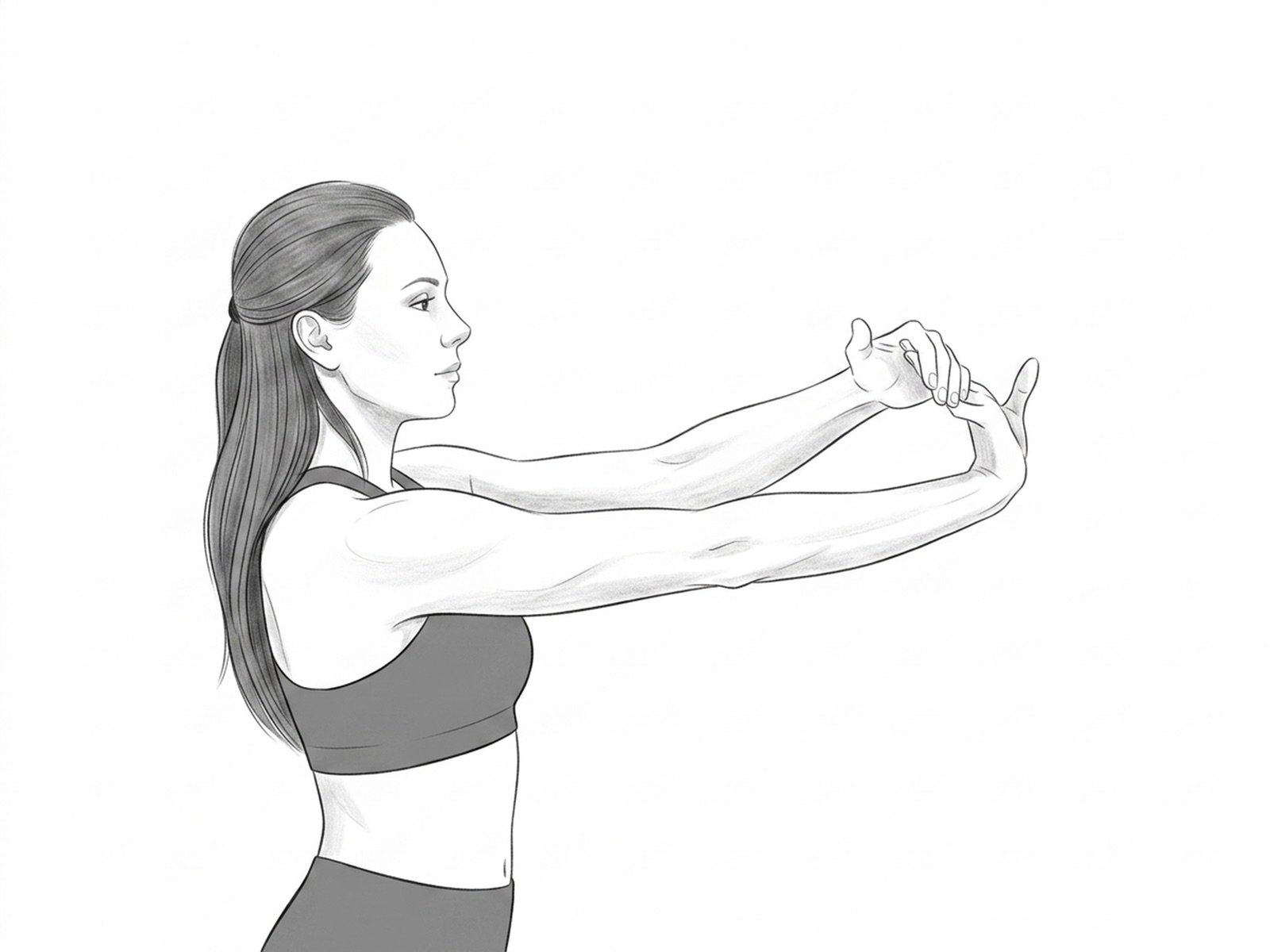
Wrist Flexor Stretch
Stretch of the wrist flexors and the common flexor apparatus. Reduces pressure in the carpal tunnel and complements the neural mobilization.