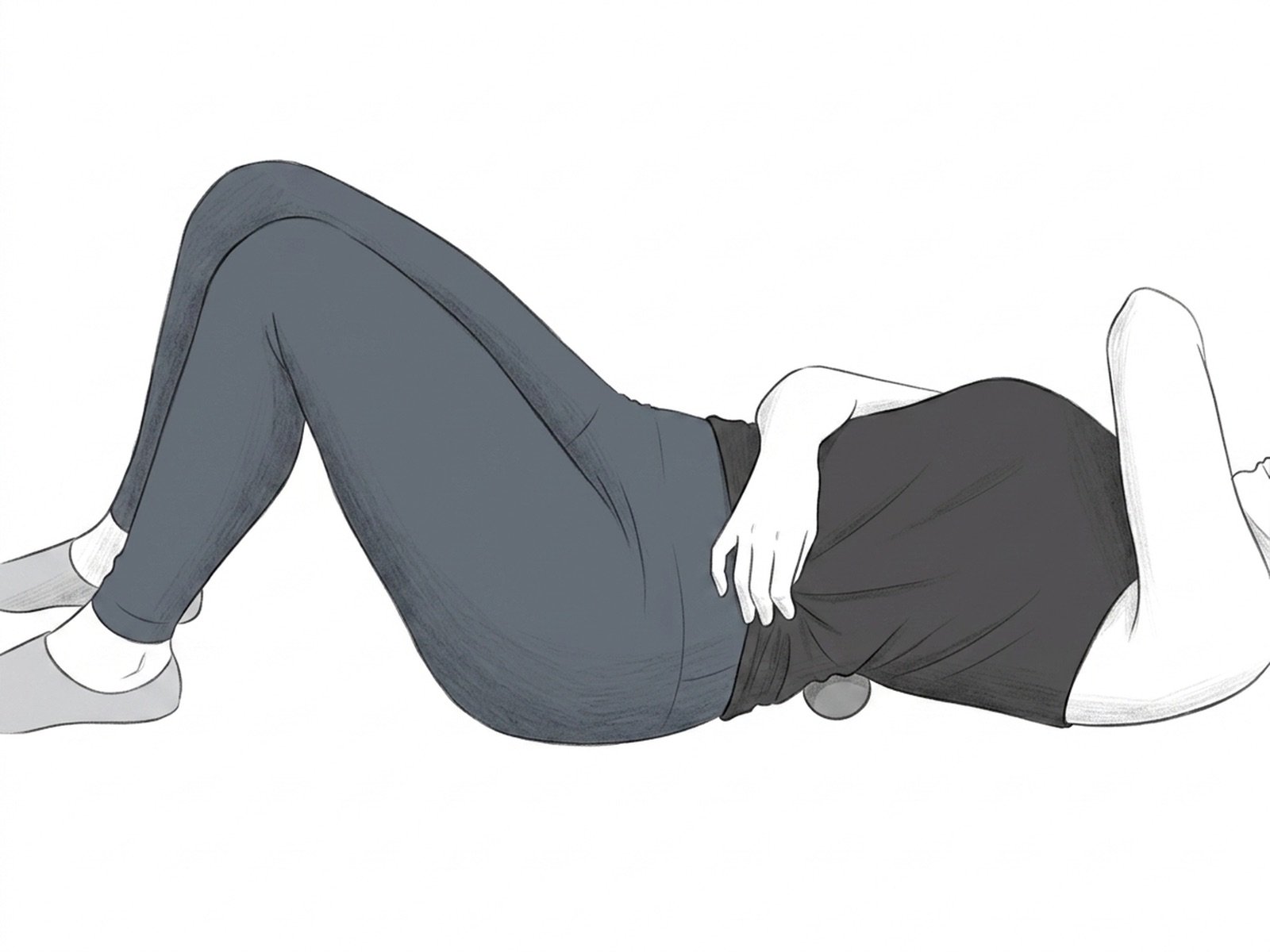
Therapeutic exercise
Quadratus Lumborum Ball Release
Targeted self-massage of the quadratus lumborum using a release ball (lacrosse or tennis) against the wall. Reaching the QL is difficult — it requires specific positioning to isolate the muscle, which lies deep between the rib, iliac crest, and lumbar transverse processes.
How to perform
- Starting position. Stand next to a wall.
- Step 2. Position a firm ball between the wall and the lateral region of your back, just above the iliac crest and below the last ribs (QL region).
- Step 3. Apply pressure against the ball by leaning your body into it — start with light pressure and adjust according to tolerance.
- Step 4. Hold sustained pressure on painful trigger points for 60–90 seconds, breathing deeply — initial pain should reduce gradually.
- Return. To progress the release, make small lateral inclination movements with the ball in contact, mobilizing the QL at different angles.
When not to perform
- Acute low back pain with radiation
- Polycystic kidney or active kidney stones (anatomical proximity)
- Recent floating rib fracture
- Recent abdominal or lumbar surgery
- Severe acute pain on local palpation
- Pregnancy (adapt to side-lying in a seated position)
Medical disclaimer. These exercises are presented for informational purposes only. Always consult your physician before starting any exercise program, especially in case of acute pain, recent injury, or underlying clinical condition.
Related Exercises
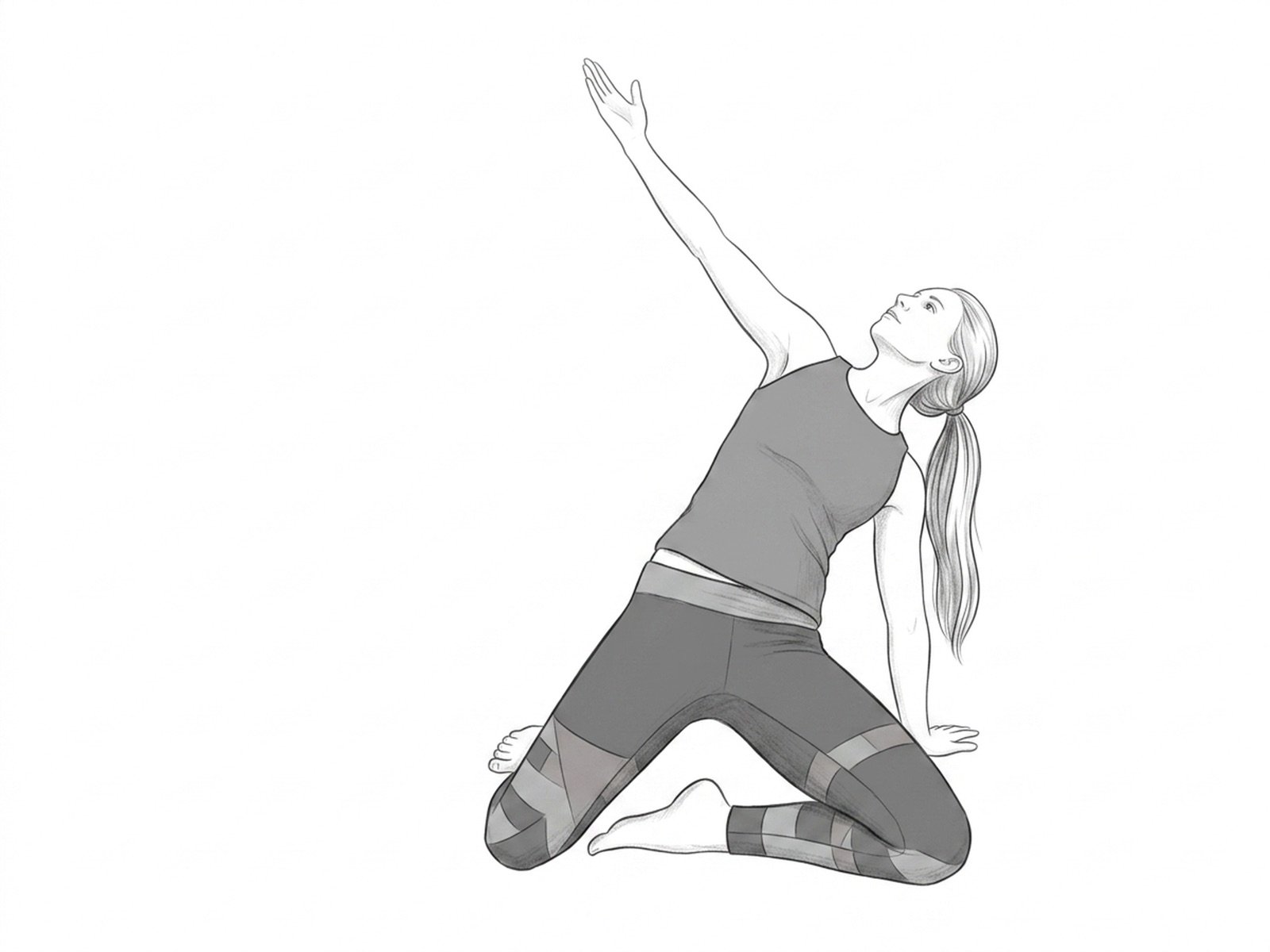
Quadratus Lumborum Lateral Stretch (Mermaid)
Specific stretch of the quadratus lumborum in a side-sitting position with legs folded laterally (Pilates Mermaid). Indicated in QL myofascial pain, chronic unilateral low back pain, and functional scoliosis — stretching the shortened QL unlocks lumbopelvic compensatory patterns.
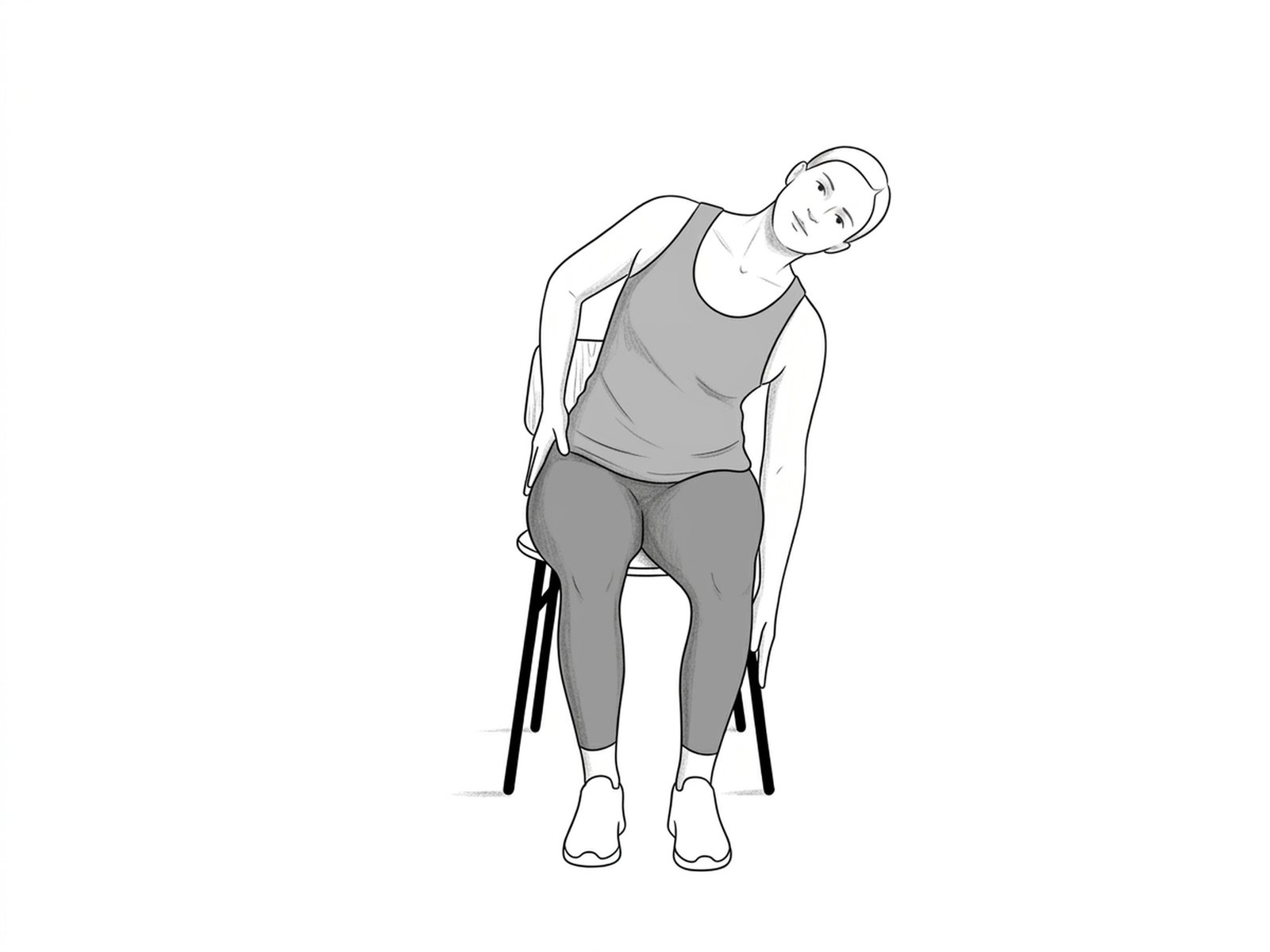
Seated Lateral Trunk Stretch
Lateral stretch of the quadratus lumborum, latissimus dorsi, and intercostals in a seated position, accessible in the work environment. Complements the Mermaid (on the floor) as a practical option for short breaks during the day.
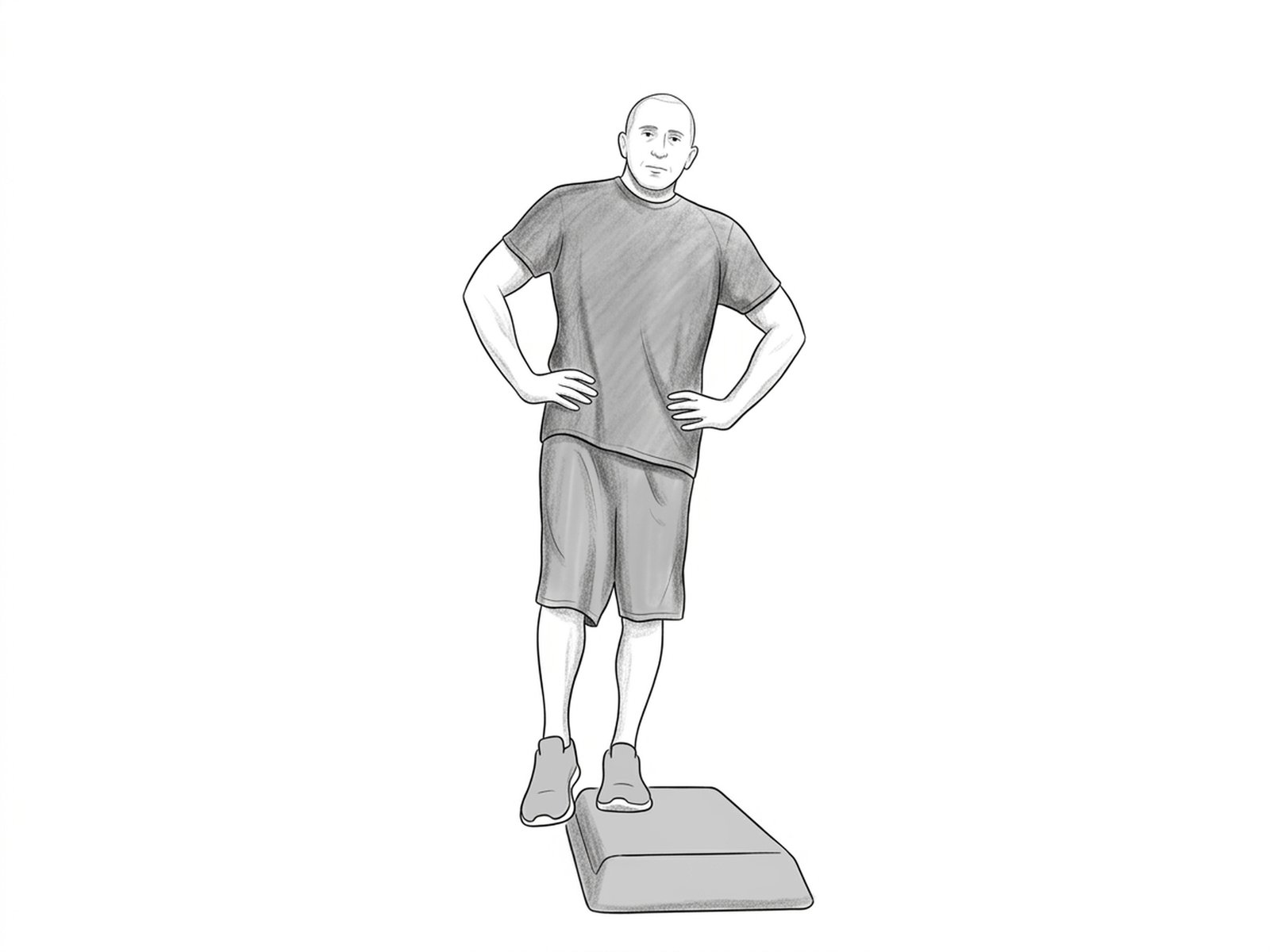
Pelvic Hike Standing on a Step
Unilateral strengthening of the quadratus lumborum and gluteus medius through elevation and descent of the contralateral pelvis while the patient stands on a step. Re-educates pelvic control in single-leg support — essential in QL myofascial pain and iliotibial band syndrome.