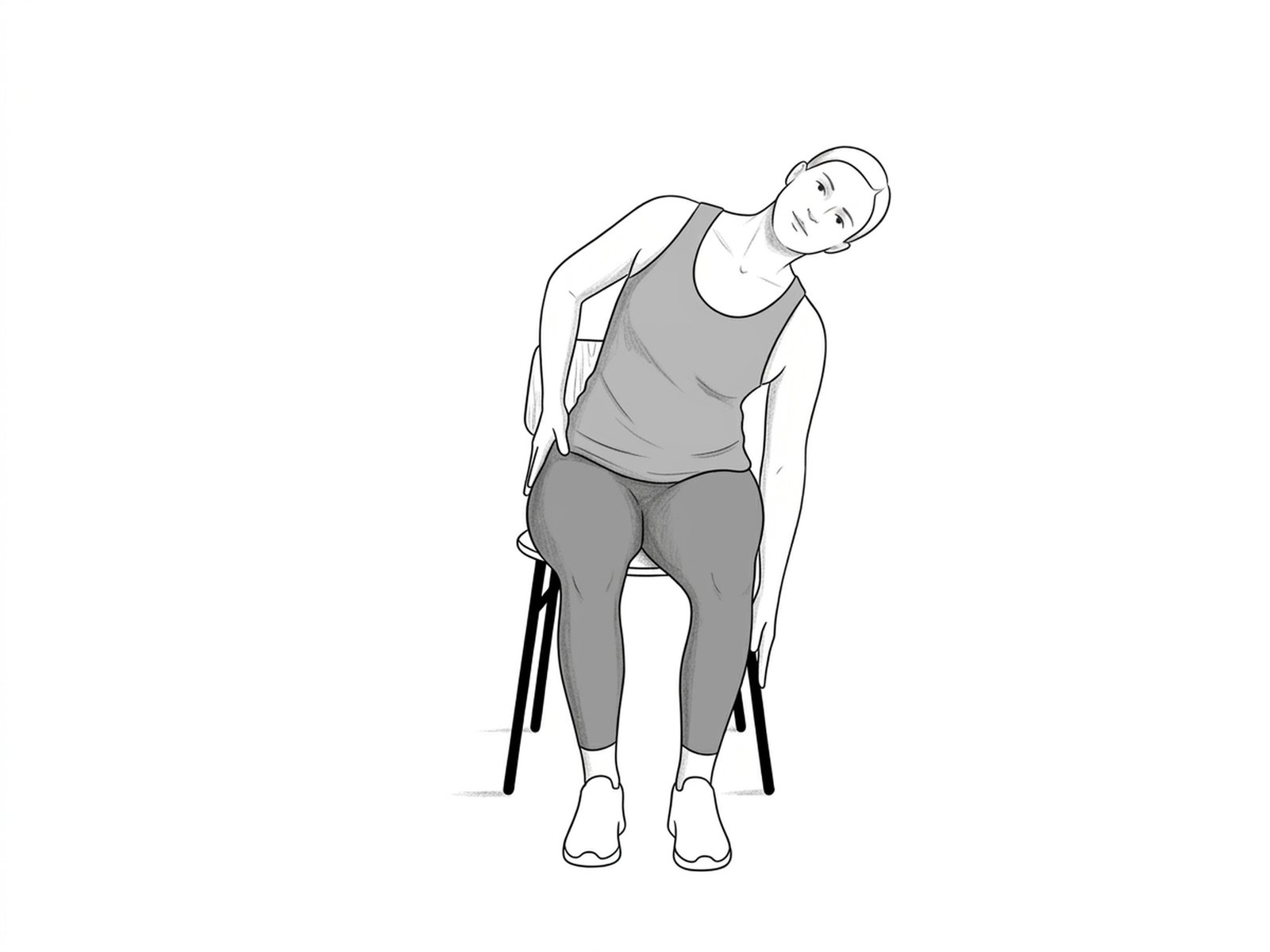
Therapeutic exercise
Seated Lateral Trunk Stretch
Lateral stretch of the quadratus lumborum, latissimus dorsi, and intercostals in a seated position, accessible in the work environment. Complements the Mermaid (on the floor) as a practical option for short breaks during the day.
How to perform
- Starting position. Sit upright in a firm chair with feet flat on the floor.
- Step 2. Raise the arm on the side you want to stretch overhead, extending it fully upward.
- Step 3. Slowly lean the trunk to the side opposite the raised arm — the movement should come from the trunk, not the hips.
- Step 4. Keep the stretched arm extended toward the ceiling, creating a stretch along the entire lateral trunk.
- Return. Hold for 20–30 seconds, breathing deeply, and return slowly to center. Switch sides.
When not to perform
- Acute low back pain with radiation
- Symptomatic lumbar disc herniation
- Orthostatic hypotension (can cause dizziness when leaning)
- Osteoporosis with vertebral fracture risk
- Recent spine surgery
- Acute cervical pain (the arm position increases cervical tone)
Medical disclaimer. These exercises are presented for informational purposes only. Always consult your physician before starting any exercise program, especially in case of acute pain, recent injury, or underlying clinical condition.
Related Exercises
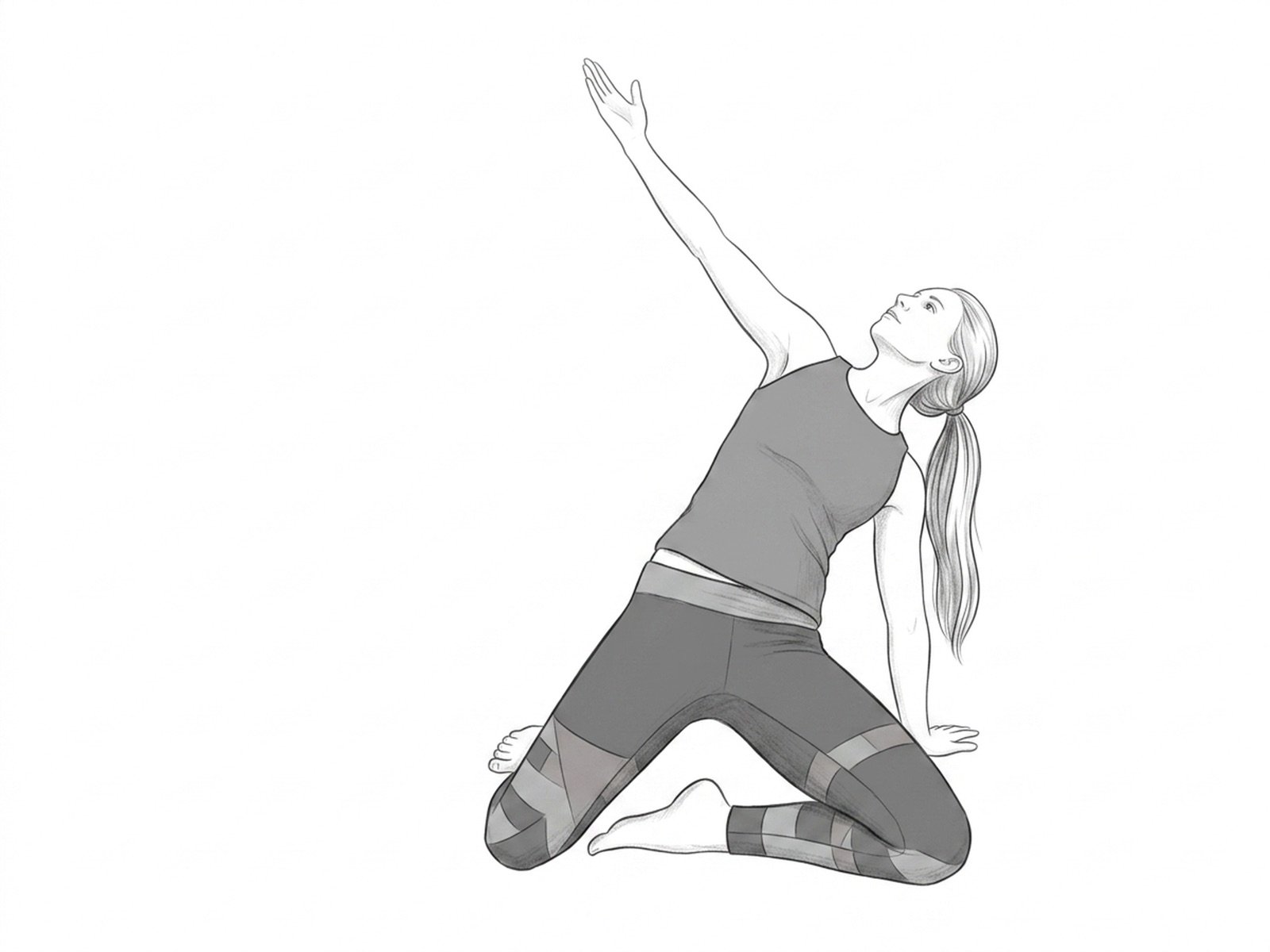
Quadratus Lumborum Lateral Stretch (Mermaid)
Specific stretch of the quadratus lumborum in a side-sitting position with legs folded laterally (Pilates Mermaid). Indicated in QL myofascial pain, chronic unilateral low back pain, and functional scoliosis — stretching the shortened QL unlocks lumbopelvic compensatory patterns.
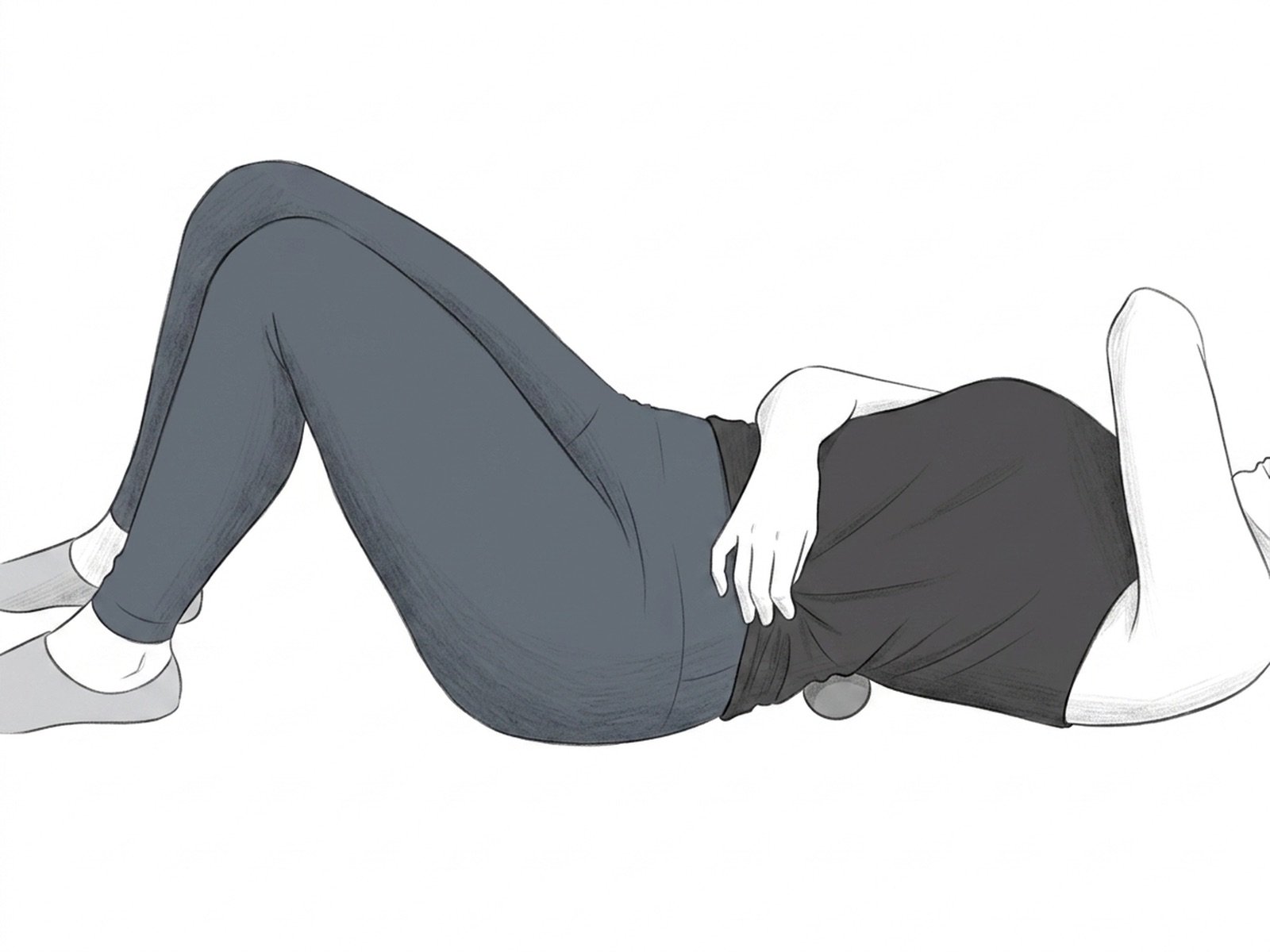
Quadratus Lumborum Ball Release
Targeted self-massage of the quadratus lumborum using a release ball (lacrosse or tennis) against the wall. Reaching the QL is difficult — it requires specific positioning to isolate the muscle, which lies deep between the rib, iliac crest, and lumbar transverse processes.
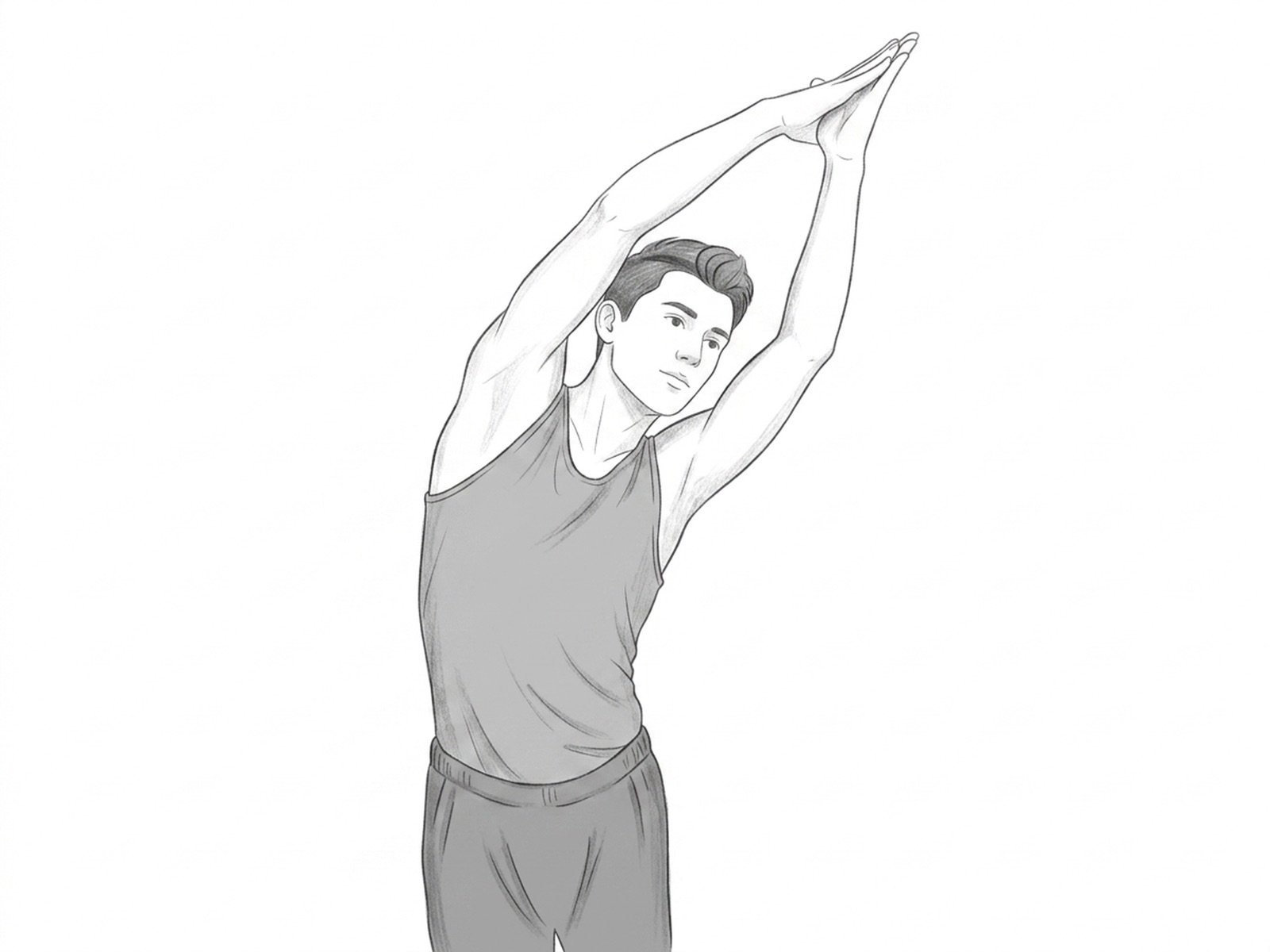
Lateral Intercostal Stretch
Stretches the intercostal muscles through a combination of lateral trunk flexion and sustained deep inhalation. Indicated for costochondritis, myofascial chest pain, and patients with chronic rib stiffness — opens the contracted hemithorax.