Supine Marches
Alternating knee lifts toward the chest in supine, simulating a march. Less demanding than the bridge march (without pelvic elevation), it is the natural progression after heel slides in the postpartum protocol — integrates dynamic movement with core stability.
Muscles worked
Illustration demonstrating the position of the Supine Marches exercise.
Biomechanical Execution Sequence
05 phases- Starting position
Lie face-up with knees bent and feet flat on the floor.
- Phase 2
Activate the transversus abdominis (drawing-in).
- Phase 3
Maintaining activation, slowly lift the right leg, bringing the knee toward the chest, until the hip flexes to 90°.
- Phase 4
Return the foot to the floor with control over 3 seconds, without allowing the low back to arch.
- Return
Alternate with the left leg, in a slow and controlled marching rhythm. The quality of pelvic stabilization is more important than speed.
Prescribed in Clinical Guides
Medical disclaimer. These exercises are presented for informational purposes only. Always consult your physician before starting any exercise program, especially in case of acute pain, recent injury, or underlying clinical condition.
Related Exercises
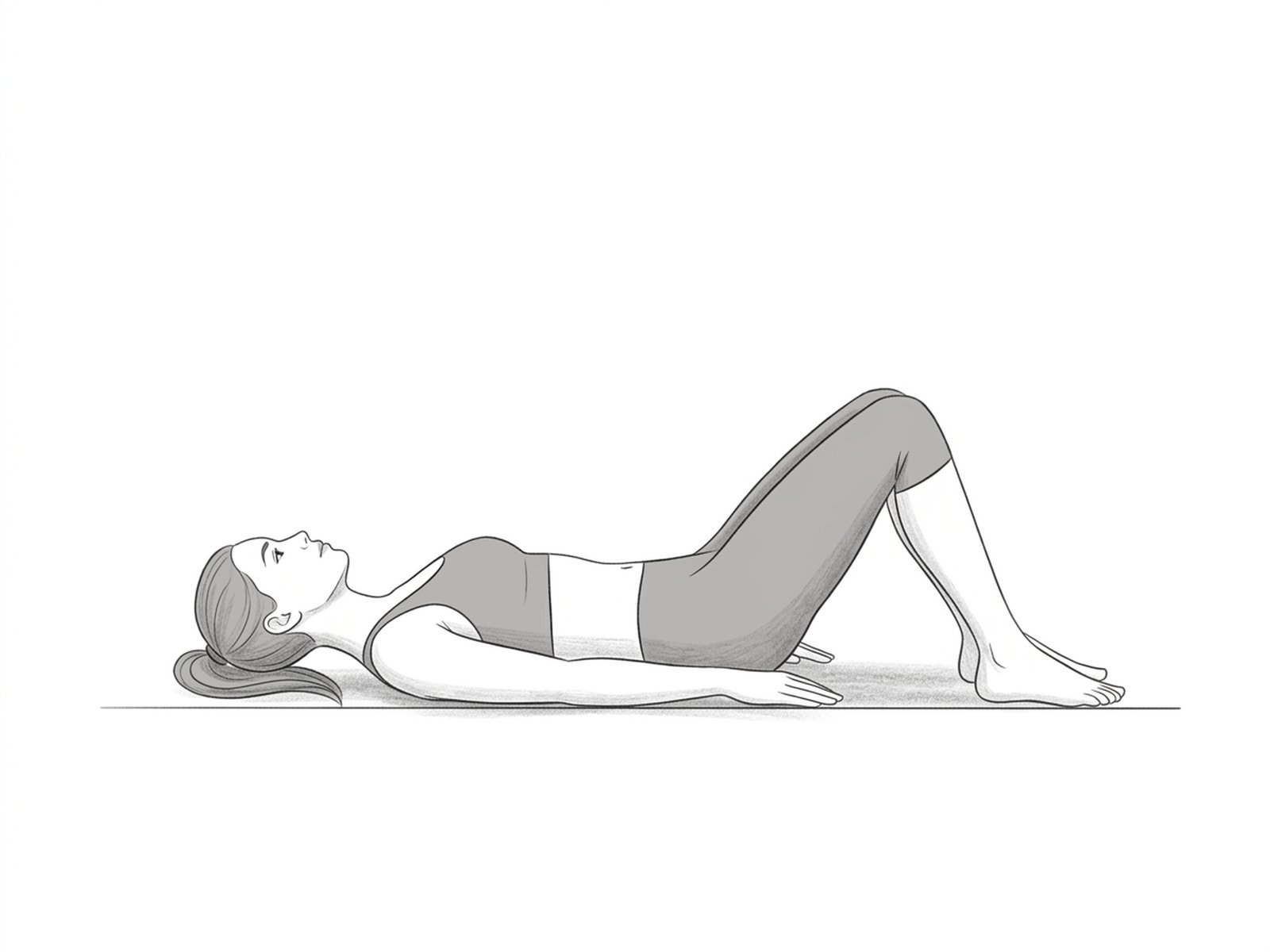
Transversus Abdominis Activation (Drawing-In)
Isolated motor activation of the transversus abdominis, the deep stabilizing muscle of the lumbar spine. The foundational motor-reeducation exercise — fundamental in core instability, sacroiliac dysfunction, and postpartum abdominal diastasis.
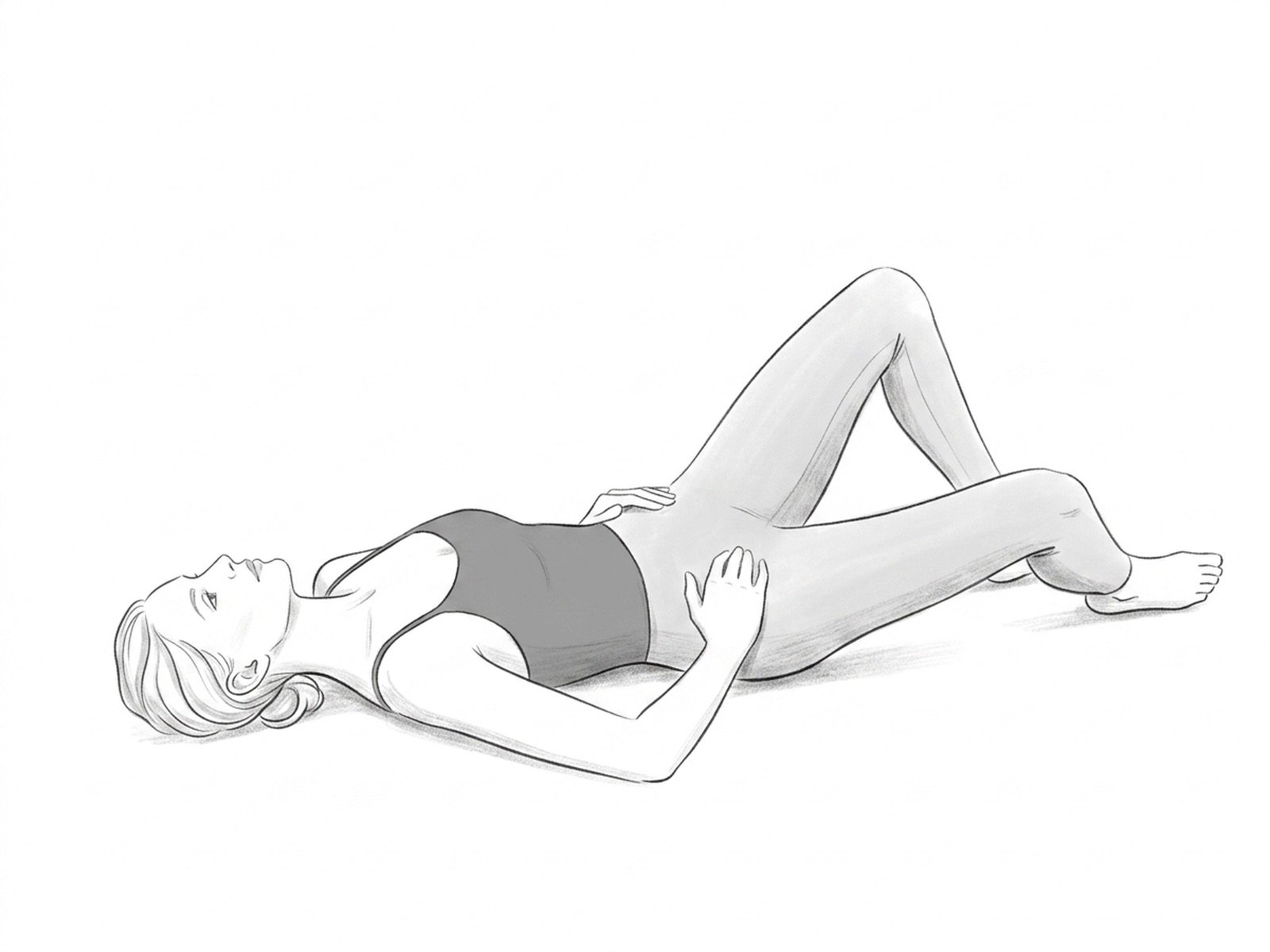
Supine Bent-Knee Fall-Outs
Low-load rotational control exercise with maintenance of the neutral pelvic position. Challenges the abdominal obliques and the transversus to resist rotation — a natural progression after mastering heel slides in abdominal diastasis rehabilitation.
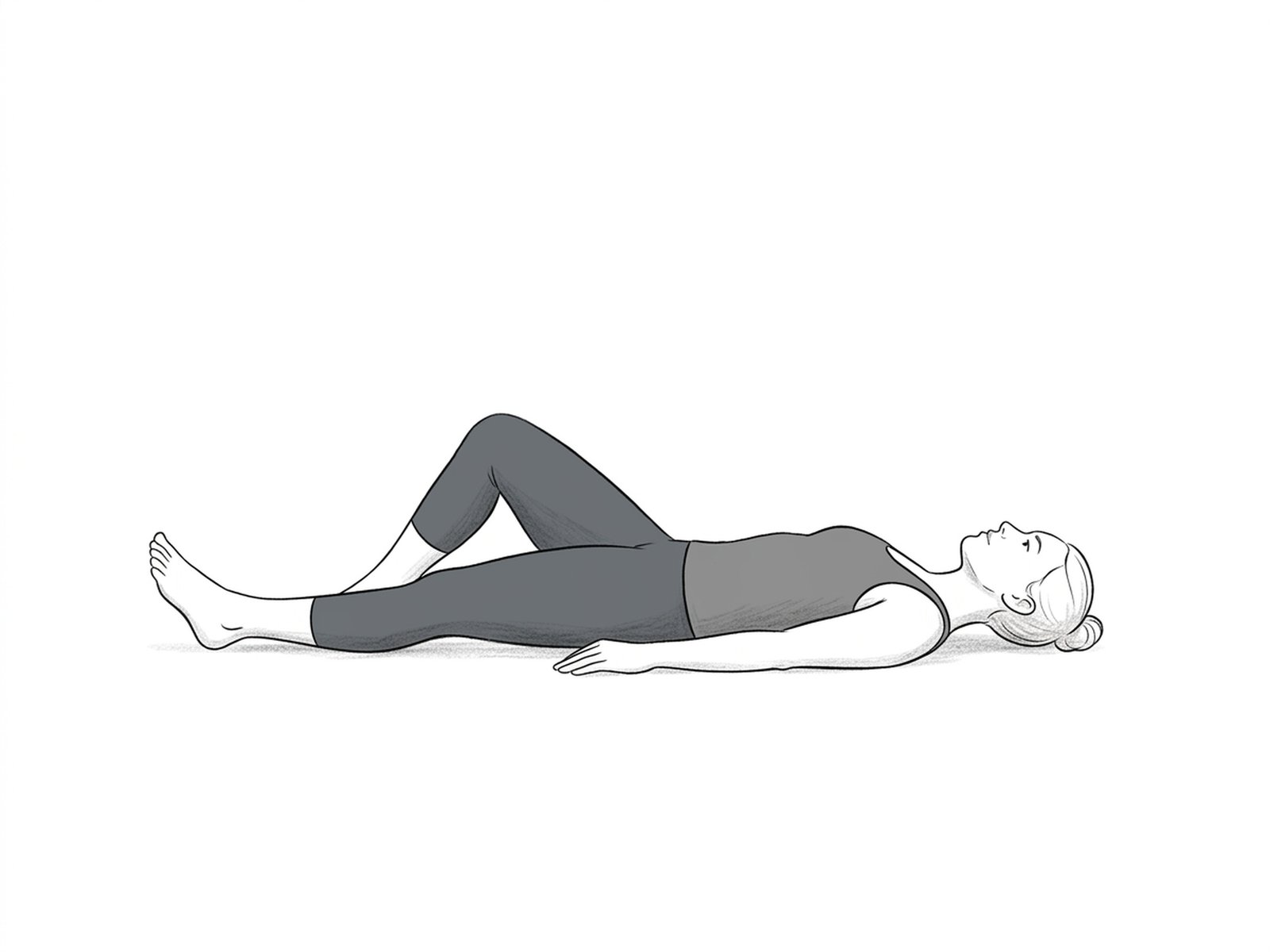
Heel Slide with Transversus Activation
A low-load exercise that combines alternating heel slides with isolated activation of the transversus abdominis. Safe in the postpartum period and appropriate for early rehabilitation of abdominal diastasis — progresses the core without overloading the linea alba.