Therapeutic exercise
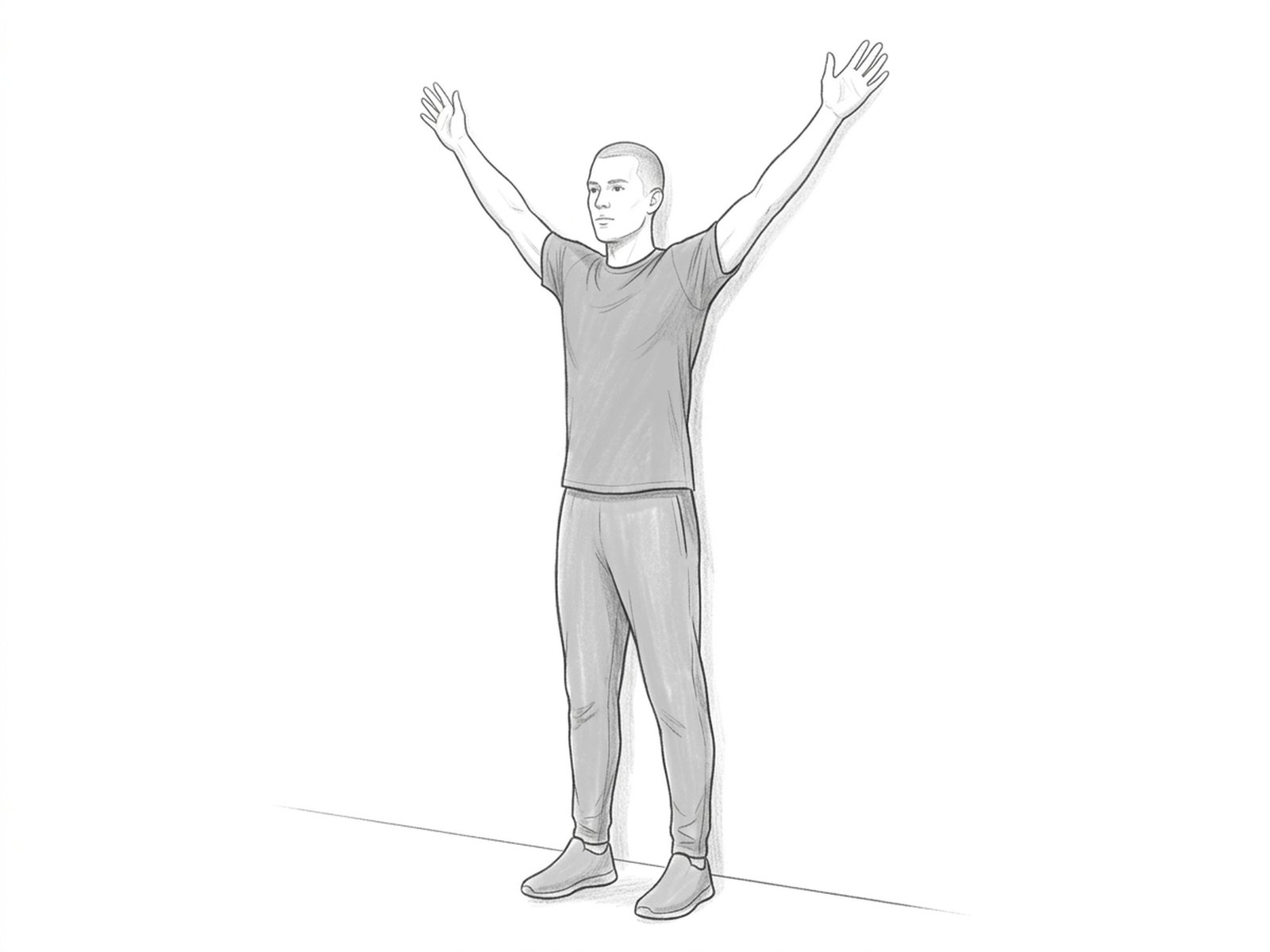
Wall Slide
Mobilization of the scapulothoracic chain in a functional elevation pattern. Restores the scapulohumeral rhythm, frequently dysfunctional in impingement syndrome.
How to perform
- Starting position. Stand with your back against the wall, feet slightly out from the wall.
- Step 2. Position your arms on the wall in a 'W' (elbows at 90°, palms forward).
- Step 3. Slide your arms slowly upward, keeping the elbows and wrists in contact with the wall.
- Return. When you feel the contact starting to break, return to the starting position.
When not to perform
- Acute shoulder pain on elevation
- Severe range-of-motion limitation (capsulitis)
Medical disclaimer. These exercises are presented for informational purposes only. Always consult your physician before starting any exercise program, especially in case of acute pain, recent injury, or underlying clinical condition.
Related Exercises
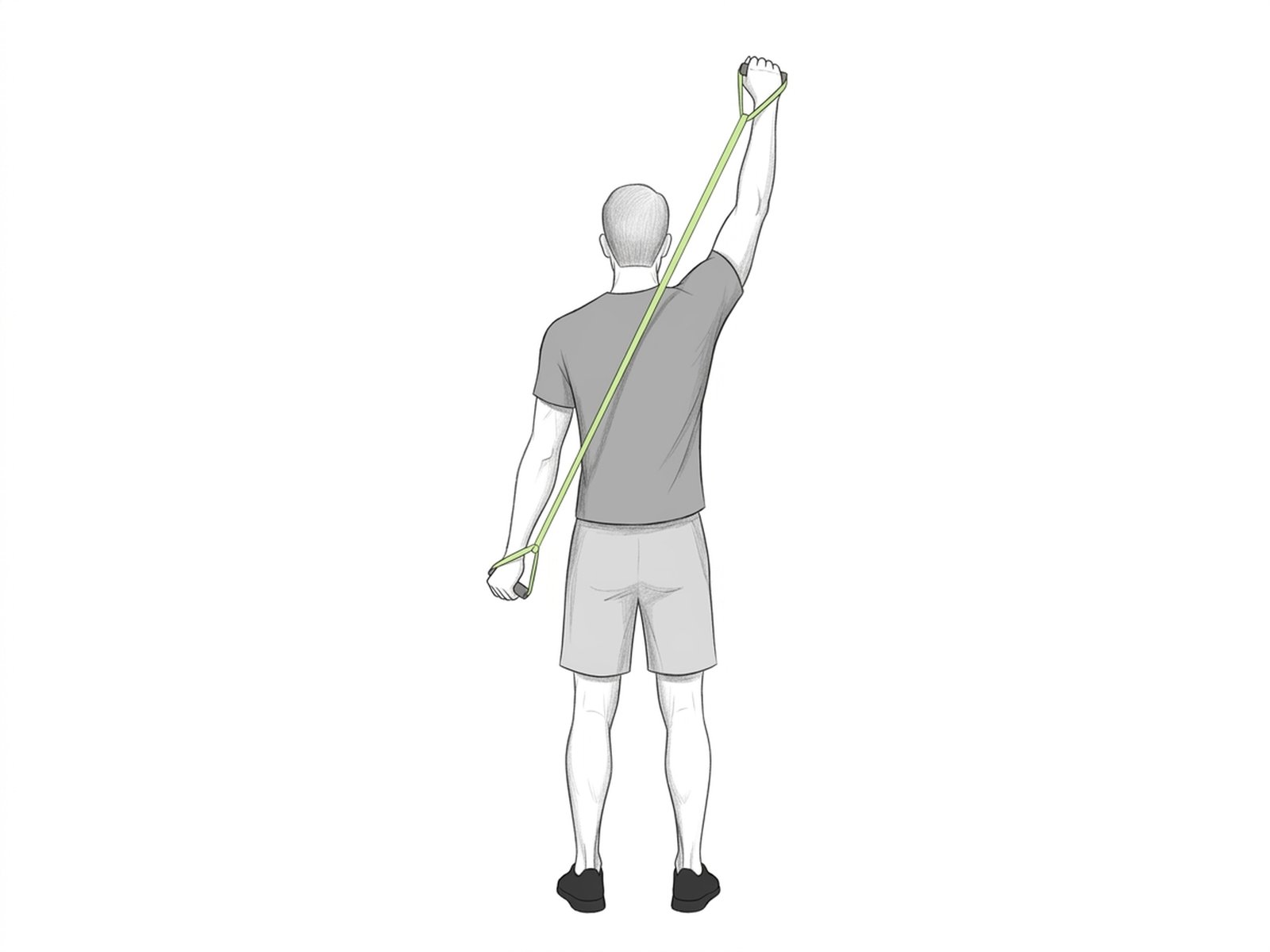
Wall Slide with Scapular Lift-Off
Advanced progression of the classic wall slide. At the top of the movement, the patient lifts the arms off the wall, creating additional isotonic demand on the lower trapezius and serratus anterior — the exercise of choice in advanced scapular dyskinesia rehabilitation.
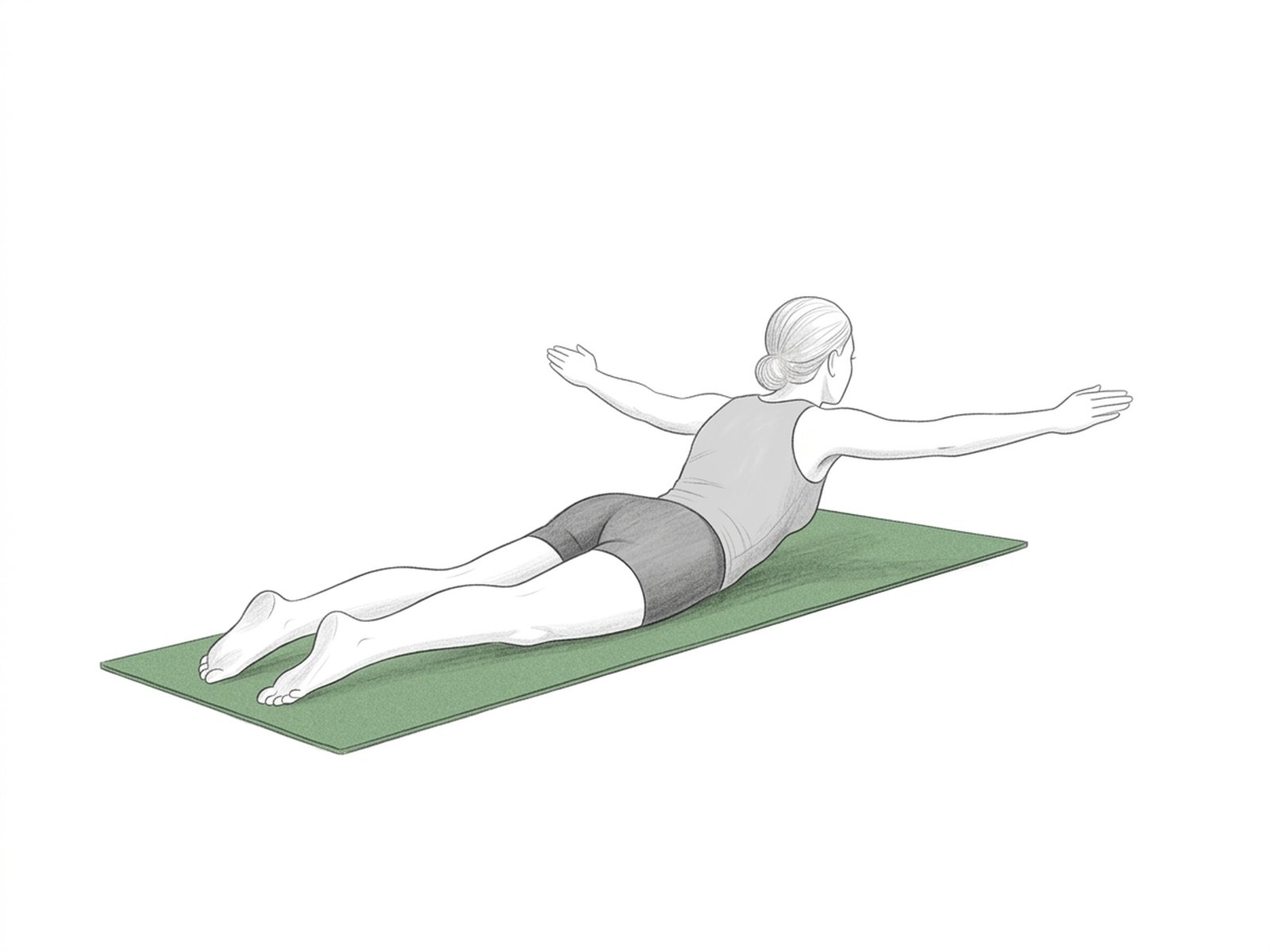
Prone T-Raise
Isolation of the middle trapezius and posterior deltoid in a prone position. Component of the Prone I/T/Y/W series — essential for re-balancing the shoulder girdle in patients with upper-crossed syndrome and scapular dyskinesia.
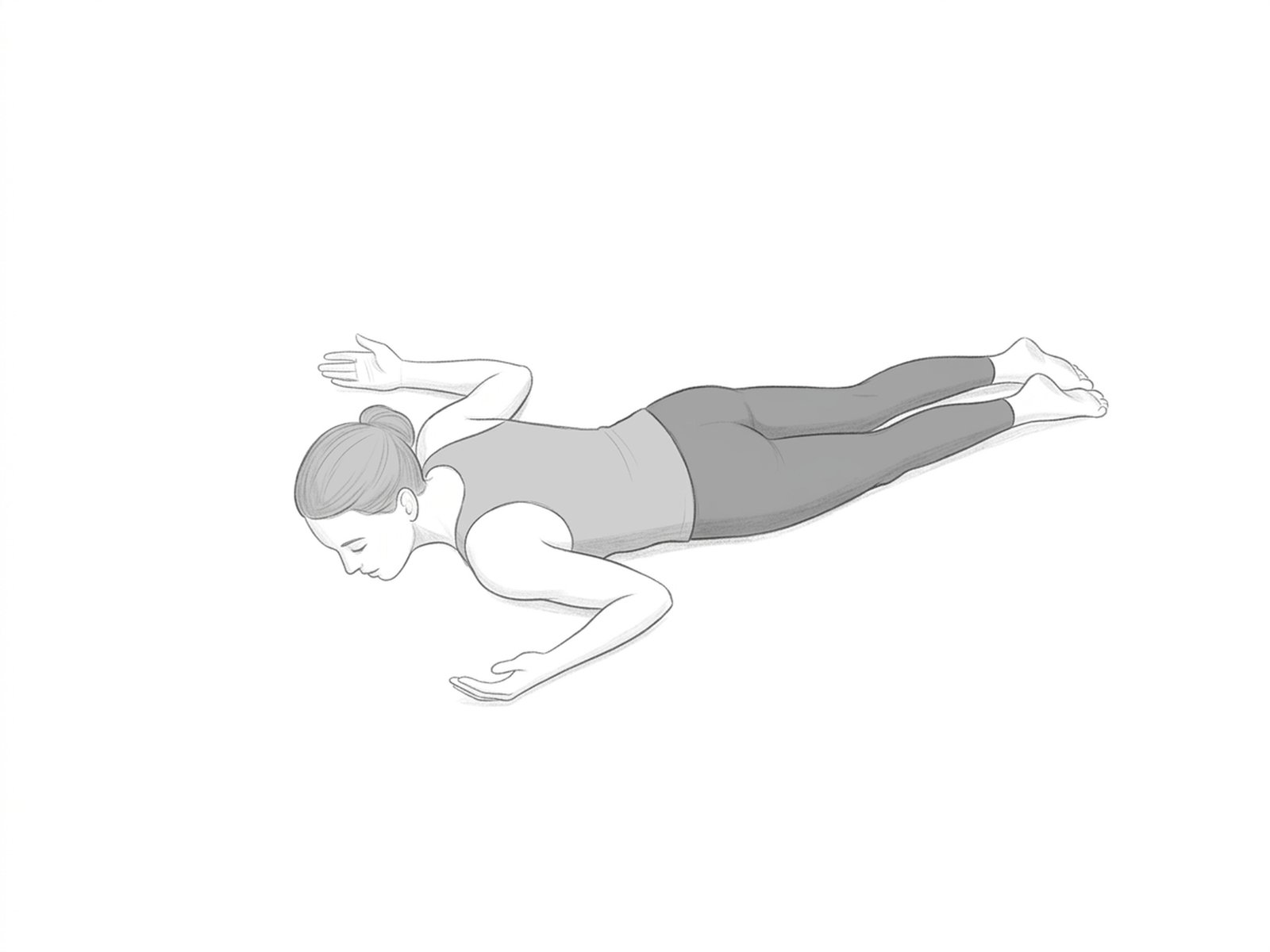
Prone W-Raise
Combines glenohumeral external rotation with scapular retraction in a prone position, forming a W with the body. Simultaneously recruits the posterior rotator cuff and scapular stabilizers — ideal for advanced progression of the Prone series.