Neurobiological Mechanisms of Acupuncture for Some Common Illnesses: A Clinician's Perspective
Cheng KJ · Journal of Acupuncture and Meridian Studies · 2014
Evidence Level
STRONGOBJECTIVE
To explain the neurobiological mechanisms of acupuncture for common conditions using Western scientific concepts
WHO
Comprehensive review of studies on multiple clinical conditions
DURATION
Analysis of decades of scientific research
POINTS
PC-6, ST-36, SP-6, Ashi points, GV-20, Shenmen
🔬 Study Design
Narrative Review
n=0
Analysis of scientific literature on neurobiological mechanisms
📊 Results in numbers
Local musculoskeletal effects
Somato-autonomic reflex
Neurotransmitters
Point specificity
📊 Outcome Comparison
Level of evidence by condition
This study explains how acupuncture works in the body using modern science. Acupuncture acts through three main mechanisms: local effects that improve circulation and healing, reflexes that connect points of the body to internal organs, and changes in brain chemicals that control pain and mood. This helps explain why acupuncture is effective for several health conditions.
Article summary
Plain-language narrative summary
Acupuncture, an ancient practice consisting of the insertion of needles at specific points on the body for therapeutic purposes, has gained increasing acceptance in Western medicine, especially for the treatment of musculoskeletal conditions such as back pain. Although the traditional Chinese concepts of qi (氣), meridians, and yin-yang (陰陽) have historical value, many Western medical professionals and patients find it difficult to understand these ancient concepts. To facilitate the incorporation of acupuncture into conventional medical practice, it becomes essential to explain its mechanisms of action using contemporary knowledge of neurobiology and physiology. The basic phenomenon of acupuncture can be understood simply: the insertion of needles at certain locations in the body produces specific therapeutic effects, regardless of the theoretical explanations used to describe it.
This scientific study aimed to present the neurobiological mechanisms proposed to explain how acupuncture works in different common clinical conditions, using a Western medical perspective. The researcher analyzed available scientific evidence on the effects of acupuncture in various medical conditions, organizing the mechanisms of action into three main categories: local effects, somato-autonomic reflexes, and systemic effects through brain neurotransmitters. The methodology consisted of a narrative review of the existing scientific literature, examining studies that investigated the neurobiological foundations of acupuncture across different clinical applications. The author also explored alternative approaches to understanding the mechanisms of acupuncture, including the fascia network (connective tissue) and the primo vascular system, and discussed the implications of these findings for the design of clinical trials.
The findings revealed that acupuncture acts through multiple well-grounded neurobiological mechanisms. For musculoskeletal conditions, the main mechanism involves tissue microinjuries that stimulate increased local blood flow, facilitate healing, and promote analgesia through the release of neurotransmitters such as enkephalin. An important milestone was the discovery that acupuncture stimulates the release of endogenous endorphins, establishing the neural model of action. For effects on internal organs, acupuncture works through somato-autonomic reflexes, in which stimulation of specific muscles sends signals to the brain that then project to autonomic nerves, affecting functions such as digestion and blood pressure.
In the treatment of conditions such as smoking cessation and depression, acupuncture modifies levels of brain neurotransmitters such as serotonin and dopamine in the limbic system, altering emotional states and reducing cravings. For headache, acupuncture affects pain-modulating neurotransmitters such as substance P and met-enkephalin along nociceptive pathways. In hormonal conditions such as polycystic ovary syndrome, acupuncture influences the hypothalamic-pituitary axis, reducing luteinizing hormone release.
For patients, these findings mean that acupuncture has solid scientific foundations and can be considered a legitimate modality of conventional medicine, not merely a mystical alternative practice. The neurobiological mechanisms explain why acupuncture is especially effective for musculoskeletal pain, where it has the most compelling evidence of efficacy. For health professionals, understanding these mechanisms allows for a more rational practice of acupuncture, based on scientific evidence rather than traditional concepts. An important clinical implication is that, for musculoskeletal conditions, there is no point specificity — that is, any site where pain is present may be effective for treatment, which explains why "sham points" used in clinical trials often show some efficacy.
On the other hand, for systemic effects involving the brain, some point specificity exists, although not as rigid as traditionally described. This has important implications for the design of clinical research in acupuncture.
The study acknowledges several important limitations. Many of the proposed mechanisms were established primarily in animal studies and require further clinical validation in humans. Evidence of efficacy varies considerably across different clinical applications — while it is strong for musculoskeletal pain and nausea, it is still inconclusive for conditions such as smoking cessation, headache, and hypertension. The author acknowledges that there is no unified theory of the mechanisms of acupuncture, only varied models and hypotheses for different clinical applications.
In addition, some fundamental aspects, such as why certain traditional points are more effective than others located over the same deep nerves, remain poorly understood. The study concludes that, although current neurobiological models are rudimentary and may later be modified or replaced, they represent an important advance in the scientific understanding of acupuncture. This evidence-based approach allows acupuncture to be viewed as a modality of conventional medicine, facilitating its acceptance and integration into Western medical practice.
Strengths
- 1Scientific approach based on neurobiology
- 2Integration of Eastern and Western concepts
- 3Comprehensive review of multiple conditions
- 4Clear explanation of different mechanisms of action
Limitations
- 1Lack of a unified theory
- 2Limited evidence for some applications
- 3Point specificity not yet fully understood
- 4Need for additional clinical studies
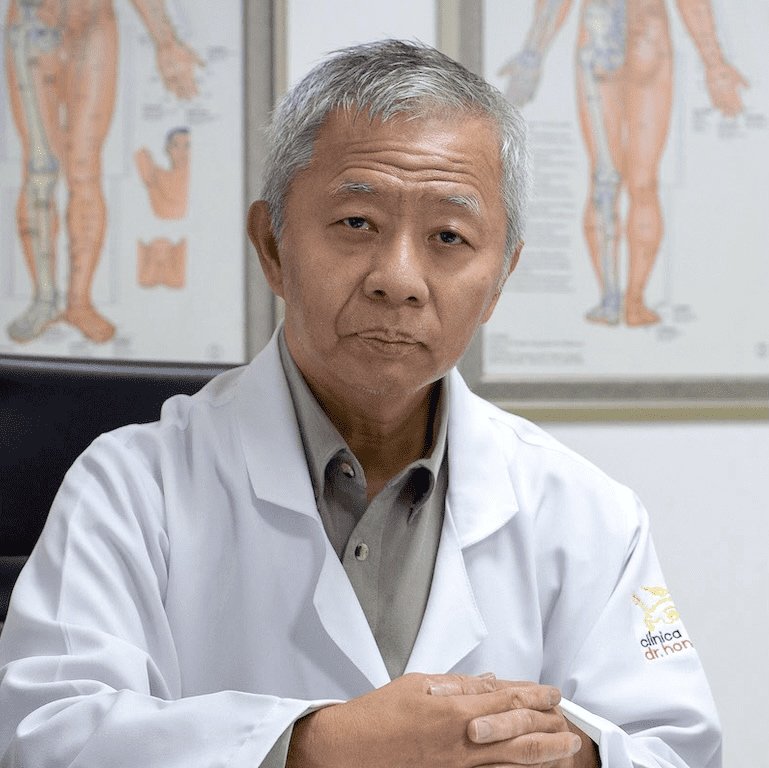
Expert Commentary
Prof. Dr. Hong Jin Pai
PhD in Sciences, University of São Paulo
▸ Clinical Relevance
Understanding the neurobiological mechanisms of acupuncture has gone from being an academic curiosity to an indispensable tool for dialogue with colleagues and the justification of clinical decisions before hospital committees. Cheng clearly organizes the mechanistic triad — local tissue-vascular effects, somato-autonomic reflex, and central neurotransmitter modulation — that underpins indications as diverse as chronic low back pain, polycystic ovary syndrome, and depression. For the clinician who integrates acupuncture into the therapeutic arsenal, the distinction between the absence of point specificity for musculoskeletal pain and the relative presence of specificity for systemic effects has a direct implication: it justifies both the perilesional approach in tendinopathies and the careful selection of points in the treatment of autonomic and hormonal conditions. This guides practical choices in patients with overlapping conditions, common in the population that seeks out the pain service.
▸ Notable Findings
The most relevant point of this review is the explicit description of the somato-autonomic reflex as the link between peripheral stimulus and the visceral effects of acupuncture — a mechanism that connects, in neurophysiological language, what classical medicine described as the action of points on distant organs via meridians. Modulation of the hypothalamic-pituitary axis as an explanation for the effects of acupuncture in polycystic ovary syndrome, via reduced luteinizing hormone release, lends a concrete endocrinological rationale to the treatment of these patients. Equally noteworthy is the action on the limbic system — with changes in serotonin and dopamine — as the substrate for the effects observed in depression and nicotine dependence. The synthesis of tissue microinjury inducing local angiogenesis and the release of enkephalins repositions the needle as an instrument of active tissue repair, not just analgesia.
▸ From My Experience
In my practice at the Pain Center of HC-FMUSP, the mechanistic framework proposed by Cheng resonates with what we have observed over decades. For musculoskeletal pain — low back pain, myofascial pain syndrome, tendinopathies — I usually see a perceptible clinical response between the third and fifth sessions, with consolidation around eight to twelve sessions, after which we transition to a monthly maintenance regimen. The absence of strict point specificity for pain, described in the article, is something we have been practicing empirically for a long time: we treat the painful area and its surroundings, without topographic rigidity. For autonomic conditions — borderline hypertension, dysautonomia, menstrual irregularities — point selection follows different logic and the response tends to be slower, appearing between the sixth and tenth sessions. We usually combine acupuncture with supervised exercise and, when indicated, with conventional pharmacotherapy, never as a substitute. Patients with high central sensitization and an anxious profile tend to respond better when the approach also includes the limbic axis, which this article appropriately substantiates.
Full original article
Read the full scientific study
Journal of Acupuncture and Meridian Studies · 2014
DOI: 10.1016/j.jams.2013.07.008
Access original articleScientific Review

Marcus Yu Bin Pai, MD, PhD
CRM-SP: 158074 | RQE: 65523 · 65524 · 655241
PhD in Health Sciences, University of São Paulo. Board-certified in Pain Medicine, Physical Medicine and Rehabilitation, and Medical Acupuncture. Scientific review and curation of every entry in this library.
Learn more about the author →Medical disclaimer: This content is for educational purposes only and does not replace consultation, diagnosis, or treatment by a qualified professional. Some information may be assisted by artificial intelligence and is subject to inaccuracies. Always consult a physician.
Content reviewed by the medical team at CEIMEC — Integrated Centre for Chinese Medicine Studies, a reference in Medical Acupuncture for over 30 years.
Related articles
Based on this article’s categories