Acupuncture in Traditional Chinese Medicine - An Historical Review
Veith I · California Medicine · 1973
Evidence Level
STRONGOBJECTIVE
To analyze the historical origins and theoretical foundations of acupuncture in traditional Chinese medicine
SOURCE
Yellow Emperor's Classic of Internal Medicine (Huang Ti Nei Ching Su Wen)
PERIOD
From 7,000 years ago to the 20th century
POINTS
365 points where the meridians emerge on the body surface
🔬 Study Design
Historical review
n=0
Analysis of historical texts and traditional practices
📊 Results in numbers
Acupuncture points identified
Main meridians
Main organs (Tsang)
Eliminating organs (Fu)
📊 Outcome Comparison
Antiquity of practices
This historical study shows that acupuncture is not a recent discovery but a millennia-old medical practice with deep philosophical foundations. Traditional Chinese acupuncture is based on the balance of Yin and Yang forces and the flow of vital energy (Ch'i) through specific channels in the body, offering a holistic approach to health.
Article summary
Plain-language narrative summary
This fundamental historical article, published in 1973 by Ilza Veith, offers a comprehensive analysis of the origins and theoretical foundations of acupuncture in traditional Chinese medicine. The work arose in the context of renewed American interest in acupuncture after the reopening of diplomatic relations with China, when Western visitors were impressed by the use of acupuncture as surgical anesthesia.
The author traces the origins of acupuncture to the Neolithic period, approximately 7,000 years ago, when the first needles were made of stone. The main text that grounds traditional Chinese medicine is the 'Huang Ti Nei Ching Su Wen' (The Yellow Emperor's Classic of Internal Medicine), attributed to the Yellow Emperor (2697-2597 BCE), although it was probably written between the 4th and 3rd centuries BCE.
The philosophical foundations of Chinese medicine are based on three essential concepts: the Tao (the Way), the Yin and Yang forces, and the five elements (water, fire, wood, metal, and earth). According to this cosmogony, the universe created itself through the Tao, which divided the original chaos into the complementary Yin and Yang forces. Human beings, created from the same elements as the universe, must maintain the balance of these forces to preserve health.
Traditional Chinese anatomy was limited due to religious taboos that prevented dissection. The body was described as having nine orifices, five storage organs (Tsang) — liver, heart, spleen, lungs, and kidneys — and six eliminating organs (Fu). The circulatory system included vessels that carried blood and others that conducted air or vital pneuma, later known as meridians.
Diagnosis was based primarily on pulse palpation, considered an extremely sophisticated art. The physician examined six pulses at each wrist, each connected to a specific organ. The technique was so refined that Western physicians who observed the practice reported its almost supernatural precision in diagnosing organic conditions.
Treatment followed five main methods: healing of the spirit (guidance toward the right way of life), nourishment of the body (diet based on the five elements), medicine (substances from the animal, vegetable, and mineral kingdoms), treatment of intestinal disorders (massage and adequate evacuation), and acupuncture with moxibustion.
Acupuncture involves the insertion of needles at specific points of the 365 locations where the meridians emerge on the body surface. Moxibustion uses cones of dried Artemisia vulgaris leaves burned on the skin. Both techniques aim to create openings to relieve the congestion of Ch'i (vital energy) caused by the imbalance of Yin and Yang.
The article also addresses modern attempts to scientifically explain the efficacy of acupuncture. Proposed theories include the correspondence between skin areas and the cerebral cortex (work by Rasmussen and Penfield), the 'gate control' theory of Melzack and Wall, and later developments such as the 'two-gate control' theory. These investigations seek to understand the neurological mechanisms by which stimulation of specific skin points can produce therapeutic effects.
The clinical implications are significant, as the article documents thousands of years of effective therapeutic use of acupuncture. The Chinese tradition has always emphasized preventive medicine, with the famous maxim that sages do not treat those already ill but instruct those still healthy. This holistic approach considers not only physical symptoms but also the emotional and moral state of the patient.
Veith's work is fundamental for contextualizing acupuncture within its original philosophical system, helping to understand why this medical practice persisted for millennia. Although the exact mechanisms are still the subject of scientific investigation, the clinical efficacy documented throughout history suggests that acupuncture offers real benefits, especially in pain relief and the treatment of various chronic conditions.
Strengths
- 1Comprehensive and well-documented historical analysis
- 2Detailed philosophical contextualization of the foundations of Chinese medicine
- 3Bridge between traditional knowledge and modern scientific investigation
- 4Valuable primary source on the Yellow Emperor's Classic
Limitations
- 1Does not present contemporary clinical data
- 2Limited by the availability of ancient historical sources
- 3Primarily theoretical focus without experimental validation
- 4Some interpretations based on translations of ancient texts
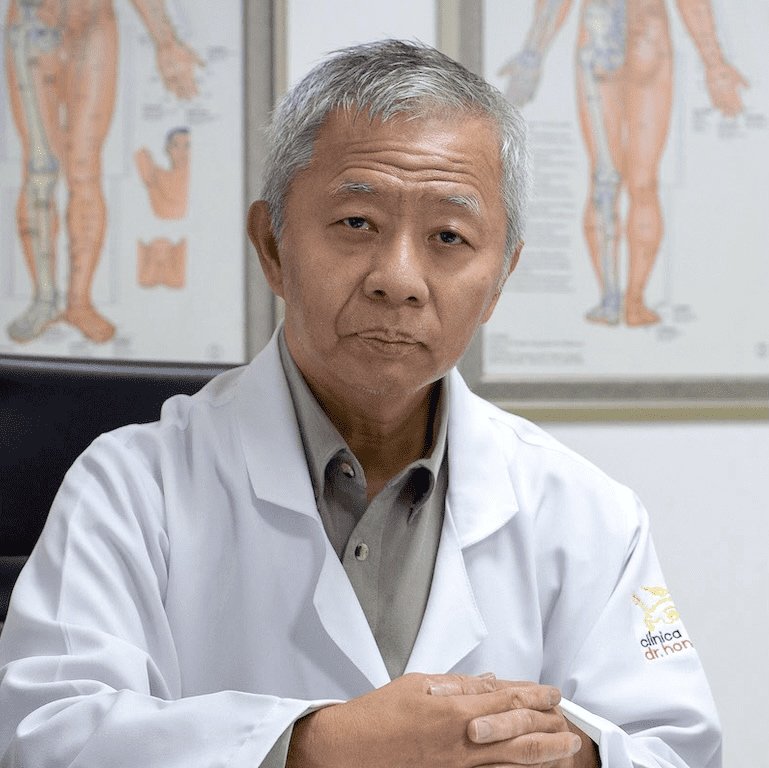
Expert Commentary
Prof. Dr. Hong Jin Pai
PhD in Sciences, University of São Paulo
▸ Clinical Relevance
Published in 1973, at a time when the West was rediscovering acupuncture after the diplomatic reopening with China, this article by Ilza Veith remains essential reading for any physician who wishes to understand the philosophical foundations on which the entire clinical practice of acupuncture rests. Understanding the Tao, Yin-Yang, and the five elements is not an exercise in antiquarian erudition; it is a condition for correctly interpreting the diagnostic patterns that guide point selection. The physician who treats chronic low back pain, irritable bowel syndrome, or insomnia from kidney Yin deficiency works with constructs that this text documents at their origin. The distinction between the five Tsang organs and the six Fu, central to acupuncture prescription, gains depth when one knows the cosmogony that justifies it. For the training of physician acupuncturists, this article is an irreplaceable starting point.
▸ Notable Findings
The most lasting contribution of the work is the systematization of the three conceptual pillars — Tao, Yin-Yang, and the five elements — as an integrative structure for diagnosis and therapeutics, not as a poetic metaphor. The description of the pulse examination with six positions on each wrist, each linked to a specific organ, anticipates by centuries any Western physiological monitoring and explains why 19th-century observers reported its diagnostic accuracy as almost supernatural. Equally notable is the fact that the article documents, as early as 1973, the first attempts at neurobiological anchoring of acupuncture — citing the gate control model of Melzack and Wall and the cortical maps of Penfield — establishing a bridge that contemporary neuroscience continues to traverse. The antiquity of 365 points distributed across 12 pairs of meridians, mapped without systematic dissection, remains intellectually impressive.
▸ From My Experience
In my practice at the Pain Center at HC-FMUSP, I notice that physicians trained without this historical foundation tend to reduce acupuncture to a list of analgesic points, losing the diagnostic dimension that distinguishes mediocre treatment from precise treatment. I have advised residents to read Veith at the beginning of training precisely so they understand why the same complaint — for example, chronic neck pain — may require completely different prescriptions according to the underlying Yin-Yang pattern. In practice, patients with a deficiency profile respond more slowly; I usually observe clinically perceptible improvement starting from the fourth or fifth session in these cases, while excess patterns respond in two to three sessions. The maxim cited in the article — to treat the healthy before they become ill — resonates directly with the preventive medicine protocols we have developed for oncology and immunocompromised patients, where acupuncture acts far beyond pain control.
Indexed scientific article
This study is indexed in an international scientific database. Check your institutional access to obtain the full article.
Scientific Review

Marcus Yu Bin Pai, MD, PhD
CRM-SP: 158074 | RQE: 65523 · 65524 · 655241
PhD in Health Sciences, University of São Paulo. Board-certified in Pain Medicine, Physical Medicine and Rehabilitation, and Medical Acupuncture. Scientific review and curation of every entry in this library.
Learn more about the author →Medical disclaimer: This content is for educational purposes only and does not replace consultation, diagnosis, or treatment by a qualified professional. Some information may be assisted by artificial intelligence and is subject to inaccuracies. Always consult a physician.
Content reviewed by the medical team at CEIMEC — Integrated Centre for Chinese Medicine Studies, a reference in Medical Acupuncture for over 30 years.
Related articles
Based on this article’s categories