The Roots and Development of Chinese Acupuncture: from Prehistory to Early 20th Century
Ma KW · Acupuncture in Medicine · 1992
Evidence Level
STRONGOBJECTIVE
To document the historical development of Chinese acupuncture from prehistory to the early 20th century
SOURCES
Ancient silk manuscripts, oracle bone inscriptions, classical texts, and archaeological records
PERIOD
From the Stone Age to the early 20th century (more than 3,000 years)
EVOLUTION
From 'Bian Shi' stone needles to complete systems with 359 acupuncture points
🔬 Study Design
Documentary review
n=0
Historical analysis of ancient texts and archaeological evidence
📊 Results in numbers
Acupuncture points documented in the Huang Di Nei Jing
Points systematized by Wang Wei-yi
Types of ancient needles described
Main channels identified
📊 Outcome Comparison
Evolution of acupuncture instruments
This historical study reveals that acupuncture has roots going back thousands of years, evolving from stone needles used in prehistory to a sophisticated medical system. The research shows how knowledge was transmitted through families of physician-acupuncturists across generations, creating the scientific foundations that support the modern acupuncture we know today.
Article summary
Plain-language narrative summary
Acupuncture is one of the oldest practices in traditional Chinese medicine, with a fascinating history spanning more than five millennia. This comprehensive study, presented by Dr. Kan-Wen Ma, takes us through a historical journey that reveals how this therapeutic technique evolved from its prehistoric origins to the early 20th century, demonstrating its enduring importance in Eastern medicine.
The origin of acupuncture can be traced back to the New Stone Age, when our ancestors used instruments called 'Bian' or 'Bian Shi' — polished and sharpened stones — to treat illnesses through the puncture of specific points on the body. Fascinating archaeological evidence includes writings on silk fabrics found in tombs from the 3rd century BCE, which describe the use of these stones in the treatment of hemorrhoids and other ailments. The discovery of these ancient materials offers a unique window for us to understand how this medical practice developed over the centuries, passing from generation to generation through families of physician-acupuncturists who served emperors and led the medical profession.
The study adopts a systematic historical approach, analyzing three distinct periods of acupuncture development. The first period, from prehistory to the 3rd century CE, marks the crucial transition from stone needles to metal instruments made of bronze, iron, silver, and gold. During this period, the first foundational medical texts emerged, including the famous 'Huang Di Nei Jing' (Yellow Emperor's Internal Classic), which established the theoretical principles of traditional Chinese medicine. The second period, from the 4th to the 10th century, was characterized by the official recognition of acupuncture as an independent medical specialty, with its inclusion in the Imperial Academy of Medicine.
The third period, from the 11th century to the early 20th, saw both the expansion and the temporary decline of the practice, especially with the introduction of Western medicine.
The most significant findings include the identification of nine different types of ancient needles, each with specific shapes and applications, from arrow-shaped needles for superficial punctures to long needles up to 20 centimeters for thick muscles. Notable archaeological findings include nine acupuncture needles found in 1968 in the tomb of Prince Liu Sheng, dated to 113 BCE, four of them made of gold and still in perfect condition. The development of the famous bronze teaching models, created by Wang Wei-yi in the 11th century, represented a revolutionary advance in medical education, allowing students to practice locating precise points on figures filled with mercury or water.
For modern patients and professionals, these historical discoveries offer valuable insights into the evolution of acupuncture as a sophisticated medical system. The research demonstrates that, over more than 2,000 years, Chinese physicians developed a systematic understanding of energy channels (meridians) and acupuncture points, gradually expanding from 295 points mentioned in classical texts to 588 points documented in later periods. The tradition of transmitting knowledge through families of physicians ensured the continued preservation and refinement of techniques, with documented cases of families practicing acupuncture for up to 12 consecutive generations. These historical records also reveal dramatic therapeutic results, including famous cases such as that of the physician Bian Que, who managed to revive a prince in deep coma using acupuncture.
The study presents important limitations that should be considered in the interpretation of the findings. Many ancient texts were lost over the centuries, limiting our complete understanding of the historical development of acupuncture. Translations of ancient texts may contain inaccuracies, and some dramatic stories of cures may have been embellished by oral tradition. In addition, the article focuses primarily on the Chinese perspective, not addressing parallel developments in other Asian cultures.
This historical work reveals that acupuncture did not emerge as a simple or primitive practice but developed gradually into a complex medical system with sophisticated theories about human energetic anatomy, precise needling techniques, and a wide range of therapeutic indications. The persistence of this tradition through millennia, surviving political and social changes and even attempts at official suppression, attests to its perceived efficacy and enduring cultural value. For modern professionals, understanding these deep historical roots can enrich contemporary practice, offering perspectives on how generations of physicians refined and perfected these ancient techniques. The history of acupuncture demonstrates how traditional medical knowledge can evolve and adapt, maintaining its relevance through the centuries.
Strengths
- 1Comprehensive analysis of primary historical sources
- 2Solid archaeological documentation
- 3Tracing of theoretical and practical evolution
- 4Cultural and social contextualization
Limitations
- 1Some historical sources lost
- 2Interpretation of ancient texts can be subjective
- 3Limitations in verifying legendary accounts
- 4Specific focus on the Chinese tradition
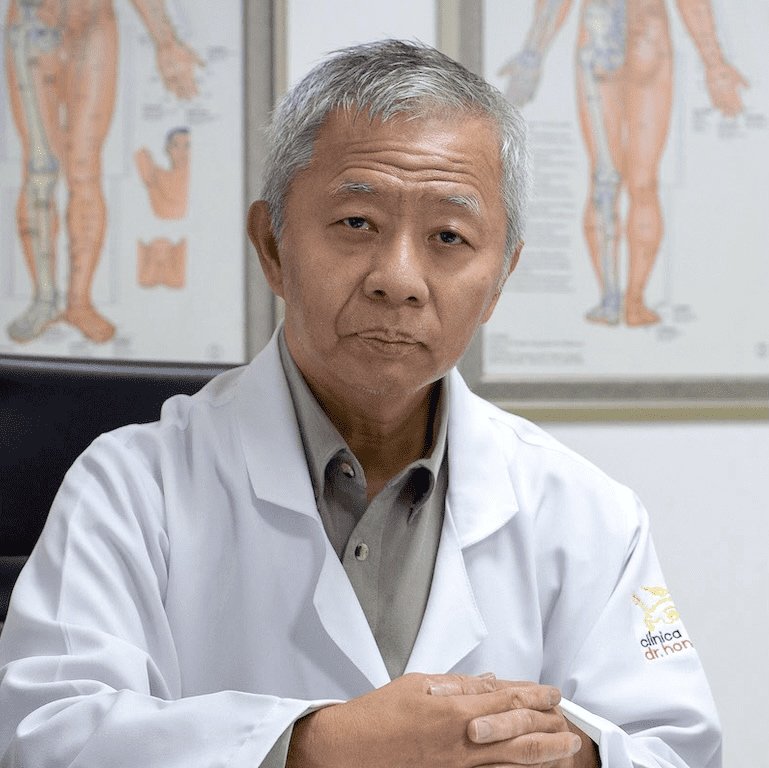
Expert Commentary
Prof. Dr. Hong Jin Pai
PhD in Sciences, University of São Paulo
▸ Clinical Relevance
Understanding the historical genealogy of acupuncture is not an exercise in vague erudition — it is a foundation that guides informed clinical decisions. When a physician recognizes that the 12 main channels and the 295 points systematized in the Huang Di Nei Jing represent centuries of empirical clinical observation, they begin to treat this framework with the epistemological rigor it deserves, rather than dismissing it as folklore. In practice, this has direct implications: point selection based on classical diagnostic patterns is not arbitrary — it is the product of systematic refinement over generations. For physicians who integrate acupuncture into protocols for chronic pain, supportive oncology, or rehabilitation, knowing this historical trajectory helps distinguish interventions with consolidated doctrinal depth from those peripheral to the system. The documented expansion from 295 to 359 points among the great compilers illustrates that traditional Chinese medicine has always been a living system, subject to revision and expansion — an epistemological stance that resonates with contemporary evidence-based medicine.
▸ Notable Findings
The archaeological finding of the nine gold and silver needles recovered from the tomb of Prince Liu Sheng, dated to 113 BCE, is particularly revealing: it demonstrates that the metallurgy applied to acupuncture had already reached notable technical refinement two millennia before modern systematization. The morphological diversity of the nine categories of ancient needles — each with distinct geometry and indication, including instruments up to 20 centimeters for deep musculature — conceptually anticipates the current differentiation between superficial, intramuscular, and periosteal needling. The bronze model created by Wang Wei-yi in the 11th century, with its 359 points and verification system through liquid leakage, represents perhaps the first documented anatomical simulator in the history of medicine. The formalization of acupuncture as a specialty in the Imperial Academy of Medicine between the 4th and 10th centuries established a standard of institutional credentialing that predates any equivalent Western medical regulation by centuries.
▸ From My Experience
In my practice at the Pain Center at HC-FMUSP, historical knowledge of acupuncture operates as a silent clinical compass. When I choose points for a patient with complex chronic low back pain, the diagnostic reasoning I apply — identification of pattern, location of imbalance in the corresponding meridian, selection of distal points — is exactly the same described in the texts that Ma documents in this article. It is not nostalgia: it is recognizing that families of physicians who practiced acupuncture for up to 12 consecutive generations accumulated clinical observations that no short-term randomized trial will be able to replicate at scale. I have observed that physicians with solid historical training make fewer indication errors — they know when the classical system of points is sufficient and when the case requires integration with modern pharmacological or interventional resources. I present this article to residents as mandatory reading not for nostalgic value, but because those who do not understand the origin of a system rarely apply it with adequate depth.
Full original article
Read the full scientific study
Acupuncture in Medicine · 1992
DOI: 10.1136/aim.10.Suppl.92
Access original articleScientific Review

Marcus Yu Bin Pai, MD, PhD
CRM-SP: 158074 | RQE: 65523 · 65524 · 655241
PhD in Health Sciences, University of São Paulo. Board-certified in Pain Medicine, Physical Medicine and Rehabilitation, and Medical Acupuncture. Scientific review and curation of every entry in this library.
Learn more about the author →Medical disclaimer: This content is for educational purposes only and does not replace consultation, diagnosis, or treatment by a qualified professional. Some information may be assisted by artificial intelligence and is subject to inaccuracies. Always consult a physician.
Content reviewed by the medical team at CEIMEC — Integrated Centre for Chinese Medicine Studies, a reference in Medical Acupuncture for over 30 years.
Related articles
Based on this article’s categories