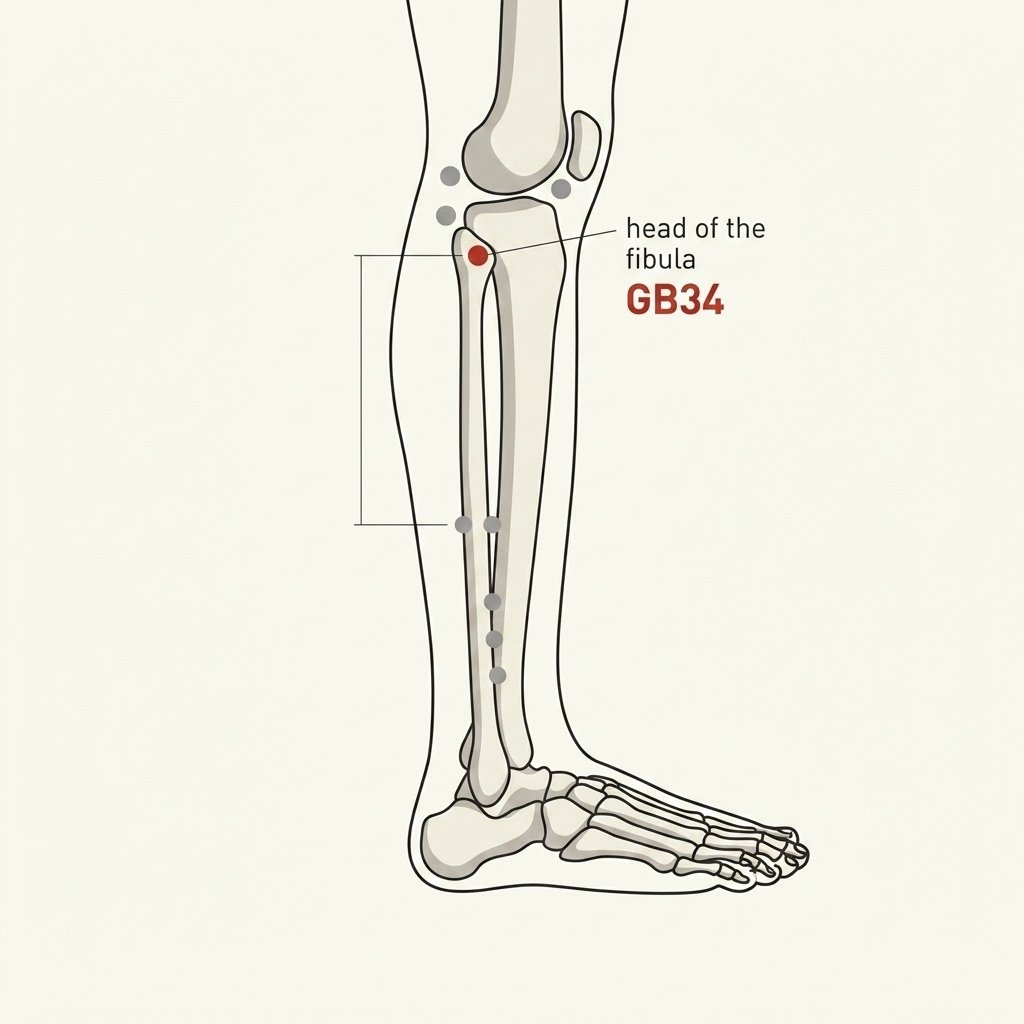
★ MajorPonto He-Mar (Terra)Ponto Hui-Reunião dos TendõesPonto He-MarSafeMembro Inferior
Depth
01–1.5 cun3.0
Oblique insertion
Precautions
Avoid direct trauma to the common fibular nerve.
📍 Location (classical)
On the lateral aspect of the leg, in the depression anterior and inferior to the head of the fibula.
🧭 How to find it (practical)
Seated, with the knees flexed and the feet relaxed, locate the point in the depression anterior and inferior to the head of the fibula.
🔬 Anatomy
Fibularis longus and extensor digitorum longus muscles. The common fibular nerve bifurcates into the deep and superficial fibular nerves near this point.
💉 Needling
Perpendicular or slightly oblique insertion directed posteriorly, 1.0–1.5 cun.
📜 Etymology
Yang (阳), Yang of Yin-Yang; Ling (陵), mound; Quan (泉), spring. The head of the fibula, located on the lateral aspect of the knee, is prominent like a mound. Below it lies a depression, like a spring, where the point is located.