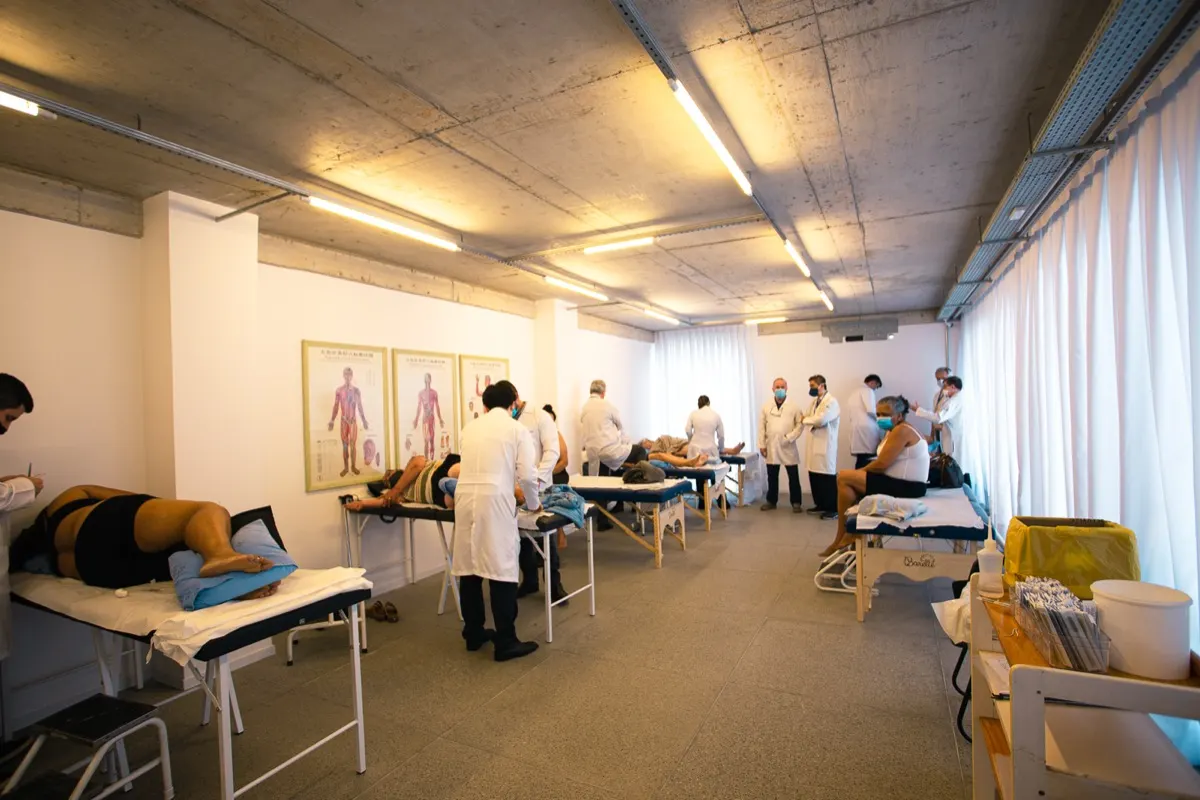

- Strong
See the numbers: What this page rests on
| Year | Study type | Verdict | Study |
|---|---|---|---|
| 2018 | Meta-analysis | Strong | Acupuncture for Chronic Pain: Update of an Individual Patient Data Meta-Analysis |
| 2025 | RCT | Strong | Effect of laser acupuncture on pain, range of motion, and function in patellofemoral pain syndrome: a randomised controlled trial |
Evidence behind this recommendation.
Selected studies from our library that inform the recommendations on this page. Evidence grade shown when available.
Effect of laser acupuncture on pain, range of motion, and function in patellofemoral pain syndrome: a randomised controlled trial
“Patellofemoral pain syndrome is a condition that primarily affects adolescents and young adults, being twice as common in women as in men.”
Acupuncture for Chronic Pain: Update of an Individual Patient Data Meta-Analysis
“Individual patient data meta-analysis confirms efficacy of acupuncture for chronic pain, with a sustained and clinically significant effect vs. sham and no-acupuncture controls.”
What Is Patellofemoral Pain?
Patellofemoral pain syndrome (PFPS) — also called "runner's knee" — is one of the most common causes of anterior knee pain in young people and active adults. Clinically, it presents with pain around or behind the kneecap (patella) during or after activities that load the patellofemoral joint: squatting, running, going up and down stairs, and sitting for long periods with the knee flexed.
The central mechanism is patellar tracking dysfunction: the patella does not glide centrally in the trochlear groove during knee flexion/extension, generating excessive pressure on the lateral aspect of the patellofemoral joint. The force imbalance between the vastus lateralis (frequently hypertonic) and the vastus medialis obliquus — VMO (frequently weak and inhibited) — is the main culprit for this poor tracking.
Unlike chondromalacia patellae (which already involves cartilage injury), PFPS is functional — without structural injury — and highly responsive to conservative treatment that addresses the muscular imbalance.
Highly Prevalent
Affects 20%–40% of young athletes and is the leading cause of anterior knee pain in runners and cyclists.
VM/VL Imbalance
The hypertonic vastus lateralis and the weak VMO are frequently the protagonists — dry needling combined with VMO strengthening can help address this imbalance.
High Responsiveness
Because it is functional (without structural injury), PFPS responds exceptionally well to conservative treatment with acupuncture + physiotherapy.
Why Conventional Treatments Are Not Always Sufficient
Physiotherapy with VMO strengthening is the reference treatment for PFPS, but it presents a practical limitation: the VMO is reflexively inhibited by patellofemoral pain. The cycle is vicious — pain inhibits the VMO, which worsens poor tracking, which generates more pain, which further inhibits the VMO.
NSAIDs control pain temporarily without addressing the muscle imbalance. Patellar alignment knee braces offer external support, but do not correct the intrinsic cause. Acupuncture and dry needling of the vastus lateralis can contribute the "missing piece" of treatment: they reduce the hypertonia of the VL that inhibits the VMO, helping to modulate the cycle.
Treatments for Patellofemoral Pain Syndrome
| Treatment | Addresses Imbalance | Speed of Response |
|---|---|---|
| Rest + NSAIDs | No | Quick, but symptomatic |
| Physiotherapy (VMO alone) | Partial (without VL) | Slow (hypertonic VL perpetuates) |
| Patellar brace | No (external mechanical) | Immediate, does not resolve cause |
| VL needling + PT VMO | Yes (complete) | Quick (2-4 sessions) |
| Acupuncture + PT | Yes | Quick and lasting |
Knee osteoarthritis: reversing quadriceps inhibition to unload the joint
Joint nociception reflexively suppresses quadriceps activation and spikes cartilage stress; pain modulation reopens strength gains.
1. Arthrogenic inhibition (AMI)
Synovial effusion and pain blunt α-motoneuron drive, shifting mechanical stress onto the medial compartment.
2. Periarticular needling
Medical stimulation at ST35, EX-LE4, ST36 and SP9 quiets joint nociception and restores voluntary muscle recruitment.
3. Active load sharing
Lower pain enables progressive quadriceps strengthening that absorbs impact and stabilizes daily walking.
How Medical Acupuncture Works in Patellofemoral Pain
The mechanism is the same as described for chondromalacia patellae, with one important difference: in PFPS without cartilage injury, dry needling of the vastus lateralis is even more effective because there is no structural damage limiting recovery. Release of the hypertonic VL immediately reduces lateral traction on the patella, improving tracking and relieving pain.
Additionally, acupuncture in the L3-L4 segments reduces excessive activity of the motor neurons innervating the vastus lateralis, normalizing the activation balance between VL and VMO. This neuromodulatory effect on motor control is a unique advantage of acupuncture that physiotherapy alone cannot reproduce.
Mechanism of Action in Patellofemoral Syndrome
Dry needling of the vastus lateralis
Twitch response followed by deep relaxation of the VL reduces excessive lateral traction on the patella.
Improvement of patellar tracking
With the VL relaxed, the patella returns to a more medial trajectory in the trochlear groove, reducing lateral overload.
L3-L4 neuromodulation
Reduction of hyperactivity of the motor neurons that innervate the VL, normalizing the activation balance with the VMO.
Reduction of reflex inhibition of the VMO
With less patellofemoral pain, the joint inhibitory reflex that suppressed the VMO is reduced — the VMO can be activated again.
Effective VMO strengthening
With the VL relaxed and the VMO disinhibited, selective VMO strengthening exercises become much more effective.
What the Scientific Studies Say
PFPS is one of the conditions with the largest number of studies on dry needling and acupuncture. Results are consistently positive, with evidence of biomechanical improvement (patellar alignment) in addition to subjective pain reduction.
The tendinopathy continuum: tailoring care from reactive to degenerative
Tendon pain is not one uniform lesion; matching load management, needling, and shockwave to biological stage drives recovery.
1. Reactive tendinopathy
Acute response to a sudden load spike; settles best with load moderation and analgesic isometric holds.
2. Tendon disrepair
Ongoing overload separates collagen bundles; responds to medical needling paired with structured eccentric loading.
3. Degenerative tendinopathy
Chronic acellular zones benefit from ESWT and heavy slow resistance to build capacity in surrounding healthy matrix.
What Is Different About the Modern Approach
The medical acupuncturist evaluates the entire lower kinetic chain — hip, knee, and ankle — because PFPS frequently has proximal components (weakness of the hip abductors, which causes internal rotation of the femur and knee adduction) and distal components (excessive foot pronation, which also contributes to poor patellar tracking).
The complete protocol includes: dry needling of the VL (main), needling of the hip abductors if necessary, recommendation of corrective insoles for excessive pronation, and prescription of VMO exercises in closed kinetic chain (single-leg mini-squat with alignment control).
When to See a Physician
Pain in the front or around the kneecap when running, squatting, climbing stairs, or sitting for prolonged periods deserves medical evaluation. The differential diagnosis with chondromalacia patellae, infrapatellar bursitis, patellar tendinopathy, and Osgood-Schlatter syndrome is essential for the correct treatment.
Frequently Asked Questions
PFPS is functional — without structural cartilage injury. Chondromalacia patellae involves real cartilage degeneration on the posterior aspect of the patella. In practice, the two frequently coexist: untreated PFPS evolves to chondromalacia. Treatment is similar, but in PFPS without cartilage injury, results are generally faster and more complete.
In general yes, with modifications: reduction of volume and intensity, avoiding downhills and hard surfaces, using shoes with good absorption and, if indicated, a temporary patellar alignment brace. The physician will guide the training progression according to improvement. Running with mild pain (up to 3/10 on VAS) is generally acceptable; above that, training should be reduced.
When combined with VMO strengthening and addressing the risk factors (hip weakness, foot pronation), PFPS may show lasting remission in many patients. Without addressing the causal factors, there is a tendency for recurrence on returning to sport. The physician advises on maintenance of preventive exercises to reduce the risk of recurrences.
Needle insertion is practically painless. The "twitch response" — a quick involuntary contraction of the VL when the trigger point is reached — may surprise the patient, but lasts a fraction of a second and is followed by deep and pleasant relaxation. Most athletes describe the sensation as "the pressure I needed relieved."
Tendinopathy continuum (Cook & Purdam) & stage-specific mechanical loading
COOK & PURDAM · BR J SPORTS MED 2009Tendon Disrepair (Matrix Breakdown)
Focal collagen separation, increased type-III collagen, and neurovascular ingrowth.
What clinical trials tested for this condition — Patellofemoral Pain
Share among studies for this condition that reported specific acupoints.
- studies analyzed
- 10 studies analyzed
- RCTs
- 4 RCTs
- sham-controlled
- 7 sham-controlled
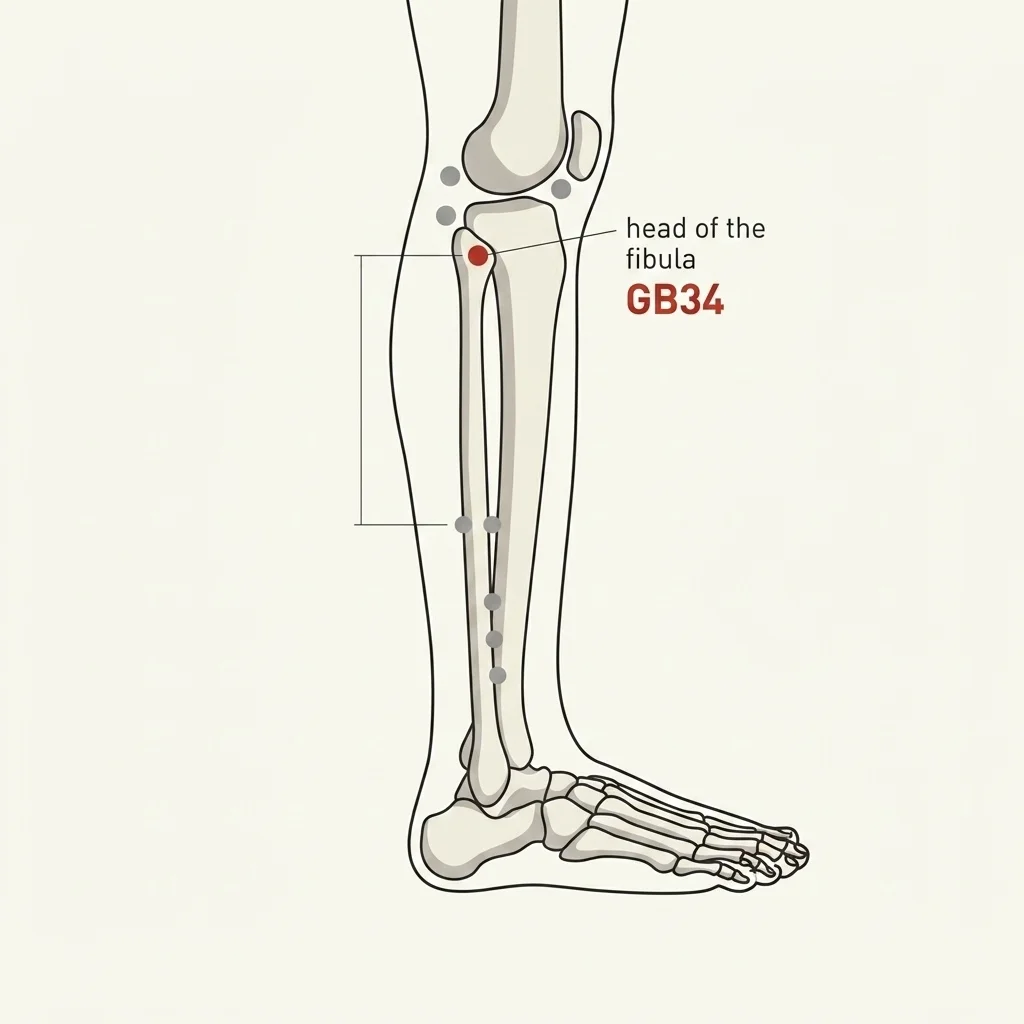
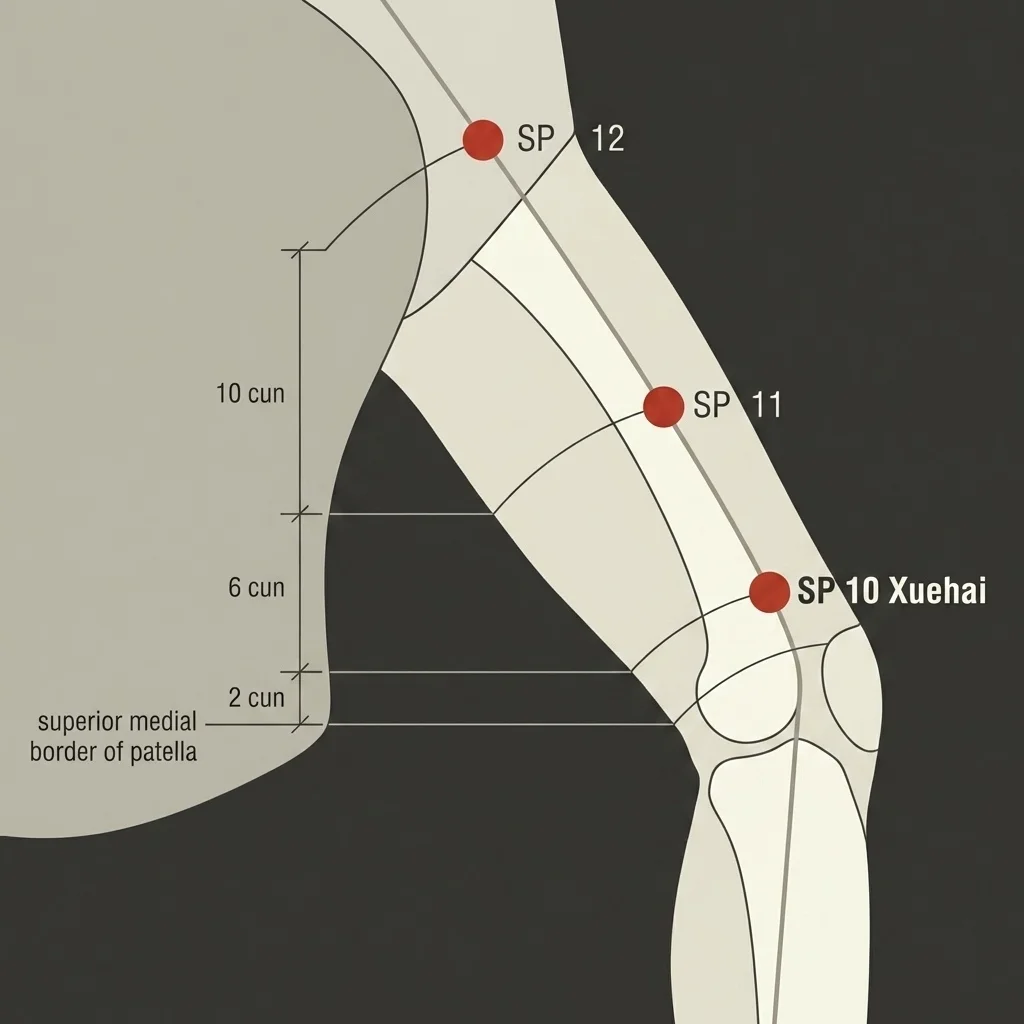
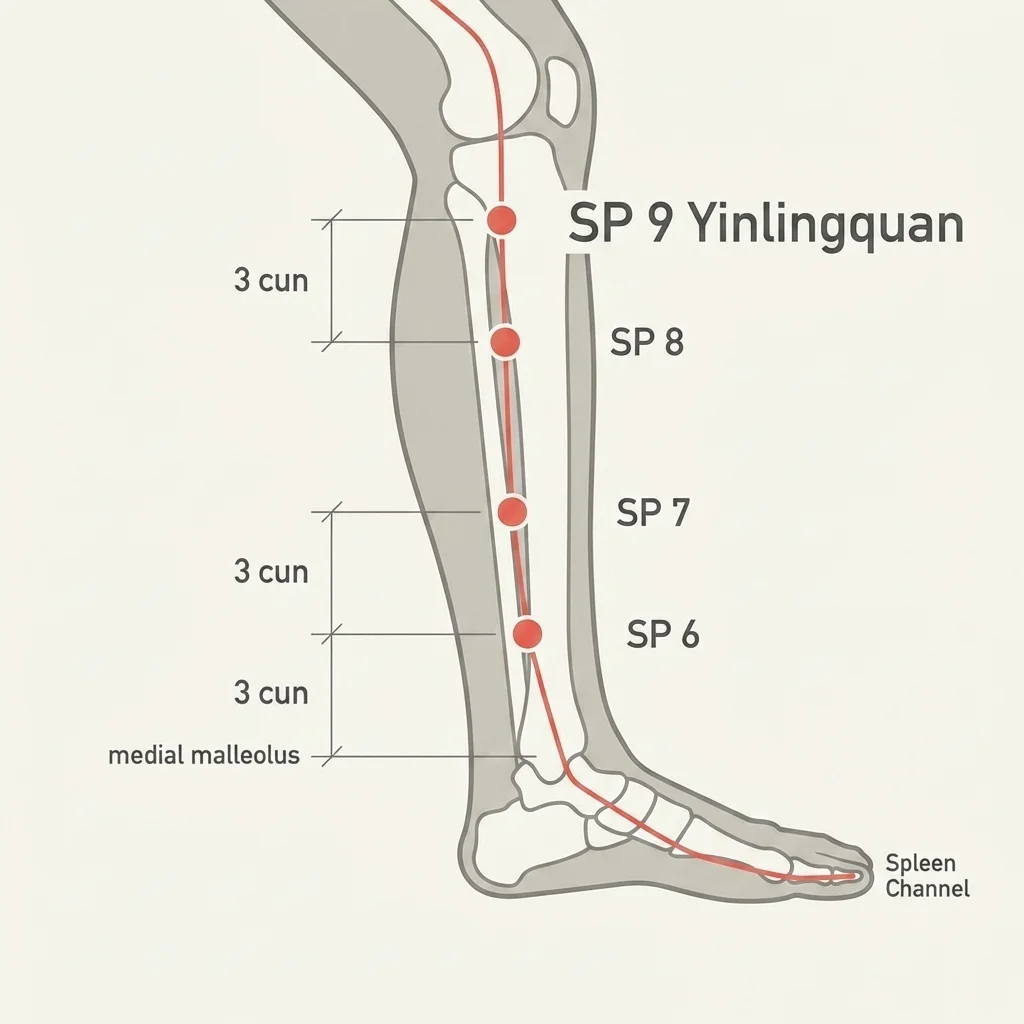
Co-prescribed pairs
- GB34 + SP102×
- GB34 + SP92×
- SP10 + SP92×
Typical session window
2–3 sessions
Trial comparators
- vs Sham / Placebo
- 7 trials
- vs Medication
- 6 trials
- vs Rehab / Exercise
- 9 trials
Sample-size panorama of indexed trials — Patellofemoral Pain
8 condition-specific studies in our Scientific Library. Logarithmic scale of sample sizes (N) across flagship trials and meta-analyses.
Head-to-head trial comparators tested against acupuncture
Select a comparator arm to highlight matching trials in the ledger below.Landmark clinical trials & meta-analyses
8/8- DOI01Randomized RCTJournal of Pain Research · 2020N=50Effects of Trigger Point Dry Needling on Neuromuscular Performance and Pain of Individuals…
- DOI02Randomized RCTFrontiers in Medicine · 2025N=60Effect of laser acupuncture on pain, range of motion, and function in patellofemoral pain…
- DOI03Meta-AnalysisForschende Komplementärmedizin · 2016N=707Acupuncture Versus Non-Steroidal Anti-Inflammatory Drugs for Treatment of Chondromalacia…
- DOI04Systematic ReviewJournal of Korean Medicine Rehabilitation · 2023N=431A Systematic Review of Acupuncture Treatment Effect for Patellofemoral Pain Syndrome
- DOI05Randomized RCTAcupuncture in Medicine · 2020N=54Comparison of dry needling and ischaemic compression techniques on pain and function in…
- DOI06Meta-AnalysisPLoS One · 2026N=1,234The effectiveness of dry needling at myofascial trigger points for knee disorders: A…
- DOI07Randomized RCTInternational Journal of Sports Physical Thera · 2018N=60Short-Term Effects of Trigger Point Dry Needling on Pain and Disability in Subjects with…
- DOI08Clinical ReviewJournal of Pain Research · 2025N=19Acupuncture Therapy for Extremity Musculoskeletal Pain: A Clinically Focused Evidence…
Acupoint co-prescription synergy across published protocols
Arc stroke thickness reflects how many clinical trials co-prescribed each acupoint pair; node radius encodes overall point frequency.