Acupuncture: Its Place in the History of Chinese Medicine
Ma KW · Acupuncture in Medicine · 2000
Evidence Level
STRONGOBJECTIVE
Document the historical role of acupuncture in traditional Chinese medicine
WHO
Chinese civilization since the Neolithic period
DURATION
More than 4,000 years of history
POINTS
From Bian Shi (stones) to 359 systematized points
🔬 Study Design
📊 Results in numbers
Points systematized in the Neijing
Points in the Zhenjiu Jiayi Jing
Points in the Tong Ren (1026 AD)
First official department
📊 Outcome Comparison
Evolution of the number of points throughout history
This study documents how acupuncture developed over more than 4,000 years in China, from the use of sharpened stones to becoming an official medical discipline recognized by the government. The research shows that acupuncture was not only one of the earliest forms of medicine in China, but also became fundamental to the entire Chinese medical system.
Article summary
Plain-language narrative summary
This comprehensive historical article, based on a commemorative lecture to the British Medical Acupuncture Society, meticulously documents the central role of acupuncture in traditional Chinese medicine over more than four millennia. The author Kan-Wen Ma presents compelling evidence that acupuncture was one of the earliest healing arts in China, possibly predating even moxibustion and herbal medicine. The historical analysis reveals that legendary figures such as Fu Xi, Shen Nong, and the Yellow Emperor were credited as pioneers of acupuncture, reflecting the ancestral origins of this therapeutic practice. Substantial archaeological evidence documents the use of 'Bian Shi' (stone needles) during the Neolithic period, with numerous artifacts discovered at various sites in China.
The transition from stone needles to bronze and gold instruments during the Xia and Shang dynasties marked a significant advance in the practice of acupuncture. The development of meridian theory and acupuncture points found its definitive systematization in the Huangdi Neijing (Yellow Emperor's Inner Classic), a foundational work that established 295 points and 12 regular meridians. This work not only codified existing knowledge, but also integrated Chinese philosophical principles such as Yin-Yang and the Five Elements into acupuncture practice. Official recognition of acupuncture as a specialized medical discipline occurred during the Tang dynasty (618 AD), when the first governmental department of acupuncture was established with professors, assistants, and students.
This historical milestone demonstrates the institutional importance that acupuncture achieved in Chinese society. The Song dynasty (960-1127) witnessed extraordinary developments, including the creation of the famous bronze figures by Wang Weiyi in 1026, which systematized 359 acupuncture points. These figures, filled with water and covered with wax, were innovatively used for teaching and evaluating students. The article highlights the international dissemination of acupuncture, particularly to Japan in the 6th century, where it was incorporated into the official Japanese medical system.
Notable physicians such as Bian Que, Hua Tuo, and Sun Simiao contributed significantly to the refinement of acupuncture techniques and theories. The clinical implications of this historical analysis are profound, demonstrating that acupuncture was not merely a complementary therapy, but rather a central medical discipline that influenced the entire development of Chinese medicine. The continued governmental recognition and institutionalization of acupuncture education throughout the dynasties evidence its recognized clinical efficacy. The limitations of this study include reliance on Chinese historical sources and the difficulty of independently verifying some ancient claims, although substantial archaeological evidence supports the main conclusions.
Strengths
- 1Comprehensive historical documentation with archaeological evidence
- 2Analysis of primary sources and classical Chinese texts
- 3Clear demonstration of the evolution and institutionalization of acupuncture
- 4Contextualization within the development of Chinese medicine
Limitations
- 1Reliance primarily on Chinese sources
- 2Some ancient historical claims are difficult to verify
- 3Does not address modern developments in acupuncture
- 4Limited focus on the Chinese cultural perspective
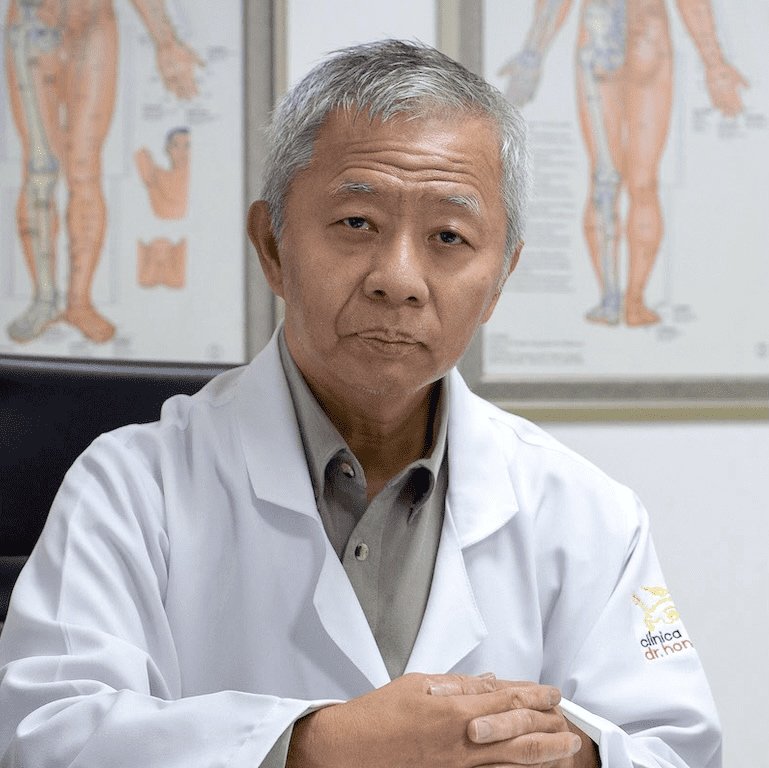
Expert Commentary
Prof. Dr. Hong Jin Pai
PhD in Sciences, University of São Paulo
▸ Clinical Relevance
Understanding the historical genealogy of acupuncture is not an exercise in scholarship for scholarship's sake — it is a foundation for contemporary medical practice. When a colleague questions the rationale of a particular point or protocol, knowing that the system of 12 meridians and 295 points was codified in the Huangdi Neijing after centuries of empirical clinical observation lends substance to the dialogue. Official recognition by the Tang dynasty in 618 AD, with a governmental department, faculty, and structured training program, anticipates by more than a millennium the institutionalization of many Western medical specialties. For the physician integrating acupuncture into the current therapeutic arsenal, this trajectory demonstrates that the systematization of points — culminating in the 359 of the Tong Ren of 1026 AD — was not arbitrary, but the product of clinical refinement accumulated over generations of physicians.
▸ Notable Findings
The archaeological demonstration of the use of Bian Shi — Neolithic stone needles — as precursors to metallic instruments places acupuncture among the oldest documented therapeutic technologies of humanity, possibly predating moxibustion and herbal pharmacology. The numerical progression of systematized points is revealing: 295 in the Neijing, 349 in the Zhenjiu Jiayi Jing, and 359 in Wang Weiyi's Tong Ren of 1026 AD, evidencing a continuous process of clinical discovery and validation — not a static revelation. Particularly notable is the use of bronze figures filled with water and covered with wax for objective student evaluation: this represents structured clinical simulation in the midst of the Song dynasty, demonstrating that concern with verifiable technical competence is as old as the discipline itself. The dissemination to Japan in the 6th century, with incorporation into the official Japanese medical system, anticipates the phenomenon of globalization of medical knowledge that we observe today on a different scale.
▸ From My Experience
In my trajectory at the Acupuncture Group of the Pain Center at HC-FMUSP, I have turned to historical reviews such as this one by Ma precisely at moments when the team needs to reconnect daily practice with its conceptual foundations. When we initiate a resident into the logic of meridians and point selection, contextualizing that this system was built empirically over millennia — and not speculatively postulated — completely changes the learner's clinical posture toward theory. I have observed that physicians with solid historical training make more coherent therapeutic decisions and better justify their point selections to skeptical colleagues. We usually reserve one session of the training program exclusively for this historical-epistemological perspective, and the impact on the quality of subsequent clinical reasoning is perceptible. The millennia-old institutionalization described in the article also serves as a consistent argument in discussions about integrating acupuncture into formal hospital protocols.
Full original article
Read the full scientific study
Acupuncture in Medicine · 2000
DOI: 10.1136/aim.18.2.88
Access original articleScientific Review

Marcus Yu Bin Pai, MD, PhD
CRM-SP: 158074 | RQE: 65523 · 65524 · 655241
PhD in Health Sciences, University of São Paulo. Board-certified in Pain Medicine, Physical Medicine and Rehabilitation, and Medical Acupuncture. Scientific review and curation of every entry in this library.
Learn more about the author →Medical disclaimer: This content is for educational purposes only and does not replace consultation, diagnosis, or treatment by a qualified professional. Some information may be assisted by artificial intelligence and is subject to inaccuracies. Always consult a physician.
Content reviewed by the medical team at CEIMEC — Integrated Centre for Chinese Medicine Studies, a reference in Medical Acupuncture for over 30 years.
Related articles
Based on this article’s categories