History and Progress of Japanese Acupuncture
Kobayashi et al. · Evidence-Based Complementary and Alternative Medicine · 2010
Evidence Level
STRONGOBJECTIVE
Document the historical evolution of Japanese acupuncture since its introduction in the 6th century
WHO
Japanese society over 1,500 years, from practitioners to the general population
DURATION
1,500 years (6th century to present)
POINTS
Unique Japanese techniques: guide tube, gentle needling, popular moxibustion
🔬 Study Design
Historical review
n=0
Documentary analysis spanning 1,500 years
📊 Results in numbers
First formal medical record
First medical law (Ishitsu-rei)
Invention of the guide tube by Sugiyama
First school for the visually impaired
📊 Outcome Comparison
Periods of development of Japanese acupuncture
This article tells the fascinating story of how acupuncture arrived in Japan 1,500 years ago and developed in a unique way. The Japanese created special techniques such as the guide tube (which makes needle insertion painless) and made moxibustion a popular practice among ordinary people, showing how traditional medicine can adapt and thrive in different cultures.
Article summary
Plain-language narrative summary
This comprehensive historical study documents the singular evolution of Japanese acupuncture over 1,500 years, revealing how a medical practice imported from China transformed into a distinctly Japanese therapeutic tradition. The journey began in 562 AD, when Chiso brought medical texts from Wu (China) to Japan, including meridian charts and acupuncture points. Official recognition came in 701 with the Ishitsu-rei, the first medical law of Japan, which established a formal educational system for acupuncturists and placed them under governmental authorization, demonstrating the importance conferred on the practice.
During the Heian period (794-1192), active exchange with the Tang dynasty of China brought advanced medical knowledge, but when these exchanges ceased in 894, Japanese physicians began to develop their own approaches. The Azuchimomoyama period (1573-1600) marked the establishment of the first private schools (ryu-ha) by scholars who returned from China, creating unique treatment styles. Dosan Manase emerged as a central figure, establishing the foundations of traditional Japanese medicine and emphasizing the importance of meridians and acupuncture points.
The Edo period (17th-19th century) brought 265 years of national isolation that catalyzed unique developments. Waichi Sugiyama, a blind acupuncturist, revolutionized the practice by inventing the guide tube method, allowing painless insertions with thinner needles. This innovation became a distinctive feature of Japanese acupuncture. Sugiyama also established the first vocational school in the world for people with physical disabilities in 1680, creating a strong association between blind people and the practice of acupuncture that endures to this day.
During this period, moxibustion became enormously popular among the common population, transcending social barriers and becoming a widely adopted self-care practice. The government encouraged its use for health promotion, and even Buddhist monks incorporated the practice, with many temples offering moxibustion treatments. Curiously, it was during this isolation that Japanese acupuncture was introduced to Europe through the Netherlands, with Hermann Bushoff publishing a book on moxibustion in 1676, introducing the word 'moxa' (derived from 'mogusa') to European languages.
The Meiji period (1868-1912) brought significant challenges when the new government, eager to Westernize Japan, favored Western medicine over traditional practices. Acupuncture was temporarily marginalized, but survived due to persistent popular demand and the determined efforts of practitioners. Paradoxically, this period also saw Western physicians begin scientific studies of acupuncture, initiating a movement to establish scientific evidence.
The postwar period presented new obstacles when the occupying Allied forces considered acupuncture unscientific and attempted to restrict it. However, dedicated advocates persuaded the government to preserve the practice, resulting in 1948 laws that regulated acupuncture as a legitimate medical practice. The educational system evolved from schools primarily for the blind to comprehensive institutions, culminating in the establishment of the first acupuncture university in 1983 and doctoral programs in 1994.
Japan's unique contributions include gentle needling techniques, abdominal diagnosis, meridian therapy based on classical texts, and special pediatric methods. The Japanese tradition emphasizes minimal stimulation with extremely thin needles, contrasting with more vigorous Chinese approaches. Currently, Japanese acupuncture maintains a strong presence in the community as a form of primary health care, expanding into areas such as sports medicine, aesthetics, and general wellness. This study demonstrates how medical traditions can adapt and flourish through cultural and political changes, maintaining contemporary relevance while preserving ancestral wisdom.
Strengths
- 1Comprehensive historical documentation of 1,500 years
- 2Rich documentary base with historical artifacts
- 3Detailed analysis of unique Japanese developments
- 4Well-grounded social and political contextualization
Limitations
- 1Absence of clinical data or evidence of efficacy
- 2Focus limited to historical aspects without contemporary assessment
- 3Possible cultural bias in the interpretation of developments
- 4Does not address modern safety or standardization issues
Expert Commentary
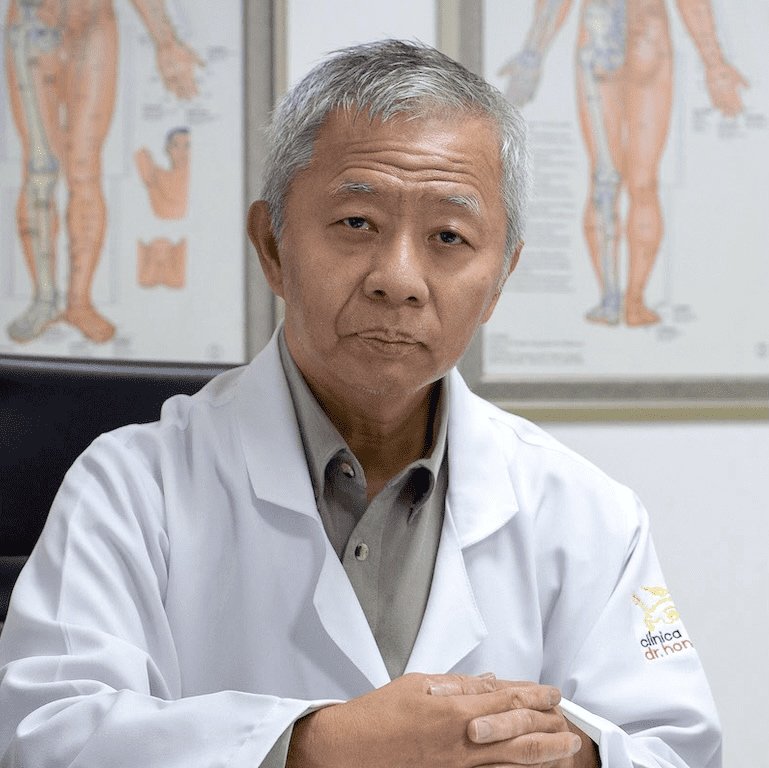
Prof. Dr. Hong Jin Pai
PhD in Sciences, University of São Paulo
▸ Clinical Relevance
Understanding the historical trajectory of Japanese acupuncture is not an exercise in antiquarian scholarship — it is a foundation for contemporary clinical practice. The guide tube invented by Sugiyama in the 17th century, for example, remains the global standard for needle insertion, including in our service at HC-FMUSP. The Japanese tradition of minimal stimulation with very thin needles has direct implications for hypersensitive populations, such as oncology patients, frail older adults, and children, in whom the gentle approach produces better tolerance and adherence to treatment. Japanese abdominal diagnosis (hara), systematized over centuries of isolated practice, offers a semiologic layer complementary to conventional clinical examination, particularly useful in functional gastrointestinal conditions and chronic pain that is difficult to characterize. Knowing this genealogy allows the acupuncture physician to rationally select technical styles according to the patient's profile.
▸ Notable Findings
The article shows that the national isolation of the Edo period, far from being an obstacle to medical development, functioned as an incubator for original therapeutic innovations. The invention of the guide tube by a blind acupuncturist — Waichi Sugiyama — is one of the most eloquent examples of how sensory limitation can sharpen other perceptive capacities and generate enduring technical solutions. Equally notable is the spread of moxibustion as a popular self-care practice in feudal Japan, with explicit governmental support for public health promotion — anticipating by centuries the modern concept of community preventive medicine. The fact that Japanese acupuncture was introduced to Europe via the Dutch route during the same period of Japan's isolation, with Hermann Bushoff incorporating the term 'moxa' into European languages in 1676, reveals a surprisingly global circulation of medical knowledge for the time.
▸ From My Experience
In my practice, the distinction between the Chinese and Japanese styles of acupuncture has concrete clinical consequences that I have learned to value over the decades. I usually turn to the Japanese technique of superficial needling and minimal stimulation especially in patients with fibromyalgia or central sensitization syndrome, in whom more vigorous needling provokes intense parasympathetic reactions or temporary exacerbation of pain — a phenomenon we observe frequently at the Pain Center. In these cases, the therapeutic response tends to appear more gradually, around the fourth to sixth session, but proves more sustained. I have also incorporated Japanese abdominal diagnosis into the evaluation of patients with chronic pelvic pain and irritable bowel syndrome, where mapping tensions and tender areas in the hara guides point selection in a more individualized way than fixed protocols. For physicians beginning in the specialty, I strongly recommend the study of the Japanese tradition as a technical counterpoint to the classical Chinese approach — not as a replacement, but as an expansion of the therapeutic repertoire.
Full original article
Read the full scientific study
Evidence-Based Complementary and Alternative Medicine · 2010
DOI: 10.1093/ecam/nem155
Access original articleScientific Review

Marcus Yu Bin Pai, MD, PhD
CRM-SP: 158074 | RQE: 65523 · 65524 · 655241
PhD in Health Sciences, University of São Paulo. Board-certified in Pain Medicine, Physical Medicine and Rehabilitation, and Medical Acupuncture. Scientific review and curation of every entry in this library.
Learn more about the author →Medical disclaimer: This content is for educational purposes only and does not replace consultation, diagnosis, or treatment by a qualified professional. Some information may be assisted by artificial intelligence and is subject to inaccuracies. Always consult a physician.
Content reviewed by the medical team at CEIMEC — Integrated Centre for Chinese Medicine Studies, a reference in Medical Acupuncture for over 30 years.
Related articles
Based on this article’s categories