Hiding in Plain Sight: Ancient Chinese Anatomy
Shaw et al. · The Anatomical Record · 2020
Evidence Level
STRONGOBJECTIVE
Demonstrate that Chinese medical texts from Mawangdui (168 BCE) constitute the world's oldest anatomical atlas, predating Galen by a thousand years
MATERIAL
Three ancient Chinese medical manuscripts discovered in the Mawangdui tombs
PERIOD
Texts dated 300-200 BCE, contemporary with the now-lost Greek texts
CONTENT
11 meridians/body pathways described through yin/yang, precursors of acupuncture points
🔬 Study Design
Historical Analysis
n=3
ancient medical manuscripts translated and anatomically interpreted
📊 Results in numbers
Age of the texts
Meridians described
Temporal precedence
📊 Outcome Comparison
Historical age of anatomical atlases
This study reveals that Chinese medical texts more than 2,000 years old contain the first detailed anatomical descriptions of the human body, showing that acupuncture has a real scientific basis in physical structures such as veins, arteries, and nerves. This shifts our understanding of ancient Chinese medicine as one grounded in real anatomical observation rather than purely esoteric concepts.
Article summary
Plain-language narrative summary
## Uncovering a Hidden Treasure of Human Anatomy: The Mawangdui Medical Texts
The history of medicine is often told from a Western perspective, with emphasis on the anatomical discoveries made in ancient Greece and during the European Renaissance. However, researchers have recently revealed a fascinating and previously hidden chapter of this history, discovering that ancient Chinese medical texts may represent the world's oldest known anatomical atlas to date. This revolutionary discovery not only rewrites our understanding of the history of anatomy but also offers new perspectives on the scientific foundations of acupuncture.
The texts in question were found at the Mawangdui archaeological site in China, where they were buried in 168 before the common era (BCE). These manuscripts remained sealed for more than two thousand years, preserved in the tombs of the family of the Marquis of Dai. When finally discovered only forty years ago, they revealed a treasure of medical knowledge that predates Galen's famous anatomical works by approximately a thousand years. Most striking is that, while the ancient Greek anatomical texts of Herophilus and Erasistratus were lost in the fire at the Library of Alexandria, the Chinese manuscripts survived intact.
To understand the importance of this discovery, it is essential to grasp the historical context in which these texts were created. During the Han dynasty (206 BCE - 220 CE), China was governed by Confucian laws, which included the concept of "filial piety." This principle considered the human body sacred and prohibited dissection, as it was seen as mutilation of one's ancestors. For this reason, many scholars assumed that the anatomy described in ancient Chinese medical texts had been developed through methods that did not involve direct examination of the body. However, historical records show that criminals could be subjected to dissection as part of severe punishment, suggesting that anatomical knowledge based on dissection was possible, even within the restrictive social context of the time.
The current study represents a meticulous analysis of these ancient manuscripts, carried out by anatomy experts who also have mastery of classical Chinese. This unique combination of skills enabled the researchers to perform both literal translation of the original texts and the anatomical investigations needed to identify the physical structures described. The work involved detailed comparisons between the textual descriptions and real human anatomy, using cadaver dissection to verify the correspondences between the ancient text and the observable bodily structures.
The main findings of the study reveal that the Mawangdui texts describe a system of eleven pathways or meridians that run through the human body, each associated with specific patterns of disease. These descriptions correspond remarkably to real anatomical structures, including veins, arteries, nerves, and muscles. The researchers found that the meridians are not esoteric concepts, as is often believed, but rather precise and observable descriptions of the physical body. For example, the yang meridians of the arm describe the network of veins beginning on the dorsum of the hand and traveling to the face, while the yin meridians correspond to the arteries supplying the upper limbs.
The methodology used by the researchers was rigorous and multidisciplinary. They first produced literal translations of the original classical Chinese texts, avoiding modern interpretations that could have influenced their understanding. They then carried out detailed anatomical investigations, identifying the physical structures that best matched the textual descriptions. This process required a significant shift in perspective, abandoning our modern view of the body as a series of separate functional systems and adopting the ancient Chinese perspective grounded in the concepts of yin and yang.
This philosophy organizes the body in terms of complementary opposites — superficial versus deep, anterior versus posterior, superior versus inferior — a fundamentally different but equally valid approach to mapping human anatomy.
The results have profound implications for both patients and healthcare professionals. First, they demonstrate that acupuncture has solid anatomical foundations, countering the widespread belief that there is no scientific basis for acupuncture anatomy. The texts clearly show that the first physicians who wrote about acupuncture were in fact describing the physical body based on direct anatomical observations. This offers a new perspective for researchers investigating the mechanisms by which acupuncture produces its therapeutic effects, suggesting that the points and meridians may have specific anatomical correlations that warrant rigorous scientific investigation.
For patients, this discovery may provide greater confidence in acupuncture as a legitimate therapeutic modality. Knowing that this centuries-old practice is grounded in careful anatomical observations made by physicians who deeply understood the physical structure of the human body may help demystify acupuncture and make it more acceptable to those who previously viewed it as a purely spiritual or esoteric practice. This is particularly relevant in an era when many patients seek integrative treatments that combine the best of traditional and modern medicine.
For healthcare professionals, especially those who practice or are considering incorporating acupuncture into their clinical practice, these findings offer a more solid scientific basis for understanding how and why acupuncture may be effective. The identification of specific anatomical correlations for the meridians can inform both clinical practice and the design of future research studies. In addition, this new understanding may facilitate dialogue between practitioners of traditional Chinese medicine and Western medicine, building bridges between different medical paradigms through a common anatomical language.
The study also reveals fascinating aspects of how different cultures can develop valid yet distinct systems for understanding the same phenomenon — the human body. Where modern anatomy organizes the body into functional systems such as the nervous, circulatory, and respiratory systems, the ancient Chinese anatomists organized it through the principles of yin and yang. Both approaches are scientifically valid but reflect different cultural and philosophical priorities in understanding bodily structure and function.
It is important to acknowledge the limitations of this pioneering study. The interpretation of ancient texts always involves some degree of uncertainty, and different translations can lead to slightly different conclusions. In addition, knowledge based solely on cadavers, as was the case in antiquity, misses important functional information that can only be observed in living organisms. The researchers also acknowledge that their own familiarity with modern acupuncture meridians may have created unconscious expectations during the process of identifying the corresponding anatomical structures.
Another important limitation is that this work represents only the beginning of a broader reappraisal of the anatomical foundations of traditional Chinese medicine. Future studies will be needed to confirm and refine these interpretations and to explore the clinical implications of these findings. Additional research may also reveal connections between other ancient medical texts and specific anatomical structures, further expanding our
Strengths
- 1Detailed analysis of unique historical texts
- 2Clear correlation between ancient descriptions and modern anatomy
- 3Evidence of dissection in ancient China
Limitations
- 1Translation-based interpretation
- 2Incomplete or damaged texts
- 3Possibility of multiple interpretations
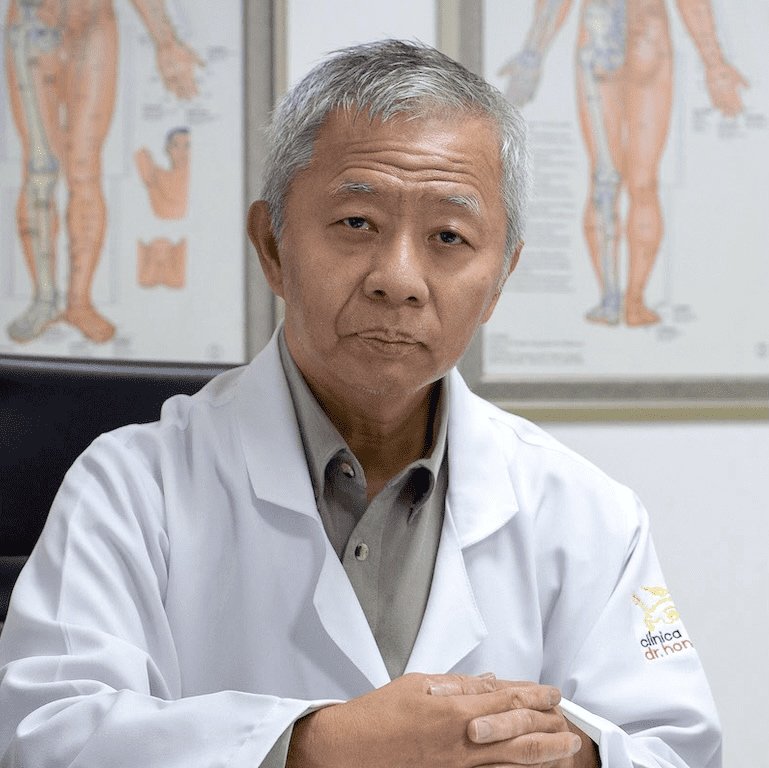
Expert Commentary
Prof. Dr. Hong Jin Pai
PhD in Sciences, University of São Paulo
▸ Clinical Relevance
The rediscovery of the Mawangdui manuscripts repositions Chinese medicine within the universal history of human anatomy — not as a parallel esoteric system, but as a tradition of systematic empirical observation millennia earlier than conventionally recognized. For the physician practicing acupuncture today, this context carries direct clinical weight: the eleven meridians described in the 168 BCE texts correspond to vascular and neural structures verifiable in cadaver, which reinforces the biological plausibility of the classical trajectories used in point selection. When a patient questions the anatomical rationale for the channels, we now have historically grounded arguments to draw upon. Moreover, the yin-yang reading as topographic organizer — superficial versus deep, anterior versus posterior — offers operational anatomical vocabulary that facilitates dialogue with orthopedic and neurology colleagues who integrate acupuncture into multimodal protocols.
▸ Notable Findings
The most striking finding is temporal precedence: texts buried in 168 BCE describe a system of eleven body pathways with verifiable anatomical precision, predating Galen by approximately a thousand years. The methodology adopted by the researchers — literal translation from classical Chinese followed by cadaveric dissection for structural correlation — eliminates circular interpretive bias. The correspondence between the yang meridians of the arm and the dorsal venous network ascending to the face, as well as between the yin meridians and the arteries of the upper limbs, suggests that the texts describe real anatomical pathways observed directly, most likely from dissections of condemned prisoners. The fact that the analogous Greek manuscripts by Herophilus and Erasistratus were lost in the Alexandria fire while those from Mawangdui survived intact lends irreplaceable documentary uniqueness to this primary source.
▸ From My Experience
In my practice at the Acupuncture Group of the Pain Center of HC-FMUSP, the question of the anatomical foundations of the meridians comes up frequently — whether in rounds with residents or in consultations with more skeptical patients, often engineers or healthcare professionals from other specialties. I have observed that presenting acupuncture as heir to a tradition of empirical anatomical observation, rather than metaphysical speculation, considerably shortens initial resistance and improves treatment adherence. Reading Shaw et al., I recognize in the pathways described in the Mawangdui texts the same topographic logic we use when selecting points along the Large Intestine meridian for carpal tunnel syndrome, for example — a pathway that follows the neurovascular structures of the forearm in a clinically coherent way. The article also reinforces something I have been arguing for decades in training courses: the dichotomy between 'scientific medicine' and 'traditional Chinese medicine' is more historiographic than epistemological.
Full original article
Read the full scientific study
The Anatomical Record · 2020
DOI: 10.1002/ar.24503
Access original articleScientific Review

Marcus Yu Bin Pai, MD, PhD
CRM-SP: 158074 | RQE: 65523 · 65524 · 655241
PhD in Health Sciences, University of São Paulo. Board-certified in Pain Medicine, Physical Medicine and Rehabilitation, and Medical Acupuncture. Scientific review and curation of every entry in this library.
Learn more about the author →Medical disclaimer: This content is for educational purposes only and does not replace consultation, diagnosis, or treatment by a qualified professional. Some information may be assisted by artificial intelligence and is subject to inaccuracies. Always consult a physician.
Content reviewed by the medical team at CEIMEC — Integrated Centre for Chinese Medicine Studies, a reference in Medical Acupuncture for over 30 years.
Related articles
Based on this article’s categories