What They Are
Neuroleptics (also called antipsychotics) are a class originally developed for management of psychosis. Use in pain is largely off-label and restricted to specific scenarios — they are not part of chronic pain guidelines as first or second line. First-generation (typical) agents — chlorpromazine and haloperidol — have established use in psychiatry and, in pain, occasional application in migraine status in the emergency setting. Second-generation (atypical) agents — olanzapine, quetiapine, risperidone — have use almost entirely restricted to palliative care (refractory nausea, end-of-life suffering). The exception with robust evidence is olanzapine for chemotherapy-induced nausea — a specific indication, not analgesia per se.
Antipsychotic class, off-label use in pain
Designed for psychosis; use in pain is restricted and almost always off-label. They are not first- or second-line in chronic pain protocols.
Restricted indications
Migraine status in the emergency setting (chlorpromazine, haloperidol IV), refractory nausea in chemotherapy/palliative care (olanzapine), refractory pain in palliative care as adjunct.
Unfavorable risk profile for chronic use
Extrapyramidal, metabolic, QT-prolongation, and cardiovascular risks in older adults (FDA black box) limit prolonged use for common pain.
1st generation (typical)
- Chlorpromazine and haloperidol are the agents of this generation.
- They have established use in psychiatry.
- In pain, they have occasional application in migraine status in the emergency setting.
2nd generation (atypical)
- Olanzapine, quetiapine, and risperidone are the agents of this generation.
- Use in pain is almost entirely restricted to palliative care (refractory nausea, end-of-life suffering).
- The exception with robust evidence is olanzapine for chemotherapy-induced nausea.

Mechanism of Action
The central mechanism is D2 dopamine receptor antagonism in the mesolimbic and nigrostriatal pathways — the basis of the antipsychotic effect and of central antiemesis. In pain, the hypothesis of analgesic action invokes central dopaminergic modulation of nociceptive pathways, but the evidence for a specific analgesic mechanism is weak compared with opioids, anticonvulsants, and antidepressants. Clinical heterogeneity arises from multireceptor antagonism: in addition to D2, there is blockade of 5-HT2 (sedation, metabolic effects), alpha-1 adrenergic (hypotension — chlorpromazine), H1 (sedation, weight gain), and muscarinic (anticholinergic — dry mouth, urinary retention, cognitive risk in older adults). In migraine emergencies, the effect combines D2 antagonism, sedation, and possible trigeminal modulation; in chemotherapy-induced nausea, D2 + 5-HT2 at the vomiting center sustains antiemetic efficacy — a distinct indication from "treating pain."
Pharmacologic Pathway of Neuroleptics
D2 antagonism + 5-HT2/alpha-1/H1 receptors
Blockade of multiple central receptors; each molecule has distinct affinities (chlorpromazine predominates at alpha-1 and H1; haloperidol is more D2-selective; atypicals have greater 5-HT2).
Central dopaminergic modulation (analgesic hypothesis)
Hypothesized modulation of dopaminergic pathways involved in central pain processing — weak mechanistic evidence in non-oncologic chronic pain.
Central antiemetic effect
D2 and 5-HT2 antagonism at the vomiting center sustains use in opioid-induced and chemotherapy-induced refractory nausea (an indication with more solid evidence than analgesia).
Sedation + adverse effects (extrapyramidal, metabolic)
Substantial adverse-effect profile: extrapyramidal symptoms (tremor, rigidity, akathisia), metabolic (weight gain, diabetes with second-generation agents), cardiovascular (QT, hypotension), and risk in older adults.
Scientific Evidence
The honest reading is uncomfortable for those who expect to see neuroleptics legitimized as analgesics: in chronic nociceptive or neuropathic pain, the evidence is low or absent; in specific emergency and palliative scenarios, there is reasonable support. The relevant question is always "which molecule, in which indication, in which context."
In refractory migraine in the emergency setting, Lobo et al. (Cephalalgia 2015) and Friedman et al. (Headache 2014) support moderate evidence for chlorpromazine and haloperidol IV in migraine status after failure of triptans, parenteral NSAIDs, and antiemetics. The use is occasional, hospital-based, and not chronic — not prophylaxis or outpatient treatment. In chemotherapy-induced nausea, Navari et al. (N Engl J Med) consolidated olanzapine as a high-efficacy add-on to the standard antiemetic regimen in highly emetogenic regimens — evidence of high quality, but the indication is antiemesis, not analgesia. In palliative care, Hardy et al. (Palliat Med) describes use in refractory pain with existential suffering — a specialized indication outside the scope of outpatient chronic pain.
The counterpoint: NICE and IASP do not include neuroleptics in protocols for chronic primary pain, low back pain, fibromyalgia, or neuropathic pain. The absence reflects lack of evidence and unfavorable risk profile for chronic use; critical reviews flag low-dose quetiapine for insomnia in chronic pain as a popular practice disconnected from the scientific basis.
- In chronic nociceptive or neuropathic pain, the evidence is low or absent; in specific emergency and palliative scenarios, there is reasonable support.
- The use in migraine status is occasional, hospital-based, and not chronic: not prophylaxis or outpatient treatment.
- The absence from protocols reflects lack of evidence and unfavorable risk profile for chronic use.
Restricted Indications
The indications below are the totality of the scenarios in which, with the current literature, it makes sense to consider neuroleptics in pain. The point is not to broaden use — it is to have clarity about the boundaries where the class has any basis.
Where Neuroleptics May Have a Role
Migraine status in hospital emergency setting
Chlorpromazine IV 12.5-25 mg or haloperidol IV 2-5 mg as an option after initial lines fail (triptans, parenteral NSAIDs, antiemetics). Occasional use, not chronic, with BP and ECG monitoring.
Severe nausea associated with opioids or chemotherapy
Especially in palliative care and highly emetogenic regimens — olanzapine has robust evidence (Navari et al.). Low-dose haloperidol is a classic antiemetic in palliative care.
Refractory pain in palliative care (adjunct)
After failure of multiple analgesic lines, with associated psychological suffering ("total suffering"). Specialized indication, conducted by a palliative care or pain physician.
Existential suffering at end of life
Use in the context of advanced palliative care for management of agitation, delirium, and suffering — NOT standardized "terminal sedation," and demands specific training.
NOT indicated in common chronic pain
Chronic musculoskeletal pain, nonspecific low back pain, fibromyalgia, migraine prophylaxis, and common neuropathic pain. Routine use in these conditions has no guideline support and exposes the patient to risks without proportional benefit.
How They Are Used
Use in pain is almost always in a hospital or specialized palliative care setting. Self-prescription or chronic outpatient use in non-palliative pain is an inadequate practice. Mandatory monitoring — ECG, extrapyramidal symptoms, metabolic parameters — is incompatible with routine use without structured follow-up.
Contexts of Neuroleptic Use in Pain
Migraine status in the emergency setting
Chlorpromazine IV 12.5-25 mg with prior hydration; or haloperidol IV 2-5 mg. Single dose with BP and ECG monitoring — occasional use, not outpatient.
Nausea in chemotherapy or palliative care
Olanzapine 5-10 mg/day PO added to the antiemetic regimen in highly emetogenic chemotherapy (Navari et al.). Haloperidol 0.5-2 mg PO/SC 2-3 times/day in palliative care.
Refractory pain in palliative care
Dose individually titrated after multiple lines fail, with associated psychological suffering. Conducted by a palliative care or pain physician.
ECG, extrapyramidal, metabolic
Baseline ECG, with repeats as appropriate to dose and interactions; assessment of extrapyramidal symptoms at every visit; glucose and lipids during prolonged use of atypicals; sodium and renal function in older adults.

Do
- Reserve use in pain for the hospital or specialized palliative care setting
- Prioritize alternatives with a better profile (low-dose amitriptyline, sleep hygiene, CBT-I) for insomnia in chronic pain
- Review the indication with the physician when low-dose quetiapine is already used for insomnia in chronic pain, since many such prescriptions are amenable to de-escalation
Avoid
- Self-prescription of neuroleptics
- Chronic outpatient use in non-palliative pain
- Starting, modifying, or stopping medication without medical guidance
Neuroleptics — by generic name
All require prescription. Chlorpromazine and haloperidol are widely available generically by virtue of their psychiatric history. Use in pain is almost always hospital-based (emergency or palliative) — chronic outpatient prescription in common pain is marginal in terms of evidence.
Neuroleptics with use in pain
| Active ingredient | Common brands | Presentation | Typical use in pain | Comments |
|---|---|---|---|---|
| Chlorpromazine | Thorazine, Largactil, generic | 25-100 mg tab; drops 40 mg/mL; ampoule 25 mg/5 mL | Migraine status IV 12.5-25 mg; refractory nausea/vomiting PO 10-25 mg | Intense sedation; hypotension |
| Haloperidol | Haldol, generic | 1-5 mg tab; ampoule 5 mg/mL; drops | Intractable migraine IV 2-5 mg; palliative nausea PO 1-2 mg | QT risk; extrapyramidal |
| Olanzapine | Zyprexa, generic | 2.5-5-10 mg tab | Nausea in chemotherapy/palliative care 2.5-10 mg/day | Weight gain; metabolic |
| Quetiapine | Seroquel, generic | 25-100-200 mg tab | Insomnia in chronic pain (CONTROVERSIAL use — off-label) | Sedation; metabolic; QT risk |
| Risperidone | Risperdal, generic | 1-2-3 mg tab | Very restricted use in pain; more in palliative agitation | Extrapyramidal; prolactin |
Clinical observation: quetiapine for insomnia in chronic pain is a widespread practice but off-label and not recommended by guidelines. For insomnia associated with chronic pain, low-dose amitriptyline, trazodone, or non-pharmacologic interventions (sleep hygiene, CBT-I) have a more favorable risk-benefit profile — lower metabolic, cognitive, and cardiovascular risk in the long term.
Dosing, interactions, and special populations
Older adults. INCREASED RISK of CV mortality in dementia — FDA black box for the entire class. Avoid as routine; in palliative care, minimum dose + short duration. Risk of falls, confusion, and extrapyramidal symptoms is additive. Cardiac patients. Baseline ECG mandatory — haloperidol IV, ziprasidone, and chlorpromazine prolong QT; in QTc > 450 ms (men) or > 470 ms (women), prudent cardiologic evaluation. Parkinson disease and dementia with Lewy bodies. Relative contraindication to typical agents (worsen rigidity, precipitate falls); in Lewy body disease, severe hypersensitivity is a hallmark of the disease — low-dose quetiapine is "less bad," clozapine is a specialized alternative. Closed-angle glaucoma. Contraindicated (anticholinergics). Pregnant and lactating women. Use in pain is exceptional; when indispensable, shared decision with obstetrician and psychiatrist.
Adverse effects, risks, and contraindications
The risk profile is the main reason use in pain is limited — adverse effects substantial and recurrent, with severe presentations (neuroleptic malignant syndrome, torsades, irreversible tardive dyskinesia). In common chronic pain, where there are alternatives, the risks do not pay off.
Absolute contraindications: hypersensitivity; coma or severe CNS depression; severe blood dyscrasia; prior neuroleptic malignant syndrome; significantly prolonged QT without correction. Relative: Parkinson or Lewy body disease (typicals), closed-angle glaucoma, symptomatic prostatic hypertrophy, severe hepatic/renal failure, pheochromocytoma.
Limitations and what is still not known
The gap is not "perhaps they work in pain and we still don't know" — it is that the evidence consistently does not support use in common chronic pain, while the risks are consistently documented. Part of current use derives from historical practice, not robust data.
Myth vs. Fact
Low-dose quetiapine is a good sleep aid for people with chronic pain
A widely diffused off-label use but WITHOUT support in guidelines. The hypnotic effect of quetiapine 25-50 mg is modest and comes from anti-histaminergic action, not from a class-specific action. In return there is risk of weight gain, metabolic syndrome, QT prolongation, akathisia, and residual cognitive effect. Alternatives with a better risk-benefit profile: amitriptyline 10-25 mg at night in a patient with pain and poor sleep, trazodone in hypnotic dose, structured sleep hygiene, cognitive-behavioral therapy for insomnia (CBT-I — greatest sustained effect). The ease of prescribing quetiapine is not a clinical argument.
Central Gaps
Evidence in chronic pain is scarce and heterogeneous. Trials in non-oncologic chronic pain are small, methodologically limited, and frequently negative. No meta-analysis justifies routine use in low back pain, fibromyalgia, peripheral neuropathy, or migraine prophylaxis. Individual predictors of response are not established — unlike other classes (carbamazepine in trigeminal neuralgia, NNT ~2-3), there is no biomarker or subgroup in common chronic pain that allows confidently predicting benefit.
Long-term data on analgesic use are absent — what is known comes from psychiatry, where the decision context is distinct. Off-label prescription of quetiapine/olanzapine for "insomnia in chronic pain" is a practice with significant risk and doubtful benefit: the hypnotic literature does not support low-dose neuroleptics outside of specific contexts.
Relationship with medical acupuncture
The practical interaction between medical acupuncture and neuroleptics is low — the use scenarios diverge (neuroleptics in hospital emergencies or palliative care; acupuncture predominantly outpatient). There is no pharmacologic combinatorial restriction. In palliative care, acupuncture may offer relief of nausea and anxiety without the adverse effects of antipsychotics — the classic point PC-6 (Neiguan) has consistent literature in postoperative and chemotherapy-induced nausea and vomiting.
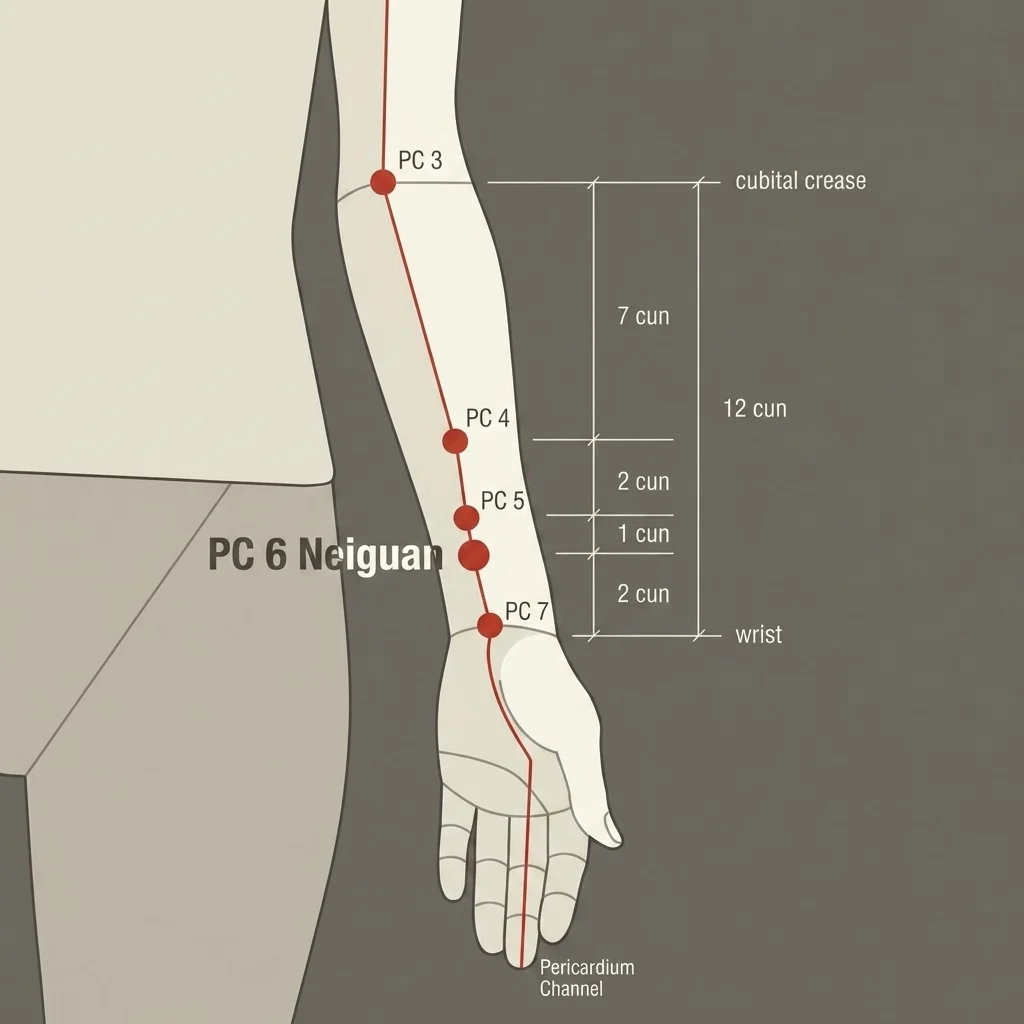
- Location
- On the palmar aspect of the forearm, 2 cun proximal to the transverse crease of the wrist, between the tendons of the palmaris longus and flexor carpi radialis muscles.
Neuroleptics vs. Medical Acupuncture
| Aspect | Neuroleptics | Medical acupuncture |
|---|---|---|
| Migraine status emergency | High (occasional, hospital) | Low (not an emergency scenario) |
| Chemotherapy-induced nausea | High (olanzapine) | Low-moderate (PC-6, adjunct) |
| Common chronic pain | Low / not indicated | Moderate |
| Insomnia in chronic pain | Questionable off-label practice | Modest adjunctive role |
| Refractory palliative pain | Specialized role | Complementary without interaction |
| Adverse-effect profile | Unfavorable (extrapyramidal, metabolic, QT) | Favorable (serious events rare) |
When to seek medical help
Acute use in emergency settings (migraine) occurs in the hospital environment without prior decision by the patient. In outpatient use (palliative or off-label), some signs warrant early contact with the attending physician, others characterize a clinical emergency.
Frequently Asked Questions about Neuroleptics in Pain
Widespread practice without guideline support. The supposed hypnotic benefit of low-dose quetiapine (25-50 mg) comes from its antihistaminic effect — not from a class-specific action. Prolonged use carries risk of weight gain, metabolic changes, QT prolongation, akathisia, and residual cognitive effects. Better-supported alternatives: amitriptyline 10-25 mg at night, trazodone at hypnotic dose, structured sleep hygiene, and cognitive-behavioral therapy for insomnia (CBT-I). If you already take quetiapine for this reason, talk with your physician about de-escalating.
In migraine status (a crisis that does not respond to usual treatment), single-dose IV haloperidol is an option after triptans, parenteral NSAIDs, and antiemetics fail (Friedman et al., Headache 2014). Occasional, hospital-based use, with BP and ECG monitoring. It is NOT outpatient prophylaxis or chronic treatment — it has a place in the emergency setting, not in home follow-up.
No — distinct classes. Neuroleptics (antipsychotics) block dopamine D2; their main uses are psychosis and severe bipolar disorder, with restricted indications in pain. Antidepressants act on serotonin and norepinephrine, modulating descending pain pathways — and therefore have an established role in chronic pain (neuropathic, fibromyalgia, migraine prophylaxis). The articles on antidepressants and anticonvulsants in pain discuss these classes in detail.
Not as a rule. In palliative care, low-dose neuroleptics manage specific symptoms — refractory nausea, delirium, psychomotor agitation, psychological suffering associated with pain. Sedation may occur as an adverse effect, and at the end of life sedation may integrate the indication when suffering is refractory. But "palliative sedation" is a specific decision, with clear protocol and consent — it is not confused with broad use of a neuroleptic in palliative care.
Olanzapine has high-quality evidence (Navari et al., N Engl J Med) as an add-on to the standard antiemetic regimen in highly emetogenic chemotherapy. The oncologist or palliative care physician prescribes it, combined with 5-HT3 antagonists, a corticosteroid, and aprepitant when indicated. Dose, duration, and monitoring are part of the individualized protocol — it is not self-prescription.
Related Reading
Deepen your knowledge with related articles