LU-8 Jingqu (經渠) — Channel Gutter
Anatomical location
Above the wrist joint space, 1 cun proximal to the palmar carpal crease (Taiyuan LU-9), on the radial border of the radial artery, in the depression at the base of the styloid process of the radius.
Practical palpation guide
With the hand extended and the palm facing up, locate the point 1 cun above the transverse wrist crease, where the artery lies, or where the radial pulse is examined. Jing Qu (LU-8) sits where the examiner's finger reaches on the radial side of the artery.
Anatomical plane & innervation
Tendon of the flexor carpi radialis muscle, brachioradialis muscle. Innervated by the lateral cutaneous nerve of the forearm and the radial nerve.
Needling technique
Perpendicular (vertical) or proximally directed insertion, 0.3–0.5 cun.
Medical application & myofascial correlation
Clinical synthesis
See Lie Que (LU-7).
Clinical practice indications
- 01Bronchitis
- 02Asthma
- 03Vocal cord dysfunction
- 04Local application for radial wrist pain
- 05Tonsillitis
- 06Esophageal spasms
- 07Soft tissue injury in the wrist
Presenting symptoms & complaints
Classical tradition, channel actions & source
Classical therapeutic actions
- Descends Lung Qi
- Relieves cough and dyspnea
- Opens the pores and expels Wind
- Opens the channel locally
Traditional indications (TCM)
Functional classification
Character etymology
Jing (經), passage; Qu (渠), gutter, valley. It is like a gutter through which the artery runs.
Layered tissue anatomy & needle biomechanics at LU 8
Cross-sectional technical schematic of perpendicular insertion (90°) (0.3–0.5 cun): superficial connective collagen coupling, intramuscular myofascial transduction, and deep neurovascular protection.
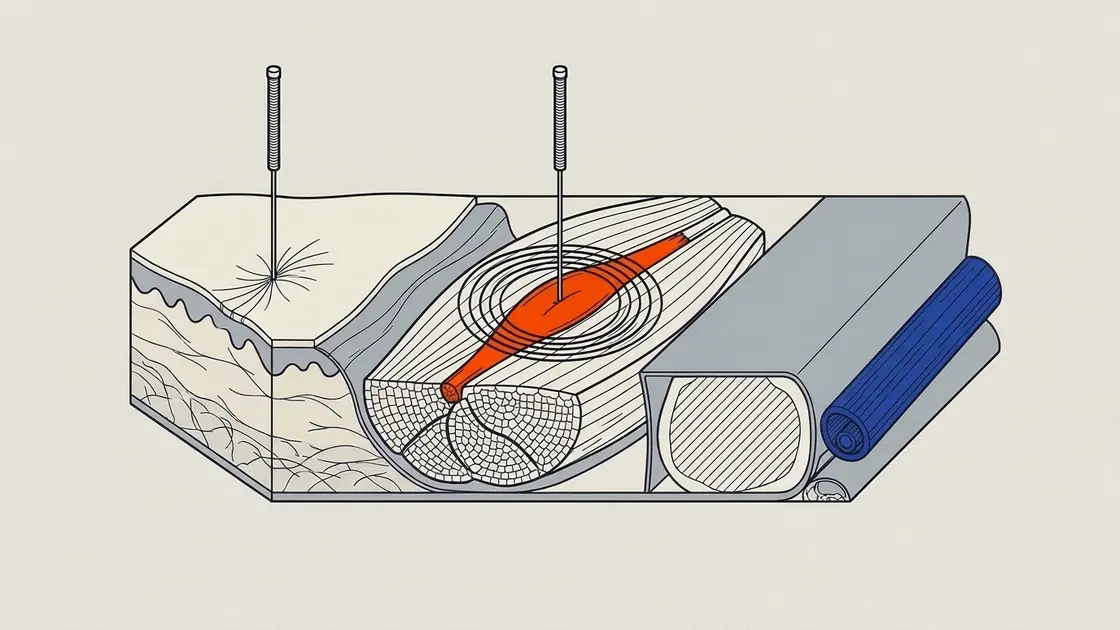
Dermal & fascial collagen coupling
A solid non-cutting filiform needle (0.25 mm rounded tip) enters via perpendicular insertion (90°), gently tenting loose areolar collagen fibers without slicing dermal vessels.
Myofascial spindle & Aδ / C transduction
Within the 0.3–0.5 cun target window at LU 8, mechanical coupling recruits intramuscular mechanoreceptors, increasing local micro-perfusion and releasing taut bands.
Strict anatomical safety floor
The deep fascial septum, bone cortex, and underlying neurovascular bundle or cavity define the strict anatomical boundary observed during physician needling at LU 8.
Clinical relations & channel protocols
Immediate neighbors on the meridian

LU 8 in research
How many Library studies cite this point, since when, and with which designs and verdicts.
- Studies
- 1Library study cites LU 8
- By year
- 2019
- Verdict
- Strong1
- Study designs
- Other designs1
- Classical source
- Ling Shu
- Depth
- 0.3–0.5 cunPerpendicular
Each study counts once, under the most specific design it states. The verdict is the Library’s word for the strength of each study’s evidence.
See the numbers: LU 8 in research
| Year | Studies |
|---|---|
| 2019 | 1 |
Often appears with
Points the Library studies cite together with LU 8. It shows research practice, not a prescription.
Each filled mark stands for 5 studies; an open mark, for 1 to 4.
Related clinical reading
6Understand bronchial asthma — a chronic inflammatory airway disease that affects more than 300 million people worldwide, its mechanisms, diagnosis, and evidence-based treatments.
Understand childhood asthma — the pathophysiology of bronchial inflammation, age-stratified diagnosis, stepwise treatment, and how pediatric acupuncture can support complementary control.
Understand chronic bronchitis — a persistent inflammation of the lower airways associated with mucus hypersecretion, its pathophysiologic mechanisms, diagnosis, and evidence-based treatments.
Understand involuntary muscle contractions — causes, prevention, and evidence-based treatments.
Understand spasticity — the velocity-dependent increase in muscle tone, its neurological causes, evaluation, and multidisciplinary therapeutic approaches.
Understand hyperhidrosis — excessive sweat production beyond thermoregulatory needs, its neurologic mechanisms, and therapeutic options.