- Strong
- Moderate
See the numbers: What this page rests on
| Year | Study type | Verdict | Study |
|---|---|---|---|
| 2022 | Narrative Review | Strong | The autonomic nervous system: a potential link for the efficacy of acupuncture |
| 2023 | Meta-analysis | Moderate | Acupuncture increases parasympathetic tone by modulating HRV: a systematic review and meta-analysis |
Evidence behind this recommendation.
Selected studies from our library that inform the recommendations on this page. Evidence grade shown when available.
The autonomic nervous system: a potential link for the efficacy of acupuncture
“Comprehensive review of the autonomic mechanisms of acupuncture: sympathetic and parasympathetic modulation via the hypothalamus, with evidence of normalization of hyperactive sympathetic tone.”
Acupuncture increases parasympathetic tone by modulating HRV: a systematic review and meta-analysis
“Meta-analysis confirms that acupuncture significantly increases parasympathetic tone measured by HRV, with an increase in RMSSD and HF-HRV vs. controls.”
What Primary Hyperhidrosis Is
Primary focal hyperhidrosis is a condition of excessive bilateral and relatively symmetric sweating at specific sites — mainly the axillae, palms, soles of the feet, and face — without an identifiable organic cause. It differs from secondary hyperhidrosis (caused by hyperthyroidism, menopause, tuberculosis, lymphoma, or medications), which requires investigation and treatment of the underlying cause.
The prevalence is 2.8% of the adult population, with frequent onset in adolescence and a peak between 25–64 years. It affects men and women equally. The social and occupational impact is significant: 74% of patients report impairment in social interactions, 57% avoid handshakes, and 36% report a negative impact on occupational performance. Palmar hyperhidrosis is especially disabling for musicians, surgeons, and professionals who use precision tools.
Pathophysiology of Primary Hyperhidrosis
Sympathetic cholinergic hyperactivity
Primary hyperhidrosis results from hyperactivity of postganglionic cholinergic sympathetic fibers that innervate the eccrine glands — not from structural abnormality of the glands
Hypothalamic-amygdala-sympathetic circuit
The emotional axis amygdala → hypothalamus → thoracic sympathetic ganglia (T2–T4 for axillary and palmar) amplifies the sweating response to emotional and social stimuli
Responsive eccrine glands
The eccrine glands at affected sites have normal density but respond with hyperactivity to sympathetic stimuli even of low intensity — lowered threshold
Cognitive-social feedback
Anticipation of social situations preemptively activates the sympathetic system; visible sweating amplifies anxiety → positive feedback cycle
Genetic predisposition
Autosomal dominant inheritance with variable penetrance in 65% of cases — positive family history as an important risk factor
Diagnosis and Diagnostic Criteria
- Diagnostic criteria: focal bilateral sweating ≥6 months + 2 of the following: bilateral and symmetric, impairs daily activity, ≥1 episode/week, onset before 25 years of age, family history, ceases during sleep
- HDSS (Hyperhidrosis Disease Severity Scale, 1–4): 1=tolerable; 2=bothersome; 3=barely tolerable; 4=intolerable — standard in clinical trials
- Starch-iodine (Minor) test: maps the sweating área to guide treatment with botulinum toxin
- Investigation of secondary hyperhidrosis: TSH, fasting glucose, complete blood count, body temperature — rule out treatable causes
- Assessment of psychosocial impact: associated social anxiety is frequent and requires a joint approach
Conventional Treatments
Treatment of primary hyperhidrosis is stepwise, starting with topical antiperspirants and progressing to interventional procedures according to severity and treatment response.
Therapeutic Approaches in Primary Hyperhidrosis
| Approach | Efficacy / Site | Limitations | Compatible with Acupuncture? |
|---|---|---|---|
| Antiperspirants with 20% aluminum chloride | Moderate for axillary; limited for palmar/plantar | Skin irritation; requires regular nighttime application | Yes — acupuncture complements for associated anxiety |
| Botulinum toxin type A (intralesional) | High for axillary (FDA/ANVISA approved); 6–12 months duration | Pain on palmar application; cost; requires reapplication; does not eliminate medication | Yes — acupuncture extends the interval between reapplications |
| Iontophoresis | High for palmar and plantar; no systemic effects | Long sessions (20–40 min, 3–4×/week); equipment required; maintenance | Yes — different approaches, no interaction |
| Systemic anticholinergics (oxybutynin, glycopyrrolate) | Moderate for generalized hyperhidrosis; oral convenience | Dry mouth, blurred vision, urinary retention, tachycardia — anticholinergic effects | Yes — acupuncture can reduce the required dose |
| Video-assisted thoracoscopic sympathectomy (VATS) | High for severe palmar and axillary; permanent result | Compensatory hyperhidrosis on the trunk and thighs (70–80% of cases); irreversible | Acupuncture can control compensatory hyperhidrosis post-VATS |
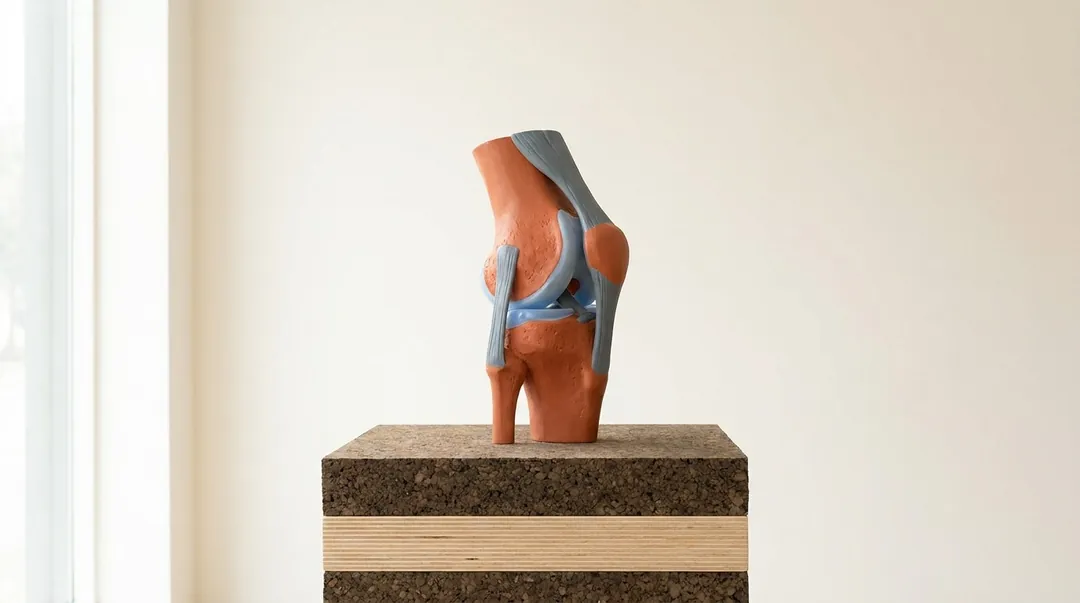
Joint preservation and pain modulation: cartilage interface, patellar track, and muscle load sharing
In osteoarthritis and patellofemoral overload, calming synovial and periarticular pain lifts arthrogenic muscle inhibition so quadriceps and hip strength can unload the joint.
1. Joint line & meniscal cushion
Brief morning stiffness (< 30 min) and load-dependent ache during prolonged standing or walking.
2. Patellofemoral anterior track
Triggered when descending stairs, squatting, or rising after prolonged flexed sitting.
3. Dynamic muscular shock absorber
Targeted analgesia reduces pain-driven inhibition so progressive strengthening protects remaining cartilage.
How Medical Acupuncture Works in Hyperhidrosis
Medical acupuncture acts on primary hyperhidrosis through modulation of cholinergic sympathetic tone via hypothalamic circuits, reduction of amygdala reactivity to social stimuli, and normalization of the sympathetic/parasympathetic autonomic balance.
Documented Effects of Acupuncture in Hyperhidrosis
Clinical Studies
The evidence base on acupuncture for hyperhidrosis includes controlled trials and case series with consistent results, especially for axillary and palmar hyperhidrosis.
Clinical Outcomes — Acupuncture in Medicine 2016 (n=45, 8 weeks)
What the Studies Show
- Objective reduction of 52% in axillary sweat production by gravimetry after 8 weeks (Acupunct Med 2016)
- Improvement of HDSS from >3 to <2 in 68% of responders — clinically significant
- Sustained response at 3 months without additional intervention in 68% of responding patients
- Concomitant improvement of associated social anxiety — point of differentiation from botulinum toxin
- Compensatory hyperhidrosis post-VATS: case reports with 40–60% reduction with acupuncture (limited but promising evidence)
Modern Approach: Integrative Acupuncture in Hyperhidrosis
Medical acupuncture can be considered as a complementary option for moderate primary focal hyperhidrosis, with advantages compared to botulinum toxin (no pain, no need for regular reapplication, may help with anxious comorbidity) and limitations in comparison (less predictable effect, individual variation). It does not replace topical antiperspirants, botulinum toxin, oxybutynin, or dermatologic evaluation when indicated.
Integrative Protocol for Primary Hyperhidrosis
Stratification (week 1)
Baseline HDSS; gravimetry if available; assessment of social anxiety (LSAS) and quality of life (DLQI); exclusion of secondary hyperhidrosis
Intensive phase (weeks 1–8)
Acupuncture 2×/week; autonomic protocol (HT6+SI5+PC6+SP6+KD3+GV20+ST36) + site-specific points; topical antiperspirant for maintenance if necessary
Consolidation phase (weeks 9–16)
Acupuncture 1×/week; reassessment of HDSS; complementary iontophoresis for palmar and plantar sites if partial response
Maintenance (after week 16)
Monthly acupuncture; social anxiety management strategies (complementary CBT if indicated); rescue botulinum toxin for specific social events if necessary
When to See a Medical Acupuncturist
Primary hyperhidrosis with a social anxiety component, moderate hyperhidrosis (HDSS 2–3), and compensatory hyperhidrosis post-sympathectomy are the main indications for medical acupuncture.
Profiles with Best Response to Acupuncture
- Moderate axillary hyperhidrosis (HDSS 2–3) as a first intervention before botulinum toxin
- Hyperhidrosis with comorbid social anxiety — treatment of two conditions simultaneously
- Compensatory hyperhidrosis post-VATS where conventional therapeutic options are limited
- Menopausal hyperhidrosis (hot flashes) — more robust evidence, response in 4–6 weeks
- Patients who wish to avoid botulinum toxin or do not tolerate strong antiperspirant due to skin irritation
Frequently Asked Questions
Frequently Asked Questions
The effect is not permanent like sympathectomy, but it can be lasting — 68% of responders maintain improvement at 3 months. Monthly or bimonthly maintenance sessions generally sustain the response. The duration of the effect is individual and depends on the baseline stress level, autonomic pattern, and hormonal factors.
Yes — the approaches are complementary and synergistic. Botulinum toxin blocks the release of acetylcholine at the neuroglandular junction (local, predictable effect), while acupuncture modulates central sympathetic firing (systemic, less predictable effect). The combination can prolong the effect of botulinum and reduce the frequency of necessary reapplications.
Palmar hyperhidrosis is more difficult to treat than axillary with any approach — including acupuncture. The points P8 (Laogong) and HT8 (Shaofu), located on the palm, are used together with the systemic autonomic protocol. Iontophoresis remains first line for palmar hyperhidrosis. Acupuncture works best as a complement, especially for the anxiety component that frequently coexists.
Yes — and this is probably the indication with the best evidence within the spectrum of hypersweating conditions. Studies of acupuncture for menopausal hot flashes suggest a reduction in frequency and intensity on the order of 36–54%, with the hypothesis of hypothalamic modulation of the thermoregulatory setpoint. Menopausal hot flashes are among the conditions with moderate evidence for acupuncture in systematic reviews.
An initial cycle of 8–12 sessions (2×/week for 4 weeks, then 1×/week) is the standard protocol. The first signs of improvement generally appear between the 3rd and 5th session. Monthly or bimonthly maintenance is recommended to sustain the results long term.