SP-21 Dabao (大包) — Great Embracement
Anatomical location
On the lateral aspect of the thorax, in the sixth intercostal space, on the midaxillary line.
Practical palpation guide
In lateral decubitus, with the arm raised over the head, locate the point in the sixth intercostal space, on the midaxillary line, 6 cun below the axillary fossa.
Anatomical plane & innervation
Serratus anterior and latissimus dorsi muscles. Innervated by the long thoracic nerve and the 6th intercostal nerve.
Needling technique
Transverse-oblique insertion along the intercostal space, 0.3 to 0.5 cun.
Medical application & myofascial correlation
Clinical synthesis
Located near the lung, Da Bao (SP-21) may be indicated to treat disorders of the respiratory system. It is one of the Luo (Connecting) points, the Great Luo of Pi (Spleen). It connects all the meridians and their collaterals. It is responsible for limb activity, both for muscular trophism and for tone. By applying moxibustion to Da Bao (SP-21), Bi Syndromes (arthralgia) and Wei Syndromes (flaccidity) can be treated, as well as intercostal pain.
Clinical practice indications
- 01Fibromyalgia (principal point for systemic muscular pain)
- 02Intercostal neuralgia
- 03Serratus anterior myofascial pain syndrome
- 04Polyarthritis.
Presenting symptoms & complaints
Classical tradition, channel actions & source
Classical therapeutic actions
- Regulates Qi and Blood of all the channels
- Opens the chest
- Benefits the lateral costal region
- Regulates Qi and Blood
- Governs and contains all the luo-connecting vessels of the body
- Opens the chest and benefits the lateral costal region and firms the tendons and joints.
Traditional indications (TCM)
Functional classification
Character etymology
Da (大), great, encompassing; Bao (包), content. The point belongs to the Great Luo (connection) of the Spleen-Pancreas Meridian, Tai Yin of the Foot, and governs the Yin and Yang Meridians. Pi (Spleen) nourishes the five Zang Fu and the four limbs.
Layered tissue anatomy & needle biomechanics at SP 21
Cross-sectional technical schematic of transverse insertion (~15°) (0.3–0.5 cun): superficial connective collagen coupling, intramuscular myofascial transduction, and deep neurovascular protection.
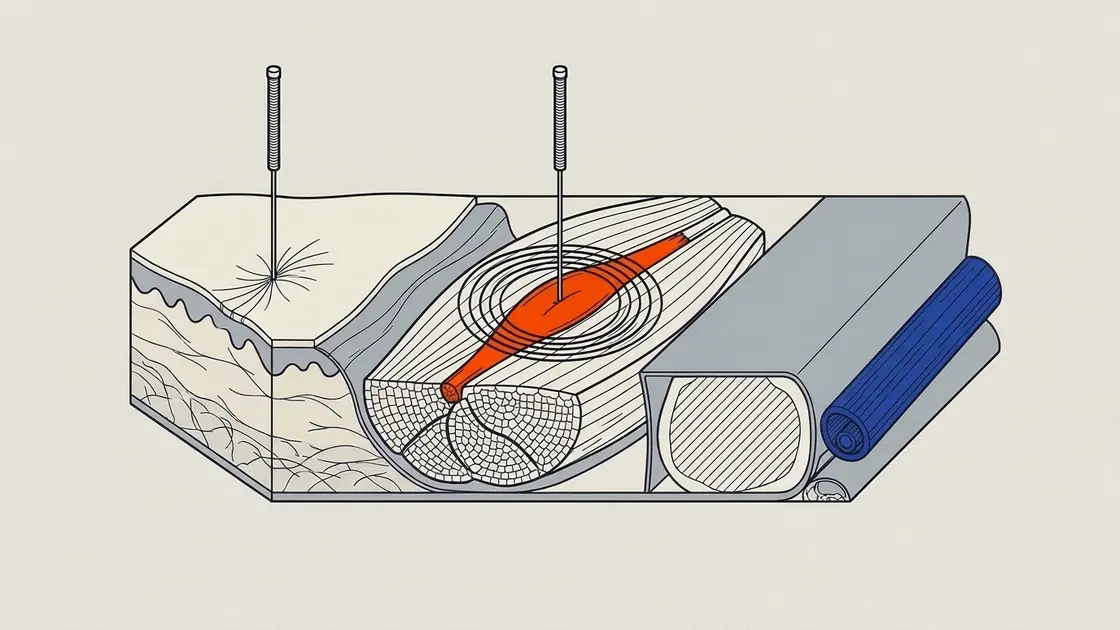
Dermal & fascial collagen coupling
A solid non-cutting filiform needle (0.25 mm rounded tip) enters via transverse insertion (~15°), gently tenting loose areolar collagen fibers without slicing dermal vessels.
Myofascial spindle & Aδ / C transduction
Within the 0.3–0.5 cun target window at SP 21, mechanical coupling recruits intramuscular mechanoreceptors, increasing local micro-perfusion and releasing taut bands.
Strict anatomical safety floor
The deep fascial septum, bone cortex, and underlying neurovascular bundle or cavity define the strict anatomical boundary observed during physician needling at SP 21.
Clinical relations & channel protocols
Immediate neighbors on the meridian

Related clinical reading
6Understand bronchial asthma — a chronic inflammatory airway disease that affects more than 300 million people worldwide, its mechanisms, diagnosis, and evidence-based treatments.
Understand childhood asthma — the pathophysiology of bronchial inflammation, age-stratified diagnosis, stepwise treatment, and how pediatric acupuncture can support complementary control.
Understand inflammation of the costochondral joints — the most common musculoskeletal cause of chest pain.
Understand myalgic encephalomyelitis / chronic fatigue syndrome (ME/CFS) — a complex neuroimmunological condition, its mechanisms, diagnosis, and therapeutic approaches.
Understand fibromyalgia — a syndrome of chronic widespread pain, its central mechanisms, diagnosis, and multidisciplinary therapeutic approaches.
Understand trigger points, causes, diagnosis, and treatment options for chronic myofascial pain.