KI-13 Qixue (氣穴) — Qi Hole
Anatomical location
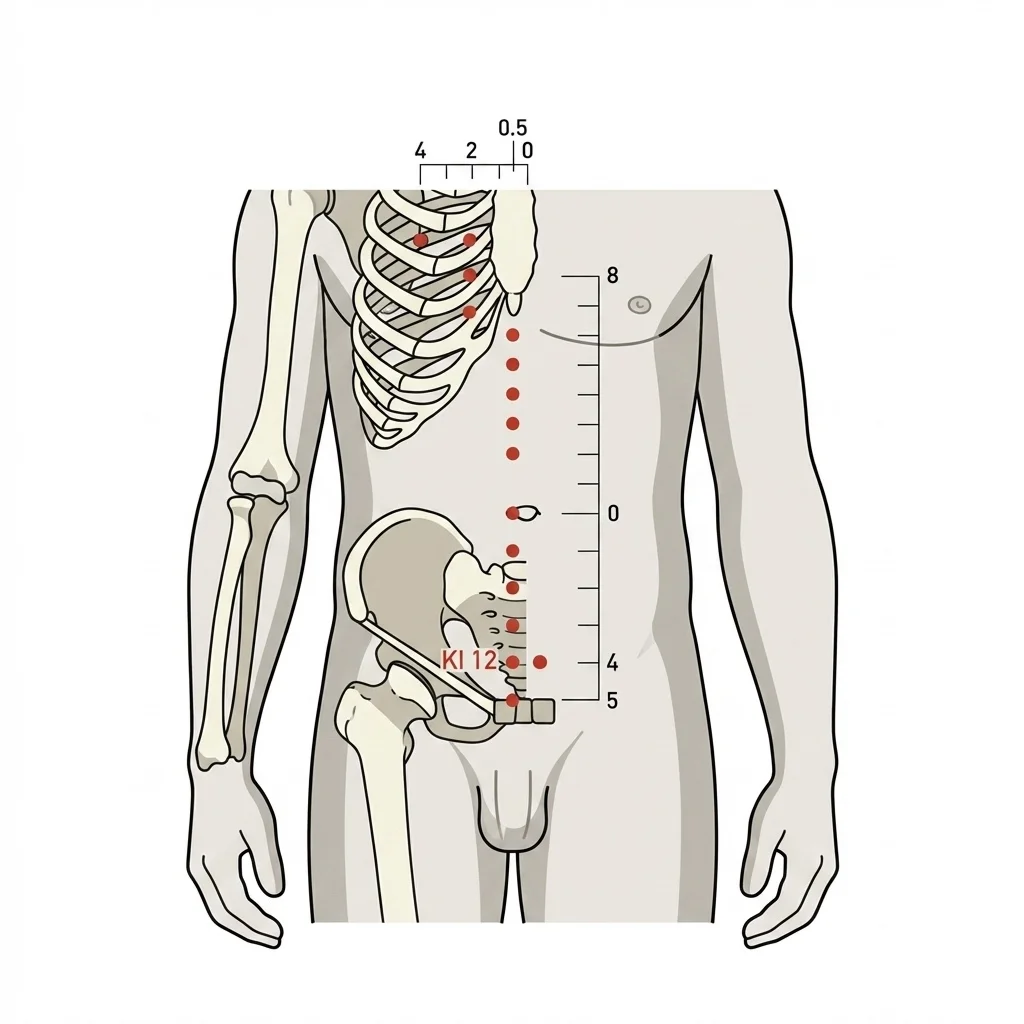
On the lower abdomen, 3 cun below the umbilicus, 0.5 cun lateral to the anterior midline (at the level of CV-4).
Practical palpation guide
In dorsal decubitus, locate the point 3 cun below the umbilicus, 0.5 cun lateral to the anterior midline, at the level of Guan Yuan (CV-4).
Anatomical plane & innervation
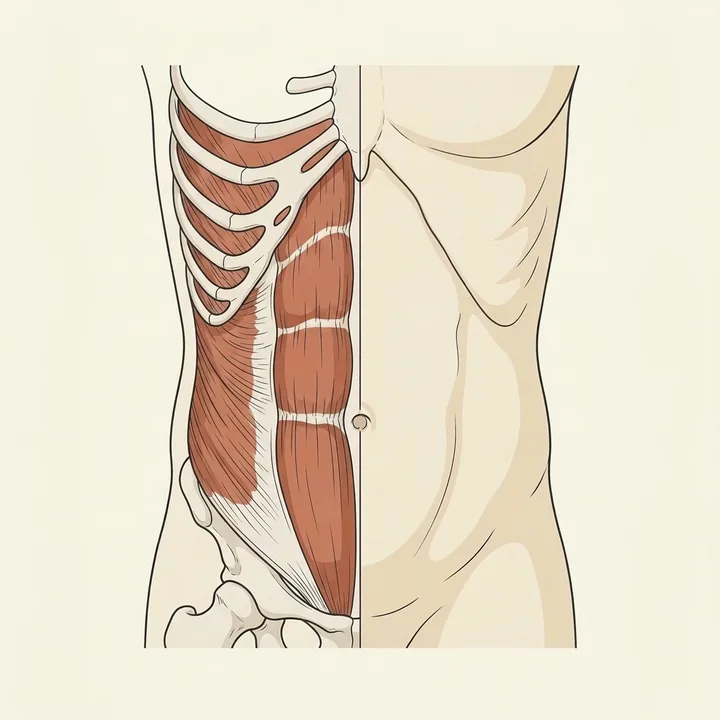
Rectus abdominis muscle. Subcostal nerve.
Needling technique
Perpendicular insertion, 1.0–1.5 cun.
Medical application & myofascial correlation
Clinical synthesis
See Da He (KI-12) for further details.
Clinical practice indications
- 01Infertility
- 02Dysmenorrhea
- 03Urinary tract infection
Presenting symptoms & complaints
Classical tradition, channel actions & source
Classical therapeutic actions
- Regulates the Penetrating and Conception vessels
- Regulates the Lower Jiao
Traditional indications (TCM)
Character etymology
Qi (气), vital Qi; Xue (穴), opening, point. This point lies beside Guan Yuan (CV-4).
Layered tissue anatomy & needle biomechanics at KI 13
Cross-sectional technical schematic of perpendicular insertion (90°) (1–1.5 cun): superficial connective collagen coupling, intramuscular myofascial transduction, and deep neurovascular protection.
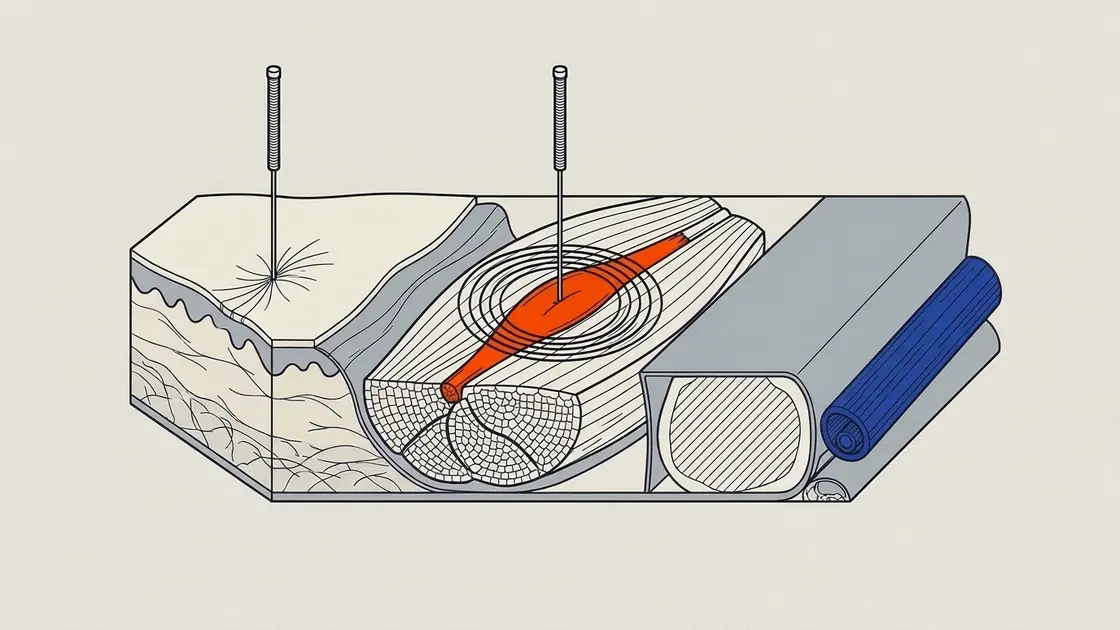
Dermal & fascial collagen coupling
A solid non-cutting filiform needle (0.25 mm rounded tip) enters via perpendicular insertion (90°), gently tenting loose areolar collagen fibers without slicing dermal vessels.
Myofascial spindle & Aδ / C transduction
Within the 1–1.5 cun target window at KI 13, mechanical coupling recruits intramuscular mechanoreceptors, increasing local micro-perfusion and releasing taut bands.
Deep neurovascular clearance
Calibrated angle and depth keep the needle tip clear of periosteum and deep neurovascular trunks, pairing targeted stimulation with anatomical safety.
Clinical relations & channel protocols
Immediate neighbors on the meridian
Related clinical reading
6Understand overactive bladder syndrome — a condition marked by urinary urgency, frequency, and nocturia, its neurophysiological mechanisms, and treatment options.
Understand interstitial cystitis/bladder pain syndrome — a chronic condition of pelvic pain, urinary urgency, and frequency, its mechanisms, and treatments.
Understand dysmenorrhea — the menstrual pain affecting millions of women — including its physiologic mechanisms, differential diagnosis, and evidence-based treatment options.
Understand urge urinary incontinence — the involuntary loss of urine associated with the imperious need to void, its mechanisms and treatments.
Understand infertility from anovulation — the most common and treatable cause of female infertility, its mechanisms, diagnosis, and evidence-based therapeutic options.
Understand irritable bowel syndrome — a functional gastrointestinal disorder that affects millions of people, its mechanisms, diagnosis, and evidence-based treatments.