KI-11 Henggu (橫骨) — Pubic Bone
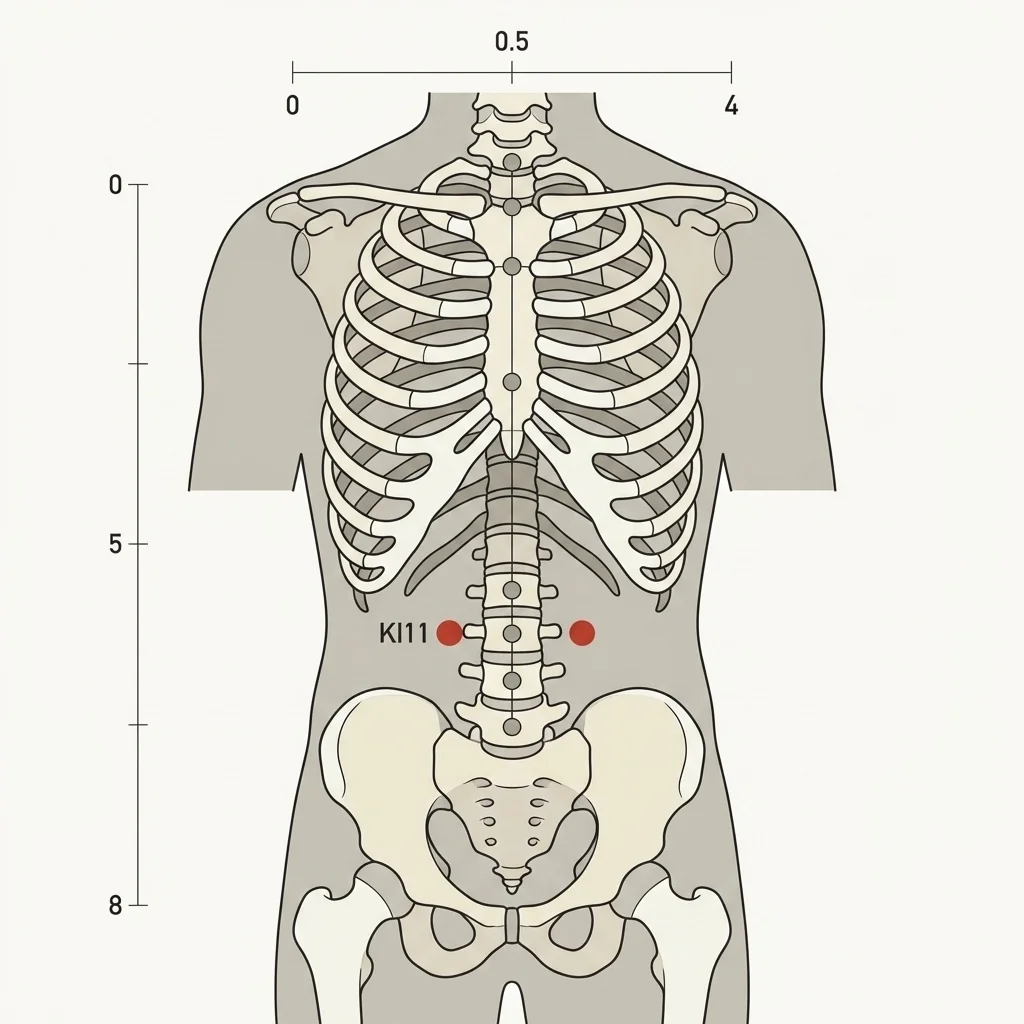
Anatomical location
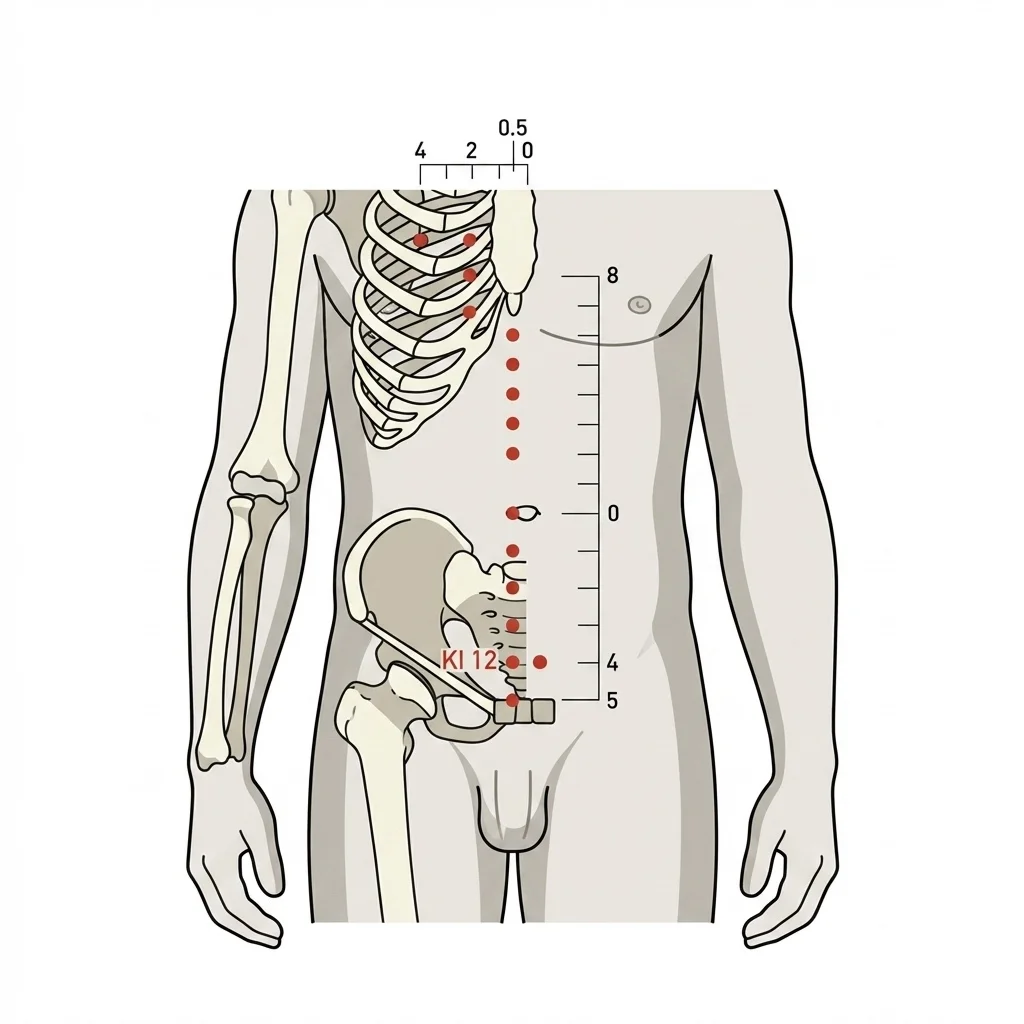
On the lower abdomen, 5 cun below the umbilicus, 0.5 cun lateral to the anterior midline (at the level of CV-2).
Practical palpation guide
In dorsal decubitus, locate the point 0.5 cun lateral to the anterior midline, at the level of the upper border of the pubic symphysis or of Qu Gu (CV-2).
Anatomical plane & innervation
Rectus abdominis muscle. Iliohypogastric nerve.
Needling technique
Perpendicular insertion, 1.0–1.5 cun.
Medical application & myofascial correlation
Clinical synthesis
This point lies where the organs of the genitourinary system meet. Based on the principle of local point treatment, this point can treat the diseases mentioned above.
Clinical practice indications
- 01Cystitis
- 02Urethritis
- 03Pelvic inflammatory disease
- 04Inguinal hernia
Presenting symptoms & complaints
Classical tradition, channel actions & source
Classical therapeutic actions
- Benefits the Lower Jiao
- Regulates the Penetrating vessel
Traditional indications (TCM)
Character etymology
Heng (横) is the ancient name for the pubis; Gu (骨), bone. The point lies at the upper border of the pubis.
Layered tissue anatomy & needle biomechanics at KI 11
Cross-sectional technical schematic of perpendicular insertion (90°) (1–1.5 cun): superficial connective collagen coupling, intramuscular myofascial transduction, and deep neurovascular protection.
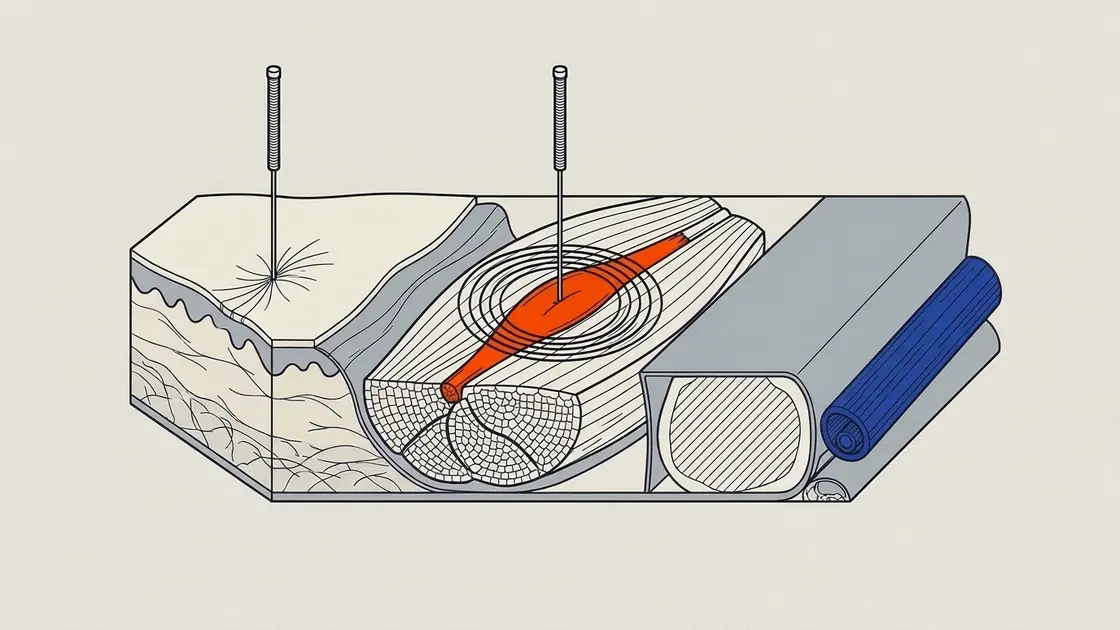
Dermal & fascial collagen coupling
A solid non-cutting filiform needle (0.25 mm rounded tip) enters via perpendicular insertion (90°), gently tenting loose areolar collagen fibers without slicing dermal vessels.
Myofascial spindle & Aδ / C transduction
Within the 1–1.5 cun target window at KI 11, mechanical coupling recruits intramuscular mechanoreceptors, increasing local micro-perfusion and releasing taut bands.
Deep neurovascular clearance
Calibrated angle and depth keep the needle tip clear of periosteum and deep neurovascular trunks, pairing targeted stimulation with anatomical safety.
Clinical relations & channel protocols
Immediate neighbors on the meridian
KI 11 in research
How many Library studies cite this point, since when, and with which designs and verdicts.
- Studies
- 1Library study cites KI 11
- By year
- 2015
- Verdict
- Moderate1
- Study designs
- RCT1
- Classical source
- Jia Yi Jing
- Depth
- 1–1.5 cunPerpendicular
Each study counts once, under the most specific design it states. The verdict is the Library’s word for the strength of each study’s evidence.
See the numbers: KI 11 in research
| Year | Studies |
|---|---|
| 2015 | 1 |
Often appears with
Points the Library studies cite together with KI 11. It shows research practice, not a prescription.
Each filled mark stands for 5 studies; an open mark, for 1 to 4.
Related clinical reading
6Understand overactive bladder syndrome — a condition marked by urinary urgency, frequency, and nocturia, its neurophysiological mechanisms, and treatment options.
Understand interstitial cystitis/bladder pain syndrome — a chronic condition of pelvic pain, urinary urgency, and frequency, its mechanisms, and treatments.
Understand erectile dysfunction — a vascular and neurologic condition that affects millions of men, its pathophysiologic mechanisms, diagnosis, and evidence-based treatments.
Understand the multiple causes of chronic pelvic pain — from endometriosis to pelvic floor dysfunction.
Understand pediatric nocturnal enuresis — why your child wets the bed, the physiological mechanisms involved, effective treatments, and how pediatric acupuncture can help gently and safely.
Understand urge urinary incontinence — the involuntary loss of urine associated with the imperious need to void, its mechanisms and treatments.